Chapitre 1
When Women Warriors Faced the World's Most Brutal Terrorist Group
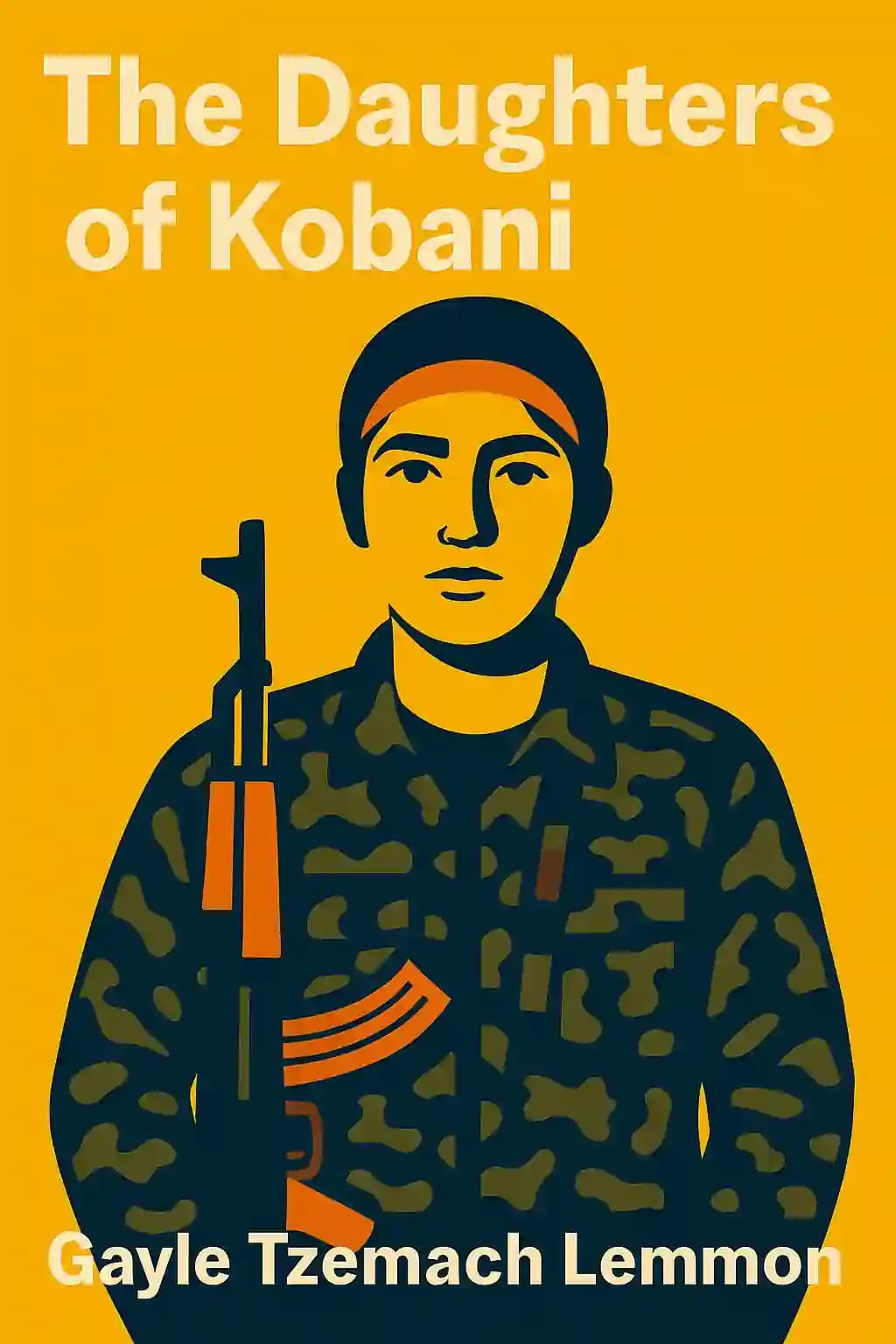
In the rugged borderlands between Syria, Turkey, and Iraq, an extraordinary revolution was unfolding that would challenge conventional wisdom about women in combat. While American women soldiers were still fighting for equal treatment in the military, Kurdish women had formed their own all-female fighting units and were leading the battle against ISIS - the most brutal terrorist organization of our time. These women weren't just supporting male fighters; they were commanding them, serving as snipers, and leading operations with the full respect of their male counterparts. This remarkable story captivated global attention when images emerged from Kobani showing young women with braided hair and flowered scarves standing against the black flags of ISIS. The Daughters of Kobani chronicles this unprecedented female-led military campaign that not only defeated ISIS territorially but simultaneously advanced one of the most progressive women's equality movements in the Middle East. As Malala Yousafzai noted, "This is a story that everyone should know," while Hillary Clinton called it "a testament to the power of women to shape the future."
Chapitre 2
The Kurdish Struggle for Recognition and Rights
The story of the Kurdish women fighters begins with generations of oppression. As Syria's largest ethnic minority, Kurds faced systematic discrimination under the Assad regime - their language banned from schools and media, citizenship denied to thousands, and land confiscated under the "Arab cordon" policy. The regime taught only in Arabic, prohibited Kurdish celebrations, and restricted property rights. Anyone opposing Assad faced imprisonment, torture, or disappearance.
By 2004, young Kurds grew increasingly restless, especially after witnessing Iraqi Kurds gain rights following Saddam Hussein's removal. The breaking point came during a soccer match in Qamishli when authorities opened fire on Kurdish fans, killing dozens and triggering widespread riots. Though Assad eventually restored order with tanks and police, the uprising revealed a generational divide between young activists and traditional Kurdish leaders who preferred dialogue over confrontation.
Among those radicalized was Azeema, a former volleyball star with a commanding presence who had firmly rejected marriage since age thirteen. She joined the Student Union of Kurdistan's training academy, attending secret meetings where PKK-trained men taught military tactics. Despite knowing she risked imprisonment and torture, Azeema felt her life taking the shape she wanted. Her childhood friend Rojda, quiet and bookish but with an unbending will, joined her at these meetings. Despite her mother's tears, Rojda firmly maintained it was her own decision, explaining, "In 2004, we had nothing. You cannot be empty-handed when someone attacks you."
When the Syrian civil war erupted in 2011, creating a power vacuum in Kurdish regions, Azeema, Rojda, and others joined the newly formed People's Protection Units (YPG) to defend Kurdish neighborhoods. Their path was heavily influenced by Abdullah Ocalan, founder of the Kurdistan Workers' Party (PKK), whose ideology insisted that Kurdish liberation required women's liberation. Ocalan rejected the "housewifization" that had replaced ancient matriarchal societies, arguing that women must be equal for society to be truly free.
Chapitre 3
The Birth of a Women's Army
Around 2013, after working alongside men for two years and suffering casualties in battle, women members of the YPG formed their own group - the YPJ (Women's Protection Units). Despite initial male resistance, leaders like Nowruz insisted women deserved their own units, having already proven themselves in battle against extremist forces and the Syrian regime.
Rojda argued forcefully: "Why should men take credit for our work? Women already have proven themselves in battle." The YPJ was officially established on April 4, 2013 - Abdullah Ocalan's sixty-fifth birthday - with women gathering in northeastern Syria to celebrate. They announced exclusive women's training camps and began formalizing their structure under leaders like Nowruz, who carried herself with the calm reassurance of a seasoned commander.
Nearly a decade older than Rojda and Azeema, Nowruz had questioned women's limited roles since girlhood. Her illiterate mother had warned her: "Don't be like me. Make sure your life looks different. Never rely on others for your future." Growing up in Hassakeh, Nowruz witnessed Kurdish oppression firsthand - the inability to celebrate holidays or speak their language freely - and dreamed her nieces and nephews would have different lives.
The YPJ quickly grew from several hundred fighters in 2013 to thousands by 2016. They implemented both military training and ideological education centered on women's equality. For many young Kurdish women, joining the YPJ represented liberation from traditional constraints. One such woman was Znarin, whose relatives had urged her father to stop her political awakening, gossiping she would disgrace the family. Her father, having already denied her education and love, couldn't deny her this passion - especially since she worked only with women.
By December 2013, the YPG reported 379 YPG and YPJ members had died that year - the women's sacrifice now officially recognized. The stage was set for an even greater challenge when ISIS began its territorial expansion in 2014.
Chapitre 4
The Rise of a Brutal Enemy
2014 marked the year ISIS shocked the world. Born in Iraq under Al Qaeda's umbrella following the 2003 U.S. invasion, ISIS evolved into a uniquely brutal organization that even Al Qaeda eventually disavowed. Their tactics included beheadings, caging and murdering opponents, and enslaving, raping, and torturing women.
In January 2014, while President Obama dismissed ISIS as "junior varsity," they captured Raqqa, declaring it their capital. By February, they took Manbij, which became the entry point for foreign fighters. Their June capture of Mosul, Iraq's second-largest city, finally jolted Washington awake. On June 29, ISIS leader al-Baghdadi declared a caliphate from Mosul's Grand Mosque, positioning himself as "leader for Muslims everywhere" and imposing their brutal interpretation of Sharia law.
In August 2014, ISIS launched a horrific campaign against the Yazidi minority in Sinjar. Unlike Christians who could pay a protection tax, Yazidis were given only two options: convert or die. Men and boys were executed, while women and girls were separated, with the youngest and most attractive given to commanders before being traded in an enslavement market. Tens of thousands fled to Mount Sinjar without adequate supplies, their plight finally capturing global attention.
As ISIS advanced toward Erbil, home to U.S. forces and a consulate, Obama announced a limited intervention on August 7, 2014. He authorized airstrikes to protect Erbil and operations to help the besieged Yazidis, while emphasizing no U.S. ground troops would be deployed. A week later, ISIS beheaded American journalist James Foley, further inflaming American outrage. By September, ISIS set its sights on the Syrian town of Kobani near the Turkish border.
The U.S. needed a force willing to fight ISIS but not Assad, as America had no desire for regime change in Damascus. Turkey was deemed unwilling and unable to accomplish this mission. Iraqi Kurdish intelligence chief Lahur Talabany suggested the Americans meet the Syrian Kurds of the YPG, vouching that they would fight ISIS but not seek to topple Assad. The YPG's rescue of Yazidis at Sinjar had impressed the Americans, and initial discussions between U.S. officials and YPG representatives began. Despite Turkey considering the YPG terrorists due to their PKK association, the Americans saw them as the only viable ground force against ISIS.
Chapitre 5
The Siege of Kobani: Women at the Frontlines
The siege of Kobani began with Azeema leading several hundred fighters on the southern front line. With no safe places to retreat, the entire town became a battlefield as ISIS launched a sophisticated assault on September 15, 2014. For ISIS, capturing Kobani would secure the road connecting Raqqa to Aleppo and help them control the entire Syrian-Turkish border. For the Syrian Kurds, with no help from Turkey or initially from the U.S., Kobani became a rallying cry.
Azeema's soldiers respected her as a leader who stayed at the front and never asked anyone to do what she wouldn't do herself. She constantly reminded newer snipers, "The secret is to keep calm. No movement, no excitement. Any excitement at all, and you won't hit your target."
ISIS launched its assault using recoilless rifles, rocket systems, and artillery in a sophisticated combined arms attack. By late September, ISIS had encircled Kobani and controlled three-quarters of the city, sending seemingly inexhaustible forces. By early October, ISIS captured Mishtanour, a strategic hilltop, forcing Kurdish defenders to retreat further into the town center.
Despite withdrawal orders, some YPJ members stayed to fight, including a woman with the nom de guerre Arin Mirkan who strapped a grenade to herself and detonated it near an ISIS tank, killing herself and the fighters inside. Her sacrifice symbolized the YPJ's determination to battle ISIS to their last fighter.
Kobani's proximity to Turkey proved decisive as cameras captured the battle, allowing Western reporters to safely document the siege. Social media amplified images of YPG and YPJ fighters - young men in fatigues and women with braided hair and flowered scarves - facing ISIS alone. The longer world leaders ignored the situation, the more compelling the narrative of the "ragtag militia" fighting terrorists became.
By November, several factors began shifting momentum toward the Kurdish forces. Around 150 Peshmerga fighters from Iraqi Kurdistan arrived as reinforcements through a U.S.-brokered deal with Turkey, joined by Free Syrian Army fighters. President Obama, despite Turkish objections, authorized nighttime airdrops of weapons, ammunition and medical supplies to the desperate defenders. American airpower increased with regular F-15, A-10 and B-1 bomber support.
During lulls in battle, Kurdish forces would play the tambor and sing songs about Kobani and fallen comrades, maintaining their humanity despite the brutality around them. Azeema struggled with the deaths of friends but knew she needed to stay focused to keep others alive.
Chapitre 6
Victory and Sacrifice: The Turning Point Against ISIS
By January 2015, after five weeks of brutal fighting, the tide had begun to turn. American airstrikes were making a difference, targeting ISIS fighters' convoys and weapons supplies. Combined with reinforcements from northern Iraq and the Free Syrian Army, the YPG had clawed back territory lost since September.
Despite Nowruz's orders to stay back, Azeema led her unit to reinforce the eastern front line where they engaged in intense combat. After successfully taking down an ISIS tank with a grenade, Azeema was shot while defending a school position, sustaining injuries to her eye and heart as blood soaked her camouflage shirt. Though severely wounded, she managed to shoot her attacker in the leg before being evacuated to a makeshift hospital.
Despite doctors' warnings about the bullet lodged near her heart, Azeema insisted on attending the victory announcement on January 26th when the YPG declared Kobani liberated from ISIS - the extremist group's first defeat. Standing before cameras with five male commanders, she proudly declared, "Now that Kobani is free, what we want to tell the world is that women have played a great role in liberating this town."
The victory at Kobani marked a turning point in the war against ISIS, demonstrating they could be defeated. It also cemented the partnership between American forces and the Kurdish fighters. While Western observers credited American airpower for saving Kobani, those on the ground knew the weapons drop and their own ground forces were equally crucial.
After Kobani, Azeema refused rest and took command of several thousand troops in Hassakeh, finding this battle simpler than the brutal street-by-street fighting of Kobani. Despite ISIS fighters targeting her specifically over radio communications, Azeema ignored warnings and proceeded with an offensive against the village of Karama. Disaster struck when their armored personnel carrier hit an ISIS mine. With both legs broken and unable to move, Azeema ordered her comrades to leave her at the hospital and continue the mission. From her hospital bed, she learned they'd liberated Karama without losing anyone, and immediately began planning the next day's operations despite doctors' warnings she might never walk unassisted again.
Chapitre 7
Building a Democratic Alternative in Northeastern Syria
While the military campaign against ISIS progressed, the Kurdish leadership implemented a radical experiment in democratic governance. In January 2014, the Democratic Union Party implemented the Charter of the Social Contract as constitutional law for northeastern Syria. It established democratic autonomy through local councils, outlawed torture and the death penalty, recognized Kurdish, Arabic and Syriac as official languages, and guaranteed ethnic minorities' rights.
Most progressively, Articles 27 and 28 mandated women's equality and required 40 percent female representation in all governing bodies - making it the region's most progressive document on women's rights. Each town under Kurdish control had joint male-female leadership and separate women's councils addressing women's economic, social and political opportunities.
This political philosophy drew heavily from Abdullah Ocalan's prison writings, which were influenced significantly by American writer Murray Bookchin. Born to Russian Jewish immigrants in 1921, Bookchin journeyed from Communist Party member to environmental theorist and advocate of "libertarian municipalism" - neighborhood-level assemblies modeled after New England town halls. His book "The Ecology of Freedom" reached Ocalan in prison, transforming the Kurdish leader's thinking from Marxism toward self-governance without statehood.
As the U.S.-Kurdish military alliance strengthened, political discussions naturally followed. In December 2015, six weeks after the Syrian Democratic Forces' creation, its political counterpart formed - the Syrian Democratic Council (SDC). Like the SDF, the SDC aimed to represent not just Kurds but Arabs, Turkmen, Yazidis, and Assyrian and Syriac Christians.
In January 2016, Brett McGurk, the U.S. Special Presidential Envoy for the Global Coalition to Counter ISIL, visited northeastern Syria, meeting with Arab, Christian, and Turkmen SDF forces. McGurk returned convinced America made the right choice partnering with the SDF, later testifying before Congress about the counter-ISIS strategy. For the Syrian Kurds, this official American visit provided the international legitimacy they'd long sought.
Chapitre 8
The Liberation of Manbij: A Homecoming Battle
Nowruz stands on a hill overlooking the Euphrates River on May 30, 2016, watching Zodiac boats carrying SDF forces toward Manbij under cover of darkness. The mission represents their most complex operation yet: a nighttime water crossing to seize ISIS's last connection to Turkey. After months of planning and U.S.-Turkish negotiations, the SDF received approval to lead the offensive, with Arab forces prominently featured.
The strategic town had been under ISIS control for two and a half years, serving as a transit point for foreign fighters including those who carried out the 2015 Paris attacks. Nowruz's YPJ women would lead the crossing - a risky operation complicated by the inability of many fighters to swim, their refusal to wear flotation devices, and the vulnerability of approaching exposed across water toward entrenched ISIS positions.
For Znarin, Nowruz's former aide and now a YPJ field commander, the Manbij campaign represents a homecoming to the city she left as a disappointed teenager years ago. Leading fifty fighters for the first time, she draws on everything she learned in Kobani from mentors like Nowruz and Azeema. Despite initial anxiety about her new leadership role, Nowruz reassures her: "We trust you and we know you'll do a great job leading."
Six days into the offensive, ISIS snipers have killed several YPJ fighters, while mines have claimed more lives. Znarin maintains morale by reminding her forces they fight not just for themselves but "for humanity." ISIS employs the same tactics used in Kobani but more effectively - booby-trapping doorways, turning cars into bombs, and hiding explosives in teapots and shop entrances.
By late June, despite heavy YPJ casualties, the SDF gradually gains ground against ISIS, which has retreated to make its last stand at the city's grain silos. ISIS counterattacks from all sides on July 1st, using human shields and disguising fighters as civilians. By mid-July, the SDF surrounds most of the city, prompting a U.S.-brokered offer: ISIS could leave safely if they released civilian hostages.
ISIS initially refuses but eventually retreats on August 12th in a convoy of vehicles, using civilians as human shields. For Znarin, this marks her transformation from driver in Kobani to battlefield commander, finally achieving her goal of leading from the front after two and a half months of fighting to reclaim her hometown.
Chapitre 9
The Final Battle for Raqqa: Liberating ISIS's Capital
By 2016, Rojda commands around four thousand fighters - both Arab and Kurdish, men and women - on the western front line in the battle for Raqqa. She's particularly motivated by the women she's rescued from ISIS captivity, including a Yazidi woman named Dalal who was sold ten times as a sex slave before being rescued. Rojda spent an entire night listening to Dalal's horrific experiences, promising her safety. This deeply personal encounter fueled her determination as the fight to retake Raqqa began.
For months, debate raged in Washington over which force should lead the Raqqa offensive. Turkey insisted it could field a force to take Raqqa, arguing against allowing Syrian Kurds to lead the fight in the majority-Arab city. U.S. military leaders, however, believed the SDF was the only viable option. The Trump administration approved direct arming of Syrian Kurds in May 2017, just after the SDF's successful Tabqa Dam operation.
In Raqqa, American special forces officer Jason Akin quickly discovered that the women commanders shared his warrior ethos despite his initial uncertainty about working with female leaders. By October, Rojda had been leading the Raqqa fight for four months, battling ISIS's familiar tactics of car bombs, suicide attacks, and mines. The battle was brutal - a master class in urban warfare's hellishness with snipers, mortar fire, and booby-trapped buildings slowing every SDF advance.
International rights groups questioned the intensity of coalition airstrikes as civilian casualties mounted. By late August, the SDF held nearly two-thirds of Raqqa, but at tremendous cost - over 1,000 documented civilian deaths and more than a hundred SDF fighters killed.
While the battle for Raqqa was brutal, the Islamic State's defeat was inevitable. By mid-October 2017, ISIS fighters were surrounded in their last two strongholds - the hospital and stadium. With ISIS fighters running low on supplies, tribal elders and the Raqqa Civil Council negotiated a deal for their safe exit to save civilian lives and prevent further destruction.
On October 17, 2017, Rojda arrived at Raqqa's Naim Square (Paradise Square) to celebrate victory. This space, once ISIS's "Hell Square" where severed heads were displayed on spikes, now hosted triumphant SDF fighters. During the celebration, fighters hoisted pictures of fallen comrades like Arin Mirkan, who had sacrificed herself in Kobani.
Chapitre 10
A Revolution for Women's Rights Amid War
By summer 2018, Raqqa was showing signs of revival despite enormous challenges. At the opening of the Raqqa Women's Council, women and men danced together in celebration - activities that would have meant death under ISIS rule. Though the city remained choked with rubble and lacked basic services due to minimal international funding, residents were returning to rebuild their lives.
The Women's Councils organized women on economic, social and political issues, representing the push for women's equality that had accompanied military victories. In a city where ISIS had bought and sold women just months before, these councils symbolized the resilience of Raqqa's citizens refusing to be broken.
After Raqqa's liberation, Rojda focused on training new YPJ recruits in Tabqa. Among them were young Arab women from Raqqa with harrowing stories of life under ISIS. One recruit named Hala described being forced to marry an ISIS fighter who imprisoned her in their home. After attempting to escape and seek divorce, she was sent to what she called a "rape camp" in Idlib. Eventually escaping with other women despite threats of minefields, Hala joined the YPJ seeking revenge and empowerment: "As a woman, why should we be raped? Why should we face this? Now at least I feel I am doing something for myself."
On March 23, 2019, at the al-Omar oil field, a ceremony marked the end of ISIS's territorial control. Azeema, Rojda, and Znarin attended as American and SDF flags flew side by side. The ceremony honored the thousands who died fighting ISIS since 2014. Photos of fallen women fighters hung alongside men's, symbolizing the YPJ's central role in the conflict.
For women like Rojda and Znarin, their status had transformed even within their own families - uncles who once opposed their independence now sought their advice. American Ambassador William Roebuck acknowledged the "tremendous sacrifice of our Syrian partners" who lost thousands of lives while helping protect coalition homelands.
Chapitre 11
Betrayal and Resilience: An Uncertain Future
Six months after celebrating ISIS's defeat, Turkey launched Operation Peace Spring against northeastern Syria in October 2019, following President Trump's withdrawal of American forces. The offensive displaced over 200,000 Syrians and killed at least 200, including Kurdish politician Hevrin Khalaf. The SDF, having recently dismantled their defensive positions at America's request, faced Turkey's wrath alone despite years of loyal partnership against ISIS.
For Nowruz, Rojda, Znarin, and Azeema, it meant returning to war. Nowruz received the news of American withdrawal from Kobani with disbelief. Rojda, on her first-ever trip abroad in Rome, abandoned sightseeing to follow developments anxiously. Each woman returned to defend their respective towns.
Despite this betrayal, the women remained committed to their vision. "I say it is worth it because when I see a child, I wonder how will they live. I fight so people can live freely," Nowruz explained in December 2019. "Like any other person, I love life-I am not tired of life. I love my people and children; I don't want them to live in the painful life that I lived in."
The future remains uncertain. Turkey controls a corridor along the border, with more attacks threatened. The Americans maintain a limited presence, helping the Syrian Kurds navigate between Russian and Syrian regime pressures. Yet remarkably, in areas the SDF still controls, women remain visible everywhere, and the civil and women's councils continue functioning.
"We are trying to build a little lake in the middle of the desert," explained Fauzia Yusuf, a veteran political activist who helped write the region's progressive constitution. Nowruz's hope for future generations remains clear: "I want her to know how to protect herself, how to be independent, and how to be powerful. We might not be alive then, but this must stay as part of history."
The story of the Daughters of Kobani reveals not just a military victory against a brutal enemy, but a revolution in gender relations that continues to unfold in one of the world's most conservative regions. These women warriors proved that liberation requires more than defeating an external enemy - it demands transforming society itself.