Chapitre 1
Rewiring Your Mind: The Transformative Power of Thought
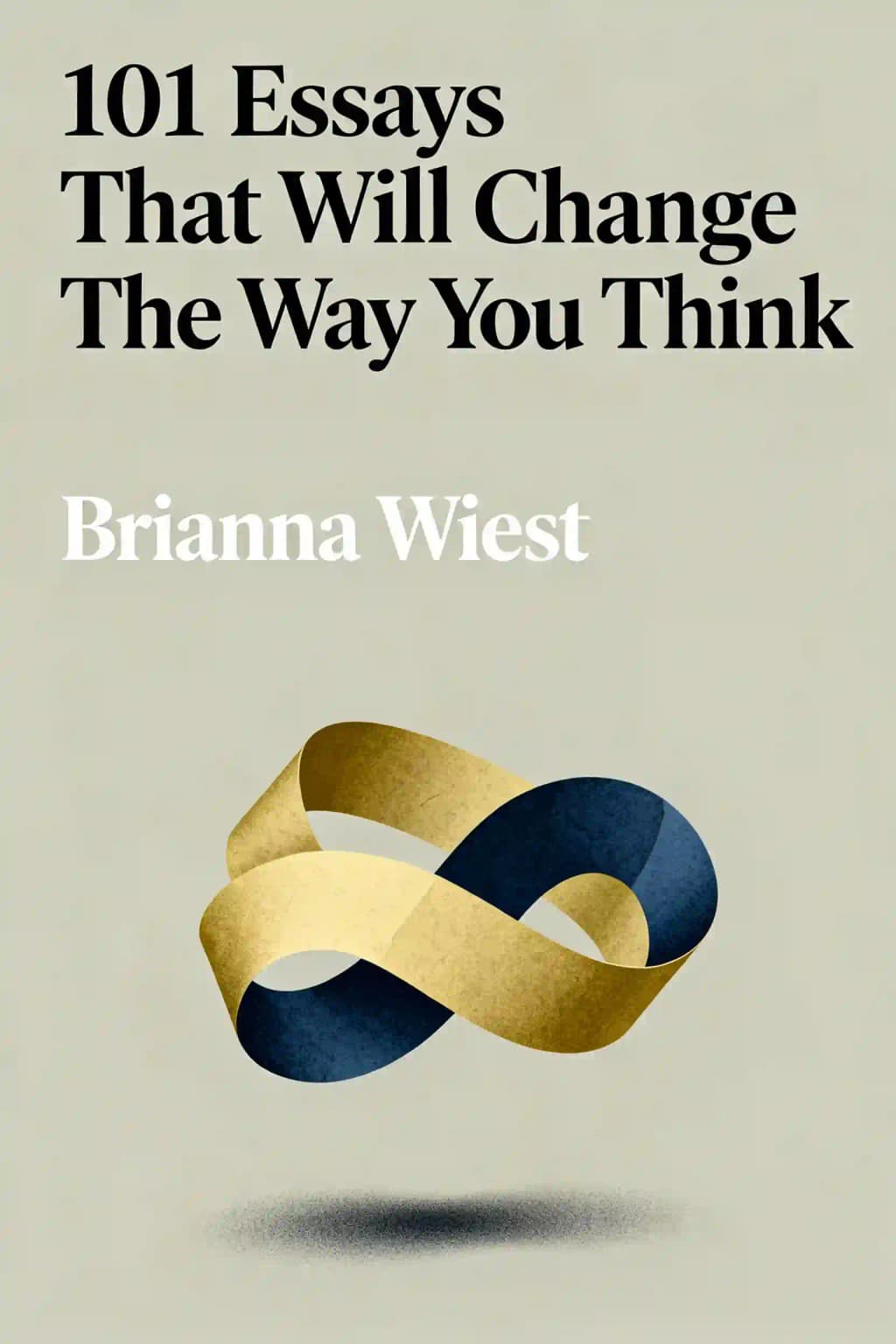
In the bustling world of self-help literature, few books have quietly transformed as many lives as Brianna Wiest's "101 Essays That Will Change The Way You Think." Since its publication, this collection has become a staple on the bookshelves of celebrities like Emma Watson and Kendall Jenner, who have both praised its accessible wisdom. What makes this work particularly powerful is how it distills complex psychological concepts into digestible insights without sacrificing depth. In a cultural moment dominated by quick-fix solutions and surface-level advice, Wiest's essays offer something rarer: an invitation to examine the fundamental patterns of thought that shape our entire experience of life. As one reader famously commented, "This isn't a book you read once-it's a book you live with." With over two million copies sold worldwide and translations in 25 languages, these essays continue to resonate because they speak to a universal truth: the way we think creates the life we live.
Chapitre 2
The Architecture of Your Reality: How Thoughts Create Your World
Our thoughts aren't just passive observations-they're the architects of our reality. As Wiest explains through the evolutionary lens of Dr. Yuval Noah Harari's work, Homo sapiens survived while other human species perished largely because of our prefrontal cortex-our ability to think complexly. Through language and imagination, we created conceptual worlds in our minds that eventually manifested as the society we inhabit today.
This evolutionary advantage points to a profound truth: thoughts create reality. It's not just a metaphysical concept but a biological fact. The neural pathways we strengthen through repetitive thinking become the lens through which we perceive and interact with the world. When we consistently focus on threats, our brain becomes hypervigilant, finding danger everywhere. When we habitually look for opportunities, we begin to see possibilities others miss.
Consider how two people can experience identical circumstances yet walk away with completely different interpretations. A job loss might devastate one person while another sees it as the universe clearing space for something better. The difference isn't in what happened but in the thought patterns each person has developed over time.
We often sabotage ourselves through unconscious thinking habits. For instance, we believe happiness comes from deciding what we want and pursuing it, yet psychological research shows we're terrible at predicting what will make us happy. Our brains can only conceptualize what they've already known, so when choosing what we want, we're merely recreating solutions from the past. When things don't unfold as expected, we interpret this as failure rather than recognizing we may have created something better but unfamiliar-which our brain misinterprets as "bad."
Another common trap is extrapolation-taking a snapshot of your current moment and projecting it as representative of your entire life. This is why a bad day can feel like a bad life, and why we often fail to recognize that everything is transitory. There is nowhere to "arrive"-we're only rushing toward death. True success isn't accomplishing goals but how much you expand in the process.
The path to genuine change begins with recognizing these subconscious patterns. When you understand that fear often signals interest rather than danger, that problems are catalysts for growth rather than obstacles, and that your past doesn't define you unless you allow it to, you begin to reclaim authorship of your life story. The greatest minds throughout history understood that changing their lives required changing their minds first.
Chapitre 3
The Psychology of Daily Routine: Building Your Mental Foundation
History's most accomplished individuals-from Einstein to Maya Angelou-shared one trait beyond talent: rigid, specific routines. While routines might seem boring or constraining, they actually create the foundation for both creativity and contentment. Your routine doesn't necessarily mean sitting in the same office daily-it could involve traveling monthly or being routinely un-routine. What matters isn't the content but how steady and safe your subconscious feels through repetitive actions and expected outcomes.
Psychologist Robert Thayer argues that our moods aren't primarily created from individual thoughts or stressors but from our habitual patterns: how much we sleep, how frequently we move, what we think, how often we think it. It's not one negative thought that derails us-it's the pattern of continually experiencing that thought that compounds its effect and makes it seem valid.
Consider how an untamed mind functions like a minefield. Without regulation or self-control, anything can persuade you into wanting something you don't actually need. That drink tonight seems more appealing than preparing for tomorrow's presentation, but the short-term pleasure isn't worth bombing an important meeting. Crafting routine means letting conscious choices guide your day while letting temporary distractions fall to the wayside.
When you regulate your daily actions, you deactivate your fight-or-flight instincts because you're no longer confronting the unknown. This explains why people struggle with change, while those consistent in their habits experience more joy-their fear instincts are turned off long enough for them to actually enjoy something. As children, routine gives us a feeling of safety. As adults, it gives us a feeling of purpose. Both share the same origin-protection from the unknown.
Routine also creates the pathway to flow-that state where we become so completely engaged with what we're doing that all ideas or worries dissolve into complete presence. Training your body to respond to different cues-waking at 7 a.m., writing at 2 p.m.-helps you naturally fall into flow with more ease, simply out of habit.
Perhaps most importantly, routine consistently reaffirms a decision you already made. If you decide to write a book and commit to three pages each night, you affirm not just your choice to begin but your ability to do it. This is the healthiest form of validation-one that comes from within rather than from external sources.
When we don't settle into routine, we teach ourselves that fear is an indicator we're doing the wrong thing, rather than just being very invested in the outcome. This breeds perpetual procrastination, creating gaps where our subconscious can say "take a break now" when you actually have a deadline. If you're used to breaking at that time, you'll allow it simply because "you always do."
Chapitre 4
Emotional Intelligence: The Misunderstood Superpower
Despite being our most powerful yet undervalued trait, emotional intelligence remains widely misunderstood. We pride ourselves on logic and reason, yet research shows we often reach the same conclusions instantly as we do after long contemplation. Our relationships fail at alarming rates, and our leaders overlook the human element in sociopolitical issues. Society seems to value being an unfeeling machine over being emotionally aware.
True emotional intelligence isn't about infallible composure or suppressing feelings. It's about understanding emotions, expressing them appropriately, and processing them effectively. Emotionally intelligent people recognize that emotions are responses, not accurate gauges of what's happening. They accept that their reactions may stem from personal issues rather than the objective situation.
They don't view emotions as "somebody else's doing" or "somebody else's problem to resolve." Understanding they are the ultimate cause of their experience keeps them from falling into indignant passivity-believing the universe must correct what it has done wrong. They recognize that indifference, not fear, signals a wrong path. Fear means you're moving toward something you love, but old beliefs or unhealed experiences are surfacing to be addressed.
These individuals don't believe "happiness" is a constant state of joy. They allow themselves time to process everything they experience and exist in their natural state. In that non-resistance, they find contentment. They recognize how social conditioning and the human "monkey-mind" can impose thoughts and beliefs that were never truly theirs. They inventory their beliefs, reflect on their origins, and decide whether each mindset actually serves them.
Perhaps most importantly, emotionally intelligent people know that a feeling will not kill them-they've developed enough awareness to understand that all things, even the worst feelings, are temporary. They recognize trust and intimacy as something to build carefully and share selectively. They're not guarded or closed, but mindful about who they allow into their lives and hearts-kind to all but truly open to few.
They avoid extrapolation-projecting the present moment into the foreseeable future. They don't mistake momentary feelings for the sum of their entire life. They allow themselves "bad" days and full humanity, finding peace through this non-resistance.
Chapitre 5
The Shadow Side of Love: When Connection Becomes Disconnection
It's fascinating how we transform people who were once everything back into nothing. How we learn to forget. How we force forgetting. The dynamics after a relationship often teach more than the relationship itself-grief being a faster teacher than joy. But what does it mean to cycle back to being strangers? You never truly stop knowing each other in that intimate way. Perhaps we have no choice but to reconstruct them in our minds as someone different from the person who knew our anxieties, our naked body, what made us cry, and how much we loved them.
When our lives revolve around someone, they don't simply stop doing so when only memories remain. Bits always linger-impressions on places visited, things said, songs shared. We find ourselves in checkout lines, hearing those songs, realizing we're revolving around them again. Maybe we never stopped.
Do we ever truly forget lovers' birthdays or our first times together? Do anniversaries ever become normal days again? Are promises ever neutralized? Or do we just decidedly ignore them because there's no other choice? The mind pushes forward and forces the heart to follow.
Perhaps you either love someone forever, in some way, or never truly loved them at all. Once two reactive chemicals cross, both are changed. Sometimes the wounds we leave in others are too raw to risk reopening. Love isn't expendable, though perhaps we force it to be out of necessity.
Maybe we're all at the centers of our own universes that occasionally overlap with others', leaving both changed. These collisions can wreck us, change us, shift us. Sometimes we merge into one; other times we pull away because the comfort of familiar loneliness wins out.
Either way, expansion is inevitable. You're left knowing more about love's capabilities and the unique pain of emptiness. Whether that space will include the person who created it, or whether anyone else can match their impression-these remain unknowable.
We all begin as strangers. The loves we choose often feel inevitable-irrationally compelling souls made of the same stuff as ours. Yet the ease of connection isn't what we crave or what we orbit around after it's gone. We wait for another universe to collide with ours, to change what we cannot change ourselves. The storm returns to calm, but we see the stars differently now, unable to choose whose wreckage transforms us.
We all start as strangers, but forget that we rarely choose who ends up a stranger, too.
Chapitre 6
Social Intelligence: The Art of Human Connection
While you might not recognize social intelligence immediately, you've surely experienced its absence-those awkward interactions that leave you frustrated or uncomfortable. Traditional "politeness" is losing appeal as it suggests sacrificing personality for uniformity. Yet social intelligence isn't about erasing yourself-it's about genuine connection while making others comfortable.
Socially intelligent people don't try to elicit strong emotional responses from anyone they're conversing with. They don't exaggerate accomplishments for awe or hardships for sympathy. When a topic doesn't deserve strong emotion, they don't pressure others into faking reactions.
They avoid speaking in definitives about people, politics, or ideas. Rather than declaring "This idea is wrong," they say "I don't personally understand or agree with this idea." They recognize that ideas exist because they're right to someone, and speaking definitively reveals closed-mindedness and shortsightedness.
Instead of responding defensively to criticism, they listen before reacting. They understand that immediate emotional responses without thoughtful consideration signal defensiveness and make relationships difficult. People who feel threatened by suggestions of hurtful behavior often reinforce problems by attacking the messenger.
They avoid labeling people with definitive statements like "He's a prick." Instead, they frame experiences subjectively: "I had a negative experience with him where I felt very uncomfortable." This acknowledges the personal nature of their perception rather than presenting it as universal truth.
They communicate intentionally-saying exactly what they mean without skirting issues. Their speech is calm, simple, concise, and mindful, focused on conveying meaning rather than merely eliciting reactions from others.
They understand the world doesn't revolve around them. They listen without assuming statements are slights against them, separating from their projections to genuinely attempt understanding others' perspectives without making everything about themselves.
Rather than accusing others of being wrong, they validate perspectives ("That's interesting, I never thought of it that way"), present their own views ("Something I recently learned is..."), then invite engagement ("What do you think?"). This creates conversation where both can learn rather than defensively argue.
They accept others' emotions without using logic to dismiss or change them. They understand that validating feelings isn't the same as validating ideas-some ideas don't deserve validation, but everyone's feelings deserve acknowledgment. This means respecting who someone is, even when different from themselves.
They understand strong emotional reactions to others often reveal projections of their own fears-hating a misinformed politician might reflect fear of being unintelligent; disliking a passive friend might indicate recognition of one's own tendency to give others power. When genuinely disliking something, they'd simply disengage rather than react intensely.
Chapitre 7
Embracing Discomfort: The Counterintuitive Path to Growth
Discomfort signals impending change, yet we often mistake it for unhappiness-coping with the latter while avoiding the former. Breaking through limitations requires discomfort, which serves as a helpful signal rather than something to escape.
When childhood issues resurface in adulthood, it's not failure to overcome them but becoming conscious of thought and feeling patterns so you can finally change them. Feeling "lost" or directionless indicates greater presence in your life-living less within premeditated narratives and more in the moment. Until you adjust, this feels like being off-track when you're actually more aligned.
Increased right-brain activity (intuition, emotions, creativity) can temporarily impair left-brain functions like focusing, organizing, and remembering details. Emotional eruptions occur when feelings demand recognition. Our job isn't to fight them but become fully conscious of them-after which we control them, not vice versa.
Major life disruptions like moving, divorce, job loss, or car breakdowns often signal transformative periods. Suddenly losing interest in socializing and finding others' problems draining rather than intriguing indicates internal recalibration. Unusually vivid, memorable dreams suggest your subconscious mind is actively communicating important messages.
Growing discomfort around negative people (who rarely recognize their negativity) leads to distancing from old friends when direct confrontation feels too uncomfortable. This collapse of old dreams makes way for a reality better aligned with who you truly are rather than who you thought you should be.
Recognizing that thoughts create experience often happens when pushed to our limits-precisely when we realize we've had control all along. This uncertainty arises as illusions about who you "should be" dissolve during evolution. Insecurity and uncertainty typically lead to growth, unlike anger and closed-mindedness that accompany negative changes.
Seeing the distance ahead means you can finally envision your destination-you know where and who you want to be. Much "irrational" anxiety comes from subconsciously sensing truths we dismiss because they lack logical evidence. Anger about being walked on or influenced by others' voices signals readiness to stop listening to them and start respecting yourself first.
This emotional autonomy terrifies because failure becomes entirely your responsibility, yet it's the only path to true freedom. The risk always justifies the reward.
Chapitre 8
The Language of Emotions: What Your Feelings Are Trying to Tell You
True emotional intelligence isn't avoiding "bad" feelings through discipline or wisdom. It's allowing yourself to fully experience everything that comes. The worst that could happen is just a feeling-how you interpret an experience and what you believe its repercussions mean.
Physical feelings are transient while our ideas about pain persist. We avoid feelings because we're taught they have lives of their own that will continue indefinitely if acknowledged. Yet genuine emotions like joy and anger last only briefly, while persistent states like tension, depression, and sadness are symptoms, not feelings themselves.
Suffering is simply refusing to accept what is-etymologically meaning "to resist, endure, put under." Healing means allowing yourself to feel emotions you couldn't process during traumatic experiences-letting yourself filter what you had to suppress to survive. We fear our feelings are too overwhelming because we were taught to suppress them for others' convenience.
Numbness isn't feeling nothing-it's feeling everything without processing anything. Sadness says "I'm attached to something being different." Guilt says "I fear I've done bad in someone's eyes," while shame says "I fear I am bad." Anxiety is resistance to the process, tiredness is resistance to your authentic self, annoyance is repressed anger, and depression (biological factors aside) is everything surfacing while you struggle to suppress it.
Realizing you're stuck means recognizing you don't need to change your feelings-you need to lean into them to discover their messages. Your anxiety is resistance to the process, your tiredness is resistance to who you really are, and your depression is everything coming to the surface. When you stow away emotions and try to force yourself to feel differently, you disregard what gives ultimate peace: allowing without judgment. Every feeling is worthwhile, and the feelings you most suppress are your most important guides. Choosing others' acceptance over your own means battling your instincts to assimilate to others' needs. Sadness won't kill you, but fighting it will-you either feel everything or numb yourself into feeling nothing.
Consider your body's parts-your heart, breath, organs-none of which you identify as "you." You say "my heart," not "I am my heart." When these parts are attached, why do we suddenly see them as self? There's a concentration of energy in your chest, throat and head that we identify with, yet it coexists with organs we don't identify with. Knowing who you are provides grounding, but when we assign fixed meanings to our dynamic selves, we create suffering. We often get attached to structures because we don't like the contents, preferring ideas of things rather than what they really are. But what if healing isn't about fixing parts but shifting awareness? What if the "what else" beyond our physical form isn't an end-thought but a beginning-one that frees us from many constraints?
Chapitre 9
Breaking Through Your Upper Limit: The Psychology of Self-Sabotage
Most people unknowingly resist happiness because they prioritize comfort or familiarity. True happiness requires intentional daily practice, not just random positive emotion. Everyone has a "happiness tolerance" or "upper limit" - the capacity we allow ourselves to feel good. When we exceed this comfort zone, we self-sabotage to return to familiar emotional territory.
People resist happiness for many reasons: they fear success will threaten relationships; they believe suffering makes them worthy; they worry happiness means giving up ambition; they delay action after knowing truth; they mistake apathy for safety; they don't practice feeling good; they believe happiness depends on circumstances rather than choice; they think anxiety is just "who they are"; they try to "beat fear to the finish line" through worry; and they perceive happy people as naive. The truth is that those who never fully step into their lives are the truly vulnerable ones - they never have anything at all.
Eric Greitens identifies three essential forms of happiness: pleasure (sensory experiences like a good meal), grace (gratitude and humility), and excellence (meaningful pursuit of something great). Like primary colors, all three are necessary - removing any one makes thriving impossible, and one cannot replace another.
The happiness of excellence comes not from reaching goals but from falling in love with the process. It's measured, deliberate work that builds emotional resilience and identity. Many avoid it because the discomfort is immediate while rewards aren't instantaneous. We want to be masters without developing the necessary discipline - to write books without daily writing practice, to achieve greatness without logging our "10,000 hours." What we receive from pursuing excellence isn't just accomplishment but a sense of self that enriches every aspect of our lives, making the entire spectrum come alive.
The "knowing-doing gap" - understanding what's best for us but doing something else - has been recognized throughout history, from ancient Greeks (Akrasia) to modern productivity gurus. We self-sabotage primarily because we're hardwired to seek comfort, which our brains interpret as survival.
Conquering resistance requires shifting your perception of comfort - focusing on the discomfort you'll face if you don't act rather than the temporary discomfort of action. Left unchecked, this gap leaves you a shell of who you could be, wasting countless hours and missing opportunities. You'll never feel "ready" for what matters most, but waiting for readiness only widens the gap.
Taking small steps creates momentum. Anxiety builds in idle hours while fear thrives in avoidance. Most meaningful pursuits are ultimately rewarding expressions of who we really are. It's easier to act your way into new thinking than think your way into new actions. Be grateful for the inner force pushing you toward discomfort - it knows there's something bigger waiting for you.
Chapitre 10
Releasing Illusions: The Expectations That Hold Us Back
Our twenties are filled with illusions we must abandon. Being extraordinary isn't the natural outcome of hard work-it's rare by definition. The real question is: what work would you do without applause? We must accept our mortality, that we cannot outsmart pain, and that love comes from within, not from others.
Hard work doesn't guarantee success, and we can't control others' thoughts about us. Our minds create our reality, not the reverse. We postpone happiness thinking we can bank it for later, when we can only experience it in the moment. Anxiety isn't just an irritant-it's a survival mechanism signaling issues we need to address.
Self-sufficiency isn't the ultimate goal but merely the foundation. The most fulfilling life comes from commitment, sacrifice, and connection to others. These aren't compromises but the very essence of what makes life worthwhile.
Extraordinary people are rare by definition. Recognizing this isn't surrendering your potential but dissolving illusions about what constitutes a meaningful life. We celebrate "one in a billion" success stories as though they're the natural outcome of self-actualization, but they're not. The real question is: what work would you do without applause? What remains worthwhile without recognition? The truly extraordinary lies in finding the exceptional within ordinary existence.
Some reading this won't survive their twenties. Others won't reach midlife or even see next year. Nobody assumes they'll die young, but that doesn't mean they won't. Keep mortality in mind-it changes everything.
Believing your mistakes deserve less accountability while your strengths are uniquely exceptional keeps you small. Without acknowledging your poor choices' magnitude, you'll justify repeating them. If you act like you can coast on being slightly better than others, you'll never truly challenge yourself.
Without a rocket scientist's IQ, you cannot become one. Without professional-level coordination, you'll never be a professional dancer. Desire alone doesn't qualify you. You can only pursue what intersects your abilities with your interests, and if circumstances allow. True wisdom lies in finding gratitude for this path, even during its challenges.
Pain cannot be intellectualized away, predicted, avoided, or denied. Attempting to do so shrinks your life experience and diminishes who you're meant to become.
People cannot transfer emotions between each other. Our obsession with making others love us reveals a fundamental misunderstanding: when we believe others love us, we simply give ourselves permission to feel love that already exists within us. If you believe love exists anywhere but in your own heart and mind, you'll never truly experience it.
The universal young adult stressor-"I don't know what I'm doing with my life"-stems from a socially constructed expectation that we should know. This is complete bullshit. None of us truly knows what we're "doing with our lives" in the big-picture sense. We can't predict our circumstances five years ahead, and pretending otherwise disconnects us from our internal navigation system.
You owe nothing to your younger self or the person you once thought you'd become. The reason you don't have what you once wanted is simple: you don't want it badly enough anymore. If you did, you'd have pursued it relentlessly.