The Quantum Leap: Beyond Binary Boundaries
Explore the 'spooky' world of qubits and superposition to understand how quantum computers solve impossible problems, from revolutionary medicine to the future of global encryption.

Mejor cita de The Quantum Leap: Beyond Binary Boundaries
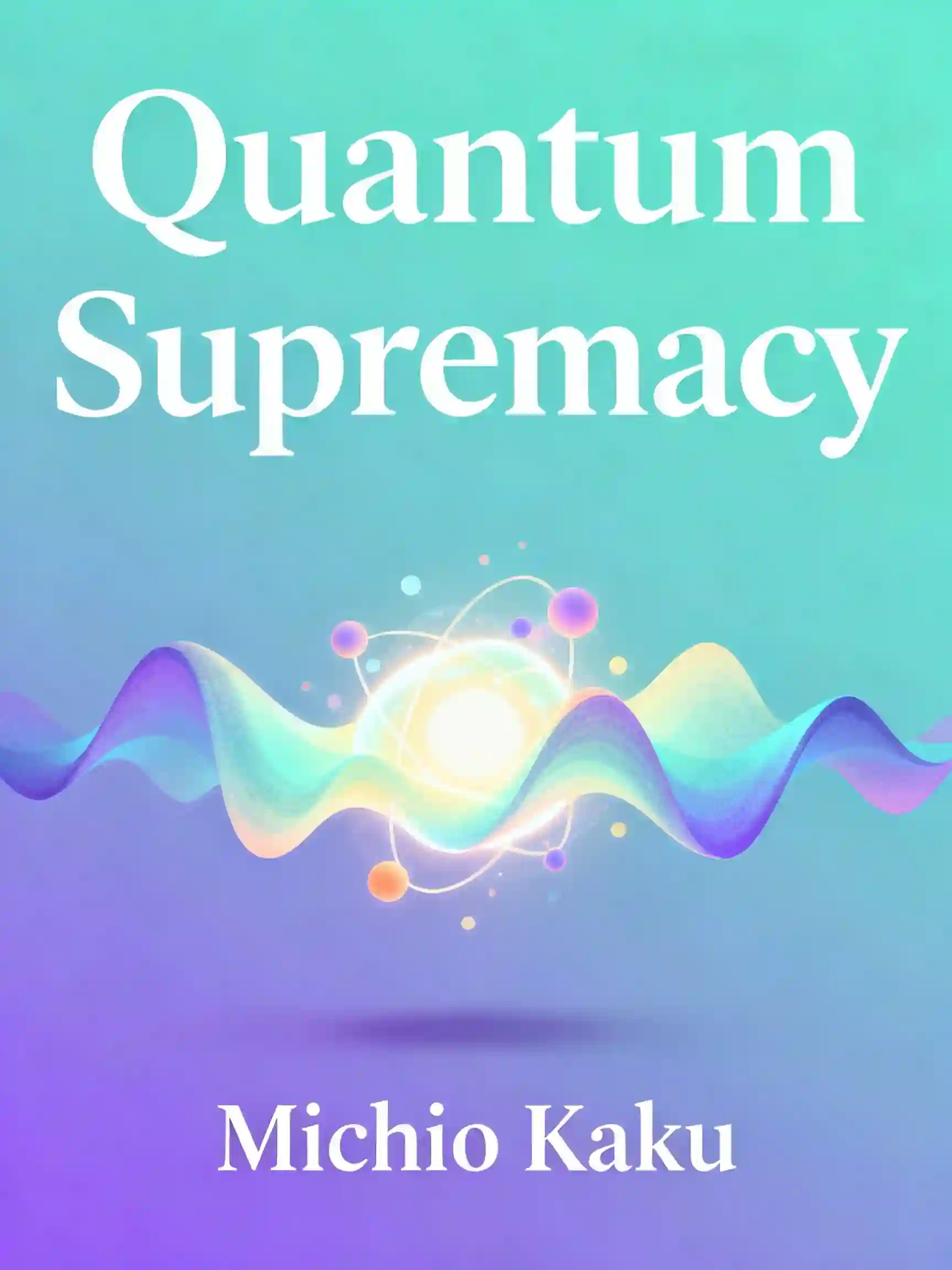
Quantum algorithms are designed so that the 'wrong' answers cancel each other out through destructive interference, while the 'right' answer gets amplified. It reshapes the landscape of probability so that when you finally take a measurement, the correct answer is the most likely thing you’ll see.
Generated by Joey
Please give a lesson on how quantum computing works and potential future applications

Preguntas frecuentes
A classical computer uses bits that are rigid and binary, meaning they must exist as either a 0 or a 1. In contrast, quantum computing uses qubits that can exist in a state of superposition, allowing them to be 0, 1, or both simultaneously. This allows a quantum computer to represent a massive, interconnected web of information and solve complex problems exponentially faster than a traditional supercomputer.
There is currently a "hardware race" with several different methods for building qubits. One common approach uses superconducting circuits cooled to temperatures colder than outer space, where electricity flows without resistance. Another method, known as "trapped ions," uses electromagnetic fields to suspend a single atom in a vacuum, controlling it with lasers. A third approach uses photons, or particles of light, which have the advantage of working at room temperature but are difficult to make interact with one another.
Most current encryption, such as RSA, relies on the fact that classical computers find it nearly impossible to factor large prime numbers. However, Shor’s Algorithm proves that a sufficiently powerful quantum computer could solve these math problems in minutes. This has led to the "harvest now, decrypt later" concern, where adversaries steal encrypted data today to unlock it once quantum technology matures, prompting a global push for "Post-Quantum Cryptography."
Decoherence is the process where a qubit loses its quantum state and collapses back into a classical state due to environmental "noise." Because qubits are incredibly sensitive, even a tiny change in temperature, a microscopic vibration, or a stray electromagnetic wave can cause errors. To combat this, scientists must isolate qubits in extreme environments like dilution refrigerators or vacuum chambers and use "Quantum Error Correction" to spread information across many physical qubits to create a single stable "logical qubit."
Quantum computers speak the "language of nature," making them uniquely capable of simulating molecular and chemical interactions that are too complex for classical machines. In medicine, this could allow researchers to digitally test millions of drug candidates or design personalized treatments. In agriculture, quantum simulation could help unlock the secrets of how bacteria fix nitrogen at room temperature, potentially replacing energy-intensive industrial processes for creating fertilizer and significantly reducing global energy consumption.
Creado por exalumnos de la Universidad de Columbia en San Francisco
"Instead of endless scrolling, I just hit play on BeFreed. It saves me so much time."


"I never knew where to start with nonfiction—BeFreed’s book lists turned into podcasts gave me a clear path."


"Perfect balance between learning and entertainment. Finished ‘Thinking, Fast and Slow’ on my commute this week."
"Crazy how much I learned while walking the dog. BeFreed = small habits → big gains."
"Reading used to feel like a chore. Now it’s just part of my lifestyle."

"Feels effortless compared to reading. I’ve finished 6 books this month already."
"BeFreed turned my guilty doomscrolling into something that feels productive and inspiring."

"BeFreed turned my commute into learning time. 20-min podcasts are perfect for finishing books I never had time for."
"BeFreed replaced my podcast queue. Imagine Spotify for books — that’s it. 🙌"

"It is great for me to learn something from the book without reading it."
"The themed book list podcasts help me connect ideas across authors—like a guided audio journey."
"Makes me feel smarter every time before going to work"
 Ask ChatGPT
 Ask Claude
Creado por exalumnos de la Universidad de Columbia en San Francisco
"Instead of endless scrolling, I just hit play on BeFreed. It saves me so much time."
"I never knew where to start with nonfiction—BeFreed’s book lists turned into podcasts gave me a clear path."
"Perfect balance between learning and entertainment. Finished ‘Thinking, Fast and Slow’ on my commute this week."
"Crazy how much I learned while walking the dog. BeFreed = small habits → big gains."
"Reading used to feel like a chore. Now it’s just part of my lifestyle."
"Feels effortless compared to reading. I’ve finished 6 books this month already."
"BeFreed turned my guilty doomscrolling into something that feels productive and inspiring."
"BeFreed turned my commute into learning time. 20-min podcasts are perfect for finishing books I never had time for."
"BeFreed replaced my podcast queue. Imagine Spotify for books — that’s it. 🙌"
"It is great for me to learn something from the book without reading it."
"The themed book list podcasts help me connect ideas across authors—like a guided audio journey."
"Makes me feel smarter every time before going to work"
"Instead of endless scrolling, I just hit play on BeFreed. It saves me so much time."
"I never knew where to start with nonfiction—BeFreed’s book lists turned into podcasts gave me a clear path."
"Perfect balance between learning and entertainment. Finished ‘Thinking, Fast and Slow’ on my commute this week."
"Crazy how much I learned while walking the dog. BeFreed = small habits → big gains."
"Reading used to feel like a chore. Now it’s just part of my lifestyle."
"Feels effortless compared to reading. I’ve finished 6 books this month already."
"BeFreed turned my guilty doomscrolling into something that feels productive and inspiring."
"BeFreed turned my commute into learning time. 20-min podcasts are perfect for finishing books I never had time for."
"BeFreed replaced my podcast queue. Imagine Spotify for books — that’s it. 🙌"
"It is great for me to learn something from the book without reading it."
"The themed book list podcasts help me connect ideas across authors—like a guided audio journey."
"Makes me feel smarter every time before going to work"
"Instead of endless scrolling, I just hit play on BeFreed. It saves me so much time."
"I never knew where to start with nonfiction—BeFreed’s book lists turned into podcasts gave me a clear path."
"Perfect balance between learning and entertainment. Finished ‘Thinking, Fast and Slow’ on my commute this week."
"Crazy how much I learned while walking the dog. BeFreed = small habits → big gains."
"Reading used to feel like a chore. Now it’s just part of my lifestyle."
"Feels effortless compared to reading. I’ve finished 6 books this month already."
"BeFreed turned my guilty doomscrolling into something that feels productive and inspiring."
"BeFreed turned my commute into learning time. 20-min podcasts are perfect for finishing books I never had time for."
"BeFreed replaced my podcast queue. Imagine Spotify for books — that’s it. 🙌"
"It is great for me to learn something from the book without reading it."
"The themed book list podcasts help me connect ideas across authors—like a guided audio journey."
"Makes me feel smarter every time before going to work"