The Habit Loop: Living Beyond the Loop
Nearly half of our daily actions happen on autopilot. Learn how to decode the hidden cues driving your behavior and rewire your brain for change.

Mejor cita de The Habit Loop: Living Beyond the Loop
Breaking a habit isn’t about a 'willpower contest'—it’s about understanding a mechanism and learning how to work with it rather than against it.
Generated with BeFreed
The Habit Loop Running Your Life






Preguntas frecuentes
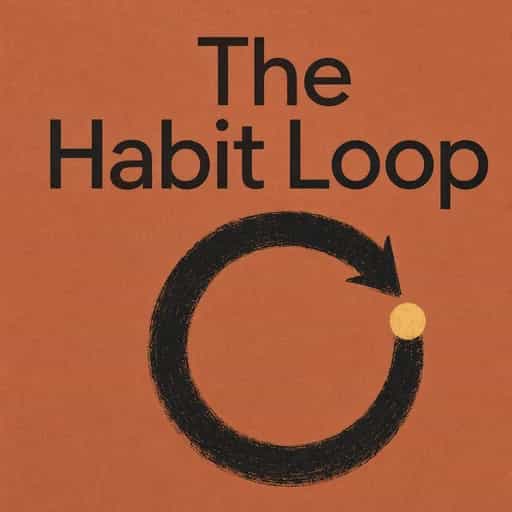
Every habit consists of a cue, a routine, and a reward. The cue is a trigger—such as a location, time of day, or emotional state—that tells the brain to go into automatic mode. This leads to the routine, which is the behavior itself. Finally, the reward is the payoff that reinforces the behavior, telling the brain that the loop is worth remembering for the future.
Willpower is a "top-down" approach that relies on the prefrontal cortex, the part of the brain responsible for complex decision-making. However, habits are stored in the basal ganglia, a deeper and more primitive structure. Because the prefrontal cortex is the first part of the brain to shut down when we are stressed, tired, or hungry, relying on willpower often fails exactly when we need it most.
Curiosity allows for "reward-based learning" by helping the brain update the value of a specific habit. Instead of trying to suppress an urge, you pay close attention to the actual experience of the habit. By noticing that a behavior might actually taste bad, feel uncomfortable, or provide a "shadow reward" that doesn't truly satisfy, you can reach a state of disenchantment where the brain naturally loses interest in the routine.
While a popular myth suggests it takes 21 days, research indicates that it takes an average of 66 days for a new behavior to become automatic. This timeline can vary significantly depending on the person and the complexity of the habit, ranging anywhere from 18 to 254 days. Importantly, missing a single day does not ruin the process as long as consistency is maintained over the long term.
The Three Gears framework is a practical playbook for changing behavior. Gear One involves mapping your habits by identifying the specific cue, routine, and reward. Gear Two is tapping into curiosity to experientially notice if the reward is actually satisfying. Gear Three is finding a "Bigger Better Offer," which involves replacing the old routine with a new behavior that provides a more valuable reward for the same trigger.
Creado por exalumnos de la Universidad de Columbia en San Francisco
"Instead of endless scrolling, I just hit play on BeFreed. It saves me so much time."


"I never knew where to start with nonfiction—BeFreed’s book lists turned into podcasts gave me a clear path."


"Perfect balance between learning and entertainment. Finished ‘Thinking, Fast and Slow’ on my commute this week."
"Crazy how much I learned while walking the dog. BeFreed = small habits → big gains."
"Reading used to feel like a chore. Now it’s just part of my lifestyle."

"Feels effortless compared to reading. I’ve finished 6 books this month already."
"BeFreed turned my guilty doomscrolling into something that feels productive and inspiring."

"BeFreed turned my commute into learning time. 20-min podcasts are perfect for finishing books I never had time for."
"BeFreed replaced my podcast queue. Imagine Spotify for books — that’s it. 🙌"

"It is great for me to learn something from the book without reading it."
"The themed book list podcasts help me connect ideas across authors—like a guided audio journey."
"Makes me feel smarter every time before going to work"
Creado por exalumnos de la Universidad de Columbia en San Francisco
"Instead of endless scrolling, I just hit play on BeFreed. It saves me so much time."
"I never knew where to start with nonfiction—BeFreed’s book lists turned into podcasts gave me a clear path."
"Perfect balance between learning and entertainment. Finished ‘Thinking, Fast and Slow’ on my commute this week."
"Crazy how much I learned while walking the dog. BeFreed = small habits → big gains."
"Reading used to feel like a chore. Now it’s just part of my lifestyle."
"Feels effortless compared to reading. I’ve finished 6 books this month already."
"BeFreed turned my guilty doomscrolling into something that feels productive and inspiring."
"BeFreed turned my commute into learning time. 20-min podcasts are perfect for finishing books I never had time for."
"BeFreed replaced my podcast queue. Imagine Spotify for books — that’s it. 🙌"
"It is great for me to learn something from the book without reading it."
"The themed book list podcasts help me connect ideas across authors—like a guided audio journey."
"Makes me feel smarter every time before going to work"
"Instead of endless scrolling, I just hit play on BeFreed. It saves me so much time."
"I never knew where to start with nonfiction—BeFreed’s book lists turned into podcasts gave me a clear path."
"Perfect balance between learning and entertainment. Finished ‘Thinking, Fast and Slow’ on my commute this week."
"Crazy how much I learned while walking the dog. BeFreed = small habits → big gains."
"Reading used to feel like a chore. Now it’s just part of my lifestyle."
"Feels effortless compared to reading. I’ve finished 6 books this month already."
"BeFreed turned my guilty doomscrolling into something that feels productive and inspiring."
"BeFreed turned my commute into learning time. 20-min podcasts are perfect for finishing books I never had time for."
"BeFreed replaced my podcast queue. Imagine Spotify for books — that’s it. 🙌"
"It is great for me to learn something from the book without reading it."
"The themed book list podcasts help me connect ideas across authors—like a guided audio journey."
"Makes me feel smarter every time before going to work"
"Instead of endless scrolling, I just hit play on BeFreed. It saves me so much time."
"I never knew where to start with nonfiction—BeFreed’s book lists turned into podcasts gave me a clear path."
"Perfect balance between learning and entertainment. Finished ‘Thinking, Fast and Slow’ on my commute this week."
"Crazy how much I learned while walking the dog. BeFreed = small habits → big gains."
"Reading used to feel like a chore. Now it’s just part of my lifestyle."
"Feels effortless compared to reading. I’ve finished 6 books this month already."
"BeFreed turned my guilty doomscrolling into something that feels productive and inspiring."
"BeFreed turned my commute into learning time. 20-min podcasts are perfect for finishing books I never had time for."
"BeFreed replaced my podcast queue. Imagine Spotify for books — that’s it. 🙌"
"It is great for me to learn something from the book without reading it."
"The themed book list podcasts help me connect ideas across authors—like a guided audio journey."
"Makes me feel smarter every time before going to work"