The Fast Track to CCP Certification Success
Master the updated eight-module WorldatWork roadmap with a strategic one-year study plan designed to elevate your compensation expertise and career potential.
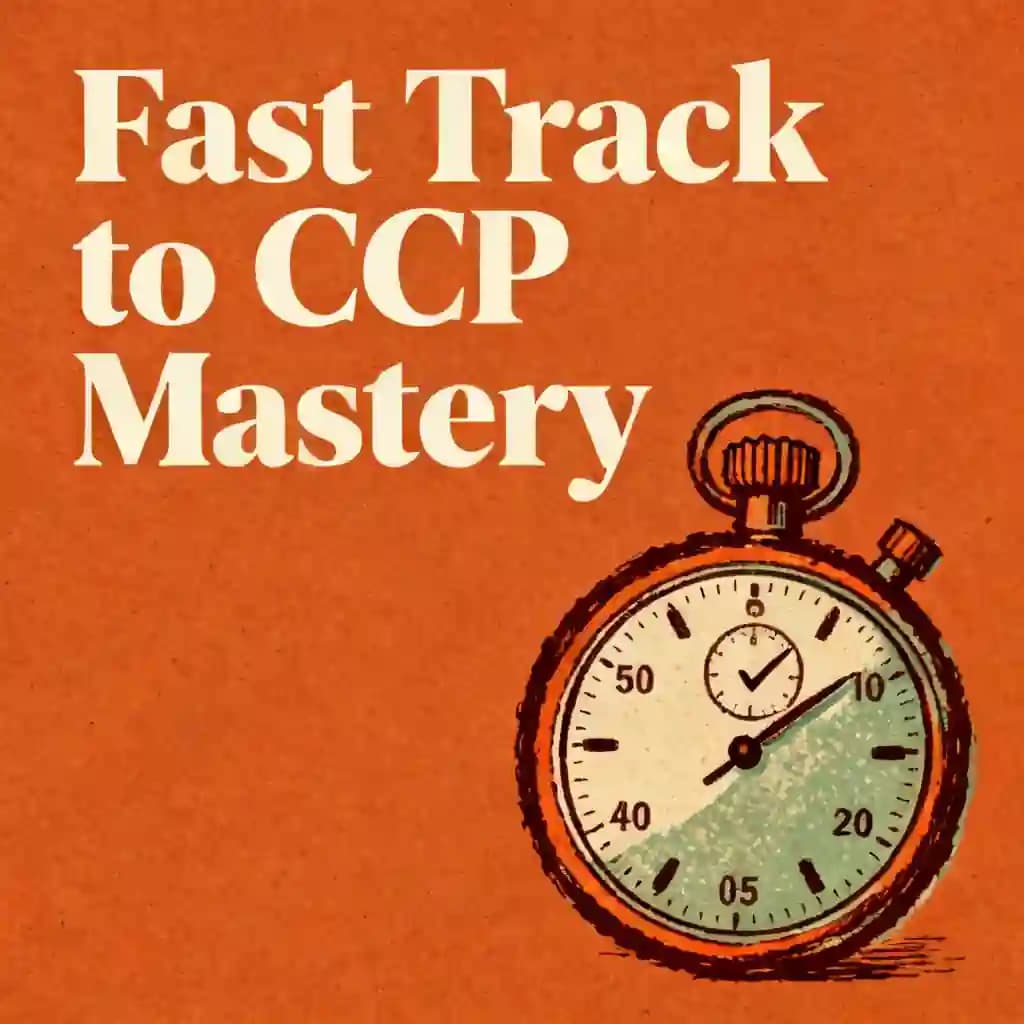
Mejor cita de The Fast Track to CCP Certification Success
The CCP certification turns you into a strategic business partner who understands the numbers just as well as anyone else at the table. It’s about moving from being a specialist to being a leader who can translate technical compensation data into a compelling narrative for executive leadership.
Generated by Rudy
Can you create a program so I can study and pass the compensation certification by world at work?

Preguntas frecuentes
The CCP credential is highly valued in the industry, with 90% of hiring managers preferring candidates who hold it. Beyond the prestige, the certification provides a comprehensive strategic framework for compensation, moving HR professionals from "people persons" to strategic business partners. Statistically, professionals with this certification can see up to a 3x pay boost compared to those with other HR credentials, opening doors to specialized roles in executive compensation, sales compensation, and high-level leadership.
The program was recently updated to be more efficient, reducing the required number of exams from ten down to eight. WorldatWork recommends a specific "North Star" path starting with "Creating Impact Through Total Rewards" to establish a foundational lens for the other modules. This is typically followed by the "Regulatory Landscape" to understand legal risks. From there, students move into the "meat" of the program—Base Pay, Market Pricing, and Variable Pay—before tackling the data-heavy modules like Accounting, Finance, and Analytics. The journey concludes with Business Acumen and Communication to help professionals link their technical plans to organizational outcomes.
To complete the certification within a twelve-month timeframe, a "one exam per month" goal is recommended. This schedule requires approximately 15 to 20 hours of total study time per module, which breaks down to about 5 hours of focused study per week. Successful students often achieve this by dedicating one hour a day for four days a week or committing to a single three-hour session on a weekend. It is also advised to "sandwich" the difficult math-based exams between more conceptual modules to maintain momentum and prevent burnout.
The most critical resource is the official course book, as exam questions are often pulled almost word-for-word from the text. While virtual classes and e-learning videos are helpful, they should not replace a thorough reading of the book. Candidates should utilize the practice quizzes within the e-learning modules to identify weak areas; scoring around 79% on these is a strong indicator of readiness since the passing score for the actual exam is 75%. For the quantitative modules, having a basic working knowledge of Excel is vital for practicing formulas, compa-ratios, and regression analysis.
Creado por exalumnos de la Universidad de Columbia en San Francisco
"Instead of endless scrolling, I just hit play on BeFreed. It saves me so much time."


"I never knew where to start with nonfiction—BeFreed’s book lists turned into podcasts gave me a clear path."


"Perfect balance between learning and entertainment. Finished ‘Thinking, Fast and Slow’ on my commute this week."
"Crazy how much I learned while walking the dog. BeFreed = small habits → big gains."
"Reading used to feel like a chore. Now it’s just part of my lifestyle."

"Feels effortless compared to reading. I’ve finished 6 books this month already."
"BeFreed turned my guilty doomscrolling into something that feels productive and inspiring."

"BeFreed turned my commute into learning time. 20-min podcasts are perfect for finishing books I never had time for."
"BeFreed replaced my podcast queue. Imagine Spotify for books — that’s it. 🙌"

"It is great for me to learn something from the book without reading it."
"The themed book list podcasts help me connect ideas across authors—like a guided audio journey."
"Makes me feel smarter every time before going to work"
 Ask ChatGPT
 Ask Claude
Creado por exalumnos de la Universidad de Columbia en San Francisco
"Instead of endless scrolling, I just hit play on BeFreed. It saves me so much time."
"I never knew where to start with nonfiction—BeFreed’s book lists turned into podcasts gave me a clear path."
"Perfect balance between learning and entertainment. Finished ‘Thinking, Fast and Slow’ on my commute this week."
"Crazy how much I learned while walking the dog. BeFreed = small habits → big gains."
"Reading used to feel like a chore. Now it’s just part of my lifestyle."
"Feels effortless compared to reading. I’ve finished 6 books this month already."
"BeFreed turned my guilty doomscrolling into something that feels productive and inspiring."
"BeFreed turned my commute into learning time. 20-min podcasts are perfect for finishing books I never had time for."
"BeFreed replaced my podcast queue. Imagine Spotify for books — that’s it. 🙌"
"It is great for me to learn something from the book without reading it."
"The themed book list podcasts help me connect ideas across authors—like a guided audio journey."
"Makes me feel smarter every time before going to work"
"Instead of endless scrolling, I just hit play on BeFreed. It saves me so much time."
"I never knew where to start with nonfiction—BeFreed’s book lists turned into podcasts gave me a clear path."
"Perfect balance between learning and entertainment. Finished ‘Thinking, Fast and Slow’ on my commute this week."
"Crazy how much I learned while walking the dog. BeFreed = small habits → big gains."
"Reading used to feel like a chore. Now it’s just part of my lifestyle."
"Feels effortless compared to reading. I’ve finished 6 books this month already."
"BeFreed turned my guilty doomscrolling into something that feels productive and inspiring."
"BeFreed turned my commute into learning time. 20-min podcasts are perfect for finishing books I never had time for."
"BeFreed replaced my podcast queue. Imagine Spotify for books — that’s it. 🙌"
"It is great for me to learn something from the book without reading it."
"The themed book list podcasts help me connect ideas across authors—like a guided audio journey."
"Makes me feel smarter every time before going to work"
"Instead of endless scrolling, I just hit play on BeFreed. It saves me so much time."
"I never knew where to start with nonfiction—BeFreed’s book lists turned into podcasts gave me a clear path."
"Perfect balance between learning and entertainment. Finished ‘Thinking, Fast and Slow’ on my commute this week."
"Crazy how much I learned while walking the dog. BeFreed = small habits → big gains."
"Reading used to feel like a chore. Now it’s just part of my lifestyle."
"Feels effortless compared to reading. I’ve finished 6 books this month already."
"BeFreed turned my guilty doomscrolling into something that feels productive and inspiring."
"BeFreed turned my commute into learning time. 20-min podcasts are perfect for finishing books I never had time for."
"BeFreed replaced my podcast queue. Imagine Spotify for books — that’s it. 🙌"
"It is great for me to learn something from the book without reading it."
"The themed book list podcasts help me connect ideas across authors—like a guided audio journey."
"Makes me feel smarter every time before going to work"