Explore the Book of Job's origins, its unique play-like structure, and its history within the Hebrew Bible. Discover if this ancient story was adopted or original.

The Book of Job is not about finding a rational answer to suffering; it is about moving from a 'hearsay' relationship with the divine to a direct encounter that allows for faith within mystery.
A person on Job. I want some interesting takes on his story and also the history of the book. It sounds like a play. Was it Hebrew or adopted by Hebrew’s.

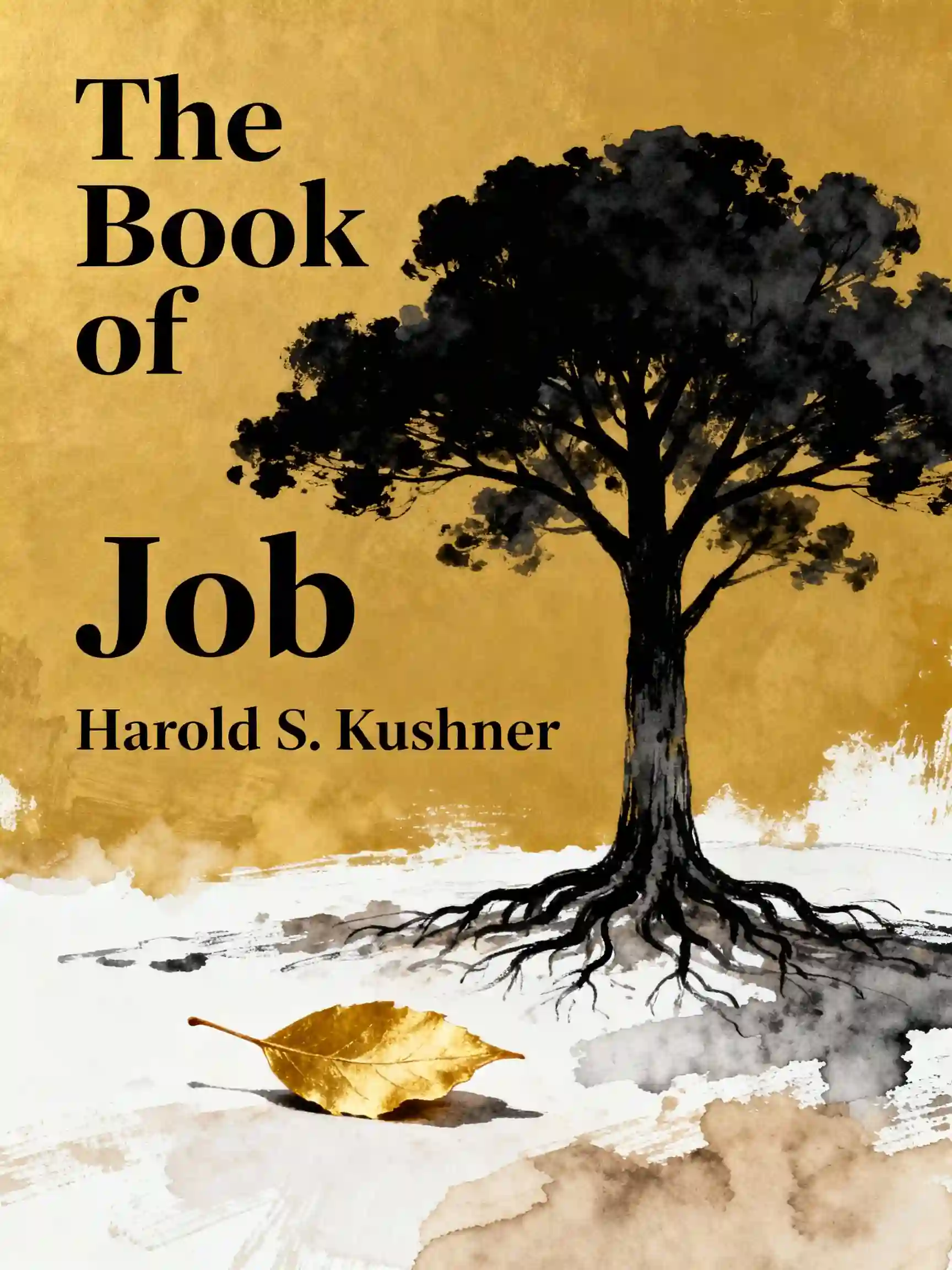
Creado por exalumnos de la Universidad de Columbia en San Francisco
"Instead of endless scrolling, I just hit play on BeFreed. It saves me so much time."
"I never knew where to start with nonfiction—BeFreed’s book lists turned into podcasts gave me a clear path."
"Perfect balance between learning and entertainment. Finished ‘Thinking, Fast and Slow’ on my commute this week."
"Crazy how much I learned while walking the dog. BeFreed = small habits → big gains."
"Reading used to feel like a chore. Now it’s just part of my lifestyle."
"Feels effortless compared to reading. I’ve finished 6 books this month already."
"BeFreed turned my guilty doomscrolling into something that feels productive and inspiring."
"BeFreed turned my commute into learning time. 20-min podcasts are perfect for finishing books I never had time for."
"BeFreed replaced my podcast queue. Imagine Spotify for books — that’s it. 🙌"
"It is great for me to learn something from the book without reading it."
"The themed book list podcasts help me connect ideas across authors—like a guided audio journey."
"Makes me feel smarter every time before going to work"
Creado por exalumnos de la Universidad de Columbia en San Francisco

Jackson: I was looking at the Book of Job recently, and something hit me—why is the hero of one of the most famous books in the Hebrew Bible not actually an Israelite? He’s from the land of Uz, which scholars often link to Edom.
Lena: It’s a great question, right? It’s one of the biggest mysteries. Even though it’s a masterpiece of Hebrew scripture, the story is actually built around an ancient legend that originated outside of Israel.
Jackson: So, was it just adopted by them? Because the structure feels less like a typical history and more like a stage play.
Lena: Exactly. It’s essentially an ancient drama meant to be reenacted. You have this prose prologue and epilogue framing a massive poetic center where characters deliver these long, intense monologues. It’s a philosophical thought experiment about why the innocent suffer.
Jackson: So let’s dive into how this "play" actually sets the stage with a cosmic wager.
Jackson: So, if we are looking at this as a play—a literal drama—the first scene is almost surreal. We have this assembly of divine beings, and God essentially starts bragging about Job. It feels like a setup from the very beginning.
Lena: It totally is. And notice who is there in the heavenly council—it is *ha-satan*, the accuser. But here is the thing—in the context of the Book of Job, this isn’t the independent, embodiment of evil we see in later traditions. This is more of a divine official. He is like a cosmic prosecutor or a royal court official whose job is to roam the Earth and sniff out trouble.
Jackson: That is a huge distinction. So he is not God’s enemy here? He is more like a quality control inspector?
Lena: Precisely. And he challenges the very nature of Job’s piety. He asks a stinging question: "Does Job fear God for nothing?" It is a challenge to the idea of disinterested righteousness. The accuser is basically saying that Job is only "good" because God has built a hedge around him—protecting his health, his ten children, and his massive wealth.
Jackson: So the wager is essentially: "If you take away the perks, will the piety vanish?"
Lena: Exactly. And God gives permission for the test to proceed. It is fascinating because it reframes the entire concept of suffering. From the reader's perspective—or the audience's, if we are watching this play—we know there is a heavenly reason for what is happening. But Job? Job is completely in the dark. He is sitting on a heap of ashes, scraping his sores with a potsherd, totally unaware of the conversation that happened in the divine court.
Jackson: And that is where the "theodicy" comes in, right? The question of how a benevolent God can permit this kind of agony.
Lena: Right. Some scholars, like J. William Whedbee, have actually analyzed this through the lens of comedy—not because it is funny, but because it follows a specific literary arc. You have a status quo, a descent into tragedy, and then a restoration. It highlights the ironies and incongruities of human life. But while we see the irony, the characters in the middle of the "play" are struggling with what feels like a moral arithmetic that has suddenly stopped working.
Jackson: It is like the "mechanistic" view of traditional wisdom—where if you do good, you get good—is being dismantled in real time.
Lena: Absolutely. And it is not just Job who is being tested—it is the theological system itself. The prose frame of the book shows us a Job who is remarkably patient. He says, "Shall we receive good from God and not receive evil?" He is the model of endurance. But then, as soon as the poetic dialogue starts in chapter three, that "Patient Job" disappears and "Rebel Job" takes the stage.
Jackson: That shift is so jarring. It is like the mask slips, and suddenly we are hearing the raw, unfiltered voice of someone who feels betrayed by the universe.
Lena: You hit the nail on the head. That tension between the patient hero of the prose and the indignant sufferer of the poetry is exactly why many scholars think the book was composed in layers over a long period. They see an outer prose narrative that might be an ancient folktale, which was then "interrupted" by an Israelite author who inserted this massive, complex poetic debate.
Jackson: So the Hebrew author took an existing "outsider" story and used it as a skeleton to build this deep, philosophical interrogation?
Lena: That is a very popular theory. It allowed them to explore the most difficult questions of faith through a character who wasn't tied to Israel's national history—no temple, no covenant law, no kings. It makes the question of suffering universal. It is not about "why did this happen to an Israelite?" but "why does this happen to a human being?"
Jackson: It makes me wonder about the timing of all this. If they were adopting and reshaping this story, when was this actually happening? Because the world Job lives in feels like the time of the patriarchs—the time of Abraham—but the questions he is asking feel much later.
Lena: You’ve hit on one of the biggest debates in biblical studies. The setting is definitely "patriarchal-style"—the way Job acts as a priest for his family, the way his wealth is measured in livestock—it all points to a very ancient period. But the language? The Hebrew used in the poetic sections is incredibly sophisticated, full of rare vocabulary and foreign loanwords.
Jackson: So it is like a modern writer setting a play in the Middle Ages but using the philosophical language of the twenty-first century?
Lena: That is a perfect analogy. While some traditions used to think Moses wrote it, or even Solomon, most modern scholars place the final composition much later—somewhere between the seventh and fourth centuries BC. Many specifically point to the Babylonian exile as the most likely "cradle" for this text.
Jackson: Because that was a time when the whole nation had lost everything—their land, their temple, their status as "blessed." They were all sitting on the ash heap together.
Lena: Exactly. If you are an exile in Babylon, the story of a man who was once the "greatest of all the people of the East" and suddenly finds himself destitute and diseased—that isn't just a story. It’s a mirror. It’s a way to process a national trauma that destroyed their traditional understanding of how God works in the world.
Jackson: So the "play" is a way of saying, "The old rules of retribution don't seem to apply anymore. How do we move forward from here?"
Lena: Right. It is a transition from a fragile theological system to one that can survive—and even find wisdom in—disorder.
Jackson: I want to go back to this idea of Job being an "outsider." If the story is set in Uz, and he is likely an Edomite, what does that tell us about the relationship between the ancient Israelites and their neighbors? I mean, we usually think of them as strictly separate, but this suggests a lot of cultural sharing.
Lena: It’s a fascinating area of research. We often think of "Israelite" as this very fixed, indigenous category within Canaan, but recent scholarly work—and even the biblical narrative itself—suggests a much more complex "mixed multitude" of origins. There is this whole debate about whether the Israelites were truly indigenous to Canaan or if they were an immigrant population that brought different genetic and cultural threads into the region.
Jackson: I was reading about some of the archeogenetic studies recently. There is this research by Johan Bauke Oosthuizen and others that suggests a significant influx of what they call "Steppe-like" ancestry into the Levant genome, peaking around 960 BC. That would be right during the time of the early monarchy.
Lena: That’s right. And it matches with other theories, like the "immigration of pastoralist nomads" model. It suggests that the people who became the Israelites weren't just one group. You had Shasu pastoralists, you had groups possibly coming from the Aegean like the Philistines, and you had these northern migrations. So, when we see the Book of Job featuring an Edomite hero, it reflects a world where these groups were constantly interacting, trading stories, and sharing a common cultural milieu.
Jackson: So, Job isn't just a random choice. He represents a shared wisdom tradition that existed across the whole "Fertile Crescent."
Lena: Absolutely. In fact, literature featuring a "pious sufferer" predates the Book of Job by centuries. We have Babylonian texts like *Ludlul Bel Nemeqi*—which literally means "Let us praise the god of wisdom"—dating as far back as 1300 BC. There is also the "Babylonian Theodicy" from around 1000 BC. These are Mesopotamian "scripts" that wrestle with the exact same problem: why do bad things happen to good people?
Jackson: So the Hebrew author wasn't inventing a new genre; they were joining a very old, very sophisticated conversation.
Lena: Exactly. They were taking these "Menippean" aggregations of genres—history, philosophy, drama, lyric—and weaving them into something uniquely theirs. It is interesting to look at the name "Job" itself. It has been found in pre-Israelite texts from Syria and Palestine dating all the way back to the nineteenth century BC. It wasn't a common Israelite name at all.
Jackson: It’s like using a legendary figure—like King Arthur—to tell a story about modern politics. You use the ancient, foreign name to give the story a sense of weight and universal authority.
Lena: You've hit the nail on the head. And by making Job a non-Israelite, the author avoids all the specific national baggage. They don't have to explain why the Temple rituals didn't save him, or why the Law of Moses wasn't enough. They can look at the "bare human" before the Creator.
Jackson: It also explains why the Book of Job is so different from, say, the Book of Kings. It’s not interested in the succession of rulers or the borders of the kingdom. It is interested in the "landscape of the soul."
Lena: Which is why the setting in the land of Uz is so effective. It is a "marginal" space. Scholars like Walter Reed point out that the discourse of justice in Job is ironically reinstated at the margins of biblical awareness. It is a story about individuals rather than ethnic groups. It’s about a providential relationship that exists outside the national covenant.
Jackson: That makes me think about the genetic studies again. If the early Israelites were this "mixed multitude," as some scholars like Ann Killebrew suggest—formed from indigenous tribal groups and external influxes—then their literature would naturally reflect that "poly-generic" or many-voiced quality.
Lena: Precisely. The archaeology shows this remarkable continuity in material culture between what we call "Canaanite" and "Israelite" in the early Iron Age. Often, the only way we can distinguish them in the record is by subtle differences in socioeconomic or environmental lifestyle, rather than a massive, sudden change in ethnicity. The Book of Job is like the literary version of that. It uses a "Canaanite" or "Edomite" setting but fills it with an evolving monotheistic theology.
Jackson: It’s a "hybrid" work. It’s Hebrew in its current form, but its DNA is much older and broader.
Lena: And that DNA includes these Mesopotamian motifs. Some researchers even argue that the prose frame of Job preserves motifs from the Akkadian tale *The Poor Man of Nippur*. In the *Testament of Job*—which is a later, non-canonical version of the story—Satan even appears in disguises that mirror the disguises used in those ancient Akkadian stories.
Jackson: So we are looking at a story that has been "retold" and "remixed" for over a thousand years.
Lena: At least. It’s a process of "inner-biblical exegesis." Later authors take these older stories and reshape them to meet the needs of their current community—whether that’s a community in exile in Babylon or a group of sages in post-exilic Jerusalem trying to make sense of a world where the old "mechanistic" blessings didn't seem to be returning.
Jackson: It’s almost as if the book itself is "anti-fragile"—to borrow a term from Nassim Nicholas Taleb. It’s a system that actually gains strength and depth from the disorder and suffering it describes.
Lena: That is a brilliant way to put it. The more the traditional explanations fail, the deeper the book has to dig into the mystery of God. It forces the reader—and the characters—to move beyond a "hearsay" relationship with the divine to a direct encounter.
Jackson: I want to look at the actual structure of this "play" because it is so deliberate. If you look at the middle section—the poetic debate—it’s not just a random argument. It is organized into three very specific cycles, right?
Lena: Exactly. It is a masterclass in chiastic symmetry—a literary structure where the themes are mirrored or "crossed" around a central point. You have the prose prologue at the start, matched by the prose epilogue at the end. Then you have Job’s opening curse matched by his final intercession. And right in the very center—chapter twenty-eight—is this pivotal poem on the inaccessibility of wisdom.
Jackson: So the "center" of the play isn't a solution. It is a poem saying that humans don't actually know where wisdom comes from.
Lena: Right! It says that true wisdom is "hidden from the eyes of every living thing." It completely undercuts the confidence of the three friends who think they have the answers. And the way the dialogue is staged is so theatrical. You have Job’s initial speech, and then each of the three friends—Eliphaz, Bildad, and Zophar—take turns speaking, and Job responds to each one.
Jackson: It’s like a courtroom drama.
Lena: It really is. In fact, John Kuriakose has argued that the Book of Job follows the structural frame of Athenian judicial rhetoric—the kind Aristotle described. It’s a "Greco-Hebrew Rhetorical Drama." You have the hero presenting his legal defense of his innocence, calling for a "hearing" before God, while the friends act as the self-appointed judges or witnesses for the prosecution.
Jackson: And the personalities of the friends are so distinct. It is not just one "voice" arguing with Job.
Lena: No, they represent different schools of thought. Eliphaz is the "mystic"—he talks about visions and spirits in the night. Bildad is the "traditionalist"—he constantly appeals to the authority of the ancestors. And Zophar is the "dogmatist"—he is the most impatient and glib, basically telling Job that his punishment is probably even *less* than what he actually deserves.
Jackson: Wow. With friends like that, who needs *ha-satan*?
Lena: Exactly! And then, after three rounds of this, when you think the argument is exhausted, a fourth character—Elihu—bursts onto the scene. He is younger, he is angry, and he is not mentioned in the prologue or the epilogue, which has led many scholars to believe his speeches were a later addition to the "play."
Jackson: He’s like the character who wasn't in the original script but was added in a later "rewrite" to bridge the gap between the friends and God.
Lena: That’s a very common view. He criticizes Job for being self-righteous, but he also criticizes the friends for failing to provide a real answer. He tries to uphold God’s justice by emphasizing God’s greatness. But even his four long speeches don't really solve the problem. They just crank up the dramatic tension before the final "climax."
Jackson: And the climax is the "theophany"—God appearing out of a whirlwind. If this is a play, that is the ultimate special effect.
Lena: It’s the *deus ex machina*, but with a twist. Usually, that device is used to untie the plot and give everyone a happy ending. But when God shows up, He doesn't answer any of Job’s questions. He doesn't even mention the wager with Satan. Instead, He just starts asking Job unanswerable questions about the universe. "Where were you when I laid the foundation of the earth?"
Jackson: It’s like He is saying, "You are trying to understand a cosmic-sized problem with a human-sized brain."
Lena: Right. It’s about perspective. God takes Job on this "virtual tour" of creation—from the stars to the depths of the sea, and then He spends a huge amount of time describing these two terrifying beasts: Behemoth and Leviathan.
Jackson: I’ve always found that part so strange. Why spend so much time on a giant hippo and a sea monster?
Lena: It’s a dramatic triumph! These creatures represent the untameable, chaotic forces of nature that are still under God’s ultimate control. It shifts the discussion from moral arithmetic—"I did X, so I deserve Y"—to cosmic mystery. It’s not about finding a rational answer; it’s about having a direct encounter with the Infinite.
Jackson: And that encounter is what finally silences Job. He says, "I have heard of You by the hearing of the ear, but now my eye sees You." He doesn't get an explanation, but he gets a "vision."
Lena: And that vision is what allows him to "repent"—or as the Hebrew word *nacham* can also mean, to "relent" or "change his mind." He moves from being a rebel to someone who can live with the mystery. It’s a transition from a "desire-in-pieces"—to use a psychological term—to a unified sense of self that can withstand suffering.
Jackson: And then we get the epilogue. The "happy ending" where everything is restored twofold. For a lot of modern readers, that feels a bit... well, cheap. Like a "conventionally monologic" ending, as some critics call it.
Lena: It’s definitely controversial. Some scholars think the epilogue is part of the original ancient folktale that the author had to keep to satisfy the audience’s need for justice. But others, like Walter Reed, see it as a "final turn of the screw." It suggests that God is so free He can follow the traditional rules of retribution or break them at will. He is not bound by our expectations of "fairness," but He isn't bound *not* to be fair, either.
Jackson: So the "play" doesn't end with a formula. It ends with the idea that the story is always bigger and more mysterious than we can see from our seat in the audience.
Jackson: We’ve talked about the "play" structure, but I’m curious about the internal world of the characters. Some of the source material you mentioned looks at this through a psychological lens—even a Lacanian one. What does that add to our understanding of Job’s suffering?
Lena: It’s a really deep dive into the "anguish of interminable desire." From a psychological perspective, Job’s world at the beginning is one of "primordial identifications." He has this perfectly structured, "blessed" life where everything matches his expectations. He sees himself reflected in his prosperity and his children. It’s what psychologists might call a "mirroring" phase where everything is synchronous and stable.
Jackson: And then the "accuser" comes along and smashes the mirror.
Lena: Exactly. The loss of his children and his property isn't just a physical loss; it’s a fragmentation of his very identity. He is left with what Andre Green calls the "work of the negative." He is sitting on that ash heap, and his own body has become an "alienating object" covered in sores. His wife’s reaction—"Curse God and die"—is almost a push toward "self-immolation" or the complete relinquishing of the "body-envelope" image.
Jackson: That is intense. So his struggle with his friends is really a struggle to "re-bind" his broken identity?
Lena: Precisely. The friends represent the "symbolic order"—the societal rules and theological systems that are supposed to make sense of the world. But their words don't "answer the subject's demand for love," as Lacan might put it. Instead, they offer "pedantic" explanations that only increase his "sea of anguish." They are trying to force him back into a "mechanistic" box that no longer fits his reality.
Jackson: So when Job is "arguing" with them, he’s not just debating theology; he’s fighting for his psychological survival?
Lena: Right. He is in a "psychic retreat." He is using his speeches to "empty himself" of his old, hearsay-based faith so he can find a new way to represent himself. This is where the idea of the "hidden subject" comes in. The book isn't just about Job or God; it’s about the emergence of a "believing subject" who can stand in a relationship with the divine that isn't based on "moral arithmetic."
Jackson: That makes the "God in the whirlwind" part even more interesting. If Job is looking for a mirroring response—for God to say "Yes, Job, you are right, you are innocent"—and instead God shows him Behemoth... how does that help him psychologically?
Lena: It forces him to "absent himself from his semantic chains." It shifts his gaze away from his own suffering—his own "ego"—and toward the "Other." By seeing the vastness and the "absurdity" of creation, Job is able to find a "transitional space." He realizes that his personal problems are "ignored" in the grand cosmic scheme, but strangely, that is where he finds his answer.
Jackson: It’s like the "relief of the infinite." If the universe is that big and that mysterious, then maybe my suffering doesn't have to have a simple, "punishment-based" reason.
Lena: Exactly! It breaks the "mechanistic" trap. It allows him to move from a "paranoiac knowledge" where he thinks God is out to get him, to a state of "wonder." He can "recognize his desire as being the desire of the Other." He finds a new relationship with God that is based on "personal faith" rather than "traditional rules."
Jackson: And that would explain why the *Testament of Job*—that later version—emphasizes his "endurance" so much. It’s about the "patience" of someone who has integrated the trauma and come out the other side.
Lena: Right. In that version, Job is even more of an "iconoclast"—someone who destroys idols. Psychologically, you could see that as him destroying the "idols" of his own limited understanding of God. He is "rectifying" his suffering through a model of "transgenerational healing."
Jackson: I noticed one of the sources mentions a "Benjaminite hypothesis" for the authorship of Job—tracing it to the historical and spiritual journey of the Tribe of Benjamin. How does that fit in?
Lena: It’s a fascinating take. The Tribe of Benjamin had a history of intense suffering and then restoration. The theory suggests that the "narrative architecture" of Job reflects their specific journey—this pattern of "transgenerational healing" and "restorative justice." It positions the book as a "cornerstone of restorative theology."
Jackson: So the "play" isn't just a universal story; it might be a very specific "national myth" of healing for a group that had been through the wringer.
Lena: It could be both. The beauty of Job is that it is "poly-generic"—it incorporates all these different voices and layers. Whether it’s an ancient Edomite legend, a Benjaminite reflection on trauma, or an exilic response to the Babylonian conquest, it all comes together in this one "textually vexed" masterpiece.
Jackson: It’s a "compendium of unresolved problems" that somehow provides the most profound resolution in all of literature.
Lena: Because it doesn't offer an explanation. It offers an "encounter." And for someone who has lost everything—like the people in the Babylonian exile—that is the only thing that actually carries weight. An explanation is just words. An encounter is a "transformation."
Jackson: We've touched on the idea that the Israelites were a "mixed multitude," and how that might explain the diverse cultural threads in Job. But if we look at the history of the book's composition, how do we reconcile the ancient "patriarchal" setting with the later "exilic" theology? Is it just a long process of editing, or is there something else going on?
Lena: Well, you have these competing theories of Israel's origins. Some scholars, like Israel Finkelstein, argue for an indigenous Canaanite origin, while others point to these sudden influxes of external populations. For example, some genetic research identifies a significant migration of people with "Steppe-like" ancestry into the Levant peaking around 960 BC. If that's the case, then the "Israelite" identity was being formed and re-formed through constant admixture with local groups like the Canaanites and the Edomites.
Jackson: So the "Uz" setting might reflect a time when those ethnic boundaries were much more fluid?
Lena: Exactly. In the early Iron Age—around 1200 to 1000 BC—archaeologists find it very difficult to distinguish between "early Israelite" and "Canaanite" sites. They lived in similar villages in the hill country, they used similar pottery. The "Israelite" ethnicity was likely something that was "remembered and forgotten" over time, as Elizabeth Bloch-Smith puts it.
Jackson: So, the "story" of Job might have been part of that "remembered" cultural heritage—an ancient tale that was preserved by these pastoralist groups as they moved through the region.
Lena: Right. And then, much later—during the Babylonian Exile in the sixth century BC—a "skilled poet and theologian," as Pastor Jason Elder describes the author, took that ancient heritage and "shaped it into a sophisticated dialogue." This explains why the Hebrew is so complex and why the book includes "archaic and later elements." It’s a deliberate use of "archaism" to give the story a sense of timeless authority.
Jackson: It’s like how we use "old-fashioned" language in a ceremony today to make it feel more "sacred."
Lena: Precisely. The author is "interrogating the assumptions behind conventional wisdom" using a character from a "pre-national" past. And this "interrogation" was incredibly urgent during the Exile. Traditional explanations for suffering—like the idea that God always protects the Temple or the Davidic line—had been "profoundly challenged by national catastrophe."
Jackson: So Job becomes the "everyman" for a people who have had their worldview "dismantled."
Lena: And this process of "dismantling" is reflected in the text's own history. Many scholars think the speeches of Elihu were a "later addition," reflecting an "ongoing interpretive engagement" with the book's theology. It’s like the book was a living document that a community kept adding to as they grappled with new layers of suffering.
Jackson: It’s a "self-consciously dialogical reflection" on a literature that was in danger of becoming "monologic," as Walter Reed says. It critiques the "generic paradigms of law, prophecy, and wisdom" by showing their limits.
Lena: That’s a powerful way to see it. It’s not just a book *about* wisdom; it’s a book that "critiques" the very idea of traditional, practical wisdom. It exposes the "limits of theological systems that attempt to explain pain too quickly."
Jackson: And that explains why the "date of writing" is so hard to pin down. It’s not one "date"; it’s a "long period of development."
Lena: Exactly. It spans from the ancient "patriarchal" world of the Shasu pastoralists to the "mature literary environment" of post-exilic Jerusalem. This "composition history" is what gives the book its "enduring authority." It’s not about a named author or a specific historical event; it’s about a "sustained reflection on suffering that unfolds across generations."
Jackson: It’s interesting to think about how this "outsider" story became so central to the Hebrew Bible. It’s like the Israelites realized that to understand their own relationship with God, they had to look beyond their own borders—to the "land of Uz."
Lena: Right. It’s a "Greco-Hebrew rhetorical drama" that uses the "structural frame of Athenian judicial rhetoric" to explore the "Hebrew concept of divine justice." It’s a "hybrid" that belongs to the whole world.
Jackson: And it has resonated down through the millenniums. From the Babylonian "pious sufferer" to the "Patient Job" of Christian tradition, to the "Rebel Job" of modern secular scholars.
Lena: It’s a "wellspring of artistic creativity," as the *Britannica* article says. Whether it’s William Blake’s engravings, Handel’s *Messiah*, or the Coen Brothers’ *A Serious Man*, the "image of the righteous sufferer" continues to be a "potent site for theological and ethical debate."
Jackson: Because the question it asks—"why?"—never goes away.
Lena: And the book's "refusal to offer easy explanations" is exactly why it remains so relevant. It "invites readers into moral and theological imagination" rather than giving them a "doctrinal treatise." It teaches us that "faithfulness can include lament, protest, and unknowing."
Jackson: We've been looking at the "how" and the "when" of Job, but I think it's important to address the "Higher Criticism" of it all. For a long time, there was this very skeptical approach that basically tried to "deconstruct" the Bible as just a collection of myths and borrowed stories.
Lena: You're talking about the "Documentary Hypothesis"—the JEDP theory that gained so much ground in the nineteenth century with scholars like Julius Wellhausen. They basically proposed that the Pentateuch—and by extension, books like Job—were "compiled from different sources" much later than the events they described, and that many of the stories were just "myths passed on orally" or "borrowed from pagan cultures."
Jackson: Right. And for a while, that was the dominant view. But it seems like archaeological and linguistic research has really challenged some of those "skeptical" assumptions in recent decades.
Lena: It has. For one thing, the idea that the Hebrews didn't have a written language until the monarchy was completely overturned by discoveries showing that writing was "highly regarded" in the Near East as far back as 3100 BC. And by 1500 BC—well before the time of the kings—there was already a distinct alphabet being used in Syria and Palestine.
Jackson: So the idea that these were just "oral legends" that weren't written down for a thousand years doesn't really hold up anymore.
Lena: Not at all. And then you have the discovery of the Dead Sea Scrolls, which provided massive support for the "Masoretic Text" and showed that there were "at least three different textual types" circulating at the time of Christ—not just one "fixed form" that was edited later, as Wellhausen thought.
Jackson: And what about the "borrowed from pagan culture" idea? I know we talked about the Babylonian "pious sufferer" stories. Does that mean the Israelites just copied them?
Lena: That’s where it gets interesting. While there are "striking parallels," scholars like Yehezkel Kaufmann argued that the Israelites had a "religion completely different from any other in the ancient world." They had an "indigenous monotheism" that wasn't just a slow "evolution" from primitive animism. The Genesis and Job accounts are actually much "simpler and more direct" than the elaborate, complex pagan myths, which usually suggests they were the "earlier" versions rather than later "embellishments."
Jackson: So the "Higher Critics" might have had it backwards? They thought the "simple" stories were the result of late "editing," but in the Near East, stories actually tend to get *more* complex as time goes by?
Lena: Exactly! And archaeological evidence has even "revealed the existence of Sodom and Gomorrah" and confirmed details about the "Hittites," who were once thought to be mythological. So the "historical reliability" of the setting is much stronger than the nineteenth-century critics believed.
Jackson: And how does that apply to Job? If the "Higher Criticism" was skeptical about its age and its Hebrew-ness, what do we know now?
Lena: Well, even though the "Graf-Wellhausen Documentary Hypothesis" is no longer accepted the way it once was, many scholars still see Job as a "hybrid" work. But instead of seeing it as a "ruse" or a "myth," they see it as a "theological response to trauma." The "refusal to accept easy answers" isn't a sign of late, "skeptical" editing; it's a sign of a "community grappling with unresolved suffering" in a very real, historical context.
Jackson: So the "anonymity" of the author isn't a weakness. It’s a deliberate choice to keep the focus on the "theological depth and enduring wisdom" rather than on a specific "named authority."
Lena: Right. And that wisdom is "anti-fragile." It doesn't break when the traditional explanations fail. It actually "gains from disorder." This is why Job is often grouped with Proverbs and Ecclesiastes as "Wisdom Literature," but it’s unique because it "interrogates the assumptions" of those other books.
Jackson: It’s the "critique" that keeps the whole system honest.
Lena: Absolutely. And that's why "recognizing when Job was written"—or at least the *context* in which it was finalized—allows us to appreciate its "courage." It was written for a people who had seen their "world reduced to wreckage," and it gave them a way to "return to wholeness" through the "struggle" itself.
Jackson: It’s not about finding a "doctrinal treatise" that solves the "puzzle of suffering." It’s about a "moral and theological imagination" that allows us to live with the "puzzle."
Lena: And that's a much more "actionable" takeaway for anyone listening who is going through their own "ash heap" moment. The book doesn't give you a "formula" to make the pain stop. It gives you a "script" for how to talk to God in the middle of it.
Jackson: It validates the "lament" and the "protest" as part of a "faithful" life.
Lena: Exactly. And it reminds us that "perspective" is everything. We might not see the "heavenly wager," but we can "trust the story" knowing that the Creator of Behemoth and the stars is still in the whirlwind.
Jackson: So, Lena, after all this deep diving into genetics, archaeology, and the structure of this cosmic "play," what do we actually *do* with the Book of Job? For our listeners who are maybe sitting on their own metaphorical "ash heap" today—how does this story change the way they live?
Lena: I think the first "actionable" takeaway is the validation of the "rebel." We spend so much time praising "Patient Job"—the guy who says "the Lord gives and the Lord takes away"—that we forget the middle 36 chapters where he is "anguished and indignant." He is "violently protesting." And the book tells us that is okay. Faith isn't just silence; it can be a "bold confidence" that calls God to a hearing.
Jackson: So, step one is "don't suppress the protest."
Lena: Exactly. Be honest about the "sea of anguish." Don't try to force yourself into a "mechanistic" explanation that doesn't fit your reality. If you are hurting, "theology-by-formula" from friends—even well-meaning ones—can actually be "pedantic" and "misguided."
Jackson: That's a great point. And that leads to the second takeaway: "be careful who you listen to." Job's friends represent "traditional explanations" that were "too quick to explain pain." Sometimes, the best thing a friend can do is just "sit shiva"—to be present in the silence without trying to "fix" the suffering with a glib answer.
Lena: Absolutely. In Jewish culture, that "sitting shiva" means you don't speak until the griever speaks. You are just there. And for the person suffering, it's about realizing that "wisdom is inaccessible" to human logic. You don't have to find the "reason" why this happened to find a way through it.
Jackson: So, step three would be "shift your perspective." Instead of looking for a "moral arithmetic" answer—"I did this wrong, so this happened"—try to look at the "Infinite."
Lena: Right. The "theophany" in the whirlwind teaches us that the story is always "bigger than we can see." It invites us into a "moral and theological imagination." It’s about "trusting the story" even when you don't have the "explanation." As the author of *Covered in His Dust* puts it, God can "mine wisdom from the hills of suffering" as easily as man mines minerals.
Jackson: And that leads to the idea of "anti-fragility." Suffering doesn't have to just "break" you. It can be the "trigger that helps you arrive at a new understanding." It can move your relationship with God from "hearsay" to "vision."
Lena: Yes! "I heard of You by the hearing of the ear, but now my eye sees You." That transition is the "transgenerational healing." It’s about "rectifying" the trauma by allowing it to "transform" you into a "believing subject" who is no longer bound by "people's expectations."
Jackson: And finally, remember that the "epilogue" isn't a promise that you'll get "double" your money back in this life. It’s a "symbolic restoration." It’s a way of saying that the "discourse of justice" is still honored, but it’s "no longer absolute." God is free, and in that freedom, there is hope for a "happy ending" that we might not yet understand.
Lena: It’s a "message of hope for the exiled." Whether that's exile from your home, your health, or your old sense of self. The "play" ends with a "new relationship" and a "liberated experience of faith."
Jackson: That is a powerful playbook. It’s not a "how-to" for avoiding suffering, but a "how-to" for *surviving* it and finding "wonder" on the other side.
Lena: Precisely. It’s about "shunning evil" and "fearing the Lord"—which the book tells us is the "beginning of wisdom." And that wisdom is a "mystery of joy and love," even when it’s wrapped in a "mystery of despair."
Jackson: This has been such a journey—from the "land of Uz" to the courts of Babylon, and through the "chiastic symmetry" of a cosmic drama. It’s clear that the Book of Job isn't just a book of the Bible; it’s a universal archetype for the human experience of pain.
Lena: It really is. It’s a "poly-generic" masterpiece that managed to "include itself within the canonical embrace" while simultaneously "critiquing the Hebrew Bible as a whole." It challenges us to look beyond our "national" or "ethnic" borders and find a "providential relationship" that exists at the "margins of our awareness."
Jackson: And whether it was written by a "Benjaminite" author reflecting on their tribe's restoration, or an "Exilic Prophet" speaking to a nation in ruins, its authority doesn't come from a "named author." It comes from its "honesty about the limits of human understanding."
Lena: That honesty is what makes it "endure down through the millenniums." It’s a "testament of Judeo-Christian faith" that uses the "structural frame of Athenian judicial rhetoric" to ask the most "heady and difficult" question of all: "Why?"
Jackson: And while it doesn't give us a "rational answer," it gives us a "direct encounter." It reminds us that "God understands the way to wisdom and He alone knows where it dwells."
Lena: As we wrap things up today, I want to encourage everyone listening to think about their own "whirlwind." What are the "idols" of understanding that you might need to "destroy"? Where can you find "wonder" in the middle of your "anxiety"?
Jackson: It’s a powerful challenge. Job's story tells us that we can be "righteous sufferers" and "rebels" at the same time, and that God is big enough to handle both.
Lena: Exactly. Thank you so much for joining us and diving into these "unresolved problems" with us today. It’s been a fascinating look at one of the most "textually vexed" but "profoundly beautiful" books ever written.
Jackson: We hope this gives you a new "perspective" on your own story. Take some time today to reflect on where you might be seeking "moral arithmetic" instead of "cosmic wonder." And remember—even in the middle of the storm, there is a "path to the thunderstorm" that God alone knows.
Lena: Thank you for listening. We'll leave you with that thought to carry with you. Be well, and keep seeking that "wisdom that comes from His divine perspective."