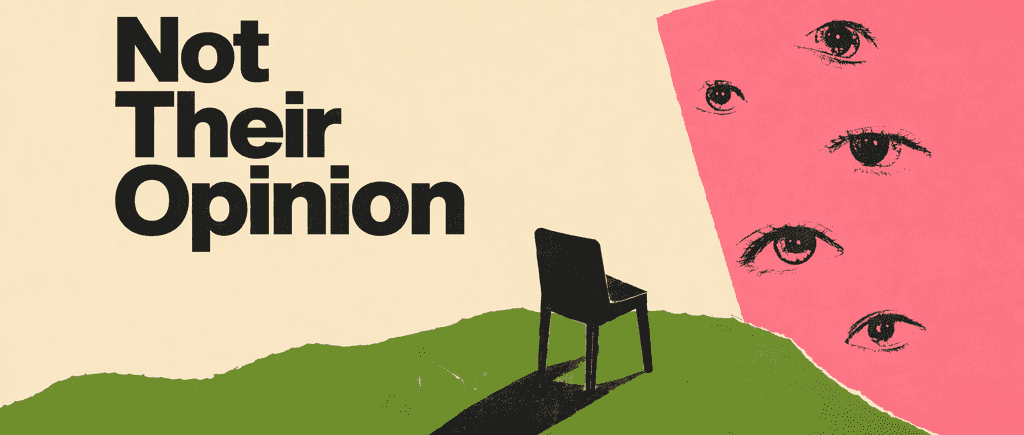
Stop caring what people think by rewiring your brain
Struggling with the spotlight effect? Learn why your brain treats social judgment like a threat and how to trade external approval for true authenticity.

Mejor cita de Stop caring what people think by rewiring your brain
Confidence isn't something you feel before you do the thing; it’s what you get after you do the thing and realize you survived. You’re retraining your nervous system to understand that social friction is not a survival threat.
Generated by Hobbes
Plan a lesson on how to stop caring so much about what other people think.

Preguntas frecuentes
The Spotlight Effect is a cognitive bias where individuals significantly overestimate how much others notice their appearance or mistakes. In the script, a study is cited where students wearing embarrassing T-shirts predicted that 50% of people would notice them, while in reality, only about 25% did. This "math error" contributes to social anxiety because we assume our internal feelings of embarrassment are transparent to everyone else, when most people are actually too focused on their own lives to notice our minor slips.
People-pleasing makes a person's identity "liquid," changing shape to fit the expectations of others to avoid disapproval. Shifting to values-based living provides an internal compass that remains steady regardless of external validation. By focusing on controllable values—such as honesty or kindness—rather than uncontrollable outcomes—like whether someone liked a comment—the brain recruits the logical prefrontal cortex instead of the threat-sensitive centers, reducing the stress of "outcome monitoring."
Since the brain acts as a prediction machine that treats social rejection as a physical survival threat, it needs new data to change its patterns. Behavioral experiments involve making a specific social prediction, such as "If I disagree, I will be exiled," and then intentionally testing it in a low-stakes setting. When the predicted disaster fails to happen, the brain receives a "prediction error" that provides actual evidence that social friction is not a life-threatening event, gradually building "rejection resilience."
Safety behaviors are habits used to lower short-term anxiety, such as over-editing text messages for twenty minutes or over-explaining a "no" to avoid guilt. While these actions provide immediate relief, they trap the individual in a loop by reinforcing the idea that imperfection is dangerous. The script suggests practicing "Response Prevention," which means setting a boundary or sending an imperfect message without the usual apologies or check-ins, proving to the nervous system that one can survive the discomfort of being authentic.
Contrary to the myth that being hard on oneself maintains an "edge," chronic self-criticism actually activates the brain's threat system, leading to higher stress and increased procrastination. Self-compassion activates the "caregiving and safety" systems, making an individual feel internally secure enough to take risks and learn from failure. By using tools like "Compassionate Reappraisal," people can shift from an identity-based "internal prosecutor" mindset to a growth-oriented mentor mindset that treats mistakes as constructive data points rather than life sentences.
Creado por exalumnos de la Universidad de Columbia en San Francisco
"Instead of endless scrolling, I just hit play on BeFreed. It saves me so much time."


"I never knew where to start with nonfiction—BeFreed’s book lists turned into podcasts gave me a clear path."


"Perfect balance between learning and entertainment. Finished ‘Thinking, Fast and Slow’ on my commute this week."
"Crazy how much I learned while walking the dog. BeFreed = small habits → big gains."
"Reading used to feel like a chore. Now it’s just part of my lifestyle."

"Feels effortless compared to reading. I’ve finished 6 books this month already."
"BeFreed turned my guilty doomscrolling into something that feels productive and inspiring."

"BeFreed turned my commute into learning time. 20-min podcasts are perfect for finishing books I never had time for."
"BeFreed replaced my podcast queue. Imagine Spotify for books — that’s it. 🙌"

"It is great for me to learn something from the book without reading it."
"The themed book list podcasts help me connect ideas across authors—like a guided audio journey."
"Makes me feel smarter every time before going to work"
 Ask ChatGPT
 Ask Claude
Creado por exalumnos de la Universidad de Columbia en San Francisco
"Instead of endless scrolling, I just hit play on BeFreed. It saves me so much time."
"I never knew where to start with nonfiction—BeFreed’s book lists turned into podcasts gave me a clear path."
"Perfect balance between learning and entertainment. Finished ‘Thinking, Fast and Slow’ on my commute this week."
"Crazy how much I learned while walking the dog. BeFreed = small habits → big gains."
"Reading used to feel like a chore. Now it’s just part of my lifestyle."
"Feels effortless compared to reading. I’ve finished 6 books this month already."
"BeFreed turned my guilty doomscrolling into something that feels productive and inspiring."
"BeFreed turned my commute into learning time. 20-min podcasts are perfect for finishing books I never had time for."
"BeFreed replaced my podcast queue. Imagine Spotify for books — that’s it. 🙌"
"It is great for me to learn something from the book without reading it."
"The themed book list podcasts help me connect ideas across authors—like a guided audio journey."
"Makes me feel smarter every time before going to work"
"Instead of endless scrolling, I just hit play on BeFreed. It saves me so much time."
"I never knew where to start with nonfiction—BeFreed’s book lists turned into podcasts gave me a clear path."
"Perfect balance between learning and entertainment. Finished ‘Thinking, Fast and Slow’ on my commute this week."
"Crazy how much I learned while walking the dog. BeFreed = small habits → big gains."
"Reading used to feel like a chore. Now it’s just part of my lifestyle."
"Feels effortless compared to reading. I’ve finished 6 books this month already."
"BeFreed turned my guilty doomscrolling into something that feels productive and inspiring."
"BeFreed turned my commute into learning time. 20-min podcasts are perfect for finishing books I never had time for."
"BeFreed replaced my podcast queue. Imagine Spotify for books — that’s it. 🙌"
"It is great for me to learn something from the book without reading it."
"The themed book list podcasts help me connect ideas across authors—like a guided audio journey."
"Makes me feel smarter every time before going to work"
"Instead of endless scrolling, I just hit play on BeFreed. It saves me so much time."
"I never knew where to start with nonfiction—BeFreed’s book lists turned into podcasts gave me a clear path."
"Perfect balance between learning and entertainment. Finished ‘Thinking, Fast and Slow’ on my commute this week."
"Crazy how much I learned while walking the dog. BeFreed = small habits → big gains."
"Reading used to feel like a chore. Now it’s just part of my lifestyle."
"Feels effortless compared to reading. I’ve finished 6 books this month already."
"BeFreed turned my guilty doomscrolling into something that feels productive and inspiring."
"BeFreed turned my commute into learning time. 20-min podcasts are perfect for finishing books I never had time for."
"BeFreed replaced my podcast queue. Imagine Spotify for books — that’s it. 🙌"
"It is great for me to learn something from the book without reading it."
"The themed book list podcasts help me connect ideas across authors—like a guided audio journey."
"Makes me feel smarter every time before going to work"