Never Split the Difference: Tactical Empathy
Logic often fails in high-stakes negotiations because humans are driven by emotion. Learn how to use mirroring and labeling to build trust and win.
Mejor cita de Never Split the Difference: Tactical Empathy
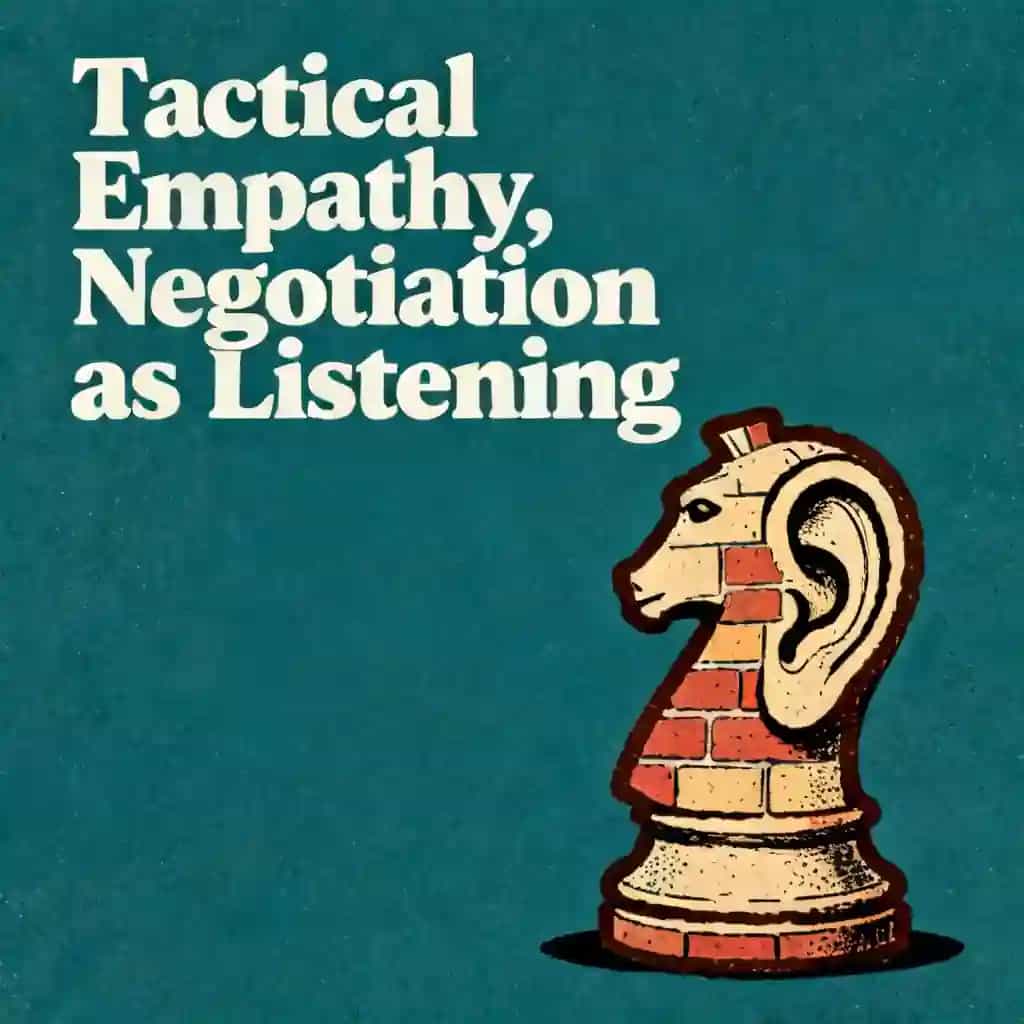
Tactical empathy is not about being nice or agreeing with the other person; it is the disciplined practice of recognizing their perspective and naming it out loud to influence the outcome.
Generated with BeFreed
An audio lesson about the book Never Split the Difference, covering its key ideas and takeaways.






Preguntas frecuentes
In critical situations, such as a hostage negotiation, finding a middle ground can lead to catastrophic results. For example, if a kidnapper has four hostages and wants a getaway car, a negotiator cannot "split the difference" by allowing the kidnapper to keep two hostages in exchange for the car. This logic-based approach fails because it ignores the fact that humans are fundamentally irrational and driven by emotions. In the real world, compromise often satisfies neither party and can result in a total failure of the objective.
Tactical empathy is the disciplined practice of recognizing and naming the other side’s perspective to influence the outcome of a conversation. It is not about sympathy, agreement, or adopting the other person's values. Instead, it is a strategic tool used to understand their worldview so deeply that their defenses drop. By showing that you understand their fears and motivations, you create the psychological safety necessary for them to move out of a defensive state and actually listen to your proposal.
The "late-night FM DJ voice" is a deep, soft, slow, and reassuring tone that communicates total control and calm. Using this voice is a physiological hack that helps move the other person's brain out of a "fight-or-flight" state and into a problem-solving state. It allows a negotiator to deliver difficult news or set firm boundaries without sparking a confrontation, making it a powerful tool for de-escalating tension.
When someone says "you're right," they are often being polite or trying to end the conversation without actually committing to anything. In contrast, "that's right" signals a true breakthrough because it indicates the person feels completely and accurately understood. Achieving this requires a summary of their feelings and obstacles that is so precise they feel a sense of alignment with you. Once they feel their reality has been acknowledged, they no longer feel the need to defend it and can focus on collaborative problem-solving.
Calibrated questions are open-ended inquiries, usually starting with "what" or "how," designed to give the counterpart an "illusion of control." Instead of making demands, which triggers resistance, you ask questions like "How am I supposed to do that?" This forces the other person to engage their analytical brain and solve your problem for you. These questions take the aggression out of the interaction and turn the counterpart into a partner who is helping to find a solution.
Creado por exalumnos de la Universidad de Columbia en San Francisco
"Instead of endless scrolling, I just hit play on BeFreed. It saves me so much time."


"I never knew where to start with nonfiction—BeFreed’s book lists turned into podcasts gave me a clear path."


"Perfect balance between learning and entertainment. Finished ‘Thinking, Fast and Slow’ on my commute this week."
"Crazy how much I learned while walking the dog. BeFreed = small habits → big gains."
"Reading used to feel like a chore. Now it’s just part of my lifestyle."

"Feels effortless compared to reading. I’ve finished 6 books this month already."
"BeFreed turned my guilty doomscrolling into something that feels productive and inspiring."

"BeFreed turned my commute into learning time. 20-min podcasts are perfect for finishing books I never had time for."
"BeFreed replaced my podcast queue. Imagine Spotify for books — that’s it. 🙌"

"It is great for me to learn something from the book without reading it."
"The themed book list podcasts help me connect ideas across authors—like a guided audio journey."
"Makes me feel smarter every time before going to work"
Creado por exalumnos de la Universidad de Columbia en San Francisco
"Instead of endless scrolling, I just hit play on BeFreed. It saves me so much time."
"I never knew where to start with nonfiction—BeFreed’s book lists turned into podcasts gave me a clear path."
"Perfect balance between learning and entertainment. Finished ‘Thinking, Fast and Slow’ on my commute this week."
"Crazy how much I learned while walking the dog. BeFreed = small habits → big gains."
"Reading used to feel like a chore. Now it’s just part of my lifestyle."
"Feels effortless compared to reading. I’ve finished 6 books this month already."
"BeFreed turned my guilty doomscrolling into something that feels productive and inspiring."
"BeFreed turned my commute into learning time. 20-min podcasts are perfect for finishing books I never had time for."
"BeFreed replaced my podcast queue. Imagine Spotify for books — that’s it. 🙌"
"It is great for me to learn something from the book without reading it."
"The themed book list podcasts help me connect ideas across authors—like a guided audio journey."
"Makes me feel smarter every time before going to work"
"Instead of endless scrolling, I just hit play on BeFreed. It saves me so much time."
"I never knew where to start with nonfiction—BeFreed’s book lists turned into podcasts gave me a clear path."
"Perfect balance between learning and entertainment. Finished ‘Thinking, Fast and Slow’ on my commute this week."
"Crazy how much I learned while walking the dog. BeFreed = small habits → big gains."
"Reading used to feel like a chore. Now it’s just part of my lifestyle."
"Feels effortless compared to reading. I’ve finished 6 books this month already."
"BeFreed turned my guilty doomscrolling into something that feels productive and inspiring."
"BeFreed turned my commute into learning time. 20-min podcasts are perfect for finishing books I never had time for."
"BeFreed replaced my podcast queue. Imagine Spotify for books — that’s it. 🙌"
"It is great for me to learn something from the book without reading it."
"The themed book list podcasts help me connect ideas across authors—like a guided audio journey."
"Makes me feel smarter every time before going to work"
"Instead of endless scrolling, I just hit play on BeFreed. It saves me so much time."
"I never knew where to start with nonfiction—BeFreed’s book lists turned into podcasts gave me a clear path."
"Perfect balance between learning and entertainment. Finished ‘Thinking, Fast and Slow’ on my commute this week."
"Crazy how much I learned while walking the dog. BeFreed = small habits → big gains."
"Reading used to feel like a chore. Now it’s just part of my lifestyle."
"Feels effortless compared to reading. I’ve finished 6 books this month already."
"BeFreed turned my guilty doomscrolling into something that feels productive and inspiring."
"BeFreed turned my commute into learning time. 20-min podcasts are perfect for finishing books I never had time for."
"BeFreed replaced my podcast queue. Imagine Spotify for books — that’s it. 🙌"
"It is great for me to learn something from the book without reading it."
"The themed book list podcasts help me connect ideas across authors—like a guided audio journey."
"Makes me feel smarter every time before going to work"