A comprehensive guide to acute vs chronic pain management in outpatient settings, exploring the WHO pain ladder and comparing opioid medications including morphine, oxycodone, fentanyl, and alternatives with their unique mechanisms, benefits, and risks.

Effective pain management isn't just about having medications—it's about understanding the fundamental difference between acute and chronic pain, and then systematically matching the right therapeutic approach to the specific patient and condition.
Acute and chronic pain management in the outpatient setting along with pain medication ladder and alternatives please differentiate and explain pros and cons of different opioid pain medications


Creado por exalumnos de la Universidad de Columbia en San Francisco
"Instead of endless scrolling, I just hit play on BeFreed. It saves me so much time."
"I never knew where to start with nonfiction—BeFreed’s book lists turned into podcasts gave me a clear path."
"Perfect balance between learning and entertainment. Finished ‘Thinking, Fast and Slow’ on my commute this week."
"Crazy how much I learned while walking the dog. BeFreed = small habits → big gains."
"Reading used to feel like a chore. Now it’s just part of my lifestyle."
"Feels effortless compared to reading. I’ve finished 6 books this month already."
"BeFreed turned my guilty doomscrolling into something that feels productive and inspiring."
"BeFreed turned my commute into learning time. 20-min podcasts are perfect for finishing books I never had time for."
"BeFreed replaced my podcast queue. Imagine Spotify for books — that’s it. 🙌"
"It is great for me to learn something from the book without reading it."
"The themed book list podcasts help me connect ideas across authors—like a guided audio journey."
"Makes me feel smarter every time before going to work"
Creado por exalumnos de la Universidad de Columbia en San Francisco

Blythe: Miles, I've been thinking about something that really puzzles me in clinical practice - why do we still see so many patients struggling with pain management when we have all these different medications available?
Miles: You know, that's exactly the right question to start with, Blythe. The reality is that effective pain management isn't just about having medications - it's about understanding the fundamental difference between acute and chronic pain, and then systematically applying the right therapeutic approach at the right time.
Blythe: Right, and I imagine that's where the WHO pain ladder comes in?
Miles: Exactly! The WHO pain ladder gives us this brilliant framework for escalating treatment based on pain severity and response. But here's what's fascinating - most clinicians don't realize that the choice between different opioids isn't just about strength. Each opioid has a completely different mechanism of action, side effect profile, and clinical application.
Blythe: That's really interesting. So we're not just talking about weak versus strong opioids?
Miles: Not at all. I mean, morphine works differently than oxycodone, which works differently than fentanyl. Understanding these differences is crucial for optimizing patient outcomes while minimizing risks. So let's dive into how we can systematically approach pain management using evidence-based principles.
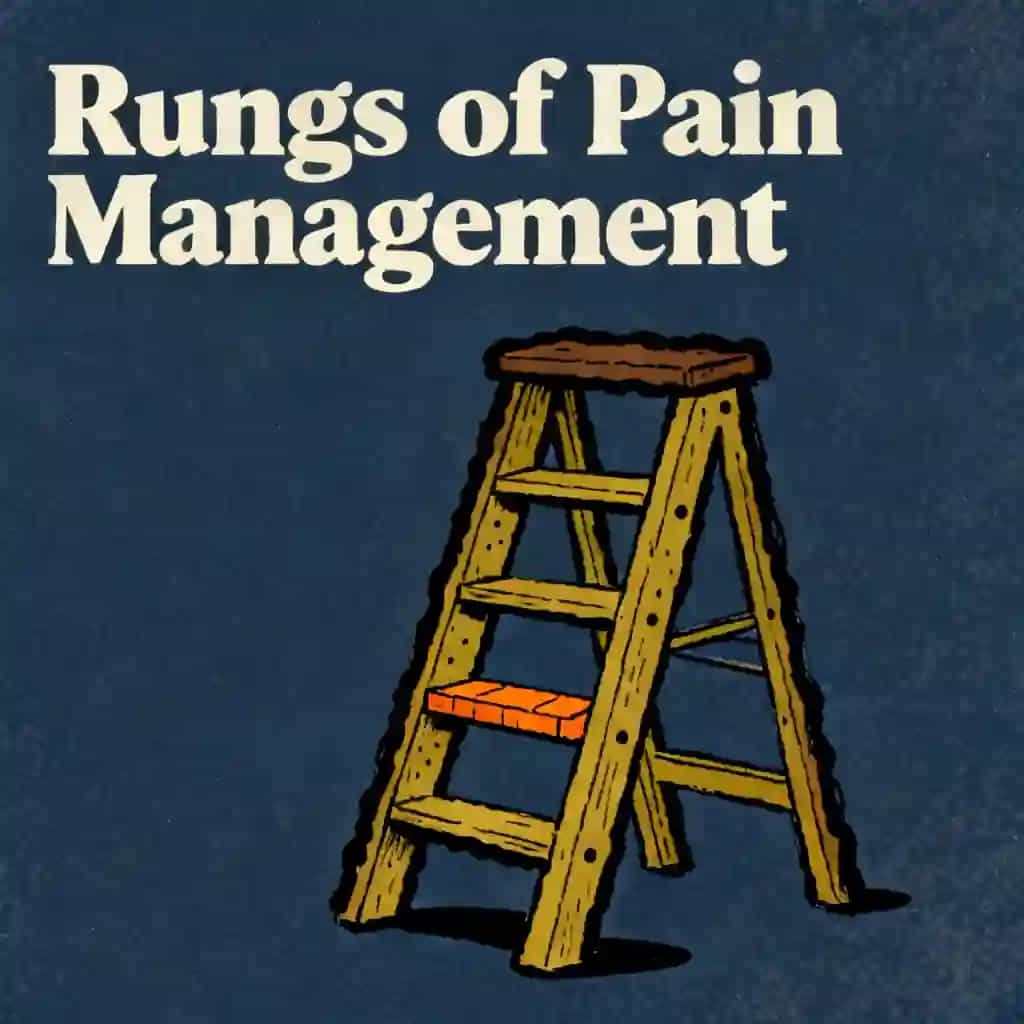
Miles: So let's break down this WHO pain ladder that's become the gold standard for pain management. Think of it as a three-step escalation system that matches treatment intensity to pain severity.
Blythe: Okay, so we're starting from the bottom and working our way up based on what the patient needs?
Miles: Exactly. Step one is your non-opioid analgesics—we're talking acetaminophen, NSAIDs like ibuprofen or naproxen. These are your workhorses for mild to moderate pain. The CDC guidelines really emphasize maximizing these before considering opioids.
Blythe: And that makes sense from a safety perspective, right? Lower risk profile?
Miles: Absolutely. But here's what's interesting—NSAIDs aren't just safer, they're often more effective for certain types of pain. The research shows that for dental pain, kidney stones, and musculoskeletal injuries, NSAIDs actually outperform opioids in many cases.
Blythe: Really? That's counterintuitive to what a lot of people might expect.
Miles: Right! So step two introduces what we call "weak" opioids—codeine, tramadol, low-dose oxycodone combinations. But calling them "weak" is misleading because tramadol, for instance, has this dual mechanism. It's not just hitting opioid receptors; it's also blocking serotonin and norepinephrine reuptake.
Blythe: So it's almost like getting an antidepressant effect along with pain relief?
Miles: Exactly! That's why tramadol can be particularly effective for neuropathic pain or chronic conditions where there's a psychological component. But it also means higher seizure risk and serotonin syndrome potential.
Blythe: And then step three is where we get into the heavy-duty opioids?
Miles: That's your morphine, oxycodone, fentanyl—the full mu-opioid receptor agonists. But here's the critical point: the ladder isn't just about strength. It's about matching the right medication to the specific pain condition and patient factors.
Blythe: So you might actually skip steps based on the clinical situation?
Miles: Absolutely. If someone comes in with severe trauma or post-surgical pain, you're not going to start with acetaminophen and work your way up over days. You assess the pain severity and jump to the appropriate step.
Blythe: You mentioned earlier that acute and chronic pain are fundamentally different. Can you walk me through what that actually means clinically?
Miles: This is huge, Blythe. The CDC defines acute pain as lasting less than three months, but it's not just about duration. Acute pain serves a biological purpose—it's your body's alarm system telling you something's wrong.
Blythe: Like when you touch a hot stove and immediately pull your hand away?
Miles: Perfect example. That's protective acute pain. It's usually proportional to tissue damage and resolves as healing occurs. Chronic pain, on the other hand, is when that alarm system gets stuck in the "on" position.
Blythe: So the pain persists even after the original injury has healed?
Miles: Exactly, and this is where it gets really interesting from a neurological perspective. In chronic pain, we see actual changes in the nervous system—what researchers call central sensitization. The pain pathways become hypersensitive, amplifying normal signals.
Blythe: That sounds like the nervous system is essentially learning to be in pain.
Miles: That's a brilliant way to put it! And this is why the treatment approaches are so different. For acute pain, we're trying to manage symptoms while the body heals. For chronic pain, we're trying to retrain those hypersensitive pathways.
Blythe: Which explains why opioids might work well for acute pain but become problematic in chronic conditions?
Miles: Absolutely. The research shows that long-term opioid use can actually increase pain sensitivity—a phenomenon called opioid-induced hyperalgesia. So you end up needing more medication to achieve less relief.
Blythe: That seems like a vicious cycle.
Miles: It really is. And the CDC guidelines reflect this understanding. For acute pain, they recommend the shortest effective duration—often just a few days. For chronic pain, they emphasize non-opioid approaches as first-line treatment.
Blythe: What about that middle ground—subacute pain?
Miles: Great question. Subacute pain, lasting one to three months, is this critical window where acute pain can transition to chronic. This is where clinicians need to be especially careful about opioid prescribing because you're potentially setting up long-term dependency.
Miles: Let's dive into the specific opioids, starting with morphine—it's still considered the gold standard that everything else gets compared to.
Blythe: Why is morphine the benchmark? Is it just because it's been around the longest?
Miles: Partly that, but also because it's a pure mu-opioid receptor agonist with well-understood pharmacology. When we talk about morphine milligram equivalents—MMEs—we're literally using morphine as the reference point.
Blythe: Right, so if someone's taking 30 mg of oxycodone, that converts to 45 MMEs because oxycodone is 1.5 times as potent?
Miles: Exactly! But here's where it gets tricky—morphine has some unique characteristics that make it challenging to use. It's heavily metabolized by the liver into active metabolites, including morphine-6-glucuronide, which is actually more potent than morphine itself.
Blythe: So patients with kidney problems could have these metabolites building up?
Miles: Precisely. That's why morphine can be problematic in elderly patients or anyone with renal impairment. You get this accumulation effect that can lead to prolonged sedation and respiratory depression.
Blythe: What about the side effect profile compared to other opioids?
Miles: Morphine tends to cause more histamine release, which means more itching, nausea, and potentially blood pressure drops. It's also notorious for constipation—probably the most common side effect that patients struggle with long-term.
Blythe: And I imagine that constipation isn't just uncomfortable—it can become a serious medical issue?
Miles: Absolutely. We're talking about opioid-induced constipation that can lead to bowel obstruction, perforation, or severe impaction requiring hospitalization. The guidelines emphasize starting bowel regimens prophylactically, not waiting for problems to develop.
Blythe: So morphine's effectiveness comes with a significant side effect burden?
Miles: Right, and that's why understanding alternatives becomes so important. Each opioid has this unique risk-benefit profile that needs to match the patient's specific situation.
Blythe: So let's talk about oxycodone. I know it's become pretty controversial, especially with the OxyContin crisis, but what makes it different pharmacologically?
Miles: Oxycodone is fascinating because it's about 1.5 times more potent than morphine, but it has a cleaner side effect profile in many ways. It causes less histamine release, so you get less itching and nausea.
Blythe: That sounds like it would be preferable for most patients.
Miles: In many cases, yes. Oxycodone also has better oral bioavailability—meaning more of the drug actually gets into your system when you take it by mouth. That makes dosing more predictable.
Blythe: But there must be downsides, or we'd just use oxycodone for everything.
Miles: The big concern is addiction potential. Oxycodone seems to have higher abuse liability, possibly because it produces more euphoria than morphine. That's part of what drove the opioid crisis—OxyContin was marketed as having lower abuse potential because of its extended-release formulation.
Blythe: Right, the idea was that slow release would prevent the rapid onset that leads to addiction?
Miles: Exactly, but that theory didn't hold up in practice. People found ways to crush the tablets or extract the drug, and even when taken as prescribed, the addiction risk remained significant.
Blythe: What about for acute pain management? Is oxycodone still a reasonable choice?
Miles: For short-term use—we're talking days, not weeks—oxycodone can be very effective, especially for moderate to severe pain. The key is strict duration limits and careful patient selection.
Blythe: And I imagine monitoring becomes crucial?
Miles: Absolutely. The CDC guidelines recommend evaluating patients within one to four weeks of starting any opioid therapy, and more frequently for higher-risk patients.
Miles: Now let's talk about fentanyl, which has gotten a lot of attention lately, though mostly in the context of illicit use. Medically, it's an incredibly potent and useful medication when used appropriately.
Blythe: How potent are we talking about?
Miles: Fentanyl is roughly 80 to 100 times more potent than morphine. We're talking micrograms instead of milligrams. A therapeutic dose might be 25 to 100 micrograms, compared to 5 to 10 milligrams of morphine.
Blythe: That's a tiny margin for error.
Miles: Exactly, and that's what makes it so dangerous in illicit markets. But in medical settings, fentanyl has some unique advantages. It has rapid onset—within minutes when given intravenously—and relatively short duration.
Blythe: So it's good for situations where you need quick, controllable pain relief?
Miles: Perfect for surgical anesthesia or emergency situations. The transdermal patches are also useful for chronic pain patients who need steady, around-the-clock dosing.
Blythe: How do those patches work exactly?
Miles: The patch delivers fentanyl through the skin over 72 hours. But here's the tricky part—absorption can be affected by body temperature, skin condition, even external heat sources. Patients have overdosed from fever or hot baths increasing absorption.
Blythe: That sounds like it requires really careful patient education.
Miles: Absolutely. The CDC guidelines specifically mention that only clinicians familiar with fentanyl's unique properties should prescribe it. There's also a significant delay in both onset and offset—it takes 12 to 24 hours to reach steady state, and effects can persist for hours after patch removal.
Blythe: So if someone has an adverse reaction, you can't just stop the medication and expect immediate improvement?
Miles: Exactly. That's why fentanyl patches should never be first-line therapy for opioid-naive patients. They're reserved for patients already on significant opioid doses who need conversion to long-acting therapy.
Blythe: Let's talk about tramadol and codeine. These seem to occupy this middle ground—they're opioids, but they're often treated differently.
Miles: That's because they really are different beasts. Codeine is actually a prodrug—it has to be converted to morphine in the liver to be effective. The problem is that this conversion varies dramatically between people.
Blythe: What do you mean by varies?
Miles: Some people are "poor metabolizers"—they can't convert codeine to morphine efficiently, so they get little to no pain relief. Others are "ultra-rapid metabolizers" who convert it too quickly and can get morphine toxicity from normal codeine doses.
Blythe: So the same dose could be ineffective for one person and dangerous for another?
Miles: Exactly. This genetic variability is why many guidelines now recommend avoiding codeine, especially in children and breastfeeding mothers. There have been cases of infant deaths from mothers taking prescribed codeine.
Blythe: That's terrifying. What about tramadol?
Miles: Tramadol is more predictable but has its own quirks. It's not just an opioid—it also blocks serotonin and norepinephrine reuptake, giving it antidepressant-like properties.
Blythe: So it might work better for certain types of pain?
Miles: Right, particularly neuropathic pain or conditions with a psychological component. But that dual mechanism also creates unique risks—seizures and serotonin syndrome, especially when combined with other serotonergic medications.
Blythe: Like antidepressants or migraine medications?
Miles: Exactly. The drug interaction profile for tramadol is much more complex than traditional opioids. It's also still subject to abuse, despite being perceived as "safer."
Blythe: So these aren't necessarily the gentle stepping stones they might appear to be?
Miles: Not at all. They require just as much caution and monitoring as any other opioid, sometimes more because of their unique properties.
Miles: Methadone deserves special attention because it's probably the most misunderstood opioid in clinical practice. Most people know it from addiction treatment, but it's also used for chronic pain.
Blythe: What makes methadone different from other long-acting opioids?
Miles: The pharmacokinetics are incredibly complex. Methadone has a very long and variable half-life—anywhere from 8 to 60 hours—but its analgesic effect only lasts 6 to 8 hours for most patients.
Blythe: Wait, so the pain relief wears off while the drug is still building up in their system?
Miles: Exactly! This creates this dangerous situation where patients might feel like they need more medication for pain relief, but they're actually at risk for accumulation and overdose.
Blythe: That seems like a recipe for disaster.
Miles: It really can be. Methadone also has cardiac effects—it can prolong the QT interval and cause dangerous arrhythmias. The CDC guidelines specifically state that methadone shouldn't be a first choice and should only be prescribed by clinicians familiar with its unique risks.
Blythe: So when would methadone be appropriate for pain management?
Miles: Usually for patients with chronic pain who haven't responded to other opioids, or those with both chronic pain and opioid use disorder. The long half-life can provide stable blood levels once you reach steady state.
Blythe: But getting to that steady state safely is the challenge?
Miles: Right. It requires very careful dose escalation—usually no more than every 5 to 7 days—and close monitoring. Some experts recommend EKG monitoring because of the cardiac risks.
Blythe: It sounds like methadone requires a lot more clinical expertise than other opioids.
Miles: Absolutely. It's not a medication for general practice—it really should be managed by pain specialists or addiction medicine specialists who understand its complexities.
Blythe: Okay Miles, so we've covered all these different opioids and their unique properties. For our listeners who are healthcare providers, how do you actually put this all together into a practical approach?
Miles: Great question, Blythe. The key is developing a systematic decision-making framework that considers the patient, the pain condition, and the medication characteristics all together.
Blythe: So start with patient assessment?
Miles: Exactly. First, you're distinguishing acute versus chronic pain—that determines your overall strategy. Then you're assessing pain severity using validated scales, looking at functional impact, and screening for risk factors like substance use history or mental health conditions.
Blythe: The CDC guidelines emphasize those risk assessments pretty heavily, right?
Miles: They do, and for good reason. You want to identify patients at higher risk for opioid use disorder before prescribing. Tools like the AUDIT-C for alcohol screening or simple questions about previous substance use can be really informative.
Blythe: What about the actual medication selection process?
Miles: This is where understanding those unique opioid profiles becomes crucial. For acute pain, you might choose oxycodone for its predictable dosing and lower nausea profile. For neuropathic pain, tramadol's dual mechanism might be beneficial. For patients with kidney disease, you'd avoid morphine because of metabolite accumulation.
Blythe: And you're always starting with the lowest effective dose?
Miles: Always. The guidelines recommend starting opioid-naive patients at doses equivalent to about 20 to 30 MME per day, and being very cautious about increasing beyond 50 MME daily.
Blythe: What about duration limits?
Miles: For acute pain, we're talking days, not weeks. Most acute conditions resolve within 3 to 7 days. The research shows that longer initial prescriptions predict long-term use, even for procedures that should only need short-term pain management.
Blythe: So you're really trying to prevent that transition from acute to chronic opioid use?
Miles: Exactly. And if someone needs opioids beyond 30 days, that's when you need to have a serious conversation about long-term treatment goals and risks. You're essentially considering chronic opioid therapy at that point.
Blythe: What about monitoring and follow-up?
Miles: The guidelines recommend checking in within 1 to 4 weeks of starting opioids, then regularly thereafter. You're assessing pain levels, functional improvement, side effects, and any signs of problematic use.
Blythe: And I imagine prescription drug monitoring programs play a role here?
Miles: Absolutely. Checking PDMP data before prescribing can reveal if patients are getting opioids from multiple providers or combining them with benzodiazepines—both major red flags for overdose risk.
Blythe: As we wrap up our deep dive into opioid prescribing, I keep thinking about how we balance evidence-based caution with genuine compassion for patients in pain.
Miles: That's really the heart of it, Blythe. The opioid crisis has created this environment where some patients with legitimate pain needs feel stigmatized or undertreated. But the solution isn't to swing back to liberal prescribing—it's to get smarter about how we approach pain management.
Blythe: So it's about having better tools and better understanding, not just more restrictions?
Miles: Exactly. When we understand that NSAIDs might actually work better than opioids for kidney stones, or that tramadol's dual mechanism makes it particularly effective for neuropathic pain, we can make more targeted choices that optimize outcomes.
Blythe: And the multimodal approach becomes really important here, right?
Miles: Absolutely. The research consistently shows that combining pharmacologic and non-pharmacologic approaches—physical therapy, cognitive behavioral therapy, interventional procedures when appropriate—often provides better pain relief than opioids alone.
Blythe: What about for patients who are already on long-term opioids?
Miles: That's one of the most challenging clinical situations. The guidelines emphasize that you shouldn't rapidly taper or abruptly discontinue opioids—that can be dangerous and counterproductive. It's about careful, collaborative dose reduction while optimizing other pain management strategies.
Blythe: So it's really about meeting patients where they are and working together toward better outcomes?
Miles: That's beautifully put. Pain management is ultimately about improving function and quality of life. Sometimes opioids are part of that equation, sometimes they're not. The key is making informed decisions based on the best available evidence while maintaining that therapeutic relationship.
Blythe: And staying current with evolving guidelines and research?
Miles: Absolutely. The 2022 CDC guidelines represent a significant update from the 2016 version, incorporating new evidence about acute pain management and opioid tapering. This field continues to evolve as we learn more about pain mechanisms and treatment approaches.
Blythe: For our listeners, what's the most important takeaway from today's discussion?
Miles: I'd say it's that effective pain management requires understanding both the science and the art of medicine. Each opioid has unique properties that make it more or less appropriate for specific situations. By matching the right medication to the right patient at the right dose for the right duration, we can optimize pain relief while minimizing risks.
Blythe: And that requires ongoing education and thoughtful clinical decision-making.
Miles: Exactly. Whether you're a primary care provider occasionally prescribing opioids for acute pain, or a pain specialist managing complex chronic conditions, staying informed about these medications' distinct profiles is essential for safe, effective practice.
Blythe: Well, Miles, this has been an incredibly comprehensive look at opioid prescribing and pain management. Thank you for breaking down these complex topics in such a practical way.
Miles: Thanks, Blythe. I hope our listeners found this useful for their clinical practice. As always, we'd love to hear your thoughts and experiences with these approaches. Keep learning, keep questioning, and keep putting patients first.
Blythe: Absolutely. Until next time, take care of yourselves and each other.