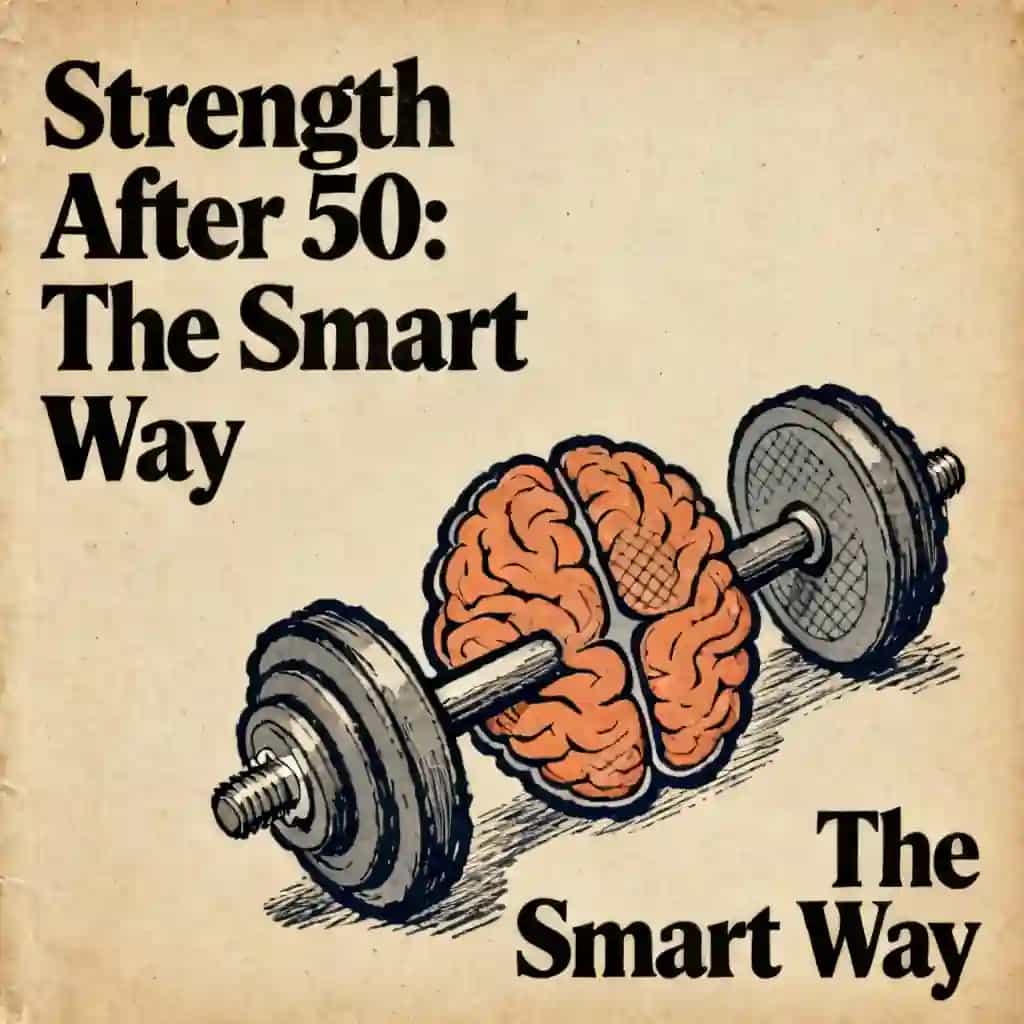
Iron Longevity: Building Strength Without the Injuries
Master the four essential movements and joint-first training to build a rock-solid foundation. Learn why starting light and focusing on recovery is the secret to sustainable, lifelong strength.

Mejor cita de Iron Longevity: Building Strength Without the Injuries
Real strength is built on the 'repeated effort' of perfect reps, not the 'heroic effort' of one ugly rep. If you can't move your own frame through space with perfect control, adding weight is just magnifying a flaw that's already there.
Generated by Anthony Bartman
build real strength while staying injury-free as a beginner lifter

Preguntas frecuentes
Starting with bodyweight movements acts as a "calibration" for your internal GPS before adding heavy cargo. If you cannot move your own frame with perfect control, adding weight only magnifies existing flaws in your form. Mastering the bodyweight baseline ensures your stabilizers are ready and helps expose side-to-side imbalances, such as one glute doing more work than the other, which could lead to injury if hidden under a heavy barbell.
The 2-for-2 rule is a safety mechanism used to determine when it is appropriate to increase weight or difficulty. According to this rule, you should only advance if you can perform two additional repetitions beyond your target goal during the final set of an exercise for two consecutive workouts. This approach removes ego from training and ensures that your muscles and connective tissues have actually adapted to the current load before you move on.
Progressive overload can be achieved through several "levers" beyond just adding plates to a bar. You can implement "double progression" by increasing the number of repetitions per set, or you can manipulate tempo by slowing down the lowering phase of a movement to create more mechanical tension. Additionally, you can increase training density by reducing rest intervals between sets or switch to harder exercise variations, such as moving from a standard bodyweight squat to a Bulgarian split squat.
A 3-day full-body framework prioritizes frequency and neuromuscular coordination over muscle annihilation. By performing foundational movements like squats and presses three times a week rather than once, a beginner gets significantly more practice, which helps the brain learn how to fire the muscles correctly. This schedule also provides a mandatory 48-hour recovery window between sessions, which is essential because strength is built during rest and sleep rather than during the workout itself.
While both are foundational movements, a squat is characterized as a "down and up" motion, whereas a hinge is "back and forward." The hinge focuses on the posterior chain—the hamstrings, glutes, and lower back—working as a single unit. A key technical cue for a safe hinge is keeping the weight close to the shins and pushing the hips back as if trying to close a car door with your glutes, rather than simply reaching for the floor by rounding the spine.
Creado por exalumnos de la Universidad de Columbia en San Francisco
"Instead of endless scrolling, I just hit play on BeFreed. It saves me so much time."


"I never knew where to start with nonfiction—BeFreed’s book lists turned into podcasts gave me a clear path."


"Perfect balance between learning and entertainment. Finished ‘Thinking, Fast and Slow’ on my commute this week."
"Crazy how much I learned while walking the dog. BeFreed = small habits → big gains."
"Reading used to feel like a chore. Now it’s just part of my lifestyle."

"Feels effortless compared to reading. I’ve finished 6 books this month already."
"BeFreed turned my guilty doomscrolling into something that feels productive and inspiring."

"BeFreed turned my commute into learning time. 20-min podcasts are perfect for finishing books I never had time for."
"BeFreed replaced my podcast queue. Imagine Spotify for books — that’s it. 🙌"

"It is great for me to learn something from the book without reading it."
"The themed book list podcasts help me connect ideas across authors—like a guided audio journey."
"Makes me feel smarter every time before going to work"
 Ask ChatGPT
 Ask Claude
Creado por exalumnos de la Universidad de Columbia en San Francisco
"Instead of endless scrolling, I just hit play on BeFreed. It saves me so much time."
"I never knew where to start with nonfiction—BeFreed’s book lists turned into podcasts gave me a clear path."
"Perfect balance between learning and entertainment. Finished ‘Thinking, Fast and Slow’ on my commute this week."
"Crazy how much I learned while walking the dog. BeFreed = small habits → big gains."
"Reading used to feel like a chore. Now it’s just part of my lifestyle."
"Feels effortless compared to reading. I’ve finished 6 books this month already."
"BeFreed turned my guilty doomscrolling into something that feels productive and inspiring."
"BeFreed turned my commute into learning time. 20-min podcasts are perfect for finishing books I never had time for."
"BeFreed replaced my podcast queue. Imagine Spotify for books — that’s it. 🙌"
"It is great for me to learn something from the book without reading it."
"The themed book list podcasts help me connect ideas across authors—like a guided audio journey."
"Makes me feel smarter every time before going to work"
"Instead of endless scrolling, I just hit play on BeFreed. It saves me so much time."
"I never knew where to start with nonfiction—BeFreed’s book lists turned into podcasts gave me a clear path."
"Perfect balance between learning and entertainment. Finished ‘Thinking, Fast and Slow’ on my commute this week."
"Crazy how much I learned while walking the dog. BeFreed = small habits → big gains."
"Reading used to feel like a chore. Now it’s just part of my lifestyle."
"Feels effortless compared to reading. I’ve finished 6 books this month already."
"BeFreed turned my guilty doomscrolling into something that feels productive and inspiring."
"BeFreed turned my commute into learning time. 20-min podcasts are perfect for finishing books I never had time for."
"BeFreed replaced my podcast queue. Imagine Spotify for books — that’s it. 🙌"
"It is great for me to learn something from the book without reading it."
"The themed book list podcasts help me connect ideas across authors—like a guided audio journey."
"Makes me feel smarter every time before going to work"
"Instead of endless scrolling, I just hit play on BeFreed. It saves me so much time."
"I never knew where to start with nonfiction—BeFreed’s book lists turned into podcasts gave me a clear path."
"Perfect balance between learning and entertainment. Finished ‘Thinking, Fast and Slow’ on my commute this week."
"Crazy how much I learned while walking the dog. BeFreed = small habits → big gains."
"Reading used to feel like a chore. Now it’s just part of my lifestyle."
"Feels effortless compared to reading. I’ve finished 6 books this month already."
"BeFreed turned my guilty doomscrolling into something that feels productive and inspiring."
"BeFreed turned my commute into learning time. 20-min podcasts are perfect for finishing books I never had time for."
"BeFreed replaced my podcast queue. Imagine Spotify for books — that’s it. 🙌"
"It is great for me to learn something from the book without reading it."
"The themed book list podcasts help me connect ideas across authors—like a guided audio journey."
"Makes me feel smarter every time before going to work"