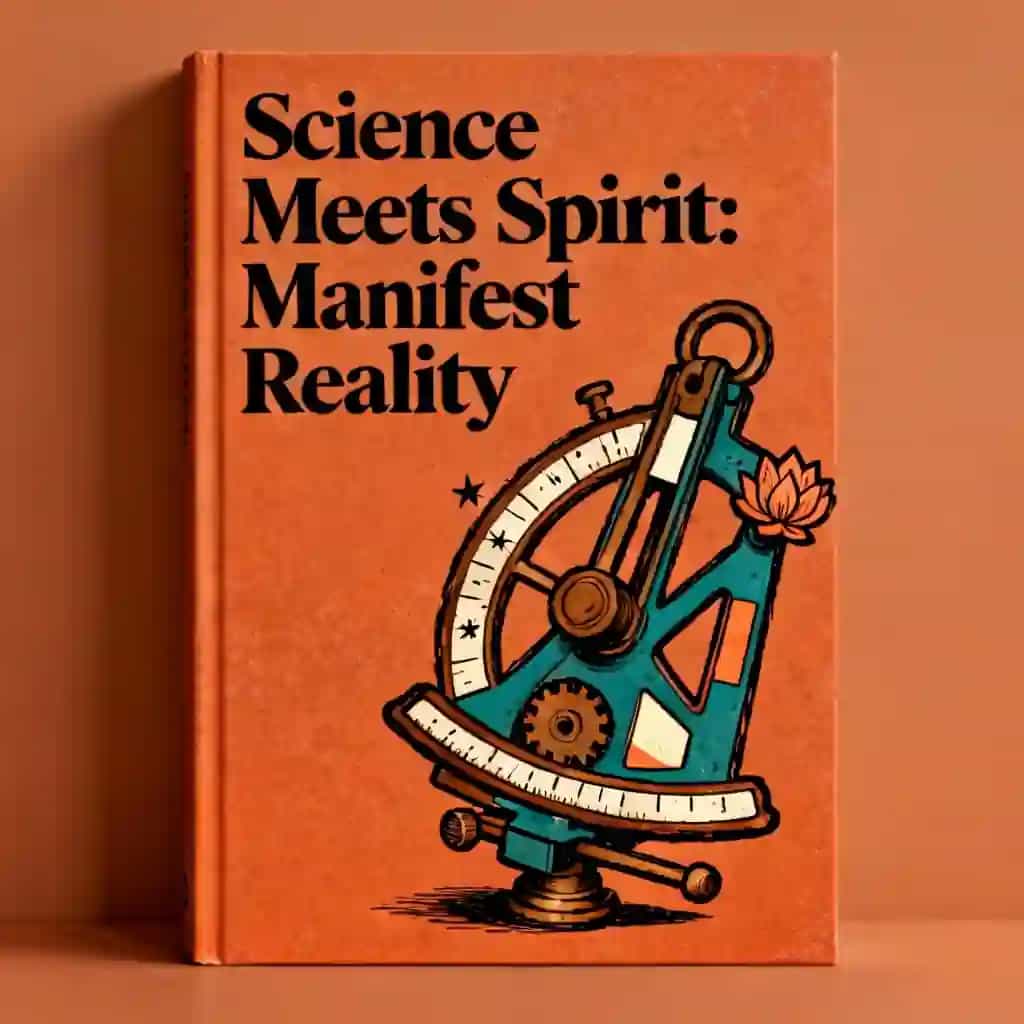
BeFreed
    Categories>Psychology>How the Law of Attraction Actually Works

    How the Law of Attraction Actually Works

    28 min
    |
    |
    27 mar 2026
    • Psychology
    • Self-Growth

    Struggling to manifest despite positive thinking? Learn how your subconscious energy drives your results and how to shift your internal signal today.

    How the Law of Attraction Actually Works
    0:00 / 0:00
    Elige cómo se cuenta

    Un episodio. Muchas formas de escucharlo.

    Las mismas ideas de How the Law of Attraction Actually Works. Elige la voz, profundidad y ritmo que más te convengan. Cambia cuando quieras.

    Transcripción y capítulos

    Capítulo 1

    Beyond Positive Thinking: Tuning Your Signal

    Nia: You know, Blythe, I was looking at my vision board this morning and honestly just felt a little stressed about my bills. It’s like I’m saying all the right affirmations, but my chest still feels tight.

    Blythe: That is so relatable, and it’s actually the perfect place to start. Most people think the Law of Attraction is just about "thinking positive," but did you know your subconscious drives about ninety-five percent of what you do and feel every day?

    Nia: Ninety-five percent? That’s huge! No wonder my morning "money magnets" feel like they're bouncing off a brick wall if I'm secretly panicking inside.

    Blythe: Exactly. It’s not just the sentences in your head; it’s the energy underneath them. We’re actually moving through an invisible ocean of energy where everything—even your phone or the chair you’re sitting on—is ninety-nine point nine percent empty space vibrating at different frequencies.

    Nia: It sounds less like magic and more like tuning a radio to the right station.

    Blythe: Precisely. So let’s dive into how you can actually shift that internal signal to start manifesting the life you want.

    Capítulo 2

    The Clockmaker’s Discovery: Precision in Mental Mechanics

    Nia: That radio analogy really sticks with me, Blythe, but if I’m being honest—sometimes I feel like my "tuner" is just broken. Like I’m twisting the knob and all I get is static.

    Blythe: That’s because most of us are trying to tune a radio that has a hundred years of old wiring inside it. To understand how to fix it, we have to go back to the source—and I don’t mean a viral TikTok. I’m talking about a clockmaker from Maine in the 1830s named Phineas Quimby.

    Nia: A clockmaker? That’s not what I expected. I was thinking more... Himalayan caves or ancient temples.

    Blythe: Right? But it makes so much sense. Think about what a clockmaker does. They deal with tiny, invisible gears, precision, and cause and effect. Quimby started out as a mesmerist—basically an early hypnotist—and he’d watch people get "healed" by these trances. But because he had that analytical, "how does this work" brain, he noticed something odd. The healing didn't happen because of some magical "magnetic fluid" or the doctor’s power. It happened because the patient believed it was happening.

    Nia: So he saw the "gears" of the mind turning before anyone else did?

    Blythe: Exactly. He realized that the mind was the primary cause and the body was just the effect. He called physical illnesses "errors" in thinking. Imagine a clock that’s losing time because a tiny bit of dust got into the gears. Quimby realized that if you could find that "mental dust"—that false belief—and correct it with the "Truth," the whole mechanism of your life would start running perfectly again.

    Nia: I love that. "Mental dust." It makes it feel so much less permanent. It’s not that I’m broken; it’s just that there’s an error in my programming.

    Blythe: That is exactly the shift. Quimby treated thousands of people—documented cases—by basically talking them out of their sickness. He’d sit with them and find the specific thought—maybe something a doctor told them or a fear they picked up—and he’d use "rational persuasion" to show them why that belief was a lie. Once the mind let go of the error, the body followed.

    Nia: It sounds like an early version of what we call "limiting beliefs" today.

    Blythe: It’s the direct ancestor! Quimby proved empirically, nearly two hundred years ago, that you cannot manifest a healthy life from a state of consciousness that believes in sickness. You can’t manifest abundance if your "inner clock" is set to "scarcity time."

    Nia: So, if I’m stressed about my bills while doing affirmations, my inner clock is still ticking according to "not enough." I’m basically trying to force the clock hands to move without fixing the gears.

    Blythe: You hit the nail on the head. We’re often so focused on the "hands"—the external results—that we ignore the internal mechanics. Quimby’s legacy is the foundation of the whole New Thought movement. He taught us that "Mind creates Matter." He didn't use the term "Law of Attraction" yet, but he was practicing the core of it: your internal state determines your external reality.

    Nia: It’s fascinating that it started with a guy who fixed watches. It makes the whole process feel so... mechanical. Like there’s a logic to it that we can actually learn.

    Blythe: And that’s the beauty of it. It’s not a mystery; it’s a system. And once you understand the system, you can start being the one who sets the time.

    Aprende más con este episodio

    Lleva las ideas de este episodio a una experiencia de aprendizaje guiada en BeFreed.

    Capítulo 3

    The Filter in Your Brain: Science Meets Manifestation

    Nia: Okay, so if Quimby gave us the philosophy, I’m wondering if modern science has actually found these "gears" in the brain. Because "mental dust" is a great metaphor, but what’s actually happening when we focus on a goal?

    Blythe: Oh, Nia, this is where it gets really cool. Science has actually identified the physical "gatekeeper" in your brain. It’s called the Reticular Activating System, or the RAS. It’s this bundle of nerves in your brainstem that acts as a filter.

    Nia: A filter? Like for spam emails?

    Blythe: Exactly like that! Think about it—right now, your brain is being bombarded by millions of bits of sensory data every second. The sounds in the street, the feeling of your socks, the light in the room, millions of colors. If you noticed all of it, your brain would literally fry. So the RAS decides what gets through to your conscious mind.

    Nia: So how does it decide? Does it have a "VIP list"?

    Blythe: It does! And you are the one who writes the list. The RAS looks for things that are important to your survival, but also things that you focus on. Have you ever decided you wanted a specific car—let’s say a blue SUV—and suddenly you see blue SUVs on every single corner?

    Nia: All the time! I always thought the universe was just teasing me.

    Blythe: No, the blue SUVs were always there! Your RAS just wasn't letting them through the gate because it didn't think they were "important." But once you focused on them, you "programmed" your RAS to alert you every time one appeared.

    Nia: Wow. So when people say they’re "noticing opportunities," it’s not that the opportunities just started existing. It’s that their brain finally stopped filtering them out?

    Blythe: Precisely. That’s why visualization and affirmations are so powerful from a neurological perspective. You’re not "magically" pulling a new job out of thin air; you’re telling your RAS, "Hey, this is a priority." Then, when you’re at a party or scrolling through LinkedIn, your brain "highlights" a specific name or a piece of information that leads to that job.

    Nia: It’s like a search engine for your life. If I type "scarcity" into my internal Google, I’m only going to get results for "scarcity."

    Blythe: You’ve got it. And there’s more. Neuroscientists have found something called "functional equivalence." This means that when you vividly visualize yourself achieving a goal, your brain activates the exact same neural pathways as if you were actually doing it.

    Nia: Wait, so my brain doesn't know the difference between me imagining a successful presentation and me actually giving one?

    Blythe: Not really! To your neurons, the "fire" is the same. This is why Olympic athletes use mental rehearsal. By the time they step onto the track, their brain has already "run" the race a thousand times. They’ve built the muscle memory and the neural pathways for success. So for our listeners who feel like they’re "faking it" when they manifest—your brain actually thinks you’re practicing.

    Nia: That makes me feel so much better. It’s not "lying" to myself; it’s "training" my nervous system.

    Blythe: Exactly. You’re building the architecture for the life you want before the bricks even arrive. When you combine Quimby’s idea of correcting "mental errors" with the science of the RAS, you realize that manifestation is just the process of aligning your internal filter with your external desires.

    Nia: So if I stop looking for the "errors"—the reasons why I’m not enough—and start looking for the "blue SUVs" of my success... my brain literally changes its reality.

    Blythe: It has to! It’s following your instructions. Your focus is the command that sets the filter.

    Capítulo 4

    The Harlem Transmission: Becoming the Version of You

    Nia: You mentioned earlier that these ideas evolved over time. I’m curious—how did we get from a 19th-century clockmaker to the "manifesting" we see on social media today? There feels like a missing link.

    Blythe: There is a huge missing link, and it’s one of the most fascinating stories in this whole lineage. It takes us to Harlem in the 1930s. There was this mysterious mystic teacher named Abdullah—an Ethiopian rabbi who taught a young man named Neville Goddard.

    Nia: Neville Goddard! I’ve seen his name all over manifestation forums. He’s the "Law of Assumption" guy, right?

    Blythe: That’s him! But before he was a famous teacher, he was a struggling dancer in New York City. He really wanted to go home to Barbados for Christmas to see his family, but he had absolutely no money. He went to his mentor, Abdullah, and told him his problem.

    Nia: And let me guess... Abdullah gave him a pep talk?

    Blythe: Not even close. Abdullah looked at him and said, "You are in Barbados."

    Nia: But he was standing in a cold apartment in New York!

    Blythe: Right? Neville tried to argue, saying, "But Ab, I don’t have the money for a ticket." And Abdullah just walked out of the room and slammed the door! He refused to even discuss the "not having money" part because, in his mind, the moment Neville desired it, it was a finished fact in consciousness. He told Neville, "You must walk the streets of New York as though you are walking the streets of Barbados."

    Nia: That sounds like a whole different level of "acting as if."

    Blythe: It was. It’s called the Law of Assumption. Abdullah’s whole point was: do not try to change the world. Change who you are. If you assume the identity of the person who is already in Barbados—if you sleep as though you are there, smell the salt air in your imagination, feel the warmth of the sun—your subconscious has no choice but to bridge the gap.

    Nia: So what happened? Did he get the ticket?

    Blythe: He did! A few weeks later, his brother sent him a letter out of the blue with money for a ticket and even some extra for clothes. But the lesson wasn't about the money. It was about the fact that your identity is the "mold" that reality has to fill.

    Nia: This goes back to what we were saying about the 95% subconscious. If Neville had stayed in the identity of "the poor dancer who can't afford a trip," he probably would have missed the opportunity or not even checked his mail.

    Blythe: Exactly. Abdullah taught him that the subconscious mind does not respond to your wishes. It responds to your identity. It’s not about "I want to be rich"; it’s about "I am the person for whom abundance is normal."

    Nia: I think that’s where I get stuck. I’m "wanting" things, but I’m still "being" the person who lacks them.

    Blythe: That is the most common trap! Wanting implies that you don’t have it. It’s a frequency of "lack." Abdullah’s "Barbados" technique is about shifting into the state of the wish fulfilled. It’s like what modern researchers call "identity mechanics." When you change your internal self-concept, your behavior, your perception, and even the "coincidences" around you start to rearrange themselves to match that new self.

    Nia: It’s like we’re cosplaying our future selves until the world realizes it’s not a costume.

    Blythe: (laughs) I love that! "Cosplaying the future." And it’s not just "woo-woo." Think about the dopamine we talked about. When you vividly imagine that success, your brain releases dopamine now. That gives you the energy and the persistence to actually take the actions that lead to the goal. Neville took Abdullah’s mystical Harlem lessons and turned them into a system that millions use today.

    Aprende más con este episodio

    Lleva las ideas de este episodio a una experiencia de aprendizaje guiada en BeFreed.

    Capítulo 5

    The Anatomy of a Manifestation: Why "Feeling is the Secret"

    Nia: So, if Abdullah and Neville are telling us to "assume the feeling," I have to ask... why is the feeling so important? Can’t I just think the thought really hard? I’m a great overthinker, Blythe! I could think a thought for twenty-four hours straight!

    Blythe: (laughs) Trust me, Nia, if overthinking could manifest millions, we’d all be billionaires! But here’s the thing: thoughts are like the "instructions," but emotions are the "power." Neville Goddard actually wrote a whole book called Feeling is the Secret. He argued that the subconscious mind is like a garden, and thoughts are the seeds—but the feeling is the water and the sun that makes them grow.

    Nia: That makes sense. My "I am wealthy" affirmation feels pretty dry when my bank account is at ten dollars.

    Blythe: Right! And your subconscious is smart—it can tell when you’re lying to yourself. If you say "I am rich" but you feel "I am terrified," the subconscious prioritizes the feeling of terror. Why? Because from an evolutionary standpoint, your feelings are your survival signals. Terror means "danger," so your brain focuses on that.

    Nia: So how do we bridge that gap? How do I feel "abundant" when I’m actually stressed?

    Blythe: You use what researchers call "emotional embodiment." You don’t try to force a feeling that isn't there. Instead, you find a memory or a small moment that already holds that frequency. Think about a time you felt totally safe, or a time you received an unexpected gift, or even just the feeling of a really good cup of coffee. That feeling of "I have what I need"—that is the frequency of abundance.

    Nia: Oh! So it’s not about feeling "Bill Gates rich"; it’s just about feeling the ease of having enough.

    Blythe: Exactly! It’s about the relief of the wish fulfilled. Neville used to say that the most powerful manifestation feeling is "Thank you." Because you only say "Thank you" when something has already happened. When you sit in a state of gratitude, you’re signaling to your nervous system—and your RAS—that the goal is already a fact.

    Nia: That is a game-changer. "Thank you" is so much easier than trying to imagine a million dollars in my hand.

    Blythe: It’s the ultimate shortcut. And there’s science to back this up, too. A study by Dixon and his team in 2025 looked at people who believed in manifestation. They found that these people didn't just have "positive thoughts"—they had higher levels of "hope" and "perceived success." Even before they had the objective results, their internal state was already "winning."

    Nia: And because they felt like they were winning, they probably took more risks and noticed more opportunities.

    Blythe: Precisely! The study showed that people who believe in manifestation are more likely to take risks, like investing in crypto or starting a business. Now, the flip side is they also have to be careful not to get caught in "get-rich-quick" scams, because their optimism is so high! But the core finding is that the belief and the feeling changed their behavior.

    Nia: So the feeling isn't just a mood; it’s a behavioral driver. It changes how I show up in the world.

    Blythe: Exactly. If you walk into a room feeling like "the person who has already succeeded," your body language changes, your voice tone changes, and people respond to you differently. It’s what Neville called "Everyone is you pushed out." The world is just a mirror reflecting your internal state back to you.

    Nia: So if I want the mirror to change, I have to change my face first. I can’t wait for the mirror to smile before I do.

    Blythe: You've hit the nail on the head. The feeling is the signal that tells the mirror what to show.

    Capítulo 6

    The Fantasy Fiasco: Why Daydreaming Can Be Dangerous

    Nia: Okay, Blythe, I have to play devil’s advocate for a second. I spend a lot of time "visualizing" my dream life—the house, the travel, the beach. But sometimes, after a long session of daydreaming, I actually feel less motivated to do my actual work. It’s like I already "ate" the dessert in my head, so I don’t want to cook the dinner.

    Blythe: Nia, you are describing something that scientists call "the fantasy fiasco." And it is the number one reason why manifestation fails for a lot of people. There’s a psychologist named Gabriele Oettingen who has spent over twenty years researching this. She found that purely "positive thinking" can actually trick your brain into thinking you’ve already achieved the goal.

    Nia: Wait, so my "functional equivalence" is working too well?

    Blythe: In a way, yes! When you only visualize the "outcome"—the big check, the red carpet—your brain releases relaxation signals. Your heart rate slows down, your blood pressure drops. Your brain essentially says, "Phew, we did it! Time to take a nap."

    Nia: That is exactly what happens to me! I feel all warm and fuzzy, and then I just want to watch Netflix.

    Blythe: Right! You’ve drained your "motivation tank." Oettingen’s research shows that the most successful people don’t just visualize the result. They use a method she calls WOOP: Wish, Outcome, Obstacle, Plan.

    Nia: That sounds a lot less "magical," but a lot more practical.

    Blythe: It’s the "science-approved" manifestation. You start with the Wish and the Outcome—that’s your manifestation part. You feel the joy of it. But then—and this is the crucial step—you look at the Obstacle. You ask, "What is within me that is stopping this from happening?" Is it fear? Is it procrastination?

    Nia: Oof. That’s the part we usually skip on the vision board.

    Blythe: Exactly. But by identifying the obstacle, you activate the "problem-solving" part of your brain, not just the "dreaming" part. And then you make a Plan: "If [Obstacle] happens, then I will [Action]." This is called "if-then planning."

    Nia: So instead of just dreaming of the beach, I dream of the beach, recognize that I’m currently avoiding my emails, and then plan: "If I feel the urge to scroll social media, then I will set a timer for twenty minutes and answer three emails."

    Blythe: Spot on! Oettingen found that people who use this method are significantly more likely to lose weight, get better grades, and achieve their career goals than people who just "think positive." It’s about merging the "fantasy" with the "reality."

    Nia: It’s like giving your manifestation feet. You have the head in the clouds, but the feet on the ground.

    Blythe: I love that. And it connects back to what we were saying about Quimby and the "mental errors." If you don't look at the obstacles—those "errors" in your thinking or habits—your manifestation will always just be a daydream.

    Nia: So manifestation isn't about avoiding the "negative." It’s about using the vision to fuel the work needed to get past the negative.

    Blythe: Precisely. Visualization is the "preview of coming attractions," but the "if-then" plan is the production crew that actually builds the set. You need both to make the movie happen.

    Aprende más con este episodio

    Lleva las ideas de este episodio a una experiencia de aprendizaje guiada en BeFreed.

    Capítulo 7

    The Practical Playbook: Techniques for the Real World

    Nia: This is all starting to click, but I’m a "steps" person. If I wanted to start a manifestation "workout" tomorrow morning, what are the actual moves? We’ve talked about the 3-6-9 method, affirmations, and WOOP—how do I put it all together?

    Blythe: I love a good playbook. Let’s break it down into a "manifestation stack" that uses everything we’ve talked about.

    Nia: A "manifestation stack." I’m ready!

    Blythe: Step one: The Morning Prime. This is where you set your RAS filter. When you wake up, before you check your phone, give yourself five minutes of "Identity Assumption." Like Abdullah taught Neville, don't just "want" the goal—be the person who has it. Use your five senses. What does your morning coffee smell like in that "future" house? What does the fabric of your "success" suit feel like?

    Nia: Okay, so I’m "priming" my brain to look for the version of me that’s already succeeded.

    Blythe: Exactly. Step two: The 3-6-9 Writing. This is for focus. Write your affirmation—in the present tense—three times in the morning, six times in the afternoon, and nine times in the evening. The repetition isn't a "magic spell"; it’s a way of constantly "pinging" your RAS so it doesn't default back to your old "worry" settings.

    Nia: It’s like a reminder notification for my subconscious.

    Blythe: Totally. Step three: The "Thank You" Anchor. Throughout the day, whenever you feel that "tightness" in your chest—the stress about bills or the fear of failure—stop and say "Thank you." Find anything to be genuinely grateful for in that moment. It resets your nervous system from "threat mode" back to "abundance mode."

    Nia: I can do that. Even if it’s just "Thank you for this sunset" or "Thank you for this funny text."

    Blythe: It works! Step four: The WOOP Reflection. Once a day, maybe in your journal, do the WOOP exercise. Wish, Outcome, Obstacle, Plan. If you’re manifesting a new business, identify the obstacle—like "I’m afraid of being judged"—and create that "if-then" plan. "If I feel afraid of posting my work, then I will call my supportive friend Nia for a two-minute pep talk."

    Nia: (laughs) I’m always here for the pep talk!

    Blythe: And finally, Step five: Inspired Action. This is the most important part. Manifestation is a "co-creation." You tune the radio, but you also have to turn the volume up and listen. When your RAS highlights an opportunity—a random email, a person you meet, an idea that pops into your head—act on it. Don't wait for the "perfect" moment.

    Nia: So if I’m manifesting a "full man," as that TikTok girl said, and a cute guy starts a conversation at the grocery store, I shouldn't just stand there and think "I’m manifesting"? I should actually... talk back?

    Blythe: (laughs) Yes! Talk back! That is the "bridge of incidents" Neville Goddard talked about. The universe provides the "bridge," but you have to walk across it.

    Nia: It’s like we’re giving the universe the "raw materials" through our thoughts, but we’re the "contractors" who have to actually build the house.

    Blythe: That’s a perfect way to put it. You provide the vision and the belief, and then you show up for the work. And because you’ve tuned your RAS and primed your dopamine, the "work" actually feels exciting instead of draining.

    Capítulo 8

    Beyond the Vision Board: The 2026 Perspective

    Nia: You know, Blythe, looking at all this from the perspective of 2026, it feels like we’re finally moving past the "magic wand" phase of manifestation. We’re starting to see it as a legitimate mental technology.

    Blythe: It really is. We’ve come such a long way from the "Secret" era where people thought they could just sit on a couch and wait for a check. Now we understand the neuroscience, the psychology of goal-setting, and the deep history of people like Quimby and Abdullah.

    Nia: It makes it feel much more accessible. Like, I don’t have to be a "spiritual master" to do this. I just have to be someone who is willing to train my brain and pay attention.

    Blythe: Exactly. And the research from 2025—like that Dixon study—reminds us to be mindful. Manifestation is a superpower, but like any power, it needs a "reality check." We have to be careful not to fall for "get-rich-quick" schemes or use manifestation to ignore the real work. It’s about enhancing your life, not escaping it.

    Nia: Right. It’s the difference between "wishing for a miracle" and "becoming the kind of person who creates miracles."

    Blythe: That is so profound, Nia. It’s about self-efficacy—the belief that you can influence your outcomes. When you practice these techniques, you’re not just trying to get "stuff." You’re building a relationship with yourself where you trust your own mind.

    Nia: I think that’s what I was missing this morning with my vision board. I was looking at the "stuff" and feeling like I didn't have it. Now, I’m realizing the vision board is just a map. I’m the one who has to drive the car.

    Blythe: And you have a much better GPS now! You know how to clear the "mental dust," how to program your RAS, and how to walk the streets of your "Barbados" before you even get there.

    Nia: It feels like the tight feeling in my chest is actually starting to loosen up. It’s not just about the bills anymore; it’s about the fact that I have the tools to change the frequency.

    Blythe: That is the real manifestation, Nia. The shift in you is the first and most important result. Everything else is just the "echo" of that internal change.

    Aprende más con este episodio

    Lleva las ideas de este episodio a una experiencia de aprendizaje guiada en BeFreed.

    Capítulo 9

    The Identity Doctrine: Stability in the Shift

    Nia: We’ve covered so much ground, Blythe, but I have one final "what if." What if I do all the work, I tune the signal, I take the action... and it still doesn't happen on my timeline? That’s usually when I give up and go back to my old "this doesn't work" thoughts.

    Blythe: That is the final "boss level" of manifestation: Stability. There’s a concept called the "Identity Doctrine" that’s been popping up a lot lately. It says that true change only happens when your new identity becomes stable.

    Nia: Stable? Like, it’s not just a "mood" I have on Tuesday morning?

    Blythe: Exactly. Most of us are "identity tourists." We visit the identity of "Success" or "Abundance" for ten minutes during meditation, but then we spend the other twenty-three hours of the day living in the identity of "Struggle." The subconscious mind is like a massive ship—it takes time to turn. If you keep switching the "GPS" back and forth, the ship just ends up going in circles.

    Nia: So the reason my manifestations are "slow" might just be because I’m giving my subconscious "mixed signals"?

    Blythe: Precisely! If you assume the feeling of the wish fulfilled on Monday, but then on Wednesday you’re crying to your friend about how "nothing ever works," you’ve just cancelled the order. You have to be the person who is successful, even when the mirror hasn't reflected it yet.

    Nia: That sounds like "faith," but in a really practical, psychological way.

    Blythe: It’s "persistence in the assumption." Neville Goddard used to say that if you persist in the assumption, it must harden into fact. It’s a law of consciousness. Think of it like a seed. Once you plant it, you don't dig it up every two days to see if it’s growing, right? You’d kill it!

    Nia: I am definitely a "seed digger." I’m constantly checking for results!

    Blythe: (laughs) We all are! But stability means you trust the process. You’ve done the mental work, you’ve set the filter, you’re taking the action. Now, your job is to stay in that "frequency" even when the external world is still showing the "old" movie.

    Nia: It’s like being the only person who knows the "secret" to a surprise party. You’re smiling because you know what’s coming, even if the room looks empty right now.

    Blythe: That is the perfect metaphor! And that "knowing" is what actually accelerates the result. Because when you’re not stressed and "checking," your brain is more relaxed, your dopamine is stable, and you’re actually better at the work you need to do.

    Nia: So, stability is the "secret sauce." It’s the difference between a "manifestation attempt" and a "manifestation lifestyle."

    Blythe: You've got it. It’s about moving from "doing" manifestation to "being" a person who naturally creates their reality.

    Capítulo 10

    Closing Reflection: Your Mind as the Master Key

    Nia: Wow, Blythe. I feel like we’ve just gone on a two-hundred-year journey from a clockmaker’s shop in Maine to the high-tech neuroscience labs of today.

    Blythe: It’s been quite a ride, hasn't it? And the coolest part is that all of this—all these laws and systems—they’re already inside you. You’ve been manifesting your whole life; you’re just learning how to do it with the lights on now.

    Nia: That’s such an empowering thought. I’m not "learning a new trick"; I’m just "taking the wheel" of a car I’ve been sitting in for years.

    Blythe: Exactly. So to everyone listening, I hope you take one thing away from this: you are not a victim of your circumstances. You are the "clockmaker" of your own life. You have the power to find those "mental errors," correct them with your vision, and program your internal filter to notice a world of infinite possibility.

    Nia: I’m definitely going to start looking for my "blue SUVs" tomorrow. And I’m going to start with a big "Thank you" for everything that’s already on its way.

    Blythe: That’s the best place to start. Remember, the "bridge of incidents" is already being built. Your only job is to keep walking.

    Nia: Thank you so much for exploring this with me today, Blythe. This was exactly what I needed to hear.

    Blythe: My pleasure, Nia! And thank you to everyone for tuning in. We really appreciate you spending your time with us.

    Nia: For our listeners, maybe take a moment after this and just ask yourself: "What is the one blue SUV I want to start noticing today?" Just one small thing to prove to yourself that your RAS is listening.

    Blythe: I love that. Give your brain a specific mission. You might be surprised at what shows up before the day is over.

    Nia: Thanks again for listening, everyone. We’re so glad you’re on this journey with us. Take care of your signal!

    Blythe: Absolutely. Keep your frequency high and your actions inspired. Happy manifesting!

    ★★★★★

    Has llegado al final de How the Law of Attraction Actually Works

    “Llevo 23 días y lo he usado todos los días. Ya forma parte de mi rutina diaria.”

    jayallen

    Mejor cita de How the Law of Attraction Actually Works

    “

    Your internal state determines your external reality; you are not a victim of your circumstances, but the clockmaker of your own life with the power to align your internal filter with your external desires.

    ”
    S

    Generated by Sam

    Pregunta de entrada

    I wanna learn about the law of attraction

    Voces del presentador
    Niaplay
    Blytheplay
    Fuentes de conocimiento
    Ask And It Is Given
    The Master Key System
    Complete Game of Life and How to Play It
    Intentionality
    The amazing power of deliberate intent
    Mind is the Master

    Preguntas frecuentes

    Phineas Quimby was a 19th-century clockmaker from Maine who became a pioneer in the New Thought movement. Through his work as a hypnotist, he observed that patients were healed not by mystical fluids, but by their own belief in the cure. He viewed physical illnesses as "errors" in thinking—much like dust in the gears of a clock—and believed that by using rational persuasion to correct these false beliefs with "Truth," the body and life circumstances would naturally realign.

    The RAS is a bundle of nerves in the brainstem that acts as a sensory filter, deciding which of the millions of bits of data perceived every second actually reach your conscious mind. It prioritizes information necessary for survival and things you specifically focus on. By practicing visualization and affirmations, you "program" your RAS to stop filtering out opportunities, effectively turning your brain into a search engine that highlights the resources and "blue SUVs" related to your goals.

    The Law of Assumption suggests that to change your outer reality, you must first change your internal identity. Taught by the mystic Abdullah to Neville Goddard in the 1930s, this principle claims that the subconscious does not respond to what you "want," but to who you "are." By assuming the feeling of the wish fulfilled—walking and sleeping as if your goal is already a fact—you create a mental mold that the external world is eventually forced to fill.

    This phenomenon is known as the "fantasy fiasco." When you purely visualize a positive outcome, your brain can experience "functional equivalence," releasing relaxation signals and lowering your blood pressure as if you have already succeeded. This drains your motivation to perform the actual work required. To counter this, researchers suggest the WOOP method (Wish, Outcome, Obstacle, Plan), which involves visualizing the goal but also identifying internal obstacles and creating "if-then" plans to navigate them.

    The Identity Doctrine emphasizes that manifestation requires a stable internal state rather than fleeting moods. Many people act as "identity tourists," feeling successful during a brief meditation but returning to a state of lack for the rest of the day. Because the subconscious mind is slow to change direction, giving it mixed signals prevents progress. Stability means persisting in the assumption of your new identity even when the external "mirror" has not yet reflected the change.

    Creado por exalumnos de la Universidad de Columbia | en San Francisco

    BeFreed Reúne a una Comunidad Global de Mentes Curiosas

    4.7

    valoración media

    Más de 7,84 mil valoraciones de la app

    Comunidad BeFreed

    En serio, todavía no he explorado la app a fondo, pero después de usarla estos últimos días estoy impresionadísima… BeFreed está en otro nivel comparada con cualquier otra app de aprendizaje que haya usado. Te engancha muchísimo y de verdad mejora la concentración, ¡ideal para los que no paran de hacer scroll!

    @ladyInfinity

    Compré BeFreed hace exactamente 23 días y lo he usado todos los días desde entonces. Se ha integrado por completo en mi rutina diaria de trabajo y aprendizaje.

    @jayallen

    La verdad es que la app ha superado todas mis expectativas. Puedo pedirle que genere audio sobre cualquier tema, sea cual sea, y el resultado es impresionante. Mi campo profesional es una especialización en psicoterapia y es multidisciplinario; aun así, las respuestas son muy precisas.

    @Raguipa

    Lo que más valoro es cuánto ha reducido mi scroll: paso menos tiempo buscando y más tiempo absorbiendo información. La combinación de audiolibros completos, podcasts y los planes de aprendizaje es brillante.

    @colonyofcreatorsNGO

    Llevo 24 años siendo instructor de aprendizaje acelerado PhotoReading… los libros, la lectura y el aprendizaje son lo mío, y BeFreed ha hecho un gran trabajo ofreciendo un enfoque innovador para transmitir información de una forma fácil de consumir.

    @BeFreed user

    No es solo una app de resúmenes de libros: he usado la opción de lectura divertida y es un resumen mucho mejor y una forma más fácil de captar las ideas que la manera tradicional; solo eso ya vale la pena.

    @austinakon

    Me encanta esta app. La he usado varios días y no puedo dejar de escuchar. Una forma buenísima de empezar.

    @jcrules328

    Me gusta mucho el programa; llevo alrededor de un mes probándolo y siento que es una verdadera joya. Funciona genial porque puedo usar BeFreed para crear mis propios temas, y la voz es buenísima, con opciones de narración ilimitadas.

    @DanielCZ

    En serio, todavía no he explorado la app a fondo, pero después de usarla estos últimos días estoy impresionadísima… BeFreed está en otro nivel comparada con cualquier otra app de aprendizaje que haya usado. Te engancha muchísimo y de verdad mejora la concentración, ¡ideal para los que no paran de hacer scroll!

    @ladyInfinity

    Compré BeFreed hace exactamente 23 días y lo he usado todos los días desde entonces. Se ha integrado por completo en mi rutina diaria de trabajo y aprendizaje.

    @jayallen

    La verdad es que la app ha superado todas mis expectativas. Puedo pedirle que genere audio sobre cualquier tema, sea cual sea, y el resultado es impresionante. Mi campo profesional es una especialización en psicoterapia y es multidisciplinario; aun así, las respuestas son muy precisas.

    @Raguipa

    Lo que más valoro es cuánto ha reducido mi scroll: paso menos tiempo buscando y más tiempo absorbiendo información. La combinación de audiolibros completos, podcasts y los planes de aprendizaje es brillante.

    @colonyofcreatorsNGO

    Llevo 24 años siendo instructor de aprendizaje acelerado PhotoReading… los libros, la lectura y el aprendizaje son lo mío, y BeFreed ha hecho un gran trabajo ofreciendo un enfoque innovador para transmitir información de una forma fácil de consumir.

    @BeFreed user

    No es solo una app de resúmenes de libros: he usado la opción de lectura divertida y es un resumen mucho mejor y una forma más fácil de captar las ideas que la manera tradicional; solo eso ya vale la pena.

    @austinakon

    Me encanta esta app. La he usado varios días y no puedo dejar de escuchar. Una forma buenísima de empezar.

    @jcrules328

    Me gusta mucho el programa; llevo alrededor de un mes probándolo y siento que es una verdadera joya. Funciona genial porque puedo usar BeFreed para crear mis propios temas, y la voz es buenísima, con opciones de narración ilimitadas.

    @DanielCZ

    Me encanta poder recibir información e ideas útiles y condensadas en un audio estilo podcast de 8 a 15 minutos. No soy muy fan de los podcasts por tanto relleno, pero esto va directo al grano.

    @BeFreed user

    Estoy terminando mi doctorado y tengo que leer muchísimo material desconocido… Con BeFreed simplemente escribes un prompt y la app encuentra las fuentes por ti y genera un podcast en audio. El proceso de BeFreed me parece más ágil que el de NotebookLM.

    @Brad

    Suelo buscar en YouTube algo que escuchar mientras preparo el desayuno, salgo a caminar o voy al trabajo, ¡y BeFreed ofrece un enfoque aún más certero, sin anuncios y sin relleno!

    @BeFreed user

    Lo mejor de esta plataforma es su versatilidad. Literalmente no hay tema que quede fuera. Le lanzas lo que sea y lo maneja… Es raro encontrar una herramienta de aprendizaje sin limitaciones que de verdad cumpla lo que promete.

    @jayallen

    BeFreed es fantástica. Su diseño intuitivo hace que pase menos tiempo navegando y más tiempo aprendiendo. La mezcla de audiolibros, podcasts y planes de aprendizaje es una combinación genial que ha cambiado por completo mi rutina diaria.

    @BeFreed user

    Al principio me llevó un rato entender cómo crear podcasts en italiano y ¡boom! ¡Es genial! Puedo pedirle que me explique cualquier tema y lo hace súper bien y con mucha inteligencia.

    @matteo77

    BeFreed se ha convertido en mi app diaria de audiolibros… Lo que más me gusta es que pones tu texto y te devuelve un audio que puedes escuchar donde sea.

    @kotanzu1

    Me encanta poder recibir información e ideas útiles y condensadas en un audio estilo podcast de 8 a 15 minutos. No soy muy fan de los podcasts por tanto relleno, pero esto va directo al grano.

    @BeFreed user

    Estoy terminando mi doctorado y tengo que leer muchísimo material desconocido… Con BeFreed simplemente escribes un prompt y la app encuentra las fuentes por ti y genera un podcast en audio. El proceso de BeFreed me parece más ágil que el de NotebookLM.

    @Brad

    Suelo buscar en YouTube algo que escuchar mientras preparo el desayuno, salgo a caminar o voy al trabajo, ¡y BeFreed ofrece un enfoque aún más certero, sin anuncios y sin relleno!

    @BeFreed user

    Lo mejor de esta plataforma es su versatilidad. Literalmente no hay tema que quede fuera. Le lanzas lo que sea y lo maneja… Es raro encontrar una herramienta de aprendizaje sin limitaciones que de verdad cumpla lo que promete.

    @jayallen

    BeFreed es fantástica. Su diseño intuitivo hace que pase menos tiempo navegando y más tiempo aprendiendo. La mezcla de audiolibros, podcasts y planes de aprendizaje es una combinación genial que ha cambiado por completo mi rutina diaria.

    @BeFreed user

    Al principio me llevó un rato entender cómo crear podcasts en italiano y ¡boom! ¡Es genial! Puedo pedirle que me explique cualquier tema y lo hace súper bien y con mucha inteligencia.

    @matteo77

    BeFreed se ha convertido en mi app diaria de audiolibros… Lo que más me gusta es que pones tu texto y te devuelve un audio que puedes escuchar donde sea.

    @kotanzu1

    Ver más sobre cómo se habla de BeFreed en la web
    129.7K19.5K
    55.2K19.2K
    154.2K10827355
    48.1K2.5K
    81.2K6.6K
    82.3K1.8K
    Comienza tu viaje de aprendizaje, ahora
    Aplicación BeFreed
    BeFreed

    Aprende Cualquier Cosa, Personalizado

    DiscordLinkedIn
    Resúmenes de libros destacados
    Crucial ConversationsThe Perfect MarriageInto the WildNever Split the DifferenceAttachedGood to GreatSay Nothing
    Categorías en tendencia
    Self HelpCommunication SkillRelationshipMindfulnessPhilosophyInspirationProductivity
    Lista de lectura de celebridades
    Elon MuskCharlie KirkBill GatesSteve JobsAndrew HubermanJoe RoganJordan Peterson
    Colección premiada
    Pulitzer PrizeNational Book AwardGoodreads Choice AwardsNobel Prize in LiteratureNew York TimesCaldecott MedalNebula Award
    Temas destacados
    ManagementAmerican HistoryWarTradingStoicismAnxietySex
    Mejores libros por año
    2025 Best Non Fiction Books2024 Best Non Fiction Books2023 Best Non Fiction Books
    Autores destacados
    Chimamanda Ngozi AdichieGeorge OrwellO. J. SimpsonBarbara O'NeillWinston ChurchillCharlie Kirk
    BeFreed vs otras apps
    BeFreed vs. Other Book Summary AppsBeFreed vs. ElevenReaderBeFreed vs. ReadwiseBeFreed vs. Anki
    Herramientas de aprendizaje
    Knowledge VisualizerAI Podcast Generator
    Información
    Sobre Nosotrosarrow
    Preciosarrow
    Preguntas Frecuentesarrow
    Blogarrow
    Carrerasarrow
    Asociacionesarrow
    Programa de Embajadoresarrow
    Directorioarrow
    BeFreed
    Try now
    © 2026 BeFreed
    Términos de UsoPolítica de Privacidad
    BeFreed

    Aprende Cualquier Cosa, Personalizado

    DiscordLinkedIn
    Resúmenes de libros destacados
    Crucial ConversationsThe Perfect MarriageInto the WildNever Split the DifferenceAttachedGood to GreatSay Nothing
    Categorías en tendencia
    Self HelpCommunication SkillRelationshipMindfulnessPhilosophyInspirationProductivity
    Lista de lectura de celebridades
    Elon MuskCharlie KirkBill GatesSteve JobsAndrew HubermanJoe RoganJordan Peterson
    Colección premiada
    Pulitzer PrizeNational Book AwardGoodreads Choice AwardsNobel Prize in LiteratureNew York TimesCaldecott MedalNebula Award
    Temas destacados
    ManagementAmerican HistoryWarTradingStoicismAnxietySex
    Mejores libros por año
    2025 Best Non Fiction Books2024 Best Non Fiction Books2023 Best Non Fiction Books
    Herramientas de aprendizaje
    Knowledge VisualizerAI Podcast Generator
    Autores destacados
    Chimamanda Ngozi AdichieGeorge OrwellO. J. SimpsonBarbara O'NeillWinston ChurchillCharlie Kirk
    BeFreed vs otras apps
    BeFreed vs. Other Book Summary AppsBeFreed vs. ElevenReaderBeFreed vs. ReadwiseBeFreed vs. Anki
    Información
    Sobre Nosotrosarrow
    Preciosarrow
    Preguntas Frecuentesarrow
    Blogarrow
    Carrerasarrow
    Asociacionesarrow
    Programa de Embajadoresarrow
    Directorioarrow
    BeFreed
    Try now
    © 2026 BeFreed
    Términos de UsoPolítica de Privacidad

    Parte de un plan de aprendizaje

    Stop overcomplicating manifestation basics
    PLAN DE APRENDIZAJE

    Stop overcomplicating manifestation basics

    4 h 17 m•4 Episodios

    Más como esto

    Portada del libro The Law of Attraction
    The Law of Attraction
    Jerry Hicks & Esther Hicks
    Manifest your dreams through positive thinking and alignment with your true self.
    24 min
    Portada del libro Unlock Your Subconscious: The Science of Manifestation
    The Source8 Secrets to Powerful ManifestingThe Amazing Power of Deliberate IntentHow to Reprogram Your Subconscious Mind in 5 Simple Steps
    6 sources
    Unlock Your Subconscious: The Science of Manifestation
    Discover how neuroscience proves manifestation works by rewiring your brain. Learn practical techniques to reprogram limiting beliefs and harness your subconscious mind's power to create your desired reality.
    13 min
    Portada del libro Attract abundance without the desperation energy
    The Dynamic Laws of ProsperityHow to Attract MoneyAsk And It Is GivenThe Science of Getting Rich
    24 sources
    Attract abundance without the desperation energy
    Struggling to manifest money or love? Learn how to rewire your brain’s prediction machine and shift your frequency to finally notice new opportunities.
    35 min
    Portada del libro Manifesting: The Mechanics of Alignment
    Ask And It Is GivenAsk and it is given8 Secrets to Powerful ManifestingSuper Attractor
    8 sources
    Manifesting: The Mechanics of Alignment
    Struggling to reach your goals? Explore how internal frequency and brain filters shape your life and learn how to shift from asking to allowing.
    7 min
    Portada del libro The Science of Manifestation
    What Is Manifestation? Science-Based Ways to Manifest | Psychology Today'I'm manifesting': Does science back the idea we can think our way to positive outcomes? - CNAWhat Is Manifestation? A Clear Guide That Works Every TimeManifestation For Beginners: The 5 Basic Principals
    5 sources
    The Science of Manifestation
    Skeptical of 'cosmic' wishful thinking? Discover how to retrain your brain's neural circuits to turn focused attention into real-world action.
    14 min
    Portada del libro Manifest Your Reality: Science Meets Spirituality
    The Dynamic Laws of ProsperityThe Complete Game of Life and How to Play ItThe Master Key SystemThe Science of Getting Rich
    16 sources
    Manifest Your Reality: Science Meets Spirituality
    Explore how manifestation works through neuroplasticity, not just wishful thinking. Learn practical techniques to align your thoughts, emotions, and actions to attract abundance and success in all areas of life.
    25 min
    Portada del libro Manifestation Tips for Attraction and Assumption
    The only little prayer you need8 Secrets to Powerful ManifestingThe Master Key SystemReset
    23 sources
    Manifestation Tips for Attraction and Assumption
    Struggling with negative thoughts while manifesting? Learn how to use the 3-6-9 method and a doubt protocol to program your brain for better results.
    24 min
    Portada del libro The Science of Manifestation
    8 Secrets to Powerful ManifestingAsk and It Is GivenReality transurfing. Steps I-VIt Works
    23 sources
    The Science of Manifestation
    Explore the fascinating intersection of psychology, neuroscience, and spirituality behind manifestation practices. Does our ability to attract desires stem from brain function, cosmic forces, or both?
    51 min

    Recommended Learning Plans

    Learn Neville's manifestation
    PLAN DE APRENDIZAJE

    Learn Neville's manifestation

    This learning plan is for anyone seeking to understand and apply Neville Goddard's transformative manifestation teachings, which have influenced modern Law of Attraction practices. Whether you're new to conscious creation or looking to deepen your existing practice, this structured approach takes you from foundational principles through advanced mastery. It's particularly valuable for those who want to move beyond surface-level manifestation techniques and develop a profound understanding of how consciousness creates reality.

    4 h 47 m•4 Secciones
    Manifesting.
    PLAN DE APRENDIZAJE

    Manifesting.

    This plan is designed for individuals seeking to bridge the gap between spiritual principles and scientific reality to achieve their goals. It is ideal for anyone looking to master their mindset and leverage quantum principles to create a life of intentional abundance.

    5 h 54 m•4 Secciones
    The 12 Laws of Reality
    PLAN DE APRENDIZAJE

    The 12 Laws of Reality

    This course is essential for individuals seeking to understand the hidden mechanics governing success, mindset, and universal balance. It is ideal for spiritual seekers and professionals who want to align their daily actions with natural laws for more effortless manifestation.

    2 h 24 m•4 Secciones
    The Mechanics of Subconscious Attraction
    PLAN DE APRENDIZAJE

    The Mechanics of Subconscious Attraction

    This course is designed for those seeking a deep dive into the psychological and biological drivers of human connection. It benefits individuals interested in behavioral science, persuasion, and the complex mechanics of interpersonal influence.

    2 h 45 m•4 Secciones
    The Alchemy of Emotional Manifestation
    PLAN DE APRENDIZAJE

    The Alchemy of Emotional Manifestation

    This learning plan is designed for individuals seeking to master the energetic and emotional aspects of personal transformation. It is ideal for those who feel stuck despite their efforts and want to align their inner state with their highest potential.

    1 h 30 m•3 Secciones
    The Hidden Laws of Human Behavior
    PLAN DE APRENDIZAJE

    The Hidden Laws of Human Behavior

    This plan is essential for anyone seeking to bridge the gap between subconscious impulses and intentional action. It is ideal for leaders, educators, and individuals looking to master self-regulation and influence through a scientific lens.

    2 h•5 Secciones
    Power of the subconscious mind
    PLAN DE APRENDIZAJE

    Power of the subconscious mind

    This plan is essential for anyone feeling stuck in self-sabotaging patterns or seeking to unlock their full potential. It bridges the gap between cognitive science and personal mastery, making it ideal for high-performers and individuals focused on deep psychological growth.

    5 h 38 m•4 Secciones
    Learn the Law of Detachment
    PLAN DE APRENDIZAJE

    Learn the Law of Detachment

    This learning plan is essential for anyone feeling overwhelmed by expectations or the pressure to control every outcome. It is designed for individuals seeking emotional resilience and a deeper sense of peace by bridging ancient wisdom with modern psychological practices.

    5 h 53 m•4 Secciones