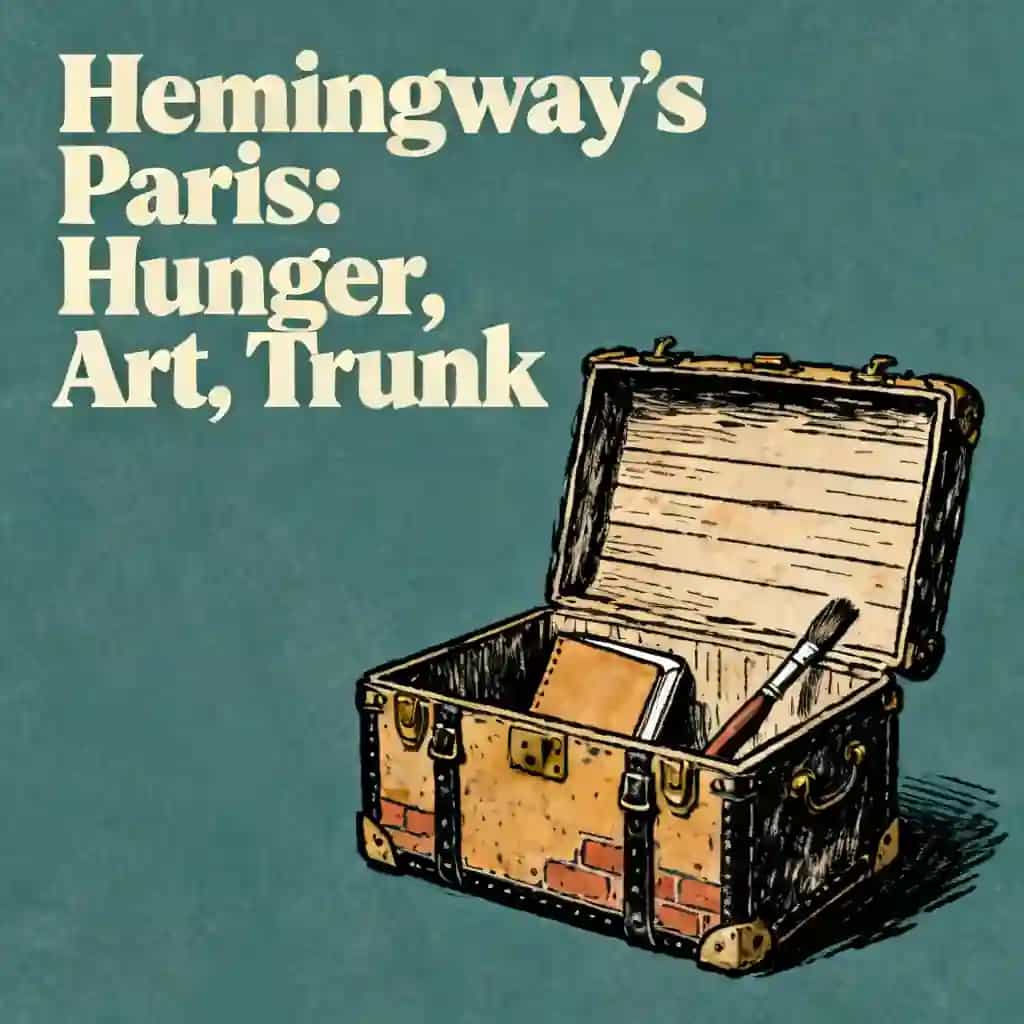
Hemingway’s Paris: Hunger, Art, and the Lost Generation
Explore Ernest Hemingway’s 'A Moveable Feast,' a bittersweet tribute to 1920s Paris where poverty sharpened the senses and literary legends were born.

Mejor cita de Hemingway’s Paris: Hunger, Art, and the Lost Generation
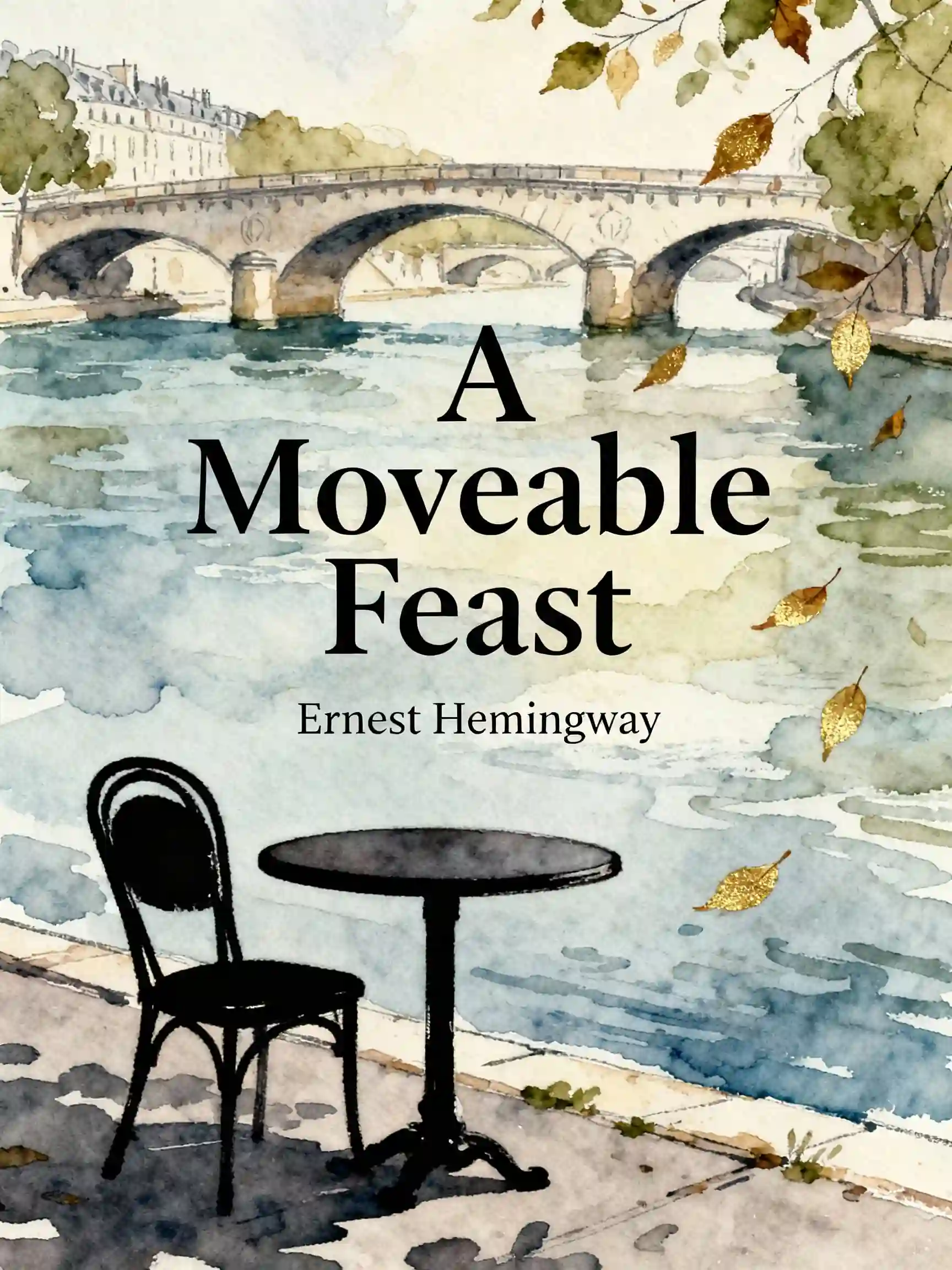
If you are lucky enough to have lived in Paris as a young man, then wherever you go for the rest of your life, it stays with you, for Paris is a moveable feast.
Generated by Alan Zong
movable feast by hemingway

Preguntas frecuentes
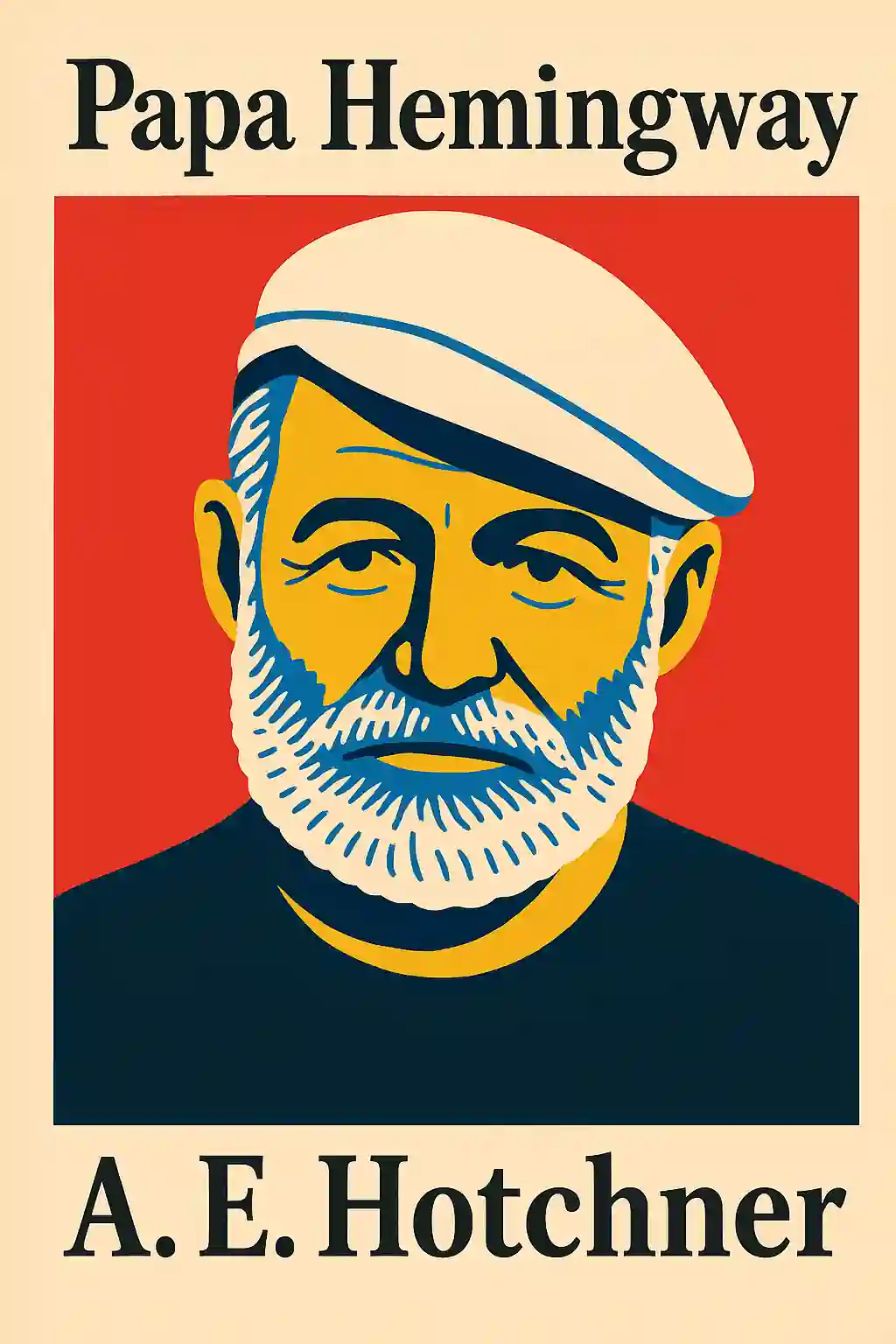
The title, suggested by Hemingway’s friend A.E. Hotchner, refers to the idea that if a person is lucky enough to live in Paris as a young man, the experience stays with them for the rest of their life, regardless of where they go. It suggests that the memories, intellectual energy, and "joie de vivre" of that time become a permanent part of one's internal geography.
In 1956, decades after he had lived in Paris, Hemingway was informed by the chairman of the Hotel Ritz that a Louis Vuitton trunk he had left in storage in 1930 was still in the basement. Inside the trunk, beneath old hunting gear and clothes, Hemingway discovered two stacks of notebooks he had kept as a young man. These raw, immediate journals from the 1920s served as the primary source material and inspiration for the sketches in the book.
Because Hemingway died before the book was officially finished, his fourth wife, Mary Hemingway, edited and published the original version in 1964, making choices about chapter order and content. In 2009, his grandson Seán Hemingway published a "Restored Edition" to more closely align with what he believed were Ernest’s original intentions. This version changed the sequence of chapters, restored the use of the second-person perspective, and included a more nuanced take on the end of Hemingway's first marriage.
Hemingway believed that physical hunger sharpened his mental perceptions and made him a more focused writer. During his early years in Paris, he often skipped meals because he was poor, but he viewed this lack of resources as a tool that stripped away distractions and forced him to prioritize his art. To him, the "discipline of the gut" was a way to reach a state of mind where he could write "one true sentence" without the "rot" of comfort.
The memoir offers a gritty and often critical look at Hemingway's contemporaries. He portrays Gertrude Stein as a mentor whose pettiness and ambition eventually soured their friendship, and he describes F. Scott Fitzgerald as a brilliant but tragic figure whose talent was compromised by alcohol and his destructive relationship with his wife, Zelda. These portraits serve as a contrast to Hemingway’s own emphasis on artistic discipline and "true" writing.
Creado por exalumnos de la Universidad de Columbia en San Francisco
"Instead of endless scrolling, I just hit play on BeFreed. It saves me so much time."


"I never knew where to start with nonfiction—BeFreed’s book lists turned into podcasts gave me a clear path."


"Perfect balance between learning and entertainment. Finished ‘Thinking, Fast and Slow’ on my commute this week."
"Crazy how much I learned while walking the dog. BeFreed = small habits → big gains."
"Reading used to feel like a chore. Now it’s just part of my lifestyle."

"Feels effortless compared to reading. I’ve finished 6 books this month already."
"BeFreed turned my guilty doomscrolling into something that feels productive and inspiring."

"BeFreed turned my commute into learning time. 20-min podcasts are perfect for finishing books I never had time for."
"BeFreed replaced my podcast queue. Imagine Spotify for books — that’s it. 🙌"

"It is great for me to learn something from the book without reading it."
"The themed book list podcasts help me connect ideas across authors—like a guided audio journey."
"Makes me feel smarter every time before going to work"
 Ask ChatGPT
 Ask Claude
Creado por exalumnos de la Universidad de Columbia en San Francisco
"Instead of endless scrolling, I just hit play on BeFreed. It saves me so much time."
"I never knew where to start with nonfiction—BeFreed’s book lists turned into podcasts gave me a clear path."
"Perfect balance between learning and entertainment. Finished ‘Thinking, Fast and Slow’ on my commute this week."
"Crazy how much I learned while walking the dog. BeFreed = small habits → big gains."
"Reading used to feel like a chore. Now it’s just part of my lifestyle."
"Feels effortless compared to reading. I’ve finished 6 books this month already."
"BeFreed turned my guilty doomscrolling into something that feels productive and inspiring."
"BeFreed turned my commute into learning time. 20-min podcasts are perfect for finishing books I never had time for."
"BeFreed replaced my podcast queue. Imagine Spotify for books — that’s it. 🙌"
"It is great for me to learn something from the book without reading it."
"The themed book list podcasts help me connect ideas across authors—like a guided audio journey."
"Makes me feel smarter every time before going to work"
"Instead of endless scrolling, I just hit play on BeFreed. It saves me so much time."
"I never knew where to start with nonfiction—BeFreed’s book lists turned into podcasts gave me a clear path."
"Perfect balance between learning and entertainment. Finished ‘Thinking, Fast and Slow’ on my commute this week."
"Crazy how much I learned while walking the dog. BeFreed = small habits → big gains."
"Reading used to feel like a chore. Now it’s just part of my lifestyle."
"Feels effortless compared to reading. I’ve finished 6 books this month already."
"BeFreed turned my guilty doomscrolling into something that feels productive and inspiring."
"BeFreed turned my commute into learning time. 20-min podcasts are perfect for finishing books I never had time for."
"BeFreed replaced my podcast queue. Imagine Spotify for books — that’s it. 🙌"
"It is great for me to learn something from the book without reading it."
"The themed book list podcasts help me connect ideas across authors—like a guided audio journey."
"Makes me feel smarter every time before going to work"
"Instead of endless scrolling, I just hit play on BeFreed. It saves me so much time."
"I never knew where to start with nonfiction—BeFreed’s book lists turned into podcasts gave me a clear path."
"Perfect balance between learning and entertainment. Finished ‘Thinking, Fast and Slow’ on my commute this week."
"Crazy how much I learned while walking the dog. BeFreed = small habits → big gains."
"Reading used to feel like a chore. Now it’s just part of my lifestyle."
"Feels effortless compared to reading. I’ve finished 6 books this month already."
"BeFreed turned my guilty doomscrolling into something that feels productive and inspiring."
"BeFreed turned my commute into learning time. 20-min podcasts are perfect for finishing books I never had time for."
"BeFreed replaced my podcast queue. Imagine Spotify for books — that’s it. 🙌"
"It is great for me to learn something from the book without reading it."
"The themed book list podcasts help me connect ideas across authors—like a guided audio journey."
"Makes me feel smarter every time before going to work"