BeFreed
    Categories>Science>Cosmetic Chemistry and Online Stocks for Beginners

    Cosmetic Chemistry and Online Stocks for Beginners

    22 min
    |
    |
    4 abr 2026
    ScienceFinanceEducation

    Stop guessing with unstable formulas and trend-chasing. Learn the science of stable emulsions and market cycles to build a resilient creative business.
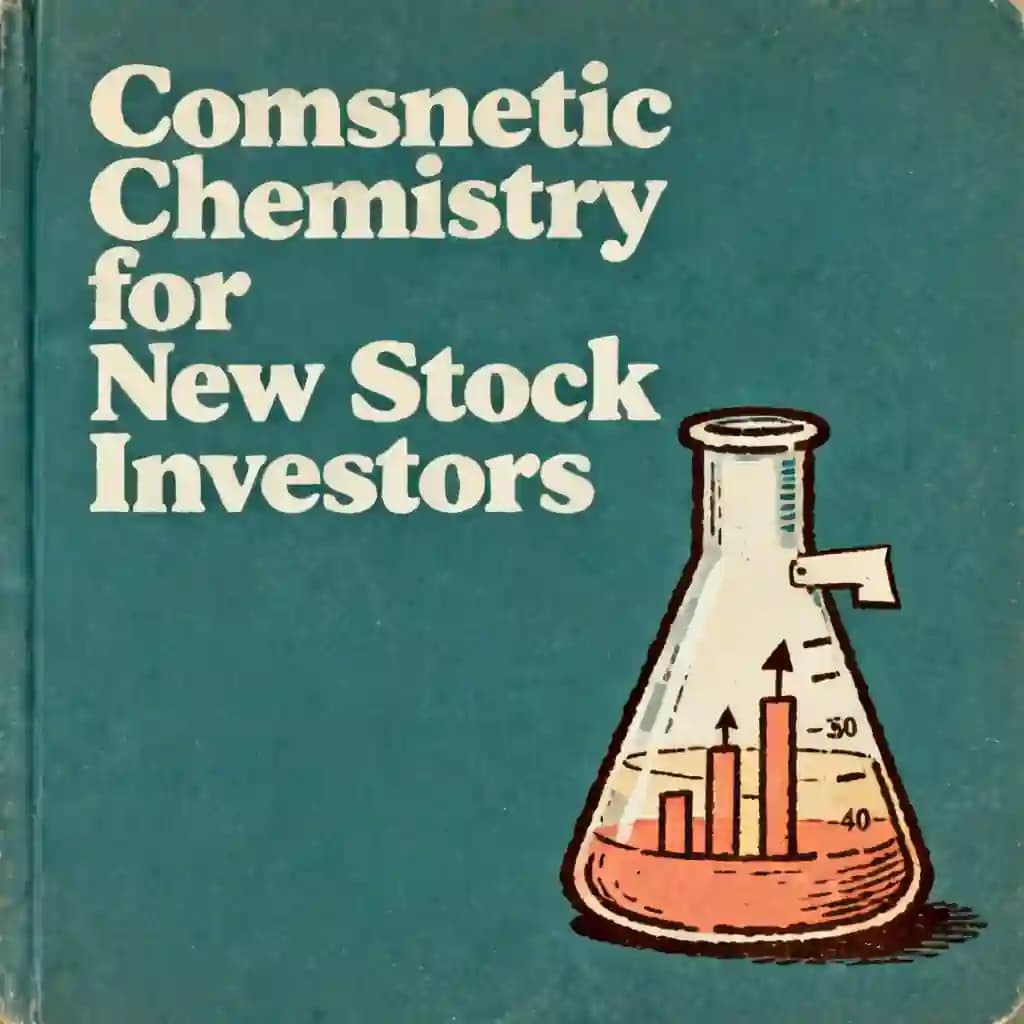
    Cosmetic Chemistry and Online Stocks for Beginners

    Mejor cita de Cosmetic Chemistry and Online Stocks for Beginners

    “

    The goal of this early stage is to build a 'stable emulsion' of knowledge that won't separate the moment the market gets volatile or a formulation fails a stability test.

    ”

    Esta lección de audio fue creada por un miembro de la comunidad BeFreed

    Pregunta de entrada

    I want one to teach me chemicals for cosmetics and how to learn stocks online

    Voces del presentador
    Lenaplay
    Estilo de aprendizaje
    Profundo
    Fuentes de conocimiento
    Skin Type Solution
    Skincare
    Not Just a Pretty Face
    The chemistry book
    Keys to Good Cooking
    Stock Investing for Dummies

    Preguntas frecuentes

    Descubre más

    Cosmetics Company

    Cosmetics Company

    PLAN DE APRENDIZAJE

    Cosmetics Company

    The global beauty market is highly competitive and requires a unique blend of scientific knowledge, regulatory compliance, and creative branding. This learning plan is designed for aspiring entrepreneurs and product managers who want to navigate the journey from initial formulation to large-scale distribution.

    3 h 8 m•4 Secciones
    Cosmetology and business

    Cosmetology and business

    PLAN DE APRENDIZAJE

    Cosmetology and business

    This plan is designed for aspiring and established cosmetologists who want to transition from being skilled technicians to successful entrepreneurs. It provides a comprehensive roadmap that balances technical beauty mastery with the operational systems required to build a profitable, scalable brand.

    2 h 17 m•4 Secciones
    Stock and trading

    Stock and trading

    PLAN DE APRENDIZAJE

    Stock and trading

    Whether you're a complete beginner looking to start investing or an active trader seeking to sharpen your edge, this learning path provides essential knowledge for navigating stock markets successfully. By combining foundational market understanding with technical skills, value investing principles, and psychological mastery, you'll develop a well-rounded approach that addresses both the analytical and mental aspects of trading and investing.

    2 h 29 m•4 Secciones
    Profit from stock investments

    Profit from stock investments

    PLAN DE APRENDIZAJE

    Profit from stock investments

    This learning plan provides a comprehensive path from stock market beginner to sophisticated investor, combining timeless principles from investing legends with modern analytical tools. It's ideal for anyone seeking to build lasting wealth through stock investments—whether you're starting from scratch, looking to formalize your self-taught knowledge, or wanting to upgrade from passive index investing to active stock selection with proven strategies.

    1 h 59 m•4 Secciones
    Learn money, trading, and discipline

    Learn money, trading, and discipline

    PLAN DE APRENDIZAJE

    Learn money, trading, and discipline

    This plan bridges the gap between financial theory and the psychological grit required for successful trading. It is ideal for aspiring investors who want to combine technical market skills with the self-discipline necessary to manage risk and build lasting wealth.

    3 h 4 m•4 Secciones
    Investing

    Investing

    PLAN DE APRENDIZAJE

    Investing

    This plan bridges the gap between basic financial literacy and professional-grade investment strategy. It is designed for individuals seeking to move beyond speculation by mastering value analysis and the psychology of market cycles.

    2 h 26 m•4 Secciones
    Learn to invest in public & private markets

    Learn to invest in public & private markets

    PLAN DE APRENDIZAJE

    Learn to invest in public & private markets

    This comprehensive curriculum bridges the gap between traditional stock analysis and exclusive private market strategies used by institutional investors. It is designed for ambitious individuals looking to move beyond basic saving toward sophisticated wealth management and advanced asset allocation.

    3 h 1 m•4 Secciones
    Learn Investing for Beginners

    Learn Investing for Beginners

    PLAN DE APRENDIZAJE

    Learn Investing for Beginners

    This learning plan bridges the gap between basic financial literacy and sophisticated market analysis. It is designed for aspiring investors who want to move beyond guesswork and build a sustainable wealth-building strategy based on proven principles.

    3 h 16 m•4 Secciones

    Creado por exalumnos de la Universidad de Columbia en San Francisco

    BeFreed Reúne a una Comunidad Global de 1,000,000 Mentes Curiosas
    Ver más sobre cómo se habla de BeFreed en la web

    "Instead of endless scrolling, I just hit play on BeFreed. It saves me so much time."

    @Moemenn
    platform
    star
    star
    star
    star
    star

    "I never knew where to start with nonfiction—BeFreed’s book lists turned into podcasts gave me a clear path."

    @Chloe, Solo founder, LA
    platform
    comments
    12
    likes
    117

    "Perfect balance between learning and entertainment. Finished ‘Thinking, Fast and Slow’ on my commute this week."

    @Raaaaaachelw
    platform
    star
    star
    star
    star
    star

    "Crazy how much I learned while walking the dog. BeFreed = small habits → big gains."

    @Matt, YC alum
    platform
    comments
    12
    likes
    108

    "Reading used to feel like a chore. Now it’s just part of my lifestyle."

    @Erin, Investment Banking Associate , NYC
    platform
    comments
    254
    likes
    17

    "Feels effortless compared to reading. I’ve finished 6 books this month already."

    @djmikemoore
    platform
    star
    star
    star
    star
    star

    "BeFreed turned my guilty doomscrolling into something that feels productive and inspiring."

    @Pitiful
    platform
    comments
    96
    likes
    4.5K

    "BeFreed turned my commute into learning time. 20-min podcasts are perfect for finishing books I never had time for."

    @SofiaP
    platform
    star
    star
    star
    star
    star

    "BeFreed replaced my podcast queue. Imagine Spotify for books — that’s it. 🙌"

    @Jaded_Falcon
    platform
    comments
    201
    thumbsUp
    16

    "It is great for me to learn something from the book without reading it."

    @OojasSalunke
    platform
    star
    star
    star
    star
    star

    "The themed book list podcasts help me connect ideas across authors—like a guided audio journey."

    @Leo, Law Student, UPenn
    platform
    comments
    37
    likes
    483

    "Makes me feel smarter every time before going to work"

    @Cashflowbubu
    platform
    star
    star
    star
    star
    star

    Creado por exalumnos de la Universidad de Columbia en San Francisco

    BeFreed Reúne a una Comunidad Global de 1,000,000 Mentes Curiosas
    Ver más sobre cómo se habla de BeFreed en la web

    "Instead of endless scrolling, I just hit play on BeFreed. It saves me so much time."

    @Moemenn
    platform
    star
    star
    star
    star
    star

    "I never knew where to start with nonfiction—BeFreed’s book lists turned into podcasts gave me a clear path."

    @Chloe, Solo founder, LA
    platform
    comments
    12
    likes
    117

    "Perfect balance between learning and entertainment. Finished ‘Thinking, Fast and Slow’ on my commute this week."

    @Raaaaaachelw
    platform
    star
    star
    star
    star
    star

    "Crazy how much I learned while walking the dog. BeFreed = small habits → big gains."

    @Matt, YC alum
    platform
    comments
    12
    likes
    108

    "Reading used to feel like a chore. Now it’s just part of my lifestyle."

    @Erin, Investment Banking Associate , NYC
    platform
    comments
    254
    likes
    17

    "Feels effortless compared to reading. I’ve finished 6 books this month already."

    @djmikemoore
    platform
    star
    star
    star
    star
    star

    "BeFreed turned my guilty doomscrolling into something that feels productive and inspiring."

    @Pitiful
    platform
    comments
    96
    likes
    4.5K

    "BeFreed turned my commute into learning time. 20-min podcasts are perfect for finishing books I never had time for."

    @SofiaP
    platform
    star
    star
    star
    star
    star

    "BeFreed replaced my podcast queue. Imagine Spotify for books — that’s it. 🙌"

    @Jaded_Falcon
    platform
    comments
    201
    thumbsUp
    16

    "It is great for me to learn something from the book without reading it."

    @OojasSalunke
    platform
    star
    star
    star
    star
    star

    "The themed book list podcasts help me connect ideas across authors—like a guided audio journey."

    @Leo, Law Student, UPenn
    platform
    comments
    37
    likes
    483

    "Makes me feel smarter every time before going to work"

    @Cashflowbubu
    platform
    star
    star
    star
    star
    star

    "Instead of endless scrolling, I just hit play on BeFreed. It saves me so much time."

    @Moemenn
    platform
    star
    star
    star
    star
    star

    "I never knew where to start with nonfiction—BeFreed’s book lists turned into podcasts gave me a clear path."

    @Chloe, Solo founder, LA
    platform
    comments
    12
    likes
    117

    "Perfect balance between learning and entertainment. Finished ‘Thinking, Fast and Slow’ on my commute this week."

    @Raaaaaachelw
    platform
    star
    star
    star
    star
    star

    "Crazy how much I learned while walking the dog. BeFreed = small habits → big gains."

    @Matt, YC alum
    platform
    comments
    12
    likes
    108

    "Reading used to feel like a chore. Now it’s just part of my lifestyle."

    @Erin, Investment Banking Associate , NYC
    platform
    comments
    254
    likes
    17

    "Feels effortless compared to reading. I’ve finished 6 books this month already."

    @djmikemoore
    platform
    star
    star
    star
    star
    star

    "BeFreed turned my guilty doomscrolling into something that feels productive and inspiring."

    @Pitiful
    platform
    comments
    96
    likes
    4.5K

    "BeFreed turned my commute into learning time. 20-min podcasts are perfect for finishing books I never had time for."

    @SofiaP
    platform
    star
    star
    star
    star
    star

    "BeFreed replaced my podcast queue. Imagine Spotify for books — that’s it. 🙌"

    @Jaded_Falcon
    platform
    comments
    201
    thumbsUp
    16

    "It is great for me to learn something from the book without reading it."

    @OojasSalunke
    platform
    star
    star
    star
    star
    star

    "The themed book list podcasts help me connect ideas across authors—like a guided audio journey."

    @Leo, Law Student, UPenn
    platform
    comments
    37
    likes
    483

    "Makes me feel smarter every time before going to work"

    @Cashflowbubu
    platform
    star
    star
    star
    star
    star

    "Instead of endless scrolling, I just hit play on BeFreed. It saves me so much time."

    @Moemenn
    platform
    star
    star
    star
    star
    star

    "I never knew where to start with nonfiction—BeFreed’s book lists turned into podcasts gave me a clear path."

    @Chloe, Solo founder, LA
    platform
    comments
    12
    likes
    117

    "Perfect balance between learning and entertainment. Finished ‘Thinking, Fast and Slow’ on my commute this week."

    @Raaaaaachelw
    platform
    star
    star
    star
    star
    star

    "Crazy how much I learned while walking the dog. BeFreed = small habits → big gains."

    @Matt, YC alum
    platform
    comments
    12
    likes
    108

    "Reading used to feel like a chore. Now it’s just part of my lifestyle."

    @Erin, Investment Banking Associate , NYC
    platform
    comments
    254
    likes
    17

    "Feels effortless compared to reading. I’ve finished 6 books this month already."

    @djmikemoore
    platform
    star
    star
    star
    star
    star

    "BeFreed turned my guilty doomscrolling into something that feels productive and inspiring."

    @Pitiful
    platform
    comments
    96
    likes
    4.5K

    "BeFreed turned my commute into learning time. 20-min podcasts are perfect for finishing books I never had time for."

    @SofiaP
    platform
    star
    star
    star
    star
    star

    "BeFreed replaced my podcast queue. Imagine Spotify for books — that’s it. 🙌"

    @Jaded_Falcon
    platform
    comments
    201
    thumbsUp
    16

    "It is great for me to learn something from the book without reading it."

    @OojasSalunke
    platform
    star
    star
    star
    star
    star

    "The themed book list podcasts help me connect ideas across authors—like a guided audio journey."

    @Leo, Law Student, UPenn
    platform
    comments
    37
    likes
    483

    "Makes me feel smarter every time before going to work"

    @Cashflowbubu
    platform
    star
    star
    star
    star
    star
    1.5K Ratings4.7
    Comienza tu viaje de aprendizaje, ahora
    BeFreed App
    BeFreed

    Aprende Cualquier Cosa, Personalizado

    DiscordLinkedIn
    Resúmenes de libros destacados
    Crucial ConversationsThe Perfect MarriageInto the WildNever Split the DifferenceAttachedGood to GreatSay Nothing
    Categorías en tendencia
    Self HelpCommunication SkillRelationshipMindfulnessPhilosophyInspirationProductivity
    Lista de lectura de celebridades
    Elon MuskCharlie KirkBill GatesSteve JobsAndrew HubermanJoe RoganJordan Peterson
    Colección premiada
    Pulitzer PrizeNational Book AwardGoodreads Choice AwardsNobel Prize in LiteratureNew York TimesCaldecott MedalNebula Award
    Temas destacados
    ManagementAmerican HistoryWarTradingStoicismAnxietySex
    Mejores libros por año
    2025 Best Non Fiction Books2024 Best Non Fiction Books2023 Best Non Fiction Books
    Autores destacados
    Chimamanda Ngozi AdichieGeorge OrwellO. J. SimpsonBarbara O'NeillWinston ChurchillCharlie Kirk
    BeFreed vs otras apps
    BeFreed vs. Other Book Summary AppsBeFreed vs. ElevenReaderBeFreed vs. ReadwiseBeFreed vs. Anki
    Herramientas de aprendizaje
    Knowledge VisualizerAI Podcast Generator
    Información
    Sobre Nosotrosarrow
    Preciosarrow
    Preguntas Frecuentesarrow
    Blogarrow
    Carrerasarrow
    Asociacionesarrow
    Programa de Embajadoresarrow
    Directorioarrow
    BeFreed
    Try now
    © 2026 BeFreed
    Términos de UsoPolítica de Privacidad
    BeFreed

    Aprende Cualquier Cosa, Personalizado

    DiscordLinkedIn
    Resúmenes de libros destacados
    Crucial ConversationsThe Perfect MarriageInto the WildNever Split the DifferenceAttachedGood to GreatSay Nothing
    Categorías en tendencia
    Self HelpCommunication SkillRelationshipMindfulnessPhilosophyInspirationProductivity
    Lista de lectura de celebridades
    Elon MuskCharlie KirkBill GatesSteve JobsAndrew HubermanJoe RoganJordan Peterson
    Colección premiada
    Pulitzer PrizeNational Book AwardGoodreads Choice AwardsNobel Prize in LiteratureNew York TimesCaldecott MedalNebula Award
    Temas destacados
    ManagementAmerican HistoryWarTradingStoicismAnxietySex
    Mejores libros por año
    2025 Best Non Fiction Books2024 Best Non Fiction Books2023 Best Non Fiction Books
    Herramientas de aprendizaje
    Knowledge VisualizerAI Podcast Generator
    Autores destacados
    Chimamanda Ngozi AdichieGeorge OrwellO. J. SimpsonBarbara O'NeillWinston ChurchillCharlie Kirk
    BeFreed vs otras apps
    BeFreed vs. Other Book Summary AppsBeFreed vs. ElevenReaderBeFreed vs. ReadwiseBeFreed vs. Anki
    Información
    Sobre Nosotrosarrow
    Preciosarrow
    Preguntas Frecuentesarrow
    Blogarrow
    Carrerasarrow
    Asociacionesarrow
    Programa de Embajadoresarrow
    Directorioarrow
    BeFreed
    Try now
    © 2026 BeFreed
    Términos de UsoPolítica de Privacidad

    Puntos clave

    1

    The Roadmap From Hobbyist to Creator

    0:00

    You might think creating a top-tier face cream is about hunting down the rarest organic extracts, but professional formulators actually prioritize structure over hype. Most beginners make the mistake of "mixing" by feel, but real formulation is about using precise percentages so your product stays stable for months, not just days. Today, we’re mapping out your dual journey into cosmetic chemistry and online stocks. You’ll learn why starting with water-free anhydrous balms is the safest way to master melting points before tackling complex emulsions. We’re breaking down the exact roadmap to go from a curious hobbyist to a confident creator.

    2

    Strategic Foundations for Formulation and Finance

    0:52

    The transition from a casual observer to a deliberate practitioner in both cosmetic science and the stock market requires a fundamental shift in how you categorize information. In the world of cosmetics, as we move beyond the initial curiosity of the first section, you must start thinking in terms of product systems rather than individual ingredients. A common mistake for those starting out is to buy a dozen expensive botanical extracts without understanding the carrier system that will actually deliver them to the skin. Professional formulators—like those who lead the specialized courses at institutions like Rutgers or through industry-led programs like those from Olay—view a product as a hierarchy. At the very bottom is the base, usually water or oil. Above that are the functional ingredients like emulsifiers and thickeners that provide structure. Only at the very top do we find the "actives," those high-performance chemicals like Niacinamide or Hyaluronic Acid that provide the specific results consumers crave. If the bottom layers of your "system" are weak, the expensive actives at the top will either degrade, separate, or fail to penetrate the skin barrier effectively.

    2:11

    This same systemic thinking applies directly to how you begin your education in the stock market online. Just as you wouldn't attempt a complex oil-in-water emulsion before understanding how a simple balm behaves, you shouldn't dive into day trading or complex options before understanding the "base" of the market. Online platforms like Coursera offer a structured way to learn these fundamentals—moving from the history and scope of an industry to the technical "chemistry" of how it functions. When you are looking to learn stocks online, your first step is to identify your "active" goal. Are you looking for long-term wealth accumulation through dividends, or are you interested in the "sensory" excitement of growth stocks? By using structured online courses, you can build a roadmap that mirrors the seven modules of a cosmetic science specialization. You start with the history and global market dynamics—understanding who the stakeholders are—before moving into the "biology" of a company, which is its financial health. This prevents the overwhelm that comes from trying to "mix" too many strategies at once. In both fields, the goal of this early stage is to build a "stable emulsion" of knowledge that won't separate the moment the market gets volatile or a formulation fails a stability test.

    3

    The Chemistry of Stability and Market Resilience

    3:38

    To truly master the chemicals used in cosmetics, you have to look at the molecular level to understand why things stay together. One of the most important concepts you will encounter is the Hydrophilic-Lipophilic Balance—or HLB—system. This is a numerical scale from zero to twenty that tells you whether a chemical is more "oil-loving" or "water-loving." If you are formulating an oil-in-water cream, which is the most common type for lightweight daily moisturizers, you need an emulsifier with a high HLB—typically between eight and eighteen. If you choose the wrong one, the oil droplets will eventually coalesce and float to the top—a process known in the lab as "creaming" or "cracking." This isn't just an aesthetic failure—it’s a safety failure. When a product separates, the preservative system—which is usually dissolved in the water phase—can no longer protect the oil phase, leading to rapid microbial growth. Understanding this "balance" is what separates a professional from a hobbyist. You are essentially acting as a molecular matchmaker—using chemicals like Glyceryl Stearate or Polysorbate 60 to bridge the gap between two phases that naturally want to stay apart.

    4:57

    When we translate this to the stock market, we find a striking parallel in the concept of portfolio rebalancing. Just as an emulsion requires a specific ratio of oil to water to remain stable, a financial portfolio requires a specific ratio of different asset classes to remain resilient against "separation" during a market downturn. If you are learning stocks online, you will frequently hear about "diversification," but rebalancing is the actual "chemical process" that makes diversification work. When one sector of the market—say, tech stocks—grows rapidly, it begins to "overwhelm" the water phase of your portfolio. Without the "emulsifier" of a disciplined rebalancing strategy, your portfolio becomes "greasy" and top-heavy—meaning you are taking on far more risk than you intended. Online tools and brokerage platforms often provide automated ways to maintain this balance, but the wisdom lies in knowing why the balance exists in the first place. You are looking for a "homogeneous mixture" of investments that can coexist without one "immiscible" event—like a sudden interest rate hike—causing the entire system to fail. By studying the "molecular structure" of a company—its debt-to-equity ratio, its cash flow, and its competitive moat—you are essentially performing the same due diligence a chemist performs when checking a Certificate of Analysis for a new batch of Cetyl Alcohol.

    4

    Navigating the Spectrum of Synthetic and Natural Inputs

    6:29

    One of the most heated debates you will encounter as you teach yourself about cosmetic chemicals is the divide between "natural" and "synthetic" ingredients. It is easy to fall into the trap of thinking that anything "natural" is inherently safer, but a rigorous scientific approach—like the one taught in the Introduction to Cosmetic Science and Ingredients specialization—reveals a more nuanced reality. Natural ingredients like essential oils or botanical extracts are incredibly complex—often containing hundreds of individual chemical constituents. This complexity makes them beautiful for marketing, but it also makes them unpredictable. They are prone to oxidation, they vary from batch to batch based on the soil and weather where the plant was grown, and they can be potent allergens. Synthetic ingredients, on the other hand, are often "nature-identical" or highly purified versions of these compounds. A synthetic version of Vitamin C—like Sodium Ascorbyl Phosphate—is often preferred by professional formulators because it is more stable and less likely to irritate the skin than the pure "natural" extract. The goal isn't to pick a side but to understand how to use both strategically. You might use a natural carrier oil like Jojoba for its skin-mimicking properties, but pair it with a synthetic preservative like Phenoxyethanol to ensure the product doesn't grow mold within a week.

    7:56

    In the world of online stock education, you will find a similar divide between "fundamental" and "technical" analysis. Fundamental analysis is like looking at the "natural" origin of a company—its management, its products, and its place in the culture. It’s the "Latin binomial name" of the stock. Technical analysis is more "synthetic"—it uses mathematical models, charts, and "bio-identical" patterns to predict price movements based purely on data. Just as the best cosmetic formulas often blend natural nourishment with synthetic stability, the most successful investors often use a "hybrid" approach. They might identify a high-quality "natural" company through fundamental research but use "synthetic" technical indicators to decide the best time to "add it to the mixture." When you are learning online, you have access to a vast array of "green chemistry" tools—software that filters stocks based on ESG—Environmental, Social, and Governance—criteria, which is the financial equivalent of "sustainable sourcing." By understanding the "INCI" names of the financial world—the standardized terminology used in SEC filings and annual reports—you can look past the "marketing labels" of a stock and see exactly what is inside the "formulation" of the business.

    5

    The Biology of Growth and Barrier Protection

    9:23

    Before you can effectively use chemicals on the skin, you must understand the "substrate" you are working with—the skin barrier itself. This is often covered in depth in the "Biology of Skin" modules of cosmetic science programs. The skin is not a static wall—it is a dynamic, living organ with multiple layers: the epidermis, the dermis, and the hypodermis. Each layer has a specific "requirement" from your cosmetic chemicals. The epidermis, for instance, relies on a "bricks and mortar" structure where skin cells are the bricks and lipids—like ceramides and cholesterol—are the mortar. When you formulate a cream, you are essentially trying to "patch" this mortar. This is why ingredients like Hyaluronic Acid are so popular—they act as humectants that draw water into the "bricks," while emollients like Shea Butter or Squalane act as occlusives that "seal" the mortar. If you don't understand this biology, you might create a product that feels "greasy" on the surface but actually leaves the deeper layers of the skin dehydrated—a phenomenon often seen with poorly formulated "natural" balms that lack humectants.

    10:38

    This concept of "barrier protection" is vital when you start investing in stocks. In finance, we call this the "margin of safety." Just as the skin uses its microbiome—a diverse community of microbes—to regulate health and immunity, a healthy investment strategy uses a "microbiome" of different asset classes to protect against extrinsic factors like inflation or geopolitical shifts. When you are learning online, you are essentially building your "financial epidermis"—the outermost layer of your wealth that has to withstand the "UV rays" of market volatility. You use "sunscreen" ingredients—like high-quality bonds or cash reserves—to prevent the "DNA damage" that occurs when you are forced to sell stocks during a market crash. A professional investor doesn't just look for "growth" any more than a cosmetic scientist just looks for "active" results—they both prioritize the "health of the barrier." If the barrier fails, the growth is irrelevant. By studying common "skin conditions" of the market—like bubbles or recessions—you can learn how the industry "combats the harmful effects" of these cycles through better "formulation" of their investment portfolios.

    6

    Mastery of Phase Transitions and Market Cycles

    11:55

    In cosmetic formulation, the "phase transition" is a critical moment. This is when you take your heated water phase and your heated oil phase and combine them under high-shear mixing. If the temperatures aren't perfectly matched—usually around seventy to seventy-five degrees Celsius—the emulsifier won't be able to "grab" both phases, and the mixture will fail. This "heat" is necessary to reduce the viscosity of the oils and waxes, allowing them to break into the tiny droplets required for a stable cream. However, you also have to master the "cool-down phase." This is where you add your most sensitive "chemicals"—things like Vitamin E, preservatives, and essential oils—that would be destroyed by the high heat of the initial emulsification. If you add your preservative too early, it might "deactivate," leaving your beautiful cream vulnerable to bacteria. This timing is everything. It’s a disciplined sequence of events that requires patience and precision.

    12:58

    Learning the stock market online requires a similar mastery of "timing and phases," although in a different sense. The market moves through distinct phases—accumulation, markup, distribution, and markdown. Just as you wouldn't add a heat-sensitive active to a boiling oil phase, you shouldn't "pour" all your capital into the market during a "boiling" distribution phase when prices are at their peak and professionals are selling. Instead, you wait for the "cool-down" phase of a market correction to add your most "sensitive" growth actives. This is where "Dollar Cost Averaging"—a strategy often taught in introductory online stock guides—becomes your "preservative system." By investing a fixed amount at regular intervals, you are essentially "emulsifying" your risk over time. You aren't trying to "time the market" perfectly—which is as difficult as trying to catch a falling emulsion—but rather you are ensuring that your "average cost" remains stable regardless of the "temperature" of the market on any given day. This systematic approach allows you to "formulate" a long-term wealth strategy that doesn't "break" when the market "cools down" suddenly.

    7

    Ethical Sourcing and Transparent Disclosures

    14:07

    As you dive deeper into cosmetic chemicals, you will eventually reach the "Ethics in Cosmetic Science" module. This is where you learn that "what" is in the bottle is often less important than "how" it got there. Ethical responsibility in cosmetics involves looking at the global supply chain—ensuring that your "Mica" isn't sourced using child labor or that your "Squalane" is derived from olives rather than sharks. This is where "Green Chemistry" principles come in—using "upcycled" ingredients from food waste or designing "biodegradable" formulas that won't harm the microbiome of the ocean when they are washed down the drain. For a new brand owner, transparency is the "active ingredient" that builds consumer trust. When you list your ingredients using the INCI—International Nomenclature of Cosmetic Ingredients—system, you are providing a "standardized language" that allows consumers to verify your claims.

    15:08

    In the world of online stock trading, this transparency is mirrored in the regulatory requirements of the SEC and other global bodies. When you learn to read a company's "10-K" or "10-Q" reports online, you are essentially reading the "INCI list" of that business. You are looking for "hidden" chemicals—like off-balance-sheet debt or "toxic" management practices—that could "irritate" your investment over time. Just as the cosmetic industry is moving toward "clean beauty," the financial world is moving toward "sustainable investing." Companies are now being "graded" on their carbon footprint and their social impact. By using online platforms that provide "ESG ratings," you can ensure that your money is "sourced" ethically. You aren't just looking for "performance" anymore—you are looking for "integrity." This alignment between your "values" and your "portfolio" is the ultimate form of "stability." It ensures that you can "hold" your investments through thick and thin because you believe in the "formulation" of the companies you own.

    8

    The Practical Playbook for the Integrated Learner

    16:17

    To turn these insights into action, you need a concrete plan that balances your study of chemicals and stocks. Start by enrolling in a structured online course like the Introduction to Cosmetic Science and Ingredients specialization on Coursera. This will give you the "academic foundation" you need to understand the biology and chemistry of the industry. While you are doing that, set up a "paper trading" account on a reputable online brokerage platform. This allows you to "formulate" an investment strategy using "simulated" money—it’s the "lab sample" phase of your financial journey. You can test your "HLB balance" and your "preservative system" without risking your actual "capital."

    17:03

    For your cosmetic journey, your next action is to create an "Ingredient Library." Don't just buy ingredients; create a spreadsheet that lists each chemical's INCI name, its function—is it an emollient, a humectant, or a surfactant?—its solubility—is it oil or water soluble?—and its recommended "use level." For your stock journey, create a "Company Library." List the "INCI" details of five companies you use every day—their ticker symbol, their primary "active" product, their "revenue growth" percentages, and their "debt-to-equity" ratio. By treating both subjects with the same "analytical rigor," you will find that the "cross-pollination" of ideas begins to happen naturally. You will start seeing "market dynamics" in your formulation beakers and "chemical reactions" in your stock charts. This "integrated" approach is the fastest way to achieve "mastery" in both fields.

    9

    Avoiding the "Trend-Driven" Formulation Pitfall

    18:03

    The biggest danger for both the new formulator and the new investor is the "hype cycle." In cosmetics, this looks like rushing to include a "rare botanical extract" just because it’s trending on social media, without realizing that it might destabilize your entire emulsion or that it has no peer-reviewed data to support its efficacy. Professional formulators—like Ashley, a chemical engineer and skincare specialist—always emphasize "structure first, actives later." A strong formula is built on a "reliable system" you understand well—like a basic oil-in-water lotion—not on a "long list of rare extracts." These extras often "add instability before adding value." If you master the "basics of cosmetic formulation"—understanding phase balance and texture control—you will be able to evaluate "novelty" with a critical eye. You will know if a new "biotech-derived" ingredient actually brings something new to the "skin-brain communication" pathway or if it’s just an expensive "sensory" addition.

    19:08

    This same "discipline of the basics" is your greatest protection in the stock market. Online, you will be bombarded with "trend-driven" investment advice—the "rare extracts" of the financial world. Whether it’s a new cryptocurrency or a "disruptive" tech startup that has no earnings, these are "actives" that can easily "destabilize" your financial "emulsion." A "wise" investor follows the "Falcon Method" or "Stock Investing for Dummies" approach—they build a "foundation" of high-quality, "boring" companies that provide "predictable" results. They don't "guess" or rely on "random recipes" found on social media. They "build systems." They understand that "wealth" is a "slow-release" formulation that requires time and "oxidative stability." By avoiding the "hype," you are ensuring that your "portfolio" remains "shelf-stable" for decades, not just for the length of a "marketing campaign."

    10

    Reflecting on the Homogeneous Future

    20:12

    As we wrap up this deep dive into the dual worlds of cosmetic chemistry and online stocks, take a moment to reflect on the "synergy" you’ve discovered. You’ve learned that whether you are "mixing" a face cream or "allocating" a portfolio, the principles of "stability," "balance," and "integrity" are universal. You now have a "roadmap" that moves from the "History and Scope" of an industry to the "Basics of Formulation"—whether that formulation is made of "surfactants" or "securities." You understand that "chemicals" aren't something to fear—they are the "building blocks" of everything around us—and that "the stock market" isn't a "casino"—it’s a "global market dynamic" that can be understood through "rigorous analysis."

    21:00

    I encourage you to try applying just one idea from today’s session. Perhaps it’s looking up the INCI list of your favorite moisturizer and identifying the "emulsifier system" that holds it together. Or perhaps it’s logging onto an online financial portal and checking the "HLB balance"—the debt-to-equity ratio—of a company you admire. By taking these small, "practical" steps, you are beginning to "emulsify" your theoretical knowledge into "tangible" skills. You are no longer just a "listener"—you are a "creator" and an "investor." Thank you for spending this time with me, exploring the Nuances of these fascinating fields. I hope you feel "invigorated" and "empowered" to continue your "formulation" journey, building a life that is as "stable," "luxurious," and "high-performing" as the most "elegant" cream on the market. Reflect on the "micro-circulation" of your new knowledge, and let it "fuel" your next "active" step toward mastery.

    Más como esto

    podcast cover
    source 1source 2source 3source 4
    6 sources
    Stock Investment Mastery: From Beginner to Builder
    Discover the fundamentals of stock investing through expert insights on ownership, compound growth, and index funds. Learn to overcome emotional traps and build lasting wealth with practical, actionable strategies.
    8 min
    podcast cover
    How the Stock Market WorksStock Investing For DummiesStock Market Basics: What Beginner Investors Should KnowUnderstanding the Stock Market: A Beginner's Guide
    6 sources
    Stock Trading Basics: Your Wealth Building Blueprint
    Demystify the stock market with proven strategies, from understanding what stocks really are to building long-term wealth through smart investing. Perfect for beginners ready to start their financial journey.
    9 min
    podcast cover
    source 1source 2source 3source 4
    6 sources
    Stock Market Investing Mastery for Beginners
    Learn the fundamental principles of stock market investing from expert insights. Discover how to build wealth through index funds, diversification, and compound growth while avoiding common pitfalls.
    9 min
    podcast cover
    source 1source 2source 3source 4
    6 sources
    Stock Market Mastery: From Beginner to Investor
    Discover the fundamentals of stock investing through insights from six expert books. Learn what you're actually buying, growth vs income strategies, why most pros can't beat index funds, and practical steps to build wealth through compound growth over time.
    11 min
    podcast cover
    How the Stock Market WorksStock Investing For DummiesWhy Does The Stock Market Go Up?Fundamental Analysis for Dummies
    26 sources
    Stock Market Investing: 5 Essential Steps for Beginners
    Learn how anyone can start investing correctly with five basic steps, transforming from intimidated beginner to confident part-owner of real businesses through practical, actionable guidance.
    32 min
    podcast cover
    The Trading BookThe Visual InvestorMake Money Trading OptionsHigh Probability Trading Strategies
    28 sources
    Stock Trading Reality Check: Smart Strategies
    Eli breaks down the truth about stock trading, debunking myths while teaching Nia the essential foundations, risk management, and psychological discipline needed to trade successfully.
    33 min
    book cover
    Business chemistry
    Kim Christfort and Suzanne Vickberg
    Unlock the secrets of workplace dynamics and learn to harness cognitive diversity for better team performance and leadership.
    9 min
    book cover
    Market mind games
    Denise Shull
    Radical approach to investing psychology, leveraging emotions as data to make better trading decisions and manage market risks.
    9 min