BeFreed
    Categories>Psychology>Anxious Attachment and the Fear of Silence: Understanding the Loop

    Anxious Attachment and the Fear of Silence: Understanding the Loop

    12 min
    |
    |
    19 ago 2026
    • Psychology
    • Self-Growth

    Explore how anxious attachment style creates a fear of silence in relationships. Learn to reframe hypervigilance and abandonment anxiety as survival mechanisms.

    Anxious Attachment and the Fear of Silence: Understanding the Loop
    0:00 / 0:00
    Elige cómo se cuenta

    Un episodio. Muchas formas de escucharlo.

    Las mismas ideas de Anxious Attachment and the Fear of Silence: Understanding the Loop. Elige la voz, profundidad y ritmo que más te convengan. Cambia cuando quieras.

    Transcripción y capítulos

    Capítulo 1

    Why your attachment style is actually a survival strategy

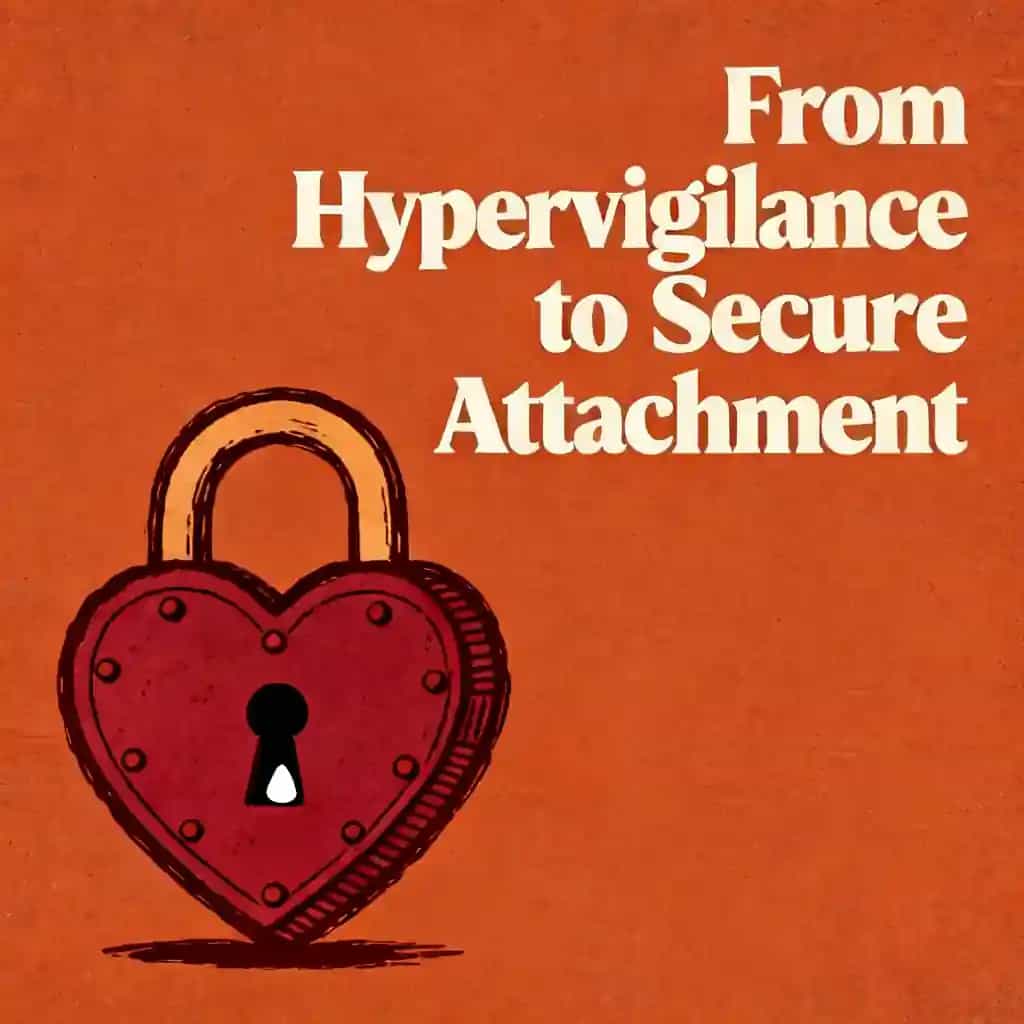
    You’ve likely felt that cold pit in your stomach when a friend’s text goes unanswered for three hours. In that silence, your mind doesn’t just wait—it builds a case. You scroll back through old messages, hunting for a moment where you might have been "too much" or said something "weird." This isn't just overthinking; it's a physiological response. About 20% of adults carry an anxious attachment style, a pattern often forged in early childhood when emotional care was inconsistent. You learned that love could disappear without warning, so you became a master at monitoring the "temperature" of your relationships. This hypervigilance was once a brilliant survival mechanism. If your environment was unpredictable, staying tuned to every subtle shift in a caregiver’s mood kept you safe. But in adulthood, that same radar can turn a busy friend’s silence into a perceived abandonment. Understanding this is the first step toward relief. You aren't "clingy" or "needy" by nature; your nervous system is simply stuck in a protective loop, scanning for threats to the connections that keep you grounded. By reframing these anxious spikes as an old survival program rather than a personal flaw, you can start to create space between the feeling and the story your mind tells. We’re going to look at how these early "wounds"—from the way you were mirrored as an infant to how your family handled conflict—dictate your present-day social life, and more importantly, how to finally turn down the volume on that constant background noise of worry.
    Capítulo 2

    The invisible architecture of your social anxiety

    Your attachment patterns didn't develop in a vacuum—they are the result of an invisible architecture built from four foundational wounds. The "mother wound" often acts as your primary template for being seen, while the "father wound" might dictate how much space you feel allowed to claim in a group. If you grew up with parents who were emotionally inconsistent—warm one day and critical the next—your brain learned that closeness is a moving target. This creates a "fawn" response, a survival instinct where you appease others to maintain safety. Psychotherapist Meg Josephson, who explores these dynamics in her work, notes that people-pleasing isn't a personality trait; it’s fawning in action. You might have learned that being the "perfect, good kid" was the only way to stabilize a volatile home. As an adult, this translates into an exhausting need for constant validation. You feel you can’t be "good" unless you know the relationship is "good." This is why even a slight change in a friend’s punctuation or response time feels like a catastrophe. You are essentially trying to control how others perceive you to soothe your own internal fear. But here’s the hard truth: you can’t actually control someone else’s perception. Even if you do everything perfectly, they see you through the lens of their own inner world. When you recognize that your anxiety is a response to an old, perceived threat rather than a current reality, you begin to reclaim your energy. The emptiness you feel when friends aren't around is often the silence of that "true self" that never got the chance to flourish because it was too busy adjusting to others' expectations.

    Aprende más con este episodio

    Lleva las ideas de este episodio a una experiencia de aprendizaje guiada en BeFreed.

    Capítulo 3

    Decoding the language of absence and emptiness

    When you feel a sense of emptiness in the absence of others, you are experiencing what some therapists call the "false self" taking center stage. If your spontaneous gestures as a child—your tantrums, your loud joys, your weird ideas—weren't acknowledged or were shut down, you likely developed a compliant, "false" version of yourself to stay lovable. This version of you is a skilled chameleon, adjusting what you wear and how you speak to fit into any group. The downside is that when you are alone, the "deadness" or emptiness sets in because there is no rooted "true self" to keep you company. This is why absence feels so heavy. Philosophers Tom Roberts and Joel Krueger describe loneliness as an "emotion of absence"—a state where social goods like trust, affection, and validation feel out of reach, either temporarily or permanently. For the anxious-attached, this absence isn't just a lack of company; it’s a perceived loss of self. You might feel you only exist when you are being reflected in the eyes of a friend. When they aren't there to validate your humor or your worth, the foundation disappears. This leads to a frantic "reassurance-seeking" cycle where you ask, "Are we okay?" just to feel real again. But this cycle is like a bandage on a wound that needs stitches; the relief lasts ten minutes, then the anxiety returns because the root cause—that lack of internal security—hasn't been addressed. True healing involves getting curious about that emptiness rather than running from it. It means learning to tolerate the "not-there" without assuming it means "never-again."

    Capítulo 4

    The trap of the anxious-avoidant friendship

    You might notice a frustrating pattern: you tend to gravitate toward friends who seem perpetually out of reach. This is often called the "anxious-avoidant trap". For someone with an anxious attachment style, an avoidant friend feels strangely familiar. Their distance mirrors the inconsistency of your early caregivers, making the "chase" for their attention feel like home. You reach out to make plans; they take days to respond. You interpret this as a sign of your own unworthiness and reach out even more to close the gap. This makes the avoidant friend feel overwhelmed, so they pull back further, which triggers your panic, and the cycle continues until burnout occurs. In these dynamics, you might find yourself "keeping score"—tracking who texted first or who suggested the last hangout—as a way to protect yourself. But this mental tally only creates more tension. It's important to realize that an avoidant friend's need for space is often about their own self-protection, not a judgment of you. They might be downplaying their emotional needs or shutting down when things get too "heavy" because closeness feels unsafe to them. When you are in the thick of this, you might start hyper-focusing on their flaws to justify your own urge to either cling or eventually resent them. Breaking this trap requires moving toward "secure" friendships—the ones that might feel "boring" at first because they lack the high-stakes drama of the chase. That "boredom" is actually the sound of safety. It’s a relationship where you don't have to perform to be valued.

    Aprende más con este episodio

    Lleva las ideas de este episodio a una experiencia de aprendizaje guiada en BeFreed.

    Capítulo 5

    Digital surveillance and the amplification of fear

    Social media acts as a high-powered amplifier for friendship anxiety. It provides endless opportunities for "relationship monitoring," where you analyze likes, "last active" timestamps, and story views for clues about where you stand. If a friend watches your Instagram story but hasn't replied to your text from three hours ago, your brain might interpret this as a deliberate snub. You feel forgotten because the digital world makes everyone appear constantly available, yet selectively distant. But think about the "t-shirt study" mentioned by Meg Josephson: people wearing embarrassing shirts in public vastly overestimated how many people actually noticed them. We are all the protagonists of our own stories, and most of the time, your friends aren't thinking about you nearly as much as you think they are—not because they don't care, but because they are caught up in their own lives, jobs, and stresses. They might be scrolling passively during a five-minute break between meetings, not having the emotional bandwidth to engage in a text conversation. When you use social media as a surveillance tool, you are looking for information to affirm a negative belief that something is wrong with you. This only deepens the feeling of emptiness. You might feel "cringe" or regret a post because it didn't get the validation you expected, leading to a spiral of self-judgment. The goal is to "decenter" these digital signals. A thumbs-up emoji or a "read" receipt isn't a verdict on your soul; it’s just a data point in a very busy, very distracted world.

    Capítulo 6

    Rewiring the nervous system through NICER regulation

    To manage the "threat mode" your nervous system enters when you feel forgotten, you need practical tools to self-regulate before you reach for that phone to seek reassurance. One effective method is the "NICER" technique. It starts with "N"—Notice. Simply acknowledge that your anxiety has spiked. Next is "I"—Invite it to stay. Instead of shoving the discomfort away or scrolling to distract yourself, let the feeling sit there. The "C" stands for Curiosity. Ask yourself what triggered this. Does it remind you of an old wound? Are you feeling a "bodily doubt" where your palms are sweating or your stomach feels sick? The "E" is for Embrace. Have some compassion for that anxious part of you; it’s just trying to keep you safe from a perceived abandonment. Finally, "R" is for Return to what is real. Look around the room. Name five things you can see, four you can hear, three you can touch, two you can smell, and one you can taste. This grounds you in the present moment, away from the worst-case scenarios your mind is spinning. Another strategy is "delaying the urge". If you feel a desperate need to text a friend to ask "Are we okay?", set a timer for thirty minutes. Sit with the discomfort and watch it peak and then naturally subside. You are teaching your brain that you can be uncomfortable and safe at the same time. This builds "self-trust," the internal security that tells you that even if a friend is busy or even if a friendship fades, you will still be okay. You are learning to meet your own needs first, rather than outsourcing your sense of worth to someone else’s response time.

    Aprende más con este episodio

    Lleva las ideas de este episodio a una experiencia de aprendizaje guiada en BeFreed.

    Capítulo 7

    Building an internal sanctuary of security

    The ultimate goal in managing anxious attachment is to move from "fear-driven" friendships to ones rooted in internal stability. This doesn't mean becoming so self-sufficient that you don't need people—humans are wired for connection. It means building a diverse friendship network so that no single person carries the entire weight of your emotional needs. When you rely on just one or two people, every interaction feels like a high-stakes test. By cultivating casual connections and hobbies, you reduce the pressure on your core group. You should also practice "direct communication" from a calm place. Instead of asking "Are you mad?", try saying, "I’ve been in my head a bit today and missing our chats. Hope you’re having a good one!". This expresses a need without demanding a rescue. Healing also involves doing "inner child work"—recognizing when your current reaction is actually a response to an old, childhood pain. When you feel that emptiness, imagine talking to your younger self and giving them the reassurance they didn't get back then. You are creating a "true self" that doesn't need to bargain or adjust its expectations to be loved. As you heal these core wounds, you'll find you can tolerate the natural fluctuations of friendship—the busy weeks, the missed calls, the slow fades—without your attachment system going into a full-blown crisis. You start to see that "solitude" can be a positive state of being rather than a sign of exclusion. You become your own source of validation, which ironically makes you a more grounded and attractive friend to others.

    Capítulo 8

    Finding peace in the quiet moments

    Thank you for taking this time to explore the complex landscape of your own heart and mind. Managing anxious attachment isn't about "fixing" yourself—it's about learning to navigate your nervous system with more grace and less judgment. The fear of being forgotten is a deeply human ache, but it doesn't have to be the pilot of your life. As you go about your day, I encourage you to notice the next time that "spiral" begins. Before you jump into action to fix a perceived problem, try to simply sit with yourself for a few minutes. Use one of the grounding techniques we discussed, like naming the things in your environment or simply breathing through the discomfort. Remember that your worth is not a variable that changes based on someone else's text message. It is a constant. You might reflect on one friendship this week where you’ve been "keeping score" or seeking excessive reassurance, and see if you can take a small step toward letting that go. Trust that the people who truly value you will not simply forget you because of a few days of silence. You are building a life where your peace of mind is rooted in your own internal sanctuary, and that is a journey worth every step. Be gentle with yourself as you practice these new ways of being. Secure connection is possible, and it starts with the way you show up for yourself in those quiet, unaccompanied moments.

    ★★★★★

    Has llegado al final de Anxious Attachment and the Fear of Silence: Understanding the Loop

    “Llevo 23 días y lo he usado todos los días. Ya forma parte de mi rutina diaria.”

    jayallen

    Mejor cita de Anxious Attachment and the Fear of Silence: Understanding the Loop

    “

    You aren't 'clingy' or 'needy' by nature; your nervous system is simply stuck in a protective loop, scanning for threats to the connections that keep you grounded. By reframing these anxious spikes as an old survival program rather than a personal flaw, you can start to create space between the feeling and the story your mind tells.

    ”
    J

    Generated by Jazi

    Pregunta de entrada

    Strategies for managing anxious attachment in friendships, specifically addressing the fear of being forgotten and the feeling of emptiness when friends aren't around. Focus on self-regulation, building internal security, and reducing the need for constant validation or closeness to feel valued.

    Voces del presentador
    Lenaplay
    Fuentes de conocimiento
    Anxious Attachment Style in Friendships: How to Stop Being Clingy and Build Secure Connections — Alyse Breathes
    link
    https://www.alysebreathes.com/knowledge/anxious-attachment-style-articles/anxious-attachment-style-in-friendships
    Managing Anxious & Avoidant Attachment in Friendships Part 2
    link
    https://inwardhealingtherapy.com/blog/fostering-genuine-friendships-part-2-a-guide-on-managing-anxious-and-avoidant-attachment
    Anxious Attachment in Friendships: Signs and Relief
    link
    https://www.reachlink.com/advice/attachment-styles2/anxious-attachment-in-friendships-signs-and-relief/
    #183 - Are You Mad at Me? Friendship Anxiety and the Need for Validation
    link
    https://ninabadzin.com/2026/02/08/183-are-you-mad-at-me/
    What might be happening when we feel empty inside | MHT
    link
    https://www.mentalhealthtoday.co.uk/blog/therapy/heres-what-might-be-happening-when-we-feel-empty-inside
    Loneliness and the Emotional Experience of Absence
    link
    https://onlinelibrary.wiley.com/doi/10.1111/sjp.12387

    Preguntas frecuentes

    The fear of silence often stems from an anxious attachment style developed during childhood when emotional care was inconsistent. For about 20% of adults, silence from a friend or partner triggers a physiological response where the mind perceives a lack of communication as a threat of abandonment. This leads to hypervigilance, where you constantly monitor the temperature of your relationships to ensure you are still safe and connected.

    Relationship hypervigilance is a survival mechanism rooted in early childhood experiences. If your early environment was unpredictable, you learned to stay tuned to subtle shifts in a caregiver's mood to stay safe. In adulthood, your nervous system remains in this protective loop, scanning for threats like unanswered texts. Understanding that this is a physiological survival program rather than a personal flaw is the first step toward finding relief and regulation.

    To stop the cycle of overthinking, it is helpful to reframe your anxious spikes as an old survival program. Instead of viewing yourself as clingy or needy, recognize that your nervous system is simply trying to protect you from perceived abandonment. By understanding how early wounds and attachment theory dictate your present-day social life, you can create space between the physical feeling of anxiety and the negative stories your mind builds during silence.

    Creado por exalumnos de la Universidad de Columbia | en San Francisco

    BeFreed Reúne a una Comunidad Global de Mentes Curiosas

    4.7

    valoración media

    Más de 7,84 mil valoraciones de la app

    Comunidad BeFreed

    En serio, todavía no he explorado la app a fondo, pero después de usarla estos últimos días estoy impresionadísima… BeFreed está en otro nivel comparada con cualquier otra app de aprendizaje que haya usado. Te engancha muchísimo y de verdad mejora la concentración, ¡ideal para los que no paran de hacer scroll!

    @ladyInfinity

    Compré BeFreed hace exactamente 23 días y lo he usado todos los días desde entonces. Se ha integrado por completo en mi rutina diaria de trabajo y aprendizaje.

    @jayallen

    La verdad es que la app ha superado todas mis expectativas. Puedo pedirle que genere audio sobre cualquier tema, sea cual sea, y el resultado es impresionante. Mi campo profesional es una especialización en psicoterapia y es multidisciplinario; aun así, las respuestas son muy precisas.

    @Raguipa

    Lo que más valoro es cuánto ha reducido mi scroll: paso menos tiempo buscando y más tiempo absorbiendo información. La combinación de audiolibros completos, podcasts y los planes de aprendizaje es brillante.

    @colonyofcreatorsNGO

    Llevo 24 años siendo instructor de aprendizaje acelerado PhotoReading… los libros, la lectura y el aprendizaje son lo mío, y BeFreed ha hecho un gran trabajo ofreciendo un enfoque innovador para transmitir información de una forma fácil de consumir.

    @BeFreed user

    No es solo una app de resúmenes de libros: he usado la opción de lectura divertida y es un resumen mucho mejor y una forma más fácil de captar las ideas que la manera tradicional; solo eso ya vale la pena.

    @austinakon

    Me encanta esta app. La he usado varios días y no puedo dejar de escuchar. Una forma buenísima de empezar.

    @jcrules328

    Me gusta mucho el programa; llevo alrededor de un mes probándolo y siento que es una verdadera joya. Funciona genial porque puedo usar BeFreed para crear mis propios temas, y la voz es buenísima, con opciones de narración ilimitadas.

    @DanielCZ

    En serio, todavía no he explorado la app a fondo, pero después de usarla estos últimos días estoy impresionadísima… BeFreed está en otro nivel comparada con cualquier otra app de aprendizaje que haya usado. Te engancha muchísimo y de verdad mejora la concentración, ¡ideal para los que no paran de hacer scroll!

    @ladyInfinity

    Compré BeFreed hace exactamente 23 días y lo he usado todos los días desde entonces. Se ha integrado por completo en mi rutina diaria de trabajo y aprendizaje.

    @jayallen

    La verdad es que la app ha superado todas mis expectativas. Puedo pedirle que genere audio sobre cualquier tema, sea cual sea, y el resultado es impresionante. Mi campo profesional es una especialización en psicoterapia y es multidisciplinario; aun así, las respuestas son muy precisas.

    @Raguipa

    Lo que más valoro es cuánto ha reducido mi scroll: paso menos tiempo buscando y más tiempo absorbiendo información. La combinación de audiolibros completos, podcasts y los planes de aprendizaje es brillante.

    @colonyofcreatorsNGO

    Llevo 24 años siendo instructor de aprendizaje acelerado PhotoReading… los libros, la lectura y el aprendizaje son lo mío, y BeFreed ha hecho un gran trabajo ofreciendo un enfoque innovador para transmitir información de una forma fácil de consumir.

    @BeFreed user

    No es solo una app de resúmenes de libros: he usado la opción de lectura divertida y es un resumen mucho mejor y una forma más fácil de captar las ideas que la manera tradicional; solo eso ya vale la pena.

    @austinakon

    Me encanta esta app. La he usado varios días y no puedo dejar de escuchar. Una forma buenísima de empezar.

    @jcrules328

    Me gusta mucho el programa; llevo alrededor de un mes probándolo y siento que es una verdadera joya. Funciona genial porque puedo usar BeFreed para crear mis propios temas, y la voz es buenísima, con opciones de narración ilimitadas.

    @DanielCZ

    Me encanta poder recibir información e ideas útiles y condensadas en un audio estilo podcast de 8 a 15 minutos. No soy muy fan de los podcasts por tanto relleno, pero esto va directo al grano.

    @BeFreed user

    Estoy terminando mi doctorado y tengo que leer muchísimo material desconocido… Con BeFreed simplemente escribes un prompt y la app encuentra las fuentes por ti y genera un podcast en audio. El proceso de BeFreed me parece más ágil que el de NotebookLM.

    @Brad

    Suelo buscar en YouTube algo que escuchar mientras preparo el desayuno, salgo a caminar o voy al trabajo, ¡y BeFreed ofrece un enfoque aún más certero, sin anuncios y sin relleno!

    @BeFreed user

    Lo mejor de esta plataforma es su versatilidad. Literalmente no hay tema que quede fuera. Le lanzas lo que sea y lo maneja… Es raro encontrar una herramienta de aprendizaje sin limitaciones que de verdad cumpla lo que promete.

    @jayallen

    BeFreed es fantástica. Su diseño intuitivo hace que pase menos tiempo navegando y más tiempo aprendiendo. La mezcla de audiolibros, podcasts y planes de aprendizaje es una combinación genial que ha cambiado por completo mi rutina diaria.

    @BeFreed user

    Al principio me llevó un rato entender cómo crear podcasts en italiano y ¡boom! ¡Es genial! Puedo pedirle que me explique cualquier tema y lo hace súper bien y con mucha inteligencia.

    @matteo77

    BeFreed se ha convertido en mi app diaria de audiolibros… Lo que más me gusta es que pones tu texto y te devuelve un audio que puedes escuchar donde sea.

    @kotanzu1

    Me encanta poder recibir información e ideas útiles y condensadas en un audio estilo podcast de 8 a 15 minutos. No soy muy fan de los podcasts por tanto relleno, pero esto va directo al grano.

    @BeFreed user

    Estoy terminando mi doctorado y tengo que leer muchísimo material desconocido… Con BeFreed simplemente escribes un prompt y la app encuentra las fuentes por ti y genera un podcast en audio. El proceso de BeFreed me parece más ágil que el de NotebookLM.

    @Brad

    Suelo buscar en YouTube algo que escuchar mientras preparo el desayuno, salgo a caminar o voy al trabajo, ¡y BeFreed ofrece un enfoque aún más certero, sin anuncios y sin relleno!

    @BeFreed user

    Lo mejor de esta plataforma es su versatilidad. Literalmente no hay tema que quede fuera. Le lanzas lo que sea y lo maneja… Es raro encontrar una herramienta de aprendizaje sin limitaciones que de verdad cumpla lo que promete.

    @jayallen

    BeFreed es fantástica. Su diseño intuitivo hace que pase menos tiempo navegando y más tiempo aprendiendo. La mezcla de audiolibros, podcasts y planes de aprendizaje es una combinación genial que ha cambiado por completo mi rutina diaria.

    @BeFreed user

    Al principio me llevó un rato entender cómo crear podcasts en italiano y ¡boom! ¡Es genial! Puedo pedirle que me explique cualquier tema y lo hace súper bien y con mucha inteligencia.

    @matteo77

    BeFreed se ha convertido en mi app diaria de audiolibros… Lo que más me gusta es que pones tu texto y te devuelve un audio que puedes escuchar donde sea.

    @kotanzu1

    Ver más sobre cómo se habla de BeFreed en la web
    129.7K19.5K
    55.2K19.2K
    154.2K10827355
    48.1K2.5K
    81.2K6.6K
    82.3K1.8K
    Comienza tu viaje de aprendizaje, ahora
    Aplicación BeFreed
    BeFreed

    Aprende Cualquier Cosa, Personalizado

    DiscordLinkedIn
    Resúmenes de libros destacados
    Crucial ConversationsThe Perfect MarriageInto the WildNever Split the DifferenceAttachedGood to GreatSay Nothing
    Categorías en tendencia
    Self HelpCommunication SkillRelationshipMindfulnessPhilosophyInspirationProductivity
    Lista de lectura de celebridades
    Elon MuskCharlie KirkBill GatesSteve JobsAndrew HubermanJoe RoganJordan Peterson
    Colección premiada
    Pulitzer PrizeNational Book AwardGoodreads Choice AwardsNobel Prize in LiteratureNew York TimesCaldecott MedalNebula Award
    Temas destacados
    ManagementAmerican HistoryWarTradingStoicismAnxietySex
    Mejores libros por año
    2025 Best Non Fiction Books2024 Best Non Fiction Books2023 Best Non Fiction Books
    Autores destacados
    Chimamanda Ngozi AdichieGeorge OrwellO. J. SimpsonBarbara O'NeillWinston ChurchillCharlie Kirk
    BeFreed vs otras apps
    BeFreed vs. Other Book Summary AppsBeFreed vs. ElevenReaderBeFreed vs. ReadwiseBeFreed vs. Anki
    Herramientas de aprendizaje
    Knowledge VisualizerAI Podcast Generator
    Información
    Sobre Nosotrosarrow
    Preciosarrow
    Preguntas Frecuentesarrow
    Blogarrow
    Carrerasarrow
    Asociacionesarrow
    Programa de Embajadoresarrow
    Directorioarrow
    BeFreed
    Try now
    © 2026 BeFreed
    Términos de UsoPolítica de Privacidad
    BeFreed

    Aprende Cualquier Cosa, Personalizado

    DiscordLinkedIn
    Resúmenes de libros destacados
    Crucial ConversationsThe Perfect MarriageInto the WildNever Split the DifferenceAttachedGood to GreatSay Nothing
    Categorías en tendencia
    Self HelpCommunication SkillRelationshipMindfulnessPhilosophyInspirationProductivity
    Lista de lectura de celebridades
    Elon MuskCharlie KirkBill GatesSteve JobsAndrew HubermanJoe RoganJordan Peterson
    Colección premiada
    Pulitzer PrizeNational Book AwardGoodreads Choice AwardsNobel Prize in LiteratureNew York TimesCaldecott MedalNebula Award
    Temas destacados
    ManagementAmerican HistoryWarTradingStoicismAnxietySex
    Mejores libros por año
    2025 Best Non Fiction Books2024 Best Non Fiction Books2023 Best Non Fiction Books
    Herramientas de aprendizaje
    Knowledge VisualizerAI Podcast Generator
    Autores destacados
    Chimamanda Ngozi AdichieGeorge OrwellO. J. SimpsonBarbara O'NeillWinston ChurchillCharlie Kirk
    BeFreed vs otras apps
    BeFreed vs. Other Book Summary AppsBeFreed vs. ElevenReaderBeFreed vs. ReadwiseBeFreed vs. Anki
    Información
    Sobre Nosotrosarrow
    Preciosarrow
    Preguntas Frecuentesarrow
    Blogarrow
    Carrerasarrow
    Asociacionesarrow
    Programa de Embajadoresarrow
    Directorioarrow
    BeFreed
    Try now
    © 2026 BeFreed
    Términos de UsoPolítica de Privacidad

    Más como esto

    Portada del libro Anxious Attachment and the Digital Silence
    The Texting Anxiety Survival Guide » Thoughts On Life And Love | Mental Health TherapyWhy You Panic When Your Partner Doesn’t Text Back: Attachment Anxiety, Three-Dot Dread, and Science-Backed Coping MovesSelf-Soothing Techniques for Anxious Attachment | Sentari7 Tips to Avoid Texting Anxiety When You Have An Anxious Attachment Style - Loveful Mind
    4 sources
    Anxious Attachment and the Digital Silence
    When a text goes unanswered, your brain can trigger a survival-level panic. Learn why silence feels like a threat and how to stop the spiral.
    833 min
    Portada del libro Anxious attachment isn't a life sentence
    Anxiously AttachedSecure LovePolysecureAttached
    24 sources
    Anxious attachment isn't a life sentence
    Feeling 'too needy' is often just a survival strategy. Learn how to rewire your internal alarm and build earned security for calmer relationships.
    34 min
    Portada del libro Anxious attachment isn't a flaw—it's a survival strategy
    Anxiously AttachedPolysecureSecure LoveAttached
    24 sources
    Anxious attachment isn't a flaw—it's a survival strategy
    Stop the exhausting reassurance loop. Learn how to decode threat detection and use vulnerable communication to build earned security in your relationship.
    19 min
    Portada del libro Anxious Attachment: Building Secure Bonds
    How to Help an Anxiously Attached Child5 ways to support a child with an anxious attachment style - A Step at a Time4 Signs of Anxious Attachment in KidsRaising Kids with a Secure Attachment Style
    6 sources
    Anxious Attachment: Building Secure Bonds
    When a child clings or screams for attention, it’s often a survival strategy. Learn how consistent responsiveness turns anxiety into a secure base.
    22 min
    Portada del libro Anxious attachment and how to stop the pursuit cycle
    Anxiously AttachedSecure LovePolysecureHow to avoid falling in love with a jerk
    25 sources
    Anxious attachment and how to stop the pursuit cycle
    Struggling with the urge to chase reassurance? Learn how to rewire your fear response and build the earned security that makes you more attractive.
    30 min
    Portada del libro Attachment styles and why they make intimacy feel hard
    Secure LoveAttachedAnxiously AttachedThe Science of Healthy Love
    22 sources
    Attachment styles and why they make intimacy feel hard
    Struggling with relationship anxiety or the urge to pull away? Learn how your attachment style shapes intimacy and how to move toward earned security.
    30 min
    Portada del libro Building Self-Worth and Secure Attachment
    PolysecureSecure LoveThe Power of Showing UpAttached
    29 sources
    Building Self-Worth and Secure Attachment
    Why do high achievers struggle with relationship anxiety? Learn to regulate your nervous system and move from overgiving to feeling truly secure.
    31 min
    Portada del libro Healing Anxious Attachment: From Hypervigilance to Security
    Anxiously AttachedPolysecureMother HungerSecure Love
    22 sources
    Healing Anxious Attachment: From Hypervigilance to Security
    Discover how anxious attachment develops from inconsistent caregiving and learn science-backed strategies to heal deep attachment wounds, build secure relationships, and transform your nervous system's response to love and connection.
    21 min