Airplane Aerodynamics: Physics and Myths with Tina Srivastava
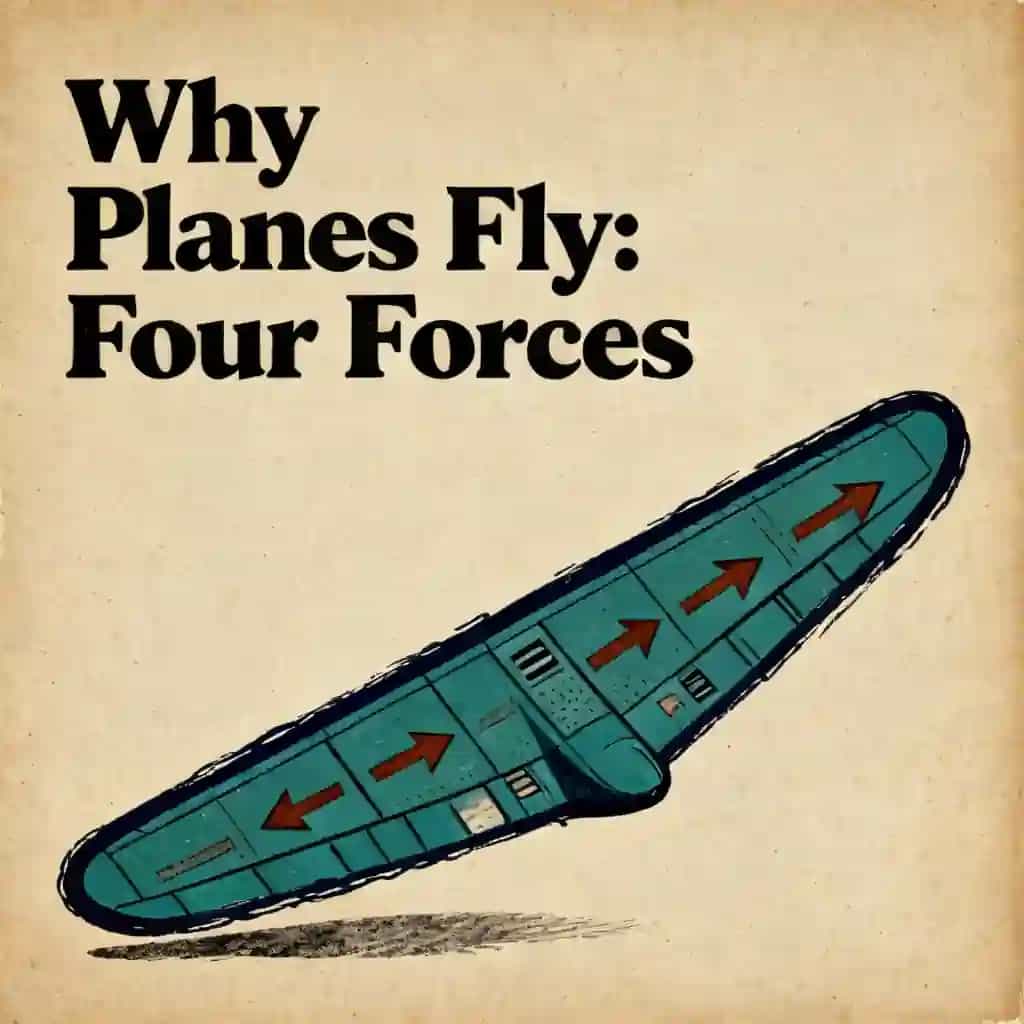
Explore the physics of flight with MIT lecturer Tina Srivastava. Learn about the four forces of flight and debunk common aerodynamic myths like Equal Transit.

Mejor cita de Airplane Aerodynamics: Physics and Myths with Tina Srivastava
The wing is basically a giant air deflector. It’s grabbing the air and throwing it toward the ground, creating an equal and opposite force that shoves the wing up.

Esta lección de audio fue creada por un miembro de la comunidad BeFreed
Create a 10-15 minute audio lesson based on 'Lecture 2 Airplane Aerodynamics.txt'. Act as a world-class science communicator (ELI10 GOD MODE) explaining flight to a complete beginner. Focus on why airplanes fly using simple language and everyday analogies (LEGO, cars, Star Wars). Structure the lesson to cover: The Four Forces (lift, weight, thrust, drag), the momentum/Newtonian explanation of lift (pushing air down), myth-busting the 'equal transit time' theory, Bernoulli's principle as a supporting factor, and flight controls (pitch, roll, yaw). Emphasize intuitive understanding over vocabulary. Use the 'hand out the car window' example for Angle of Attack and explain stalls. Follow the 13-point structure provided in the user request.


Preguntas frecuentes
This episode explores the fundamental physics that allow massive aircraft to stay airborne, moving beyond the idea that flight is just magic. Based on insights from MIT lecturer Tina Srivastava, the discussion focuses on the four fundamental forces of flight that interact during every journey. By treating air as a physical substance you can push against—similar to LEGO bricks—the episode provides a grounded explanation for how planes operate at thirty thousand feet.
Tina Srivastava is an MIT lecturer and expert who provides the scientific foundation for this discussion on airplane aerodynamics. She emphasizes that understanding the world requires moving past mysterious explanations toward concrete physics. In her speeches, she highlights the importance of pulling back the curtain on how aircraft function, ensuring that students and enthusiasts alike move past common misconceptions to understand the actual 'why' behind aviation.
The Equal Transit theory is a widely taught concept suggesting that air molecules must race each other and meet at the back of a wing at the same time. However, Tina Srivastava points out that this theory is physically impossible and is a myth found even in some textbooks. This episode aims to dismantle this specific misunderstanding of aerodynamics, replacing it with accurate physics to explain how air truly interacts with a plane's surface.
The podcast describes air not as an empty void, but as a tangible, physical 'thing' that pilots and planes can interact with. Miles uses the analogy of LEGO bricks to explain how air provides a medium that can be pushed against to generate the necessary forces for flight. This perspective helps listeners visualize the mechanical reality of aerodynamics, making the complex physics of the sky feel more intuitive and less like magic.
Creado por exalumnos de la Universidad de Columbia en San Francisco
"Instead of endless scrolling, I just hit play on BeFreed. It saves me so much time."


"I never knew where to start with nonfiction—BeFreed’s book lists turned into podcasts gave me a clear path."


"Perfect balance between learning and entertainment. Finished ‘Thinking, Fast and Slow’ on my commute this week."
"Crazy how much I learned while walking the dog. BeFreed = small habits → big gains."
"Reading used to feel like a chore. Now it’s just part of my lifestyle."

"Feels effortless compared to reading. I’ve finished 6 books this month already."
"BeFreed turned my guilty doomscrolling into something that feels productive and inspiring."

"BeFreed turned my commute into learning time. 20-min podcasts are perfect for finishing books I never had time for."
"BeFreed replaced my podcast queue. Imagine Spotify for books — that’s it. 🙌"

"It is great for me to learn something from the book without reading it."
"The themed book list podcasts help me connect ideas across authors—like a guided audio journey."
"Makes me feel smarter every time before going to work"
Creado por exalumnos de la Universidad de Columbia en San Francisco
"Instead of endless scrolling, I just hit play on BeFreed. It saves me so much time."
"I never knew where to start with nonfiction—BeFreed’s book lists turned into podcasts gave me a clear path."
"Perfect balance between learning and entertainment. Finished ‘Thinking, Fast and Slow’ on my commute this week."
"Crazy how much I learned while walking the dog. BeFreed = small habits → big gains."
"Reading used to feel like a chore. Now it’s just part of my lifestyle."
"Feels effortless compared to reading. I’ve finished 6 books this month already."
"BeFreed turned my guilty doomscrolling into something that feels productive and inspiring."
"BeFreed turned my commute into learning time. 20-min podcasts are perfect for finishing books I never had time for."
"BeFreed replaced my podcast queue. Imagine Spotify for books — that’s it. 🙌"
"It is great for me to learn something from the book without reading it."
"The themed book list podcasts help me connect ideas across authors—like a guided audio journey."
"Makes me feel smarter every time before going to work"
"Instead of endless scrolling, I just hit play on BeFreed. It saves me so much time."
"I never knew where to start with nonfiction—BeFreed’s book lists turned into podcasts gave me a clear path."
"Perfect balance between learning and entertainment. Finished ‘Thinking, Fast and Slow’ on my commute this week."
"Crazy how much I learned while walking the dog. BeFreed = small habits → big gains."
"Reading used to feel like a chore. Now it’s just part of my lifestyle."
"Feels effortless compared to reading. I’ve finished 6 books this month already."
"BeFreed turned my guilty doomscrolling into something that feels productive and inspiring."
"BeFreed turned my commute into learning time. 20-min podcasts are perfect for finishing books I never had time for."
"BeFreed replaced my podcast queue. Imagine Spotify for books — that’s it. 🙌"
"It is great for me to learn something from the book without reading it."
"The themed book list podcasts help me connect ideas across authors—like a guided audio journey."
"Makes me feel smarter every time before going to work"
"Instead of endless scrolling, I just hit play on BeFreed. It saves me so much time."
"I never knew where to start with nonfiction—BeFreed’s book lists turned into podcasts gave me a clear path."
"Perfect balance between learning and entertainment. Finished ‘Thinking, Fast and Slow’ on my commute this week."
"Crazy how much I learned while walking the dog. BeFreed = small habits → big gains."
"Reading used to feel like a chore. Now it’s just part of my lifestyle."
"Feels effortless compared to reading. I’ve finished 6 books this month already."
"BeFreed turned my guilty doomscrolling into something that feels productive and inspiring."
"BeFreed turned my commute into learning time. 20-min podcasts are perfect for finishing books I never had time for."
"BeFreed replaced my podcast queue. Imagine Spotify for books — that’s it. 🙌"
"It is great for me to learn something from the book without reading it."
"The themed book list podcasts help me connect ideas across authors—like a guided audio journey."
"Makes me feel smarter every time before going to work"