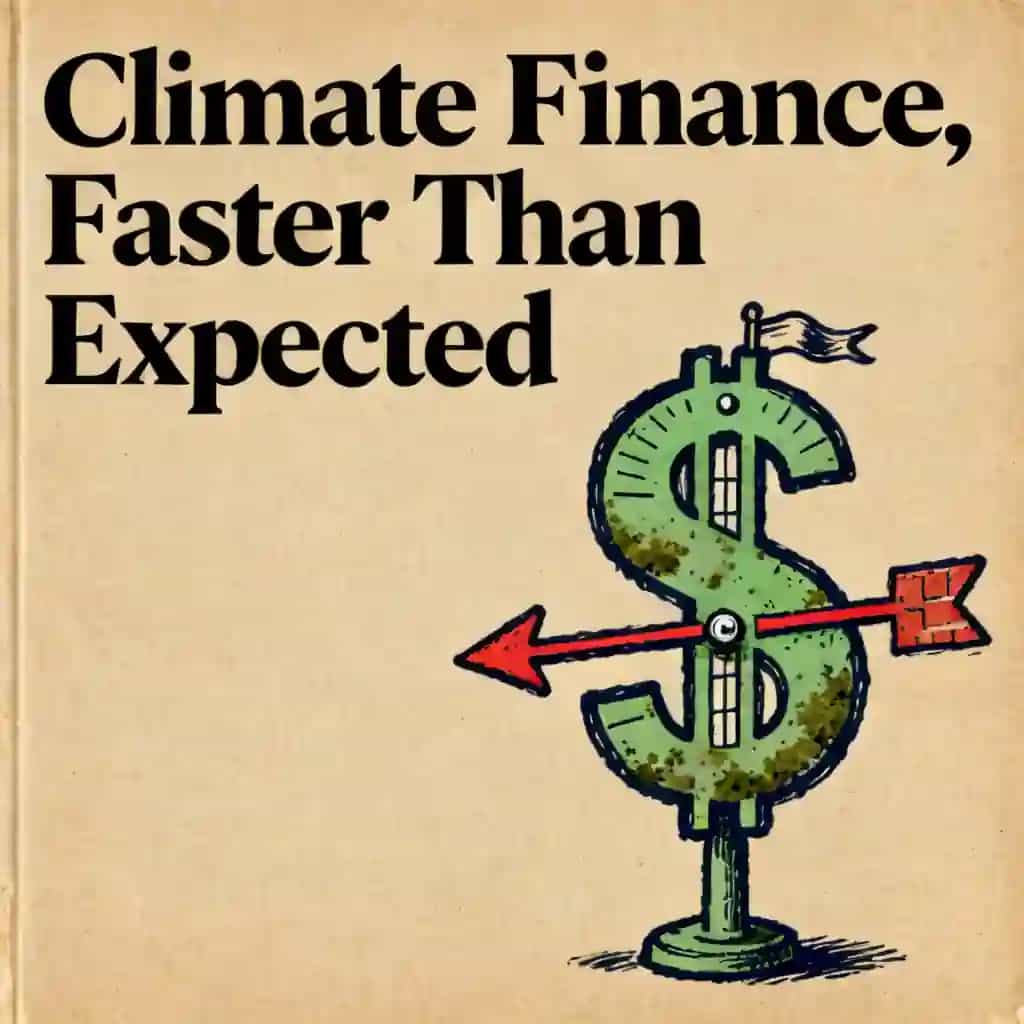
Mejor cita de Adaptive Social Protection: The New Frontier of Governance
The trend in governance right now is moving from 'do you have a benefit?' to 'is your benefit shock-responsive?' That’s the frontier.

Esta lección de audio fue creada por un miembro de la comunidad BeFreed
Adaptive social protection trends in governance

Preguntas frecuentes
Adaptive Social Protection is a governance trend that merges traditional social policy with disaster risk management and climate change adaptation. Unlike traditional safety nets that often react after a person falls into poverty, ASP is designed to be proactive. It relies on a "four-legged stool" framework: institutional coordination across different ministries, risk-layered financing that is ready before a crisis hits, data systems integrated with early-warning triggers, and flexible program design that can scale up quickly during a shock.
The 3As framework stands for Anticipate, Absorb, and Adapt. "Anticipate" involves using forecast-based financing to provide support before a disaster occurs, such as sending cash transfers to farmers when satellite data predicts a flood. "Absorb" refers to the system's ability to provide immediate relief after a shock to help people cope without selling essential assets. Finally, "Adapt" focuses on long-term shifts, such as providing green skills training or livelihood diversification grants to help citizens move out of climate-vulnerable industries.
A Just Transition ensures that the move to a sustainable economy does not disproportionately harm the vulnerable. For example, if a government removes fossil fuel subsidies to reduce emissions, energy prices may rise, hurting low-income families. An adaptive social protection system can use the savings from those subsidies to provide direct benefits to those families. This creates a "social sauce" that makes climate mitigation policies politically and economically viable by ensuring people feel protected during the transition.
These are the two primary ways an ASP program delivers aid during a crisis. Horizontal expansion refers to increasing the number of people covered by a program, temporarily adding those who were pushed into poverty by a specific shock like a hurricane or drought. Vertical expansion involves increasing the benefit amount for people who are already enrolled in the system, providing them with extra resources to ensure they don't have to take desperate measures, such as pulling children out of school, to survive the emergency.
While many programs target women as beneficiaries, few are "gender-transformative," meaning they often fail to address underlying power imbalances. A truly adaptive system must account for structural inequalities, such as lack of land titles or digital access for women, which can prevent them from receiving aid. By including features like childcare for public works projects or financial literacy training, ASP aims to change social norms and ensure that the most climate-vulnerable populations—often women and girls—are not excluded from resilience efforts.
Descubre más

Plan Hazard Risk & Implementation Design
In an increasingly volatile world, the ability to anticipate and mitigate catastrophic system failures is a critical leadership skill. This plan is designed for project managers, safety officers, and operational leaders who need to transition from basic hazard identification to building truly resilient, antifragile organizations.

The Social Safety Blueprint
This plan is designed for individuals who feel drained or overwhelmed by the physiological pressure of social settings. It provides a science-backed framework to transition from a state of survival to one of authentic connection and ease.

Explore Environment, Politics & Education
This learning plan is essential for understanding the complex intersections between ecological health, governance, and social learning. It is designed for aspiring policymakers, educators, and activists who want to build resilient, equitable systems in the face of global crises.

Disaster preparedness
In an increasingly unpredictable world, traditional preparation is no longer enough to ensure safety. This plan is designed for individuals seeking to move beyond basic survival kits toward a strategic mindset of resilience and antifragility.

Explore Politics, Creativity & Environment
This multidisciplinary path is designed for aspiring leaders and changemakers who want to bridge the gap between governance, innovation, and sustainability. It provides the essential tools to navigate complex global crises by combining political literacy with creative action.

Explore Global Issues & Human Progress
In an era of constant crisis narratives, understanding the balance between human advancement and systemic challenges is essential for informed global citizenship. This plan is ideal for leaders, students, and advocates who want to look beyond the headlines to find data-driven solutions for a sustainable future.

Politics, Behavioral Science & Mental Health
This learning plan bridges the gap between governance and the human mind, offering a unique interdisciplinary approach to modern citizenship. It is ideal for aspiring leaders, policy enthusiasts, and anyone seeking to understand the psychological drivers behind political stability and mental well-being.

Growth, Innovation, Society & Finance focus
This learning plan bridges the gap between macroeconomic theory, financial systems, and social impact. It is designed for aspiring leaders and entrepreneurs who want to understand the forces shaping our global economy and how to innovate responsibly within it.
Creado por exalumnos de la Universidad de Columbia en San Francisco
"Instead of endless scrolling, I just hit play on BeFreed. It saves me so much time."


"I never knew where to start with nonfiction—BeFreed’s book lists turned into podcasts gave me a clear path."


"Perfect balance between learning and entertainment. Finished ‘Thinking, Fast and Slow’ on my commute this week."
"Crazy how much I learned while walking the dog. BeFreed = small habits → big gains."
"Reading used to feel like a chore. Now it’s just part of my lifestyle."

"Feels effortless compared to reading. I’ve finished 6 books this month already."
"BeFreed turned my guilty doomscrolling into something that feels productive and inspiring."

"BeFreed turned my commute into learning time. 20-min podcasts are perfect for finishing books I never had time for."
"BeFreed replaced my podcast queue. Imagine Spotify for books — that’s it. 🙌"

"It is great for me to learn something from the book without reading it."
"The themed book list podcasts help me connect ideas across authors—like a guided audio journey."
"Makes me feel smarter every time before going to work"
Creado por exalumnos de la Universidad de Columbia en San Francisco
"Instead of endless scrolling, I just hit play on BeFreed. It saves me so much time."
"I never knew where to start with nonfiction—BeFreed’s book lists turned into podcasts gave me a clear path."
"Perfect balance between learning and entertainment. Finished ‘Thinking, Fast and Slow’ on my commute this week."
"Crazy how much I learned while walking the dog. BeFreed = small habits → big gains."
"Reading used to feel like a chore. Now it’s just part of my lifestyle."
"Feels effortless compared to reading. I’ve finished 6 books this month already."
"BeFreed turned my guilty doomscrolling into something that feels productive and inspiring."
"BeFreed turned my commute into learning time. 20-min podcasts are perfect for finishing books I never had time for."
"BeFreed replaced my podcast queue. Imagine Spotify for books — that’s it. 🙌"
"It is great for me to learn something from the book without reading it."
"The themed book list podcasts help me connect ideas across authors—like a guided audio journey."
"Makes me feel smarter every time before going to work"
"Instead of endless scrolling, I just hit play on BeFreed. It saves me so much time."
"I never knew where to start with nonfiction—BeFreed’s book lists turned into podcasts gave me a clear path."
"Perfect balance between learning and entertainment. Finished ‘Thinking, Fast and Slow’ on my commute this week."
"Crazy how much I learned while walking the dog. BeFreed = small habits → big gains."
"Reading used to feel like a chore. Now it’s just part of my lifestyle."
"Feels effortless compared to reading. I’ve finished 6 books this month already."
"BeFreed turned my guilty doomscrolling into something that feels productive and inspiring."
"BeFreed turned my commute into learning time. 20-min podcasts are perfect for finishing books I never had time for."
"BeFreed replaced my podcast queue. Imagine Spotify for books — that’s it. 🙌"
"It is great for me to learn something from the book without reading it."
"The themed book list podcasts help me connect ideas across authors—like a guided audio journey."
"Makes me feel smarter every time before going to work"
"Instead of endless scrolling, I just hit play on BeFreed. It saves me so much time."
"I never knew where to start with nonfiction—BeFreed’s book lists turned into podcasts gave me a clear path."
"Perfect balance between learning and entertainment. Finished ‘Thinking, Fast and Slow’ on my commute this week."
"Crazy how much I learned while walking the dog. BeFreed = small habits → big gains."
"Reading used to feel like a chore. Now it’s just part of my lifestyle."
"Feels effortless compared to reading. I’ve finished 6 books this month already."
"BeFreed turned my guilty doomscrolling into something that feels productive and inspiring."
"BeFreed turned my commute into learning time. 20-min podcasts are perfect for finishing books I never had time for."
"BeFreed replaced my podcast queue. Imagine Spotify for books — that’s it. 🙌"
"It is great for me to learn something from the book without reading it."
"The themed book list podcasts help me connect ideas across authors—like a guided audio journey."
"Makes me feel smarter every time before going to work"