Capítulo 1
The Reckoning: How #MeToo Exposed Our Oldest Prejudice
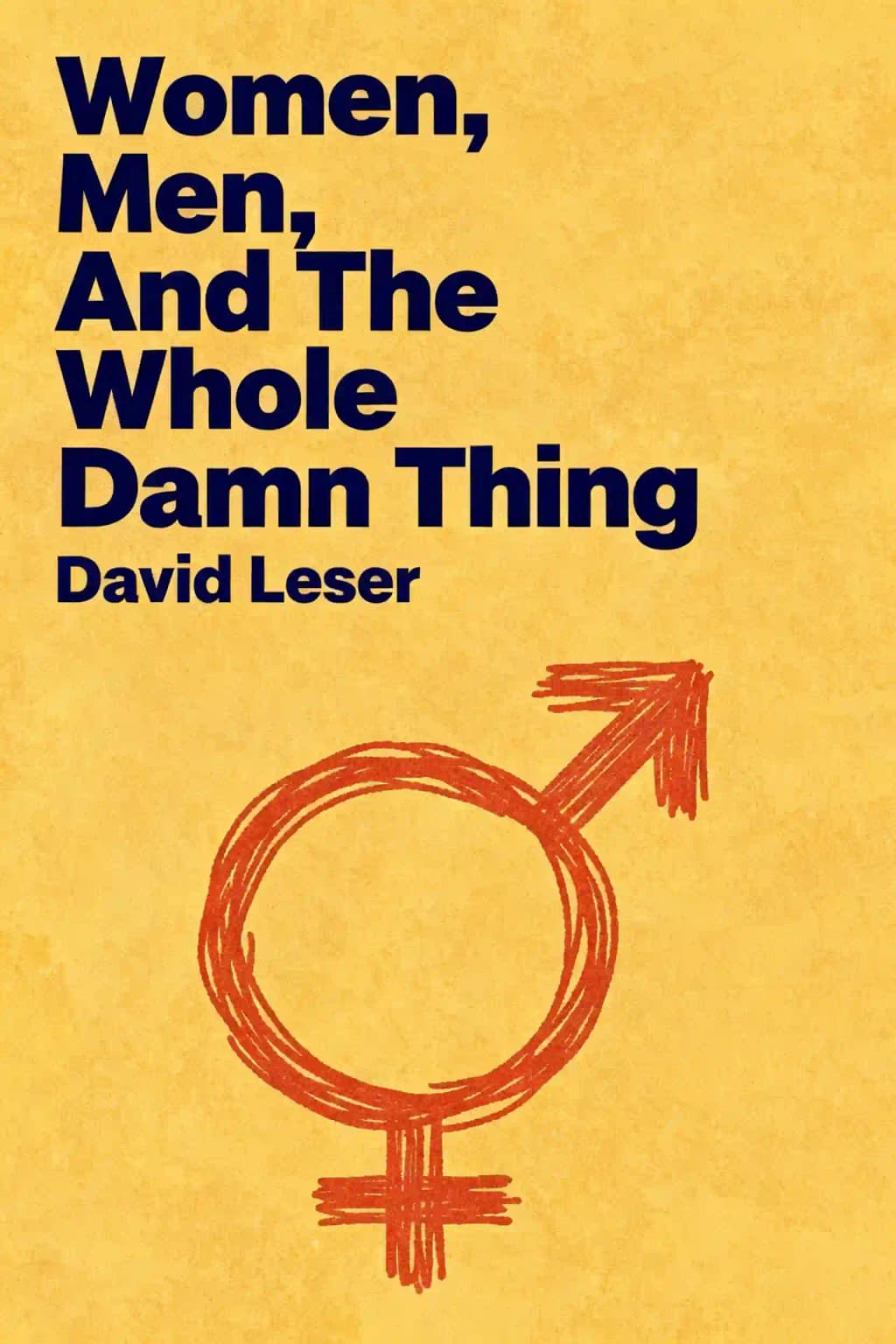
When David Leser's daughter told him, "Dad, we don't want to hear from you right now," he could have retreated from the conversation about #MeToo. Instead, he embarked on a journey to understand the roots of misogyny and the global epidemic of violence against women. His book, "Women, Men, and the Whole Damn Thing," became a cultural phenomenon, praised by figures from Oprah Winfrey to former Australian Prime Minister Malcolm Turnbull for its unflinching examination of gender relations. As a man investigating male hatred and disrespect toward women, Leser's work stands out for its rare combination of journalistic rigor and personal vulnerability. The book's timing-published amid the seismic cultural shift of #MeToo-established it as essential reading for anyone seeking to understand how we arrived at this moment of reckoning, and more importantly, where we might go from here.
Capítulo 2
When God Was a Woman: The Ancient Roots of Misogyny
Before monotheistic religions established male dominance as divine order, female deities were widely worshipped across ancient civilizations. From Isis in Egypt to Sarasvati in India, goddesses were honored as creators and inventors of agriculture, medicine, and written language. In ancient Mesopotamia, the vulva was considered sacred, with hymns sung to Inanna's "lap of honey." Throughout Canaan before the Hebrew invasion, female deities were worshipped alongside female kinship systems that valued women's independence and sexual autonomy.
This reverence for the feminine began to shift around 2400 BCE with Indo-European invasions that brought worship of the "God Father." The agricultural revolution transformed women from central figures in foraging societies to possessions alongside livestock. As Gerda Lerner wrote, "This symbolic devaluing of women in relation to the divine becomes one of the founding metaphors of Western civilization."
When Judaism emerged, it established man's dominion over woman in Genesis and created laws allowing men multiple wives and divorce rights while denying women the same freedoms. The Bible even assigned monetary values: five shekels for boys, three for girls-the original gender pay gap that would define Western civilization's moral order for millennia.
Christian theologians reinforced this misogyny with shocking vigor. Tertullian called the vagina "the Devil's gateway," Thomas Aquinas declared woman an "incomplete man," St. Augustine deemed her "a beast neither firm nor stable," and St. John Chrysostom proclaimed no wild animal as harmful as woman. As Simone de Beauvoir noted, "Woman has always been if not man's slave, at least his vassal," with religions, philosophers, and lawmakers working to prove women's subordination was divinely ordained.
Before agriculture (around 8000 BCE), anthropologists believe women likely had equal access to resources and sexual freedom. Christopher Ryan and Cacilda Jetha argue in "Sex at Dawn" that female sexuality was "silenced by religious authorities, pathologized by physicians, studiously ignored by scientists." Many hunter-gatherer societies practiced "partible paternity" and female sexual freedom that contributed to social cohesion, suggesting women's sexual repression isn't intrinsic to human nature but emerged with agricultural settlement and concepts of property ownership.
Capítulo 3
The Spectrum of Violence: From Everyday Sexism to Femicide
The scope of violence against women is staggering in its breadth and persistence across cultures and centuries. One billion women will be raped or beaten in their lifetime-and that's just reported cases. In Australia alone, more than 1.2 million women have experienced sexual violence since age fifteen, with one woman killed weekly by a partner. These statistics are compounded by the fact that an estimated 80% of sexual assaults go unreported, suggesting the true numbers are far higher. Daily manifestations include workplace harassment, online abuse, and street harassment, with studies showing that 90% of women have experienced catcalling or unwanted advances by age 17.
The violence ranges from everyday harassment to horrific extremes: genital mutilation affecting 130 million women worldwide, sex trafficking enslaving millions, bride burnings in India, and honor killings. In countries like Pakistan and Afghanistan, thousands of women face acid attacks annually for perceived transgressions against family honor. The case of Du'a Khalil Aswad, stoned to death by a thousand men in Iraq while they recorded videos on their phones, exemplifies how modern technology can intersect with ancient forms of violence. In Northern Ireland, where the word "cunt" expressed the ultimate contempt, linguistic violence reflects deeper cultural attitudes, with research showing how derogatory language correlates with increased acceptance of physical violence against women.
What makes misogyny unique among prejudices is how hatred coexists with desire, creating a complex internal conflict within men. This paradox manifests in phenomena like "revenge porn," where intimate relationships transform into weapons of humiliation. Jack Holland's research explores this contradiction while examining Ireland's restrictive abortion laws and the horrific treatment of "fallen women" in religious-run laundries. The discovery of mass graves containing 800 babies and children in Tuam revealed the deadly consequences of this system, with subsequent investigations uncovering similar sites across Ireland, demonstrating how institutional misogyny can lead to generational trauma.
Throughout history, patriarchal religions have cast women as either pure virgins or corrupted whores. The witch hunts represent the horrific pinnacle of this demonization, resulting in millions of women tortured and killed across Europe between the 15th and 18th centuries. Modern scholarship estimates that 85% of those executed were women, often targeted for their independence, knowledge of healing, or property ownership. The connection between desire and violence manifests in contemporary cases like Dr. Angela Jay, stabbed eleven times by an ex-boyfriend who couldn't accept rejection, and Saxon Mullins, whose alleged rape in a Kings Cross alleyway sparked national debate about consent laws.
As Jack Holland observed, misogyny has thrived across history "from the loftiest philosophical plane" to the streets where serial killers leave mutilated corpses, uniting figures as disparate as "Aristotle with Jack the Ripper, King Lear with James Bond." The idea that "woman is less than" has propagated throughout history across different cultures and belief systems, creating a continuum of violence that persists to this day. Recent movements like #MeToo have highlighted how this spectrum of violence connects everyday sexism to its most extreme manifestations, while studies show that societies with higher levels of gender inequality consistently experience higher rates of femicide and sexual violence.
Capítulo 4
#MeToo: From Whisper Network to Global Movement
The #MeToo movement began with Tarana Burke, a community worker in Selma, Alabama who first coined the term in 2006 while working with marginalized young women who had experienced sexual violence. A survivor herself, Burke created the non-profit Just Be Inc. to help victims heal. Her inspiration came partly from her failure to support a thirteen-year-old girl she calls "Heaven," who tried to confide about being molested by her mother's boyfriend. Burke, still dealing with her own trauma, couldn't handle the girl's story: "I shut her down in the middle of her story... I was so scared to fail her." What kept playing in Burke's mind was "This happened to me too."
The movement gained global momentum when actor Alyssa Milano used #MeToo as a hashtag in October 2017, just days after the Harvey Weinstein expose. Within 48 hours, nearly a million people had responded with their own stories, and within a day, twelve million Facebook comments, posts and reactions were logged. The movement's power came from its actionable, connected nature-allowing survivors to share testimonies and realize they weren't alone.
After Weinstein, the movement rapidly exposed numerous powerful men across industries. The Latina farmworkers' solidarity letter to Hollywood women acknowledged their common struggle against men who abuse power. Sports wasn't immune either, with USA Gymnastics doctor Larry Nassar eventually sentenced to up to 175 years for abusing over 150 women and girls.
The movement spread globally: British MPs faced accusations, Australia's Tracey Spicer received allegations from over 500 women naming 65 men, and celebrity gardener Don Burke was exposed as a "psychotic bully, misogynist and sexual predator." Actor Craig McLachlan faced accusations from three women in The Rocky Horror Show production, while Geoffrey Rush sued The Daily Telegraph for defamation over allegations during a King Lear production.
The #MeToo movement was never just about sexual violence-that was merely "the tip of the spear." It addressed deep-rooted inequalities across all industries: women being respected and heard, taking their rightful seats at decision-making tables, equal pay, power dynamics, and discrimination both structural and casual. It challenged the commodification of women, digital-age sexism, and the contradiction of using female sexuality to sell products while slut-shaming sexually active women.
Capítulo 5
The Grey Zone: Consent, Communication, and Modern Dating
In January 2018, celebrated comedian Aziz Ansari's reputation imploded when website babe.net published an account from "Grace," describing their date that turned into "the worst night of my life." The article detailed how after dinner, Ansari repeatedly made aggressive sexual advances despite Grace's "verbal and non-verbal cues" of discomfort. The story ignited fierce debate about consent and modern dating.
The Ansari story exposed something beyond the clear-cut cases of predators like Weinstein: an experience most women have carried all their lives-nights of not saying no, or saying no and not being heeded, of men not reading the cues, and mornings filled with self-recrimination and regret.
Zainab Salbi, founder of Women for Women International, initially focused on predators like Weinstein in her PBS series but ultimately concluded the Ansari case was more significant, representing "80 percent of power" dynamics women face. "Most women go through that," she explains, noting the difference between her 48-year-old self and 23-year-old self isn't that men's behavior has changed, but that she's developed thicker skin and confidence.
Helen Garner, author of the controversial 1995 book "The First Stone" about a sexual harassment case, takes a different view. Initially excited by #MeToo's "wonderful pure stage" when women threw off "shackles of silence, modesty and fear," she worries the movement has lost purity. Regarding the Ansari case, Garner asks questions she knows she "wasn't supposed to ask as a feminist": Why go to his apartment? What were you expecting?
The generational divide on these questions is stark. The author's younger daughter Hannah strongly disagreed with Garner's perspective, questioning why it's "entitled" for young feminists to continue fighting for equality. Hannah shared her own traumatic experience of non-consensual sex at thirteen, explaining: "I got drunk with this guy I had been kissing, we went to bed and he hopped on top of me and took my virginity. There was no conversation. No consent." She reflected that the MeToo movement finally allowed her to acknowledge being taken advantage of.
Meanwhile, the author's older daughter Jordan offered a contrasting view, questioning why verbal communication isn't prioritized: "If you don't want to give a guy a blow job, don't do it. And if you do, because you feel that pressured to please, well then that's a bigger conversation."
In December 2017, Kristen Roupenian's short story "Cat Person" became the New Yorker's most widely read online fiction ever, resonating particularly with millennials as it captured modern dating's disenchantments. Like the Aziz Ansari case, "Cat Person" raised complex questions about consent, male entitlement, women's difficulty verbalizing discomfort, and the power dynamics in sexual encounters.
Capítulo 6
The Man Box: How Patriarchy Damages Men
Men are socialized to suppress their emotions and vulnerability, creating destructive patterns that harm themselves and others. Tony Porter's concept of the "man box" illustrates how boys are taught to be tough, strong, and emotionless except for anger. Porter shares how he treated his young son and daughter differently regarding emotional expression, realizing he was recreating patterns from his own father, who apologized for crying at his son's funeral while praising Porter for not crying.
This rejection of the feminine becomes deeply ingrained, reinforced in schoolyards, sporting clubs, universities, and boardrooms with an unspoken message: join us or face derision. As one young man, Drew Rooke, confessed, expressing love for a girlfriend in school made him a target for ridicule-"How gay are you?"-though ironically, those mocking him likely longed for love themselves.
Men often take cues from their fathers' emotional expression-or lack thereof. Psychotherapist Steve Biddulph calls this longing "father hunger"-the sorrow for lost contact and love, the need to be affirmed by older males. He notes that boys need exposure to various masculinities to develop their own, but this connection was severed during the Industrial Revolution when men began working away from home.
In Biddulph's workshops, only about 10% of men report having deep, sustaining relationships with their fathers, while most have difficult, distant, or non-existent paternal bonds. This creates men who struggle with emotional expression, unlike women who typically develop capacity for intimacy through years of deep conversation with other women.
The silence of men has been shaped by historical trauma. In Australia, the myth of the bush shaped masculinity through generations of squatters and farmers who developed hard-boiled self-sufficiency while attempting to control the land. This stoicism came at great cost to communication. As Don Watson wrote in "The Bush": "The bush has always been as much for hiding pathologies as repairing them... In the city, opinion corrodes the outer layer of existence; in the country it eats the inner."
Steve Biddulph observes, "We've militarised men and commodified women for thousands of years." War became a defining element of masculinity, with boys raised as "soldiers of empire" taught not to cry. While emotional suppression serves purpose in extreme situations like combat or emergency response, the problem arises when it becomes "a lifelong characteristic."
The consequences of this emotional suppression are alarming: men are three times more likely to commit suicide, with 75.1% of Australia's 2,866 suicides in 2016 being male. Boys lag behind girls in school retention and literacy while experiencing higher rates of drug overdoses, road trauma, workplace fatalities and suicide. Men live six years less than women on average and are left in four of five marriage breakdowns.
Capítulo 7
Female Sexuality: The Uncharted Territory
Our understanding of female sexuality has been distorted by patriarchal religion, mythology demonizing women, and scientific indifference. Despite our hypersexualized culture and billion-dollar porn industries, we still haven't found ways to talk about sex truthfully and informatively.
Reading Naomi Wolf's "Vagina: A New Biography" reveals the complex neural wiring of female sexuality-how women's pelvic nerves branch differently, explaining why some respond more to vaginal versus clitoral stimulation. Wolf argues these differences are physical, not cultural or psychological as Freudians and feminists had debated. Female orgasm boosts testosterone levels, making women more assertive and interested in more sex-confirming patriarchy's fear that sexually satisfied women become "ungovernable."
Research reveals alarming effects of pornography on young people's sexuality. Studies show 65% of 15-16 year-olds have viewed pornography, with most exposed by age fourteen. Early exposure correlates with wanting power over women and increased likelihood of sexual harassment. Porn sites receive more traffic than Netflix, Amazon and Twitter combined. Norman Doidge explains how pornography rewires male brains, desensitizing them to real partners and fostering interest in "fucking" rather than "making love."
Sex therapist Jacqueline Hellyer has seen thousands of couples and believes women are often sexually bored because "the sex they're having is bloody awful." She describes our inherited model as "male masturbatory"-focused on genital friction until ejaculation-developed through thousands of years of female sexual suppression. This model treats sex as performance with orgasm as a KPI, rather than two people connecting through physical pleasure and emotional intimacy.
Meredith Chivers' landmark 2006 experiment measured sexual responses to various video clips. While men's self-reported arousal matched their physiological responses, women's bodies responded to all sexual imagery (even bonobos mating) regardless of what they consciously registered. This suggests women have greater "erotic plasticity" but may struggle to recognize or accept their own arousal due to cultural restrictions.
Daniel Bergner argues female libido is "an underestimated and constrained force" that has been overlooked for centuries. Ancient wisdom from Greek mythology and the Mahabharata actually recognized women experience more sexual pleasure than men-"nine times more" according to Tiresias. We've been stuck in an outdated mechanistic worldview for centuries, and are only beginning to glimpse the vast mysteries of female sexuality with its universe of untapped potential.
Capítulo 8
A New Vision: Beyond the Gender War
Violence against women may begin with men's repression of their own feminine qualities-the inner world where relationships and connection truly reside. Dr. Peter O'Connor, a Jungian psychotherapist, suggests men operate almost exclusively in the external world, severing their internal life from their external one out of fear of being overwhelmed by feelings. This creates the heart of men's rage, manifesting as violence, alcoholism, or withdrawal. "Men are actually terrified of women because they're terrified of themselves," O'Connor explains.
Many men today are actively working to transform themselves and others, moving far from traditional masculine models. Examples include young men who celebrate empowered women, singer Jimmy Barnes redefining manhood through vulnerability, actor Benedict Cumberbatch refusing roles where female co-stars are paid less, and rural mechanic Jakson Elfring publicly denouncing Australia's culture of violence toward women.
From Iceland's progressive men who embrace feminism as "just a matter of being decent" to corporate leaders like Michel Landel restructuring Sodexo for gender balance, men are increasingly challenging toxic masculinity. Programs like MenCare in Rwanda teach fathers about nonviolent communication, while others are examining their past behaviors and allowing their sons to express emotions fully.
The shift carries both terrifying implications (broken men often create broken systems) and thrilling possibilities as female power and ingenuity are unleashed. Rwanda's economic growth after its genocide, largely through female participation in government and workforce, demonstrates this potential. New Zealand's Prime Minister Jacinda Ardern exemplifies a different approach to power-leading while pregnant, returning to work after childbirth while her partner cares for their child, legislating domestic violence leave, addressing homelessness, and offering refuge to asylum seekers. Her leadership shows power through cooperation, connection and inclusion rather than domination and aggression.
Despite the current divisions and hostilities between sexes, many men recognize that their liberation is joined to women's liberation-that neither gender can truly triumph without the other. We need a men's movement that rejects old definitions of masculinity. After the shake-up comes the wake-up, with men helping raise boys who embrace both masculine and feminine qualities, understanding consent, mutuality and respect.
As Clementine Ford urged her son: "Embrace sensitivity. Don't let a world that's frightened of soft men succeed in breaking you." We need women who understand male anguish and see that most men want to be good. As Jacinda Ardern said at the UN, "Me Too must become We Too because we are all in this together." We need new conversations, new role models, and each other more than ever.
Capítulo 9
The Path to Healing: Education and Empathy
Leslee Udwin's documentary "India's Daughter" exposed not just the horrific gang rape of Jyoti Singh, but the deeply entrenched misogyny in Indian society. The educated defense lawyers made shocking statements-M.L. Sharma claimed "In our culture, there is no place for a woman" while A.P. Singh stated he would burn alive any female family member who engaged in pre-marital activities.
After making her documentary, Udwin launched Think Equal, a global initiative teaching empathy and emotional intelligence to children aged 3-6, believing education must be reformed to teach healthy relationships alongside academic subjects. Udwin argues, "Almost every culture is programmed against the value of girls," connecting the attitudes of Singh's rapists to those of powerful men like Trump and Kavanaugh. She believes empathy is the essential skill needed to see others as equals, making it every child's right to receive this foundational learning.
Jyoti Singh, known as "Nirbhaya" (the fearless one), was born into poverty but determined to become a doctor. She convinced her father to use her wedding savings for education, worked night shifts at a call center while studying, and was six months from completing her medical internship when murdered. Her death sparked change for millions of Indian women, culminating in the eruption of India's #MeToo movement in 2018.
Around the globe, female power is asserting itself even as women continue to be abused and dehumanized. The #MeToo campaign reflects women's ancient and contemporary hunger for justice after centuries of being ignored. Zainab Salbi shares a transformative moment when working in a refugee camp-initially fearing approaching Taliban-like men only to discover they were thanking her for helping their wives. This taught her to recognize her own prejudice against men and the danger of becoming an oppressor herself through self-righteousness.
Professor Tomas Chamorro-Premuzic argues that society confuses confidence with competence, leading to the promotion of incompetent men over competent women. Research shows the best leaders are typically self-effacing-a trait more common in women-while men tend to be more arrogant, manipulative and risk-prone. Gender consultant Avivah Wittenberg-Cox notes that Anglo-Saxon countries lag behind Eastern Europe and Asia in gender balance, with many executives still demanding "proof" that gender equality benefits business, despite evidence that $28 trillion would be added to global GDP by 2025 if women participated equally in the economy.
The 21st century, she suggests, will be about men adapting to women's rise in power-stepping back, stepping aside, and making room for women. But this isn't a zero-sum game. As we move beyond the gender war toward healing and reconciliation, both men and women have the opportunity to reclaim the fullness of their humanity, embracing both masculine and feminine qualities to create a more balanced and compassionate world.