Capítulo 1
Financial Education: The Missing Key to Your Child's Future
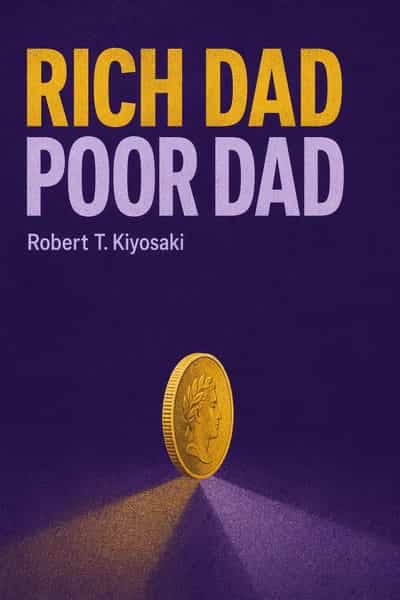
Ever wondered why some of the world's most successful entrepreneurs-Steve Jobs, Bill Gates, Mark Zuckerberg-dropped out of college? Robert Kiyosaki's groundbreaking book "Why 'A' Students Work for 'C' Students and 'B' Students Work for the Government" offers a provocative explanation: our educational system fails to teach the financial intelligence that creates true wealth. This bestseller, which has captivated millions worldwide including celebrities like Will Smith and numerous business leaders, challenges conventional wisdom about education and success. Kiyosaki, whose "Rich Dad Poor Dad" series has sold over 30 million copies in 53 languages, argues that traditional academic excellence often leads to employment rather than entrepreneurship. His work has sparked a global movement in financial education, influencing how families approach money conversations and challenging the status quo of our educational institutions.
Capítulo 2
The Educational Crisis: Why Schools Fail to Prepare Children for Financial Reality
"Whenever I think about writing a new book I ask myself: Why am I writing this book?" Kiyosaki begins. His answer reveals the fundamental problem he's observed throughout his life: money is not taught in schools. Despite teachers constantly emphasizing education as the path to good jobs, they never address the ultimate purpose of those jobs-making money.
This disconnect represents a massive blind spot in our educational system. As Einstein reportedly said, "Everybody is a genius. But if you judge a fish by its ability to climb a tree, it will live its whole life believing that it is stupid." Our schools excel at identifying certain types of intelligence while completely overlooking financial intelligence.
Like Hans Christian Andersen's tale where everyone pretends to see the emperor's nonexistent clothes until a child speaks truth, we collectively pretend our educational system prepares children for financial success when it clearly doesn't. The evidence surrounds us-widespread financial illiteracy, crushing debt, and economic anxiety despite years of formal education.
Research by Dr. Frank Luntz reveals that 80% of Americans would prefer to be business owners rather than Fortune 500 CEOs. Americans fundamentally want to be entrepreneurs, yet our school system trains children to be employees. The system produces "A" students (academics) and "B" students (bureaucrats), but rarely cultivates "C" students (capitalists)-those who create businesses and jobs.
This failure has created a peculiar contradiction in American attitudes. The Kaufman Foundation found that while Americans respect entrepreneurs, they've developed hatred toward CEOs. This stems partly from confusion between true capitalists and what Kiyosaki calls "managerial capitalists"-employees who work for entrepreneurs but have no personal financial stake in the business.
Many of history's greatest entrepreneurs-Edison, Disney, Jobs, Zuckerberg-didn't complete formal education. Yet "A" students become managerial capitalists who often give capitalism a bad name through practices like the Hostess Brands bankruptcy, where executives paid themselves millions in bonuses while 18,000 workers lost jobs.
The consequences of this educational failure are severe. Since 2007, the world has entered what Kiyosaki calls a "New Depression" fueled by government money-printing, trillions in debt, underfunded entitlement programs, high youth unemployment, crushing student loan debt, and globalization pushing jobs overseas. These are the problems today's children will face-problems their education isn't preparing them to solve.
Parents must recognize this reality: schools are not preparing children for the real financial world. It's up to parents-a child's first and most important teachers-to provide the financial education required for success in an increasingly complex economy.
Capítulo 3
The Three Windows of Learning: Critical Periods in Your Child's Financial Development
Financial education must begin early and evolve throughout childhood. Kiyosaki identifies three critical "windows of learning" that parents must understand to effectively teach their children about money.
The first window spans from birth to age 12-the period of quantum learning. During this time, the child's brain is incredibly receptive, forming neural pathways that will last a lifetime. Initially whole, the brain begins dividing into right (creative) and left (analytical) hemispheres around age four. Children effortlessly absorb languages, accents, and cultural preferences during this period.
What makes this window so powerful is the "use it or lose it" principle-neural pathways that aren't used by age 12 begin to be erased. This explains why teaching financial concepts through games like Monopoly during this period is so effective. The game engages both brain hemispheres, creating neural pathways focused on asset acquisition that will last a lifetime.
"By age 12, I had developed neural pathways focused on asset acquisition," Kiyosaki explains. "I understood the fundamental difference between capitalists, who focus on property/production and asset acquisition, and employees/self-employed people, who focus on job security."
The second window, from ages 12 to 24, is characterized by rebellious learning. Teens want to make their own choices rather than follow instructions. Tell a teen not to speed, and they're more likely to try it. This rebellious learning manifests in music trends across generations-from Elvis to The Beatles to rap and hip-hop.
The challenge during this period is that teens don't fully grasp consequences. They can't comprehend the potential outcomes of risky behaviors like speeding, drug use, or unprotected sex. How parents respond to their child's mistakes during this window-whether it's wrecking the car, selling drugs, cutting classes, or teenage pregnancy-tests the strength of the parent-child relationship.
During his own second learning window, Kiyosaki struggled academically but gained invaluable experience sitting in on his rich dad's management meetings. He observed how a successful capitalist operates by surrounding himself with talented specialists from diverse backgrounds. "Business is a team sport," rich dad often said. "The person with the best team wins."
The third window, ages 24-36, is when adults learn to "make their way in the world." This crucial period reveals how well parents and schools prepared them. Young adults begin growing professional roots, discovering if they chose the right career path, and whether they have the skills to succeed.
This window typically includes marriage, starting families, and buying homes, bringing financial realities into sharp focus. Since 2007, millions of young people have struggled with unemployment during this critical window, potentially affecting their entire lives.
Understanding these learning windows helps parents provide age-appropriate financial education. During the first window, invest time in games and family discussions when neural pathways are forming. During the second window, encourage exploration while introducing consequences by asking "What might happen if...?" rather than saying "Don't." For the third window, support your adult child's path while building on the financial education foundation you've established.
Capítulo 4
Why Valedictorians Fail in the Real World of Money
Academic success can be a double-edged sword. Professor Karen Arnold's 1981 study of high school valedictorians revealed that while these students excel academically, their success doesn't necessarily translate to real-world achievement. They're "dutiful" people who know how to achieve within the system but aren't typically mold-breakers.
In her book "Lives of Promise," Arnold found valedictorians maintain high GPAs in college (averaging 3.6) and pursue conventional careers like accounting, medicine, law, and education. While they "run the world well," they rarely change it. Their rule-following nature makes them excellent within systems but unlikely to break molds or create revolutionary change.
A Harvard study following students from the class of 1940 found that men with the highest test scores weren't particularly successful in salary, productivity, or status compared to lower-scoring peers. High test scores also didn't correlate with greater happiness or better relationships. The Harvard Business Review noted that "academic-type success was not a good predictor of on-job productivity," and many high-achievers become "smug about their intelligence even in the face of repeated failure outside the classroom."
Thomas Stanley's research in "The Millionaire Mind" found no correlation between school grades, class position, SAT scores and business success. Remarkably, 33% of Forbes 400 wealthiest people never finished college, yet these dropouts averaged $4.8 billion in net worth compared to college graduates' $1.5 billion. Dropouts even outperformed Ivy League graduates by 200 percent in net worth.
The Cone of Learning explains why valedictorians excel in E and S quadrants but struggle in B and I quadrants. Most valedictorians thrive at the bottom of the cone through reading and lectures, though studies show only 25% of students learn best this way. "A" students are conditioned to avoid mistakes, preventing them from reaching the top of the cone-"Doing the real thing." They work well within systems but rarely break molds or drive significant change.
Kiyosaki's father was one of three valedictorians among his six siblings. An academic genius, he completed his Bachelor's degree in just two years while working and raising a family, eventually earning his PhD and recognition as a top educator in Hawaii. Yet when he lost his job at 53, he lacked marketable skills outside teaching. His attempt to run an ice cream franchise failed completely.
Success in one quadrant doesn't ensure success in another. Academic excellence helps in the E quadrant as an employee but proves useless in the B and I quadrants. This aligns with university studies showing why valedictorians remain in E and S quadrants while dropouts like Jobs, Gates, and Zuckerberg thrive in B and I.
As Kiyosaki's rich dad said, "'A' students know 2+2=4, but capitalists want to know how to make 2+2=$4,000,000."
Capítulo 5
Context vs. Content: Transforming Your Child's Financial Mindset
Financial education isn't just about teaching facts-it's about transforming how your child thinks about money. Kiyosaki distinguishes between content (information) and context (the mindset that holds that information).
Traditional education focuses on content (reading, writing, arithmetic) but neglects context (the student). Using the metaphor of water (content) in a glass (context), our educational system pours information into students without considering their individual contexts. When Kiyosaki questioned why he was studying certain subjects, teachers always responded, "If you don't get a good education, you won't get a good job"-assuming he wanted to be an employee when he actually wanted to be an entrepreneur.
Context includes a person's philosophies, beliefs, thoughts, rules, values, fears, doubts, attitudes, and choices. A poor person's context reveals itself in statements like "I'll never be rich" or "Money isn't important to me." A middle-class context produces thoughts like "I need a high-paying job" and "Job security is important." Rich people's context includes beliefs like "I must be rich" and "Freedom is more important than security."
Most poor people remain poor because of their context, not lack of money. Similarly, middle-class people rarely become rich because their context leads them to consume rather than invest.
Rich dad compared teaching poor people to be rich to "teaching pigs to sing"-it wastes time and annoys the pig. His message was clear: you cannot teach someone to be rich until they change their context.
Our lives consist of various contexts, both visible and invisible. The U.S. Constitution represents foundational values governing America. Religions create different contexts-Christians view Jesus as the Son of God while Muslims see him as a prophet. Economic philosophies like socialism and capitalism form contexts that influence political choices.
When someone says "keep an open mind," they're really saying "keep an open context"-our contexts fundamentally determine what content we're willing to accept.
When Kiyosaki returned from Vietnam in 1973, rich dad suggested he take a real estate course, saying "If you want to be rich, you have to learn to use debt to become rich." Because his context was already "I want to be rich," he readily accepted this content and enrolled in a three-day course. Many people's contexts slam shut when hearing "debt can make you rich" because their parents instilled different beliefs.
The instructor assigned them to evaluate 100 properties in 90 days-not just education but transformation. Of their six-person team, only two completed the assignment, and both went on to become successful investors.
The four quadrants in the CASHFLOW quadrant represent different contexts. Moving from Employee or Self-employed to Business owner or Investor requires a contextual transformation. This isn't just changing your mindset or positive thinking-it's mental, physical, and spiritual evolution requiring faith, courage, self-esteem, and hunger to learn quickly.
In the world of money, there are three income types: Ordinary (paycheck money, most highly taxed), Portfolio (capital gains from buying low and selling high), and Passive (cash flow, taxed at lowest rates). Most people, even "A" students, only learn about ordinary income, while the rich work for portfolio and passive income.
Lottery winners and professional athletes often go broke because they fail to transform their income. Many high-income professionals struggle financially for the same reason. Financial experts advise "work hard, save money, invest in a 401(k)," but this doesn't transform money-it's all ordinary income, the most highly-taxed type.
Parents must teach children how to transform their lives by transforming their money into portfolio and especially passive income.
Capítulo 6
The CASHFLOW Quadrant: Understanding Where Money Comes From
One of Kiyosaki's most powerful concepts is the CASHFLOW quadrant, which illustrates where income comes from and how it's taxed. The quadrant has four sections: E (employee), S (self-employed), B (big business), and I (investor).
The E and S quadrants pay the highest tax rates, while B and I pay much less. Schools prepare students for the E and S quadrants-getting jobs or becoming professionals like doctors and lawyers. Meanwhile, true capitalists like Steve Jobs, Bill Gates, and Mark Zuckerberg operate in the B and I quadrants.
This explains why President Obama paid 20.5% in taxes while Mitt Romney paid only 14%. Understanding these quadrants early gives children better financial options beyond "go to school, get a job, work hard, pay higher taxes."
You're never too old to transition between quadrants. Colonel Sanders started Kentucky Fried Chicken at 65 after his small chicken shop failed, moving from the S quadrant to the B and I quadrants. Success in these quadrants doesn't require being the smartest person-it's a team sport requiring surrounding yourself with smart, trustworthy people.
The B and I quadrants demand strong financial education and early preparation. Though many start the journey, few succeed, but the rewards are immense-like climbing to the top of the financial food chain.
Most people choose quadrants out of fear rather than inspiration-the E quadrant for job security and steady paychecks, the S quadrant due to lack of trust in others. The problem with the S quadrant is you own a job, not a business. When you stop working, your income stops, meaning you own a "busy-ness" rather than a true business. A B-quadrant business, however, continues generating revenue whether you work or not.
Flight school taught Kiyosaki to face fears daily rather than seek security. His instructors forced students to practice emergency maneuvers on every flight, intentionally crippling aircraft to make them keep cool under pressure-perfect training for life in the B and I quadrants. Many struggle financially because emotions run their lives-employees hide under job security blankets while the self-employed hide behind rugged individualism.
Rather than sheltering your children from reality, tell them about the financial challenges looming in their future. This isn't about scaring them but preparing them. By facing fears and preparing for challenges, they have better chances for a successful life.
Capítulo 7
The Entitlement Mentality: A Growing Threat to Financial Independence
In 2013, wealthy individuals and business owners began fleeing high-tax regions-French actor Gerard Depardieu obtained a Russian passport, California's rich moved to tax-free states like Nevada, and businesses closed due to rising costs. These examples illustrate the growing entitlement mentality in America that began with FDR's Social Security Act in 1935, expanded through Johnson's Great Society programs, and continues with modern healthcare initiatives.
The question arises: Are schools failing to "teach people to fish" and instead teaching students they're entitled to their "daily fish"? This dependency may explain why both Obama and Romney focused on "saving the middle class" during the 2012 election-as the middle class increasingly slides toward poverty under the weight of government programs.
A telling radio exchange revealed a 39-year-old Navy retiree demanding benefits he felt "entitled to" after just 21 years of service. This contrasts sharply with Kiyosaki's own experience in the Marine Corps, where he served during Vietnam without expecting lifetime benefits, inspired instead by Kennedy's famous words: "Ask not what your country can do for you-Ask what you can do for your country."
The "entitlement wagon" grows increasingly heavy as fewer workers must support more dependents. This burden falls primarily on the middle class, who face rising taxes while many Americans receive government support without contributing. This unsustainable system raises the question: How can so few people pull such a heavy wagon?
The financial crisis facing America is fundamentally an education crisis. With 46.2 million Americans working yet earning below poverty level, and Social Security paying out $30 for every $1 contributed by early participants, the system resembles a Ponzi scheme. The lack of financial education in schools has created generations dependent on government, with many teachers themselves expecting lifetime security through tenure-another form of entitlement.
The entitlement mentality extends beyond government to the legal system, where frivolous lawsuits target "rich" doctors and businesses. Television ads encourage people to sue for money they're "entitled to," while tort reform remains unlikely since most lawmakers are lawyers or receive campaign contributions from trial lawyers.
Many Americans claim entitlement to Social Security and Medicare because they've "paid into the system," but the math reveals a different story: those who began paying into Social Security in 1950 receive at least $30 for every $1 contributed-essentially a pyramid scheme where younger workers subsidize older retirees.
The entitlement mentality begins at the highest levels of government, with the President, Senate, and Congress voting themselves generous benefit packages-demonstrating how entitlement thinking pervades even leadership positions.
During the 2012 presidential campaign, Romney's comments about the 47% of Americans who pay no income taxes sparked controversy. While Democrats attacked his characterization of these Americans as "dependent on government," the Tax Policy Center confirmed that about 46% of Americans paid no federal income tax in 2011.
The facts reveal a stark disparity: the top 1% of earners (those making over $370,000 annually) pay 37% of all income taxes, while the bottom 50% (earning $34,000 or less) contribute only 2.4%.
Fight the entitlement mentality by not giving your kids money. The entitlement mentality begins at home when parents trade money for time or love, buying things so children can keep up with classmates. Even sports programs that give everyone trophies reinforce entitlement thinking. Instead, teach children that money is a medium of exchange-you give something to get something in return.
Capítulo 8
Another Perspective on Debt: Good Debt vs. Bad Debt
Contrary to popular financial advice, Kiyosaki argues that debt can be good, make you rich, and create tax-free wealth. This perspective requires looking at the other side of the coin-seeing debt as a potential asset rather than a liability.
When Nixon removed the dollar from the gold standard in 1971, he essentially turned debt into gold. Today, elite business school graduates at investment banks package debt as assets using complex terms like derivatives, CDOs, and CMOs, selling them to professional investors who often bear no personal financial risk.
Kiyosaki makes the controversial claim that saving money is stupid while getting into debt is smart-as long as governments print trillions of dollars. Since 1971, the U.S. dollar and debt became essentially the same thing. He suggests saving might only make sense if governments stop printing money and raise interest rates.
Most people use debt as money to buy liabilities rather than assets-student loans for education, mortgages for houses, car loans, and credit card shopping. This approach makes them poorer. When someone claims they don't have money to invest, they actually don't understand how to use debt as money to create more money.
On a bank's financial statement, your savings are their liability while your mortgage is their asset. Banks pay interest on savings (taking money from their pockets) while collecting interest on mortgages (putting money in their pockets). This explains why banks offer incentives for credit cards but rarely for savings accounts-they want your debt business more than your savings.
Since dollars are taxed while debt is tax-free, Kiyosaki argues it makes more sense to learn to use debt. As banks print trillions of dollars, inflation rises, taxes increase, and the dollar's purchasing power declines. In this environment, he suggests using debt to acquire appreciating assets that provide cash flow makes more sense than saving devaluing dollars or working harder for them.
Kiyosaki uses 100% debt financing whenever possible to acquire real estate assets that generate income. He and his wife started with single-family rentals, learned from mistakes, studied to become smarter investors, then graduated to apartment complexes. Today, his personal debt runs into hundreds of millions of dollars-but it's debt that makes him richer through passive income from cash flow.
The global economic crisis stems from leadership and education failures. Our leaders are mostly "A" students who became "B" students (bureaucrats), not "C" students (true capitalists) like Steve Jobs or Henry Ford. These leaders attempt to solve debt problems with more debt, printing money, tax hikes, and increased spending-financial suicide in Kiyosaki's view.
Teach children about good debt (makes you rich) and bad debt (makes you poor). Discuss different types of debt including credit cards, mortgages, student loans, and auto loans. When age-appropriate, explain interest rates and how good debt can be tax-free. Play CASHFLOW games to practice using debt with play money before real-world application.
Capítulo 9
Be the Fed: How to Print Your Own Money
Before 2007, few people were aware of the Federal Reserve Bank, but after the crash, it gained notoriety with even homeless people carrying "End the Fed" signs during the Occupy Wall Street movement. The Fed's defined purpose is "to promote effectively the goals of maximum employment, stable prices, and moderate long-term interest rates," yet it struggles with these objectives. Instead of solving underlying problems, it prints more money.
Ron Paul views the Fed as a quasi-criminal cartel of private banks, and while Kiyosaki agrees the world might be better without central banks, he prefers to increase his financial intelligence rather than protest. Rather than trying to "end the Fed," rich dad's approach is to "be the Fed"-teaching people to print their own money instead of relying on government handouts.
The Federal Reserve Bank isn't federal, isn't a bank, and has no reserves-it's owned by the world's richest people and banks. The Fed writes checks "out of thin air" to buy Treasury bonds, keeping the economy from collapse while collecting interest paid by taxpayers.
Kiyosaki describes how he created his own Fed starting in 1973 after returning from Vietnam. Though uncertain about succeeding in his rich dad's world, he understood the requirements and knew job security wasn't among them. Despite disliking school, his desire to learn capitalism became his advantage.
To understand the "Be the Fed" process, Kiyosaki explains the four types of money: commodity money, reserve money, fractional reserve money, and fiat money. He notes that our current financial crisis stems from fiat money-currency backed only by government promises. The process of becoming the Fed requires printing your own fiat money to acquire real assets like businesses and real estate, then using cash flow from these assets to acquire more assets and commodity money like gold and silver.
In 1973, Kiyosaki purchased his first property for $18,500, putting 10% down ($1,850) using his credit card-his first 100%-financed investment. By 2005, he and his wife Kim were making million-dollar investments following the same principles, demonstrating the Law of Compensation: as education and experience increase, so does compensation. The only difference between his early and later investments was the number of zeros in the transactions.
Kiyosaki considers banks ideal investment partners because they provide most or all funding while allowing investors to keep all profits and tax advantages (amortization, appreciation, and depreciation). Unlike typical business partners who want profit-sharing, banks are content with interest payments, making them superior partners for wealth building.
Employees and self-employed individuals typically park their money in savings, insurance policies, or retirement accounts. Business owners and investors, however, borrow that money and keep it moving by acquiring assets, extracting their capital, then reinvesting in more assets. This "velocity of money" allows them to receive increasing income while paying decreasing taxes by creating what governments want: jobs, housing, food, and fuel.
For entrepreneurs, taking a company public represents graduation from capitalism's graduate school. When you can legally print your own money by issuing shares, you've earned your PhD in Capitalism. Kiyosaki experienced this joy in 2004 when his mining company went public on the Toronto Stock Exchange with gold ore valued at five billion dollars.
There are multiple ways to print your own money. Beyond taking a company public, you can use technical trading strategies in the stock market, write books and license international rights, or create other passive income streams. Children can learn this concept early through simple activities: setting up lemonade stands, selling tickets to plays, producing CDs with a garage band, creating apps, or selling Girl Scout Cookies.
Capítulo 10
The 10 Unfair Advantages of Financial Education
Financial education provides competitive advantages that both parents and children can benefit from. These "unfair advantages" put children on the path to wealth:
1. The Ability to Transform Your Money and Your Life: Financial education enables transforming ordinary income (highest taxed) into portfolio or passive income (lowest taxed). Rather than just working for money, financially educated people can "strike oil in their brains" like Steve Jobs or Thomas Edison did.
2. The Ability to Be More Generous: Greed often stems from insecurity at Maslow's second level of needs: Safety. With financial education, children can reach Maslow's fifth level, Self-Actualization, becoming more generous. Elvis Presley exemplified this generosity, giving away diamonds, Cadillacs, and supporting diverse charities.
3. Lower Taxes: The more generous you are, the lower your taxes-a simplified but accurate principle. Tax laws are government guidelines offering incentives for behaviors that support the economy. While most people have one house, the government rewards those providing housing for others.
4. Use Debt to Become Richer: Financial education teaches the distinction between good debt (making you richer) and bad debt (making you poorer). Children who learn to use debt wisely to acquire assets like real estate can provide societal needs like affordable housing, earning passive income while paying fewer taxes.
5. Expand Your Means: Without financial education, young couples believe "our home is an asset and our biggest investment"-financial deception spread by banks and real estate agents. Rather than living below their means, financially educated people expand their means by using debt to acquire cash-flowing assets.
6. Increase Your Emotional Intelligence: When Kiyosaki purchased his Porsche by first buying real estate that generated cash flow, he was playing Monopoly in real life-starting with small properties and gradually buying bigger ones. Most people won't follow this process because they lack emotional intelligence, particularly delayed gratification.
7. Understand the Different Paths to Wealth: There are multiple paths to becoming a millionaire and different types of millionaires: net-worth millionaires (whose wealth exists only on paper), high-income millionaires (who earn over $1 million yearly but face high taxes), inheritance millionaires, and cash-flow millionaires (who earn millions from investments without working).
8. Protect Your Assets: While the poor and middle class take pride in having possessions in their name, the rich want nothing in their name. They protect assets through legal entities like S Corporations, LLCs, and C Corporations to shield themselves from two predators: government (taxes) and people (lawsuits).
9. Retire Young: Warren Buffett has warned that the coming retirement crisis will be bigger than the subprime mortgage crisis. The best plan for your child's option of early retirement is to start financial education young. Kim and Kiyosaki retired in 1994 at ages 37 and 47 respectively to test their investments, which performed well even through the 2007 crash.
10. Use the Law of Compensation: The Law of Compensation states that compensation increases with experience and competence. Give your child an unfair advantage by teaching them to seek mentors and work for free in exchange for experience. Kiyosaki learned more working for rich dad without pay than he did in school, which is why he's financially free today.