Capítulo 1
A Movement Born from Personal Pain and Systemic Injustice
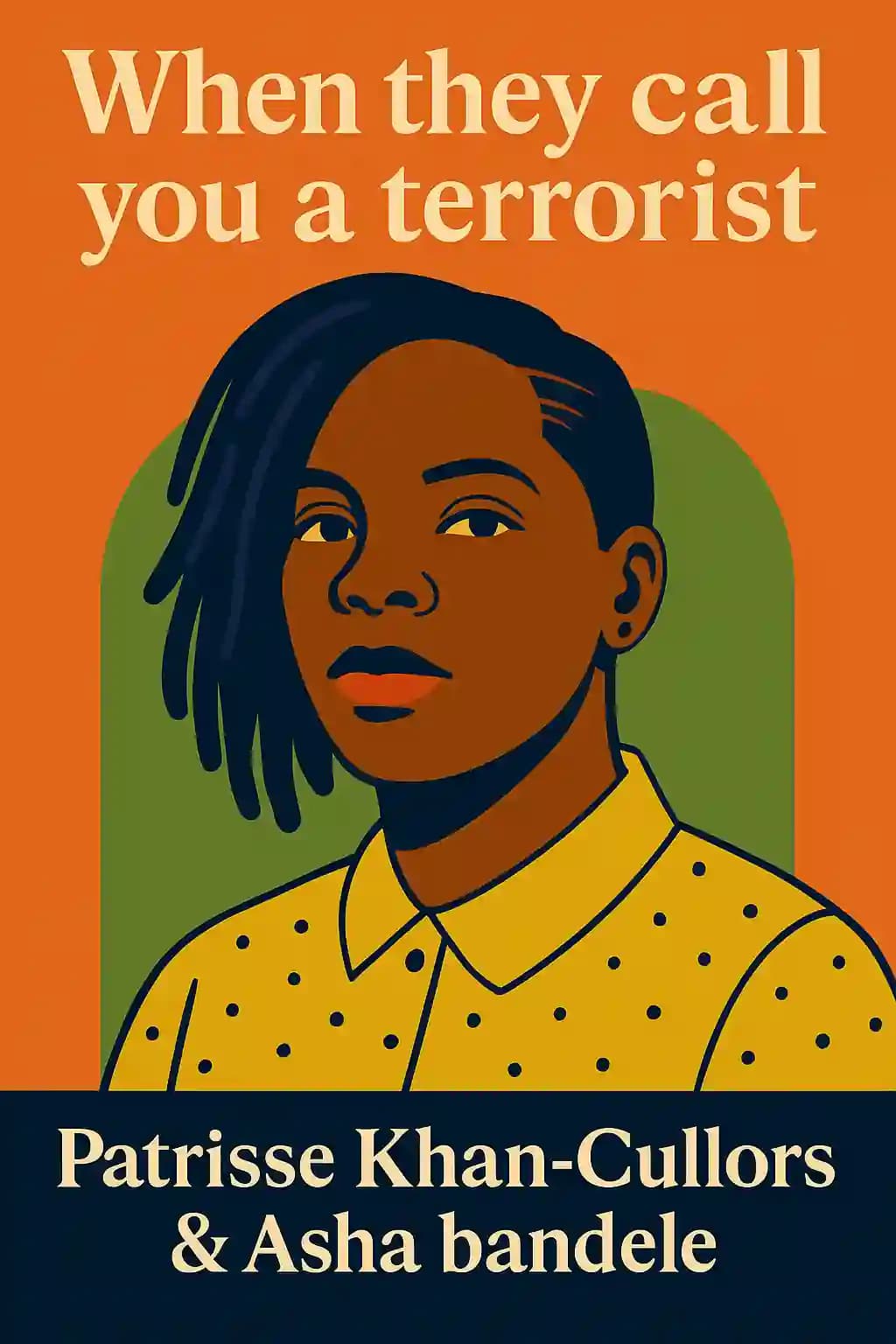
When Patrisse Khan-Cullors co-founded Black Lives Matter in 2013, few could have predicted how quickly this rallying cry would transform into a global movement. Yet the seeds of this revolution were planted long before-in the painful soil of her childhood in Van Nuys, California, where she witnessed firsthand how America's systems criminalized Black bodies and minds. Named one of Time Magazine's 100 Most Influential People in 2020, Khan-Cullors' memoir has become required reading in universities nationwide and a touchstone for understanding the intersection of personal trauma and political resistance. The raw honesty with which she details her journey from witnessing her brothers' harassment by police at age nine to becoming an internationally recognized activist offers not just a window into one woman's life, but a mirror reflecting America's unresolved relationship with race, justice, and human dignity.
Capítulo 2
Growing Up Under Twin Terrors: Poverty and Police
In Van Nuys, California, a run-down Section 8 apartment complex became the backdrop for Patrisse's childhood-a neighborhood deliberately designed to be transient, lacking even basic amenities. The absence of grocery stores meant families relied on corner liquor stores for food, while children played in parking lots instead of parks. Her mother Cherice worked multiple jobs - cashier by day, caregiver by night - often sleeping only three hours between shifts to support four children. Her father Alton, though separated from the family, maintained a presence through weekend visits and occasional financial support, representing a complex reality many families faced in their community.
The stark disparity between Van Nuys and neighboring Sherman Oaks was visible in everything from street maintenance to school funding. While Sherman Oaks boasted tree-lined streets and well-maintained parks, Van Nuys suffered from crumbling infrastructure and neglected public spaces. These invisible boundaries, enforced through redlining, zoning laws, and discriminatory housing practices, created what Patrisse describes as "separate worlds existing side by side."
Police presence dominated daily life with military-style tactics. When Patrisse was nine, she witnessed officers conducting a "routine stop" of her brothers Monte and Paul - forcing them against a wall, roughly patting them down, and demanding identification while speaking in threatening tones. This scene, repeated countless times throughout her childhood, exemplified the criminalization of Black youth. Officers would park their cruisers outside the apartment complex for hours, following teenagers walking home from school, and conducting random searches under the guise of "gang prevention."
The war on drugs hit Van Nuys particularly hard, with devastating consequences for families like Patrisse's. Her brothers faced repeated arrests for minor infractions - loitering, jaywalking, or simply gathering with friends. Meanwhile, across the invisible boundary in Sherman Oaks, Patrisse observed white teenagers openly using and selling drugs without consequence. Her friend's brother operated a profitable marijuana business from his bedroom, protected by privilege and zip code.
At twelve, Patrisse's personal encounter with systemic racism came at Millikan middle school, where she straddled two worlds but belonged to neither. Despite previous academic success, she found herself increasingly isolated. White teachers stopped calling on her in class, and guidance counselors suggested vocational tracks instead of college prep courses. Her only refuge came through dance classes, where her teacher, Ms. Rodriguez, continued to see and nurture her potential.
The statistics reflected her experience: Black girls faced suspension rates six times higher than their white peers, often for subjective infractions like "attitude" or "disrespect." This same year, Patrisse watched her brothers' friend Marcus receive a five-year sentence for marijuana possession - the same substance freely sold in Sherman Oaks homes. These early experiences shaped her understanding of how race, class, and geography determined not just opportunities, but survival itself in America's segregated landscape.
Capítulo 3
Family Bonds Forged in Adversity
Just before graduating elementary school, Patrisse's understanding of her own identity was upended when her mother revealed that Alton, whom she'd always known as her father, was actually her siblings' father but not hers. Her biological father was Gabriel Brignac, a man who had recently been calling their house. Though shocked and confused, she agreed to meet him.
When they finally met, Patrisse was breathless seeing how exactly alike they looked. Gabriel openly shared his recovery from crack addiction, living in a Salvation Army sober home. Through him, she met his large, welcoming family including her grandmother Vina, aunts, uncles, and her half-brother Darius. Gabriel became a consistent presence, picking her up every Friday for family gatherings filled with sports, gumbo, and celebrations she'd never experienced in her Jehovah's Witness upbringing.
Gabriel included Patrisse in everything-from taking her and her friends out to bringing her to his 12-step meetings where she witnessed the power of accountability and honesty. For three years, she found freedom and comfort in his love and their growing relationship-until her mother sat her down one night to tell her Gabriel was going back to prison. Patrisse collapsed, devastated, wondering how prisons could make society safer when they caused so much fear and hurt.
There were no rulebooks to guide her through this loss, though ten million American children were experiencing the same thing. She could only calculate what he would miss: her high school performances, graduation, her eighteenth birthday. Without words to explain her devastation, she tucked it away, pretended she was fine, and went to school solving algebraic equations that would never add up to her father coming home.
With Gabriel's incarceration, Patrisse lost not just her father but also the connection to the Brignac family she'd barely established. Though they loved her, without Gabriel-the magnetic center that pulled the family together-she disappeared from their world. The weekend baseball games with uncles, football Saturdays, and family gatherings over poor man's gumbo faded away, leaving only letters that began: "Dearest Patrisse, I hope this letter finds you well..."
Capítulo 4
When Mental Illness Meets Mass Incarceration
Patrisse's brother Monte's life trajectory reveals the devastating intersection of mental illness and the criminal justice system. His behavior had grown increasingly erratic-one day excitedly giving Patrisse money, the next desperately asking for it back. He'd lock himself in the bathroom sobbing, refusing to let her in despite her pleas of love. Other days he'd be manic, chattering incessantly with absolute certainty.
Like many Black boys in their neighborhood, Monte was repeatedly arrested. Once when Patrisse was twelve, they were simply walking down the street when a cop approached, asked if he was Monte Cullors, then handcuffed and took him away without explanation. At 19, Monte faced attempted robbery charges after trying to enter someone's home through a window during what was actually a mental health episode. For two months, the family couldn't locate him in the system. When their mother finally saw him at Twin Towers Detention Center, he was emaciated, 40 pounds lighter, bruised and beaten.
Years later, they learned Monte had been in a full-blown mental health episode when arrested. The jail psychiatrist diagnosed him with schizoaffective disorder, but they weren't told. LA County sheriffs had beaten him for his illness, denied him water, tied him down in four-point restraints, and drugged him into submission-not to treat his condition but to strip him of dignity and humanity.
Monte received a six-year sentence. In prison, he was immediately stabbed by a member of a Mexican gang, discovering prison's strict racial segregation. He found relative safety in the mental health unit-a tragic irony as American prisons house over ten times more severely mentally ill people than all state psychiatric hospitals combined. From prison, Monte wrote weekly letters, often incoherent and dark, randomly writing "JEHOVAH" in all caps or "WE WILL BE FREE!"
When Monte was released in 2003, Patrisse was horrified by what she saw at the Greyhound station. Her brother was hunched over, swollen from medication, wearing only a thin muscle shirt and boxer shorts-no pants, the prison's final insult. He wore shower shoes and carried only a manila envelope with discharge papers and crushed medication. The prison "doctors" had clearly not stabilized him before release. At home, Monte sat zombie-like while his son Chase tried desperately to connect with a father he'd never known.
Over the next days, Monte didn't sleep or eat, instead rubbing toothpaste on walls, mixing drinks with tissue, running outside screaming "I'm walking the line!" and wearing two pairs of shoes simultaneously. When he brought a shopping cart filled with unknown items into their living room, Patrisse's mother broke down crying-something Patrisse had never witnessed before. When the ambulance refused to come because of Monte's felon status, Patrisse reluctantly called police, who promised only to taser Monte if he became violent.
When Monte saw the police, he dropped to his knees, hands raised, sobbing and begging, "Please don't take me back." Patrisse immediately sent the officers away and held her brother on the floor, apologizing through her tears. Eventually, a family friend convinced Monte to go to the hospital, where he stayed for nearly three weeks, requiring two weeks just to stabilize his medication.
Capítulo 5
Finding Purpose Through Education and Activism
Cleveland High School became Patrisse's lifeline-a groundbreaking social justice-focused charter school that transformed her worldview and intellectual development. Here, she immersed herself in studying complex global systems of power, from South African apartheid to various forms of communism across different societies. The curriculum introduced her to radical thinkers who would profoundly shape her perspective: Emma Goldman's anarchist philosophy, bell hooks' intersectional feminism, and Audre Lorde's powerful writings on race, gender, and sexuality. Students weren't just passive recipients of information; they were actively encouraged to challenge established systems of oppression-racism, sexism, classism, and heteronormativity-and to critically examine the foundations of their own beliefs and societal assumptions.
This intellectual awakening inevitably led Patrisse to scrutinize the Jehovah's Witness faith that had shaped her early life. Her questioning became increasingly pointed and systematic, challenging fundamental tenets of the religion. She confronted Elders with scientific and logical inconsistencies: the conflict between geological evidence and the belief in a 2,000-year-old Earth, the arbitrary nature of the 144,000 chosen for heaven, the absence of prehistoric life in biblical accounts, and the patriarchal structure of church leadership. Most crucially, she questioned the devastating practice of disfellowshipping, which tore families apart and inflicted deep emotional wounds on communities.
The moment of her mother's reinstatement after two decades of spiritual exile became a turning point. Watching male Elders pass judgment on her mother-who had raised children alone while working multiple low-wage jobs-crystallized everything Patrisse had come to question about organized religion. She rejected what she viewed as institutionalized hypocrisy and began seeking her own path to spiritual fulfillment and social justice.
The Brotherhood Sisterhood social justice camp marked her transition from student to activist. The camp brought together young people from diverse backgrounds, creating an environment where participants could honestly confront systems of oppression while building bridges across cultural, racial, and economic divides. A particularly moving session with LGBTQ+ youth highlighted the urgent need for change when an 18-year-old participant revealed his HIV status and his resignation to an early death. This moment embodied the real-world consequences of societal prejudice and institutional neglect that Patrisse was beginning to understand and fight against.
The Strategy Center became her political and intellectual home, led by the inspiring Kikanza Ramsey, whose multilingual abilities and natural leadership style demonstrated the kind of inclusive, educated activism Patrisse aspired to embody. The organization provided rigorous political education, combining classical revolutionary theory from Mao, Marx, and Lenin with contemporary radical thinkers like hooks, Lorde, and Walker. This comprehensive theoretical foundation, combined with practical organizing skills, shaped Patrisse into an effective activist. Over more than ten years, she transformed the Center into a family space, bringing in both friends and relatives, including her father after his incarceration, creating a community of learning and activism that would influence her future work in social justice movements.
Capítulo 6
Love, Loss, and Building Chosen Family
Throughout her journey, Patrisse's relationships evolved in ways that challenged conventional norms. She came out as bisexual in high school, where remarkably, 20 girls of color claimed their queer identities during her time there. But this freedom came with consequences-constant harassment followed them everywhere, with slurs and threats becoming part of daily life. Depression rates ran high, with those rejected by families 8.4 times more likely to attempt suicide.
When her friend Carla was kicked out in eleventh grade, they began staying at different friends' homes or sleeping in her car. By senior year, they were completely on their own, couch surfing with duffel bags of belongings. Their art history teacher Donna Hill became their savior, letting them live with her while they stabilized. Donna never charged rent, taught them Transcendental Meditation, and showed Patrisse "what it means to receive a gift you can only properly show gratitude for by sharing with others."
Years later, Patrisse would build a relationship with Mark Anthony, a man she'd known since high school. They moved into a tiny cottage in beautiful Topanga Canyon, and she finally accepted that "this blessed life was mine." Their relationship deepened as she processed complicated feelings about the Black men who had disappeared from her life. In September 2010, they committed themselves to each other in a beautiful ceremony with 200 guests, exchanging wooden rings and jumping the broom in celebration.
But as the Black Lives Matter movement grew exponentially, Patrisse's personal life faced challenges. She and Mark Anthony drifted apart despite their deep love and respect. Being intimate with one person became difficult while being "intimate with the world." Though deeply sad, they refused to dishonor their connection, continuing to work together while transitioning to a new kind of family relationship.
Later, Patrisse would meet Future, a leader of BLM Toronto with whom she built a profound connection. When Patrisse discovered she was pregnant (with another partner who reacted poorly), Future responded with genuine joy and support. Their relationship deepened, and they eventually married in Malibu with twenty loved ones present. On March 22, 2016, their child Shine was born-their own "Black Future."
Capítulo 7
The Birth of a Movement
On July 13, 2013, Patrisse stepped away from following the trial of Trayvon Martin's killer. When the verdict came-acquittal on all charges-she was overcome with shock, shame, and grief. She wept uncontrollably, feeling the weight of responsibility for the younger Black women with her, wondering if she could protect them. Then her friend Alicia Garza posted on Facebook about refusing to give up on Black lives. Patrisse responded with a hashtag: #BlackLivesMatter. Over the next few days, Alicia, Opal Tometi and Patrisse developed the framework for what would become a global movement.
In Los Angeles, they marched on Beverly Hills' Rodeo Drive, bringing their message to wealthy white people who needed to understand what Black communities face. Despite police closing in threateningly, every person on Rodeo Drive bowed their heads in a moment of silence for Trayvon. They established guiding principles that centered ending violence against Black bodies, celebrating differences, honoring Trans leadership, affirming that all Black lives matter regardless of identity or status, and creating spaces free from sexism and misogyny.
The movement gained momentum after Michael Brown's murder in Ferguson, Missouri on August 9, 2014. When images emerged of a young Black girl holding a "Black Lives Matter" sign while facing a tank, it was clear: a generation had been called to action. Organizers planned a Freedom Ride to Ferguson for Labor Day weekend to show solidarity with the community.
Six hundred organizers, lawyers, policy experts, youth organizers and healers converged on Ferguson. They created guidelines for safety and solidarity while standing shoulder-to-shoulder with local protesters against tanks and machine guns. At the church, they created a space of respite for the Ferguson community who had endured four weeks of military-style assault and media demonization. Before leaving, they hosted discussions on patriarchy in the movement, created healing spaces, and ended with Assata Shakur's powerful chant: "IT IS OUR DUTY TO FIGHT FOR OUR FREEDOM! IT IS OUR DUTY TO WIN! WE MUST LOVE EACH OTHER AND SUPPORT EACH OTHER! WE HAVE NOTHING TO LOSE BUT OUR CHAINS!"
Capítulo 8
When They Call You a Terrorist
Despite the movement's unwavering commitment to nonviolent resistance and community healing, Black Lives Matter organizers faced relentless and often violent backlash. After the 2016 Dallas police shootings, conservative media outlets and politicians deliberately mischaracterized the movement, labeling them terrorists for simply asserting that Black lives should matter. This cruel irony struck Patrisse deeply, having witnessed genuine state-sanctioned terrorism in the treatment of her brother Monte within the LA County Jail system - where he was brutally beaten, denied basic human necessities like water, physically restrained in four-point restraints for extended periods, and forcibly drugged into submission.
The 2011 ACLU report laid bare the systematic abuse within the jail system, documenting 86 pages of horrific incidents. Prisoners endured savage beatings, were repeatedly tased without cause, suffered broken bones and severe injuries, and experienced sexual assault - all occurring under Sheriff Lee Baca's administration. These revelations compelled Patrisse to create "Stained," a powerful multimedia art performance that brought these atrocities into public view. The installation featured enlarged testimonies from the ACLU report, live performers demonstrating the psychological trauma of incarceration, and haunting audio recordings of her mother's desperate calls searching for Monte within the labyrinthine system. Recognizing that artistic expression alone couldn't create systemic change, Patrisse and her friend Francesca established the Coalition to End Sheriff Violence, pushing for meaningful civilian oversight of the department's operations.
Their persistent advocacy bore fruit in 2016 with the establishment of the first civilian oversight board of the LA County Sheriff's Department - a historic victory that created a blueprint for accountability. However, the movement faced escalating threats and violence. The suspicious deaths of three Ferguson activists who were found shot dead sent shockwaves through the movement. Meanwhile, Alicia, Opal, and Patrisse faced legal harassment through a lawsuit filed by right-wing activists who falsely claimed they had instigated riots.
Trump's election victory in 2016 brought a new wave of fear and despair. Even as they celebrated local progress with Proposition 64, the reality of a president who openly embraced white supremacist rhetoric and policies posed an existential threat to their work. Hate crimes surged by 6% in major metropolitan areas, with Black communities bearing the brunt of this violence. The gravity of the situation led Patrisse and Future to seriously contemplate relocating to Toronto, but their deep commitment to the movement they'd built ultimately kept them in the fight.
Since its inception in 2013, Black Lives Matter had evolved into a sophisticated, decentralized network spanning over 20 chapters across three countries - the United States, Canada, and the United Kingdom. The movement's achievements were significant: they had successfully amplified Black women's voices in social justice discourse, created safe spaces for unfiltered truth-telling about systemic racism, advanced concrete police accountability measures, and integrated healing practices into their activism. Their persistent presence and advocacy helped influence President Obama's use of clemency powers, contributing to the lowest federal prison population in a generation and demonstrating the tangible impact of sustained grassroots organizing.
Capítulo 9
Stardust Rising: Finding Hope in the Struggle
Patrisse opens her memoir with a profound connection to astrophysicist Neil deGrasse Tyson's observation that humans are made of stardust-atoms traceable to exploded stars. This cosmic truth deeply resonates with her understanding of her people's resilience and their connection to something greater than their immediate struggles. She sees this celestial heritage reflected in her hardworking mother who maintained three jobs to support her family, her father who battled addiction yet never lost his gentle spirit, and her ancestors who endured slavery's unspeakable horrors yet "refused to accept the idea that their lives did not matter."
The toll of activism became increasingly apparent as Patrisse found herself exhausted from constant travel, poor eating habits, and the emotional weight of organizing. Recognizing the need for sustainable activism, she embarked on a journey of self-care and healing. She implemented a structured workout routine, began preparing nutritious meals at home, reduced her travel commitments, and established a daily prayer practice that grounded her spiritually. Most significantly, she prioritized her family life, creating sacred spaces for nurturing her relationship with Future and dedicating quality time to Shine, their child whose innocent wisdom continually reveals new possibilities for joy and transformation.
When confronting potential prejudices against her child, Patrisse has prepared a powerful response about the true nature of terrorism. She'll explain how real terrorism manifests in the systematic oppression of communities: the constant surveillance of Black bodies, the trauma of solitary confinement in prisons, the struggle of working multiple jobs yet still facing food insecurity, and the deliberate underfunding of schools in Black neighborhoods. In contrast, she defines freedom through the lens of collective liberation - the ongoing push for justice, human dignity, and lasting peace.
Patrisse's journey from her first encounter with police harassment at age nine to becoming a leader in an international movement spans decades of personal growth and political awakening. Through it all, she has maintained her core identity: not as a terrorist or agitator, but as Patrisse Marie Khan-Cullors Brignac - a survivor, a mother, a fighter, and fundamentally, stardust. Her memoir serves as both historical document and living testimony to the unbreakable spirit of Black Americans who persist in their struggle for basic human rights. It chronicles their continued fight for the recognition that their lives matter, their children deserve safety and opportunity, and that through sustained collective action and radical love, transformation is not just possible but inevitable. Her story embodies the paradox of being both cosmic stardust and a grounded activist, fighting for change while remaining connected to the eternal struggle for justice.