Capítulo 1
The Anger Trap: How Rage Damages Our Lives and Relationships
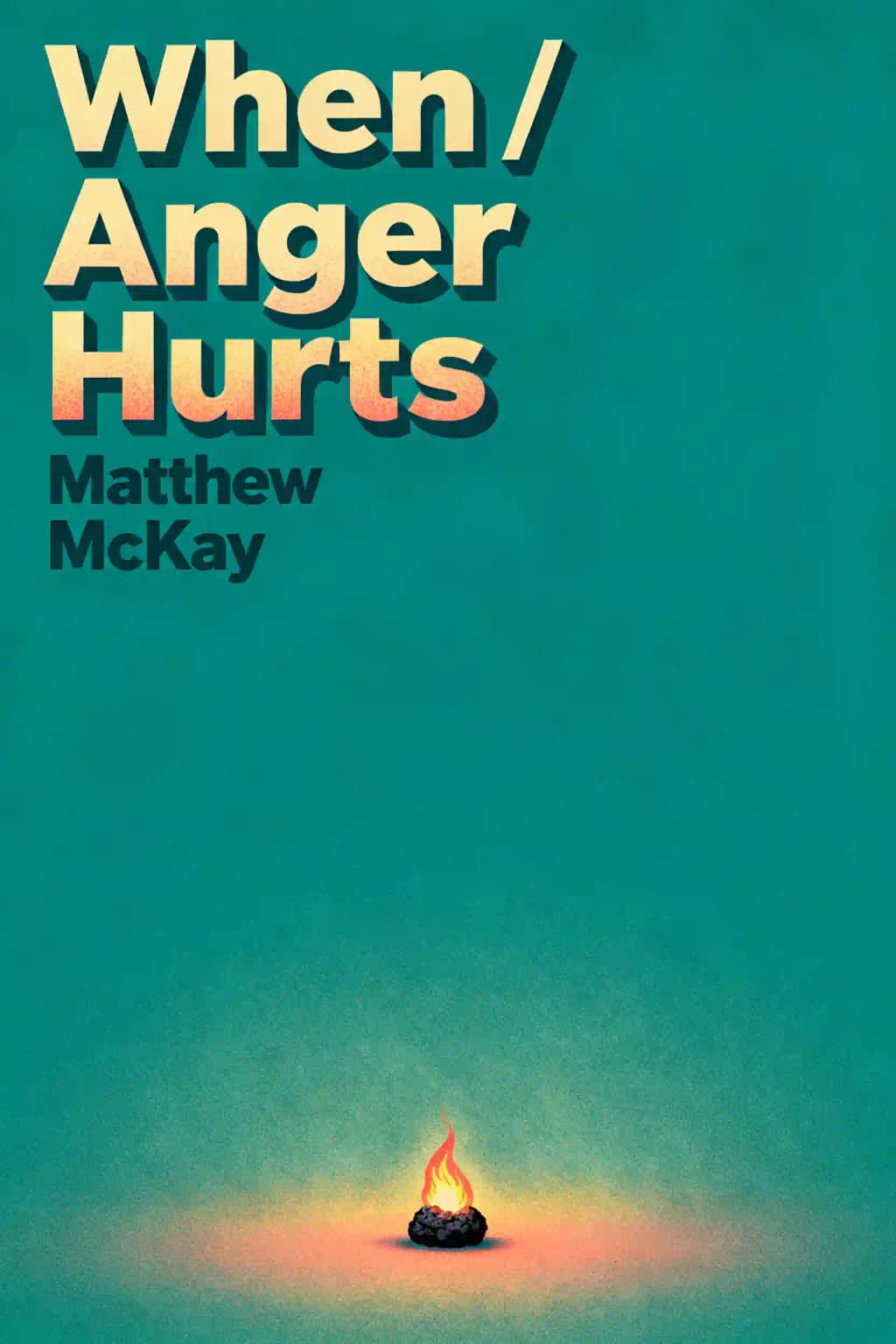
When was the last time you felt that familiar heat rising in your chest, your jaw clenching, and your thoughts narrowing to a laser-focused beam of righteous indignation? For most of us, it wasn't long ago. Anger is perhaps our most misunderstood emotion-simultaneously glorified in our culture as a sign of strength and vilified as a loss of control. "When Anger Hurts" by Matthew McKay has become something of a bible in anger management circles, selling over 250,000 copies worldwide and being used in clinical settings across the globe. This groundbreaking work challenges our fundamental assumptions about anger, revealing it not as an unavoidable biological response, but as a choice we make-often unconsciously-that carries enormous costs to our physical health, relationships, and overall well-being. The book's insights have been embraced by everyone from corporate executives seeking better leadership skills to couples on the brink of divorce, making it one of the most influential psychological texts on emotional regulation of the past three decades. As comedian Jerry Seinfeld once quipped, "Anger is like going to a fake fight with real bullets," capturing perfectly the dangerous illusion at the heart of our relationship with this volatile emotion.
Capítulo 2
Debunking the Myths: Why Everything You Thought About Anger Is Wrong
For centuries, we've been fed a steady diet of misinformation about anger. Shakespeare's "full hot horse" metaphor suggests anger is a wild force that must be released, while modern ventilationists encourage us to "let it all hang out." But research tells a dramatically different story.
The first myth-that anger is biochemically determined-falls apart under scientific scrutiny. While hormones like testosterone and prolactin correlate with hostile behavior, Schachter's groundbreaking "two-factor" theory demonstrated that emotion requires both physiological arousal and cognitive interpretation. In his classic experiments, subjects injected with adrenaline adopted entirely different emotional states based on social cues and expectations, proving that our thoughts typically override pure physiological arousal. Similarly, while the limbic system (especially the amygdala) processes aggression, it doesn't automatically trigger it-incoming stimuli must first be filtered through conscious interpretation in the cerebral hemispheres.
The second myth-that humans possess an innate aggression instinct-gained popularity through Raymond Dart's interpretation of early hominid fossils as evidence of "confirmed killers." Modern science thoroughly refutes this claim. Bob Brain discovered that fossil damage attributed to violence was actually caused by sediment pressure, and Richard Leakey argues that our ancestors' survival depended on cooperation within related bands, making unrestrained aggression evolutionarily disadvantageous.
The third myth-that frustration inevitably leads to aggression-requires significant qualification. Cross-cultural evidence shows frustration produces varied responses: the Kwoma of New Guinea might respond with submission, Balinese men often withdraw completely, and the Semai tribe uses dreams to work through frustrations. Neal Miller's 1941 reformulation acknowledged that frustration instigates many behaviors, aggression being just one possibility.
Perhaps the most dangerous myth is that "ventilating" anger is healthy. This misguided belief traces back to Freud's metaphorical "hydraulic model" of psychology, where blocked energy must find expression or overflow. Research consistently shows the opposite: people who vent get angrier, not less angry, and recipients become angry too. Jack Hokanson's studies revealed that catharsis is learned, not natural. Studies by Feshbach, Straus, and others demonstrate that ventilation increases hostility rather than reducing it.
These myths persist because they provide convenient excuses for aggressive behavior. But the scientific reality is clear: anger is primarily a choice determined by our thoughts and beliefs rather than biology or genetics. This understanding forms the foundation for effective anger management-recognizing that we have far more control over our anger than we've been led to believe.
Capítulo 3
The Hidden Health Costs: How Anger Damages Your Body
Imagine standing in a slow-moving bank line, growing increasingly furious about inconsiderate tellers and rigid work schedules. Your heart pounds, your breathing becomes heavy, your mouth dries, and your hands shake. This isn't just an unpleasant emotional experience-it's a full-body assault.
Chronic anger puts the body in a constant state of emergency, potentially contributing to serious health problems. The stress response, first documented by Walter Cannon in 1929, mobilizes the body's defenses through a complex cascade of hormonal changes. While this response helps us survive emergencies, Hans Selye showed chronic activation causes serious organic damage.
Anger produces a uniquely dangerous hormonal cocktail. It elevates testosterone (in men), epinephrine, norepinephrine, and cortisol. Chronically high testosterone and cortisol contribute to atherosclerosis, while cortisol suppresses immune function. The stress hormones redirect blood from the skin, liver, and digestive tract to the heart, lungs, and muscles. When blood diverts from the liver, cholesterol clearance decreases, promoting arterial fatty deposits. The elevated blood pressure damages arteries and forces the heart to work harder.
Research consistently links anger to hypertension. Since 1939, when Franz Alexander first suggested unexpressed anger leads to hypertension, dozens of studies have confirmed this connection. Gentry's 1982 study of over a thousand subjects categorically demonstrated that chronic suppressed anger increases hypertension risk. Interestingly, expressing anger aggressively (anger-out) also correlates with high blood pressure. Harburg's 1979 study found that those who chose confrontational responses had the highest blood pressure, while those who used "reflection" (discussing issues calmly later) had the lowest.
The link between anger and heart disease is equally well-established. In the 1950s, cardiologists Friedman and Rosenman identified personality traits linked to heart disease-a style they called "Type A," characterized by time urgency, competitiveness, and free-floating hostility. The Western Collaborative Group Study found Type A men twice as likely to have heart attacks. Duke University research revealed Type A patients had more severe atherosclerosis. Recent research has identified hostility as the key predictor of coronary disease among Type A traits. Multiple studies show people scoring high on hostility measures have significantly higher rates of heart disease and mortality.
Anger dramatically affects the digestive system too. Wolff and Wolf observed that anger produces a red stomach lining with increased contractions and hydrochloric acid secretion-unlike depression or fear, which cause pale linings with decreased activity. This hyperacidity increases risk for gastritis and ulcers.
Whether expressed or suppressed, chronic anger damages health. Expressed anger feeds on itself, prolonging harmful hormonal changes. Suppressed anger activates the sympathetic nervous system without providing tension release-like pressing a car's accelerator while simultaneously braking. By changing how we interpret situations, we can learn to live without anger and significantly improve our health.
Capítulo 4
The Relationship Destroyer: How Anger Erodes Connection
While anger may temporarily feel relieving and serve as a tool for influence, it exacts a devastating toll on our relationships. Each angry episode damages the fabric of goodwill and care that binds people together. People handle angry individuals cautiously or avoid them altogether. The cyclical nature makes anger particularly destructive-aggression breeds more hostility, anger, and continued aggression, transforming hopeful relationships into catalogs of grievances.
As anger frequency increases, tolerance and flexibility decrease. Relationships become characterized by vigilance and fear, with energy channeled into erecting barriers rather than communication. These defenses-numbness, judging, irritability, attack, withdrawal, revenge-create psychological minefields that prevent genuine connection. Once established, these barriers make people rigid and hypersensitive, with extremely low tolerance for mistakes or criticism.
People naturally resist anger-based coercion to maintain their psychological boundaries. While anger may initially work to influence others' behavior, targets soon develop resistance through avoidance, discounting, counterblaming, derailing, and passive-aggressive sabotage. No matter how frightening coercive anger becomes, it's never as scary as the loss of self.
Chronically expressed anger erodes quality of life in multiple ways. Angry people often express helplessness, feeling that nothing goes as they wish. This cycle develops in four steps: identifying pain or lack, believing others should fix it, expressing anger aggressively, and encountering resistance and withdrawal. The root cause is entitlement-"I should never feel pain, but if I do, you must fix it"-which surrenders personal power while making impossible demands of others.
Anger diminishes life's pleasures. As relationships become defensive and distant, opportunities for warmth decrease. Studies show that while hostile people have the same number of social contacts as non-hostile people, they experience these contacts as lower quality and less satisfying. Anger negatively affects decision-making and leads to self-defeating behaviors. Studies show high-trait anger players make more attack responses resulting in losses during simulated games. Research also correlates high trait anger with risky driving behaviors leading to increased accidents.
Dr. Myer Friedman determined that hostile, hard-driving people fail more than succeed in the workplace, often burning themselves out in "pointless struggle, impatience, and anger." Workplace anger creates the same problems as in personal relationships: defensiveness, counterattack, and withdrawal.
For many, anger's ultimate price is isolation. Studies show hostile Type A personalities "freely ventilate their wrath" and block pathways to close friendships. Research reveals angry managers receive less family support and report less trust in close relationships. Nearly half of angry males in one study suffered terminated or damaged relationships within a year.
This isolation affects physical health too. People with weak social ties show higher incidence of infections, cancer, and various chronic diseases. Those divorced, separated, or with few close friends have death rates two to five times higher than married peers. This connection between isolation and illness may explain why hostile people have higher death rates from all causes-as anger weakens social supports, it simultaneously weakens bodily defenses.
Capítulo 5
Anger as Choice: The Revolutionary Two-Step Model
What if everything you believed about anger was fundamentally wrong? What if anger isn't something that happens to you, but something you choose-albeit often unconsciously?
Through a family conflict scenario between Sarah, James, and Leonard, we can see how each person brings unique stresses and "trigger thoughts" that ignite their anger. When we examine their internal processes, a revolutionary understanding emerges: anger functions as a coping strategy to discharge uncomfortable emotional and physical arousal.
Anger's sole purpose is stopping stress by discharging or blocking painful arousal. It addresses four types of stress: painful emotions (blocking awareness of hurt, anxiety, or guilt), physical sensations (relieving muscle tension or pain), frustrated drives (venting arousal when desires are blocked), and perceived threats (reducing arousal from dangers to physical or psychological well-being).
Consider how anger blocks different types of stressful arousal. For anxiety and fear, anger provides immediate discharge, like a mother who shouts at her child after a near-accident rather than experiencing terror. With loss and depression, anger offers temporary relief from sadness, as when someone lashes out at colleagues while processing a breakup. For hurt feelings, anger blocks awareness almost immediately, as when someone criticized feels humiliated then explodes.
There are many healthier alternatives to anger for reducing stress. Crying helps discharge tension and communicate needs. Exercise like walking or swimming reduces stress aerobically. Other effective strategies include humor, writing, relaxation exercises, verbalizing pain, recreation, problem-solving activities, and simply resting. While some stress-reduction methods like alcohol or drugs are effective but destructive, anger is among the least effective strategies overall, causing physiological damage and relationship harm.
Three factors influence why someone chooses anger as their stress-reduction strategy: physiological predisposition, instrumental conditioning (behaviors reinforced in childhood), and social learning through modeling parents' coping mechanisms. Despite these influences, people can learn new tools for managing stress.
Anger follows a two-step process. First, stress creates uncomfortable arousal that demands coping. Second, specific anger-triggering thoughts convert stress into hostility. These thoughts fall into two categories: "blamers" (believing someone deliberately harmed you) and "shoulds" (believing someone broke rules of reasonable conduct). Both types frame others as bad, wrong, and deserving punishment. Without both stress and trigger thoughts, true anger cannot exist.
This two-step model challenges fundamental assumptions about anger. There is nothing inherently right or legitimate about anger-it's merely a response to pain using trigger thoughts that may be false or distorted. The "dam of anger" theory is incorrect-it's not anger that builds up but stress, and failing to express anger doesn't create more anger. Most importantly, anger is a choice-though often unconscious-based on trigger thoughts that transform stress into hostile feelings.
With awareness, you can choose not to take the second step of engaging with trigger thoughts. Developing this awareness requires studying your own anger process through journaling exercises that examine the stresses preceding anger, the trigger thoughts used, and whether anger provided temporary relief.
Capítulo 6
Taking Responsibility: The Path to Freedom from Anger
When in pain, people instinctively ask "who did this to me?" This impulse to assign blame fuels chronic anger. Once you decide someone is responsible for your distress, you feel justified in discharging your stress through anger. While blaming provides temporary relief by shifting focus from pain to others' wrongdoing, it's fundamentally untrue.
You alone are responsible for your life experience, for four essential reasons: only you truly understand your needs, others appropriately focus on meeting their own needs, people's needs inevitably conflict, and your life satisfaction depends on your own coping strategies.
The principle of personal responsibility involves accepting two key premises: you are responsible for your own pain, and you must change your coping strategies to better meet your needs. This perspective shifts you from helpless anger to awareness of your control in difficult situations.
Consider Irene, who resents her chronically late friend. Taking responsibility means recognizing she has choices: she could arrange to meet at her friend's house, suggest activities where timing isn't critical, or adjust her expectations. Arthur, frustrated with his workaholic wife, could develop other social connections rather than demanding she change. Marty, feeling abandoned by his friend, could express his feelings directly rather than withdrawing in anger.
When unhappy with someone's behavior, you can exercise responsible decision-making through six approaches:
1. Develop more effective reinforcement strategies to encourage desired behaviors
2. Take care of the need yourself rather than waiting for others
3. Develop alternative sources of support and nourishment
4. Set clear limits and boundaries with others
5. Negotiate assertively by directly asking for what you want and offering compromises
6. Let go-either by accepting unchangeable situations or by removing yourself from toxic relationships
Taking responsibility is preferable because anger costs too much physically and relationally. Chronic anger releases harmful hormones that can lead to ulcers, high blood pressure, and cardiovascular disease. In relationships, anger initially may produce compliance but ultimately drives people away as they become defensive or withdraw.
The principle of personal responsibility teaches that you must find more effective strategies when anger doesn't work, recognize that others won't change unless it benefits them, and accept that all relationships ultimately require either adaptation or letting go.
Coping mantras-concise statements you can memorize-help calm yourself when anger arises: "I am responsible for what happens between us," "No point in blaming, try a new strategy," "What can I do about this?" "People won't change unless I make it in their interest," "My choice is to adapt or let go," and "Only children are victims, I always have a choice." These mantras serve as powerful mental tools to interrupt anger patterns and promote more constructive responses.
Capítulo 7
Breaking the Habit: Practical Tools for Managing Anger
Breaking the anger habit begins with a manageable 24-hour commitment to act calmly regardless of provocation. This means no raised voice or shouting, no angry driving or tailgating, no physical threats or actions, and no verbal attacks. To succeed, clarify your personal goals-whether improving relationships, advancing at work, feeling physically better, or replacing shame with pride-and post these goals where you'll see them throughout the day.
When anger arises, the most important first step is to STOP-don't say or do anything immediately. Observe the emotion as it rises and falls like a wave, without acting on it. Watch your self-talk, avoiding phrases that intensify anger like "This isn't fair" or "I'm not taking it anymore." Instead, use calming statements like "I can do something different this time" or "I don't have to take this personally." Acting opposite to your angry feelings-smiling instead of glaring, relaxing muscles, lowering your voice, talking slowly, and creating physical space-can defuse situations and give you control.
Combating trigger thoughts is essential for long-term anger management. We constantly judge others' behavior based on personal rules about how people should act. When others violate these "shoulds," we perceive their behavior as deliberately wrong or immoral. The problem is twofold: first, others rarely agree with our shoulds-their perception of situations leaves them feeling blameless; second, people never do what they "should" do, they only do what's rewarding for them.
Several common fallacies fuel anger. The entitlement fallacy stems from the belief that because we want something badly, we deserve to have it. The fairness fallacy applies contractual rules to complex relationships, assuming some absolute standard of correct behavior exists. The fallacy of change assumes we can control others' behavior through sufficient pressure. Conditional assumptions follow the pattern "If you loved me, you'd..." or "If you were a real friend, you'd..." falsely equating caring with always meeting someone's needs.
Blaming triggers anger by making your pain someone else's responsibility. In intimate relationships, this creates negative cognitive sets where you interpret a person's behavior consistently negatively. The problem with blaming is twofold: it assumes someone else is responsible for your pain, and it constructs a world where people deliberately do "bad" things.
Changing established thought patterns requires discipline. Aaron Beck's three-column technique provides an effective method: in Column A, write what you're saying to yourself when angry; in Column B, identify the cognitive error; in Column C, rewrite your original statement without the distorted trigger thought. When refuting trigger thoughts, be specific rather than global, avoid judgment, recognize that punishment won't get what you want, check assumptions, take responsibility for your needs, understand people do their best given their awareness, and recognize that people change only when reinforced to do so.
Stress reduction techniques are equally important. Exercise releases endorphins that act as natural tranquilizers. Proper breathing naturally counteracts stress. Progressive muscle relaxation exploits the reciprocal relationship between tension and anger. Cue-controlled relaxation involves selecting a personal two-syllable word or phrase like "relax" or "let go" that triggers an automatic relaxation response.
Capítulo 8
Effective Communication: The Alternative to Anger
Communication patterns are learned primarily through observation during childhood. Children develop coping mechanisms in response to adult anger-some become compliant and passive, while others become aggressive. Neither style works effectively in adult relationships.
Passive communicators avoid expressing anything that might offend others, stating their needs only indirectly if at all. While appearing compliant externally, they internally suffer feelings of helplessness and resentment as their needs go unmet. This invisibility forces others to guess at their feelings and desires, usually incorrectly, as illustrated by Ralph who resents helping his sister move repeatedly while she never initiates contact for social purposes.
The aggressive style uses blame and punishment to get needs met, creating a cycle where intimidation breeds resistance and resentment. This approach leads to escalating conflicts, followed by guilt and compensatory behaviors that create new resentments. As demonstrated by Cheryl's relationship with her boyfriend, aggressive outbursts about his habits only make him defensive and stop listening, leading to guilt and temporary silence until the next explosion.
Many people alternate between passive and aggressive communication. Initially afraid to directly express needs, they suppress feelings until stress reaches a critical threshold, then explode over seemingly minor triggers rather than addressing the real underlying issues. Jim's case illustrates this pattern-unable to request needed decompression time after work, he performs household duties while growing increasingly stressed until erupting at his child's dinner behavior.
Assertiveness allows expression of feelings, thoughts and wishes while respecting others' rights. It's the antidote to anger, enabling direct communication of needs without accusation or blame. The assertive approach acknowledges that everyone has equally valid needs and works toward solutions where all parties get some of what they want.
An effective assertive statement contains three components: "I think" (objective description of facts without judgment), "I feel" (emotional response), and "I want" (specific request). The "I think" portion presents observable facts without blame or assumptions about intentions. The "I feel" component acknowledges your honest reaction without making others defensive, recognizing that anger often masks underlying emotions like worry, fear, disappointment, or embarrassment. The "I want" part should be specific, behavioral, and focused on one issue at a time.
When assertiveness alone isn't enough to motivate cooperation, sanctions may be necessary. Effective sanctions follow four rules: they must be specific (precisely describing both the triggering behavior and consequence), reasonable (proportional to the issue), sustainable (not hurting you more than the other person), and consistent (reliably enforced).
Negotiation isn't just for labor disputes-it's for any conflict where mutual benefit is possible. Effective negotiation starts with recognizing that the other person's needs matter to them as much as yours do to you. The process requires: knowing exactly what you want in behavioral terms; listening to understand the other's objections without arguing; making proposals that consider their interests; and encouraging counterproposals when needed.
The ability to say no is crucial for establishing personal boundaries. People who can't set limits often become chronically angry, feeling taken advantage of while spending time on activities that bring little joy. Effective limit-setting has three components: acknowledging the other person's needs, stating your position without apology, and clearly saying no.
Capítulo 9
Anger as Defense: Understanding the Deeper Emotional Landscape
Anger provides powerful protection through five key mechanisms: a feeling of empowerment, energy to cope, blocking of inhibiting emotions like fear and guilt, adaptive egocentricity (focusing solely on your needs), and conviction of rightness. While these properties help respond to attacks, they also make anger useful as a psychological defense against painful inner experiences.
People frequently use anger to defend against uncomfortable feelings. A husband defends against guilt about neglecting his children by attacking his wife's parenting. Marjorie shields herself from her father's criticism by lashing out. Sheila masks her grief over losing her friend Anne to marriage by attacking Anne's choices. Mateo conceals feelings of being trapped in his stressful job by picking fights with his college-aged daughters.
Anger becomes addictive because it feels easier than confronting fear, hurt, guilt, or emptiness. Like all addictions, anger offers immediate relief and control, but its aftermath damages health and relationships. Most critically, anger diverts us from appropriate action. When we use anger defensively, we never address our actual feelings or the problems causing them.
To break free from defensive anger, review your anger diary to identify which emotions your anger is masking. When facing guilt, examine the rigid rules you've violated by asking if they're yours, flexible, realistic, and life-affirming. If your rule is sound, your guilt is healthy and signals needed change. For grief, use the mantra "They are gone. I am angry so that I won't feel the loss" and set aside time daily to mourn, trusting the natural wave-like process of grief.
For hurt, acknowledge it openly without blame, focusing on your feelings rather than accusing others. For helplessness, take responsibility for your situation, generate new coping options with clear goals, and take action. For emptiness, experience your loneliness in brief, manageable periods without blaming others, then either explore deeper feelings or take direct action to create intimacy.
As you let go of anger as a defense, experiment with different approaches. What matters is maintaining your commitment to see through your anger to the underlying feelings and developing new responses to parts of yourself that were previously buried under blame and upset.
Road rage has become commonplace in America, contributing to thousands of accidents annually. To combat it, first relax your body using cue-controlled relaxation-taking deep diaphragmatic breaths while mentally saying words like "relax" or "let go." Select three coping thoughts from key attitudes that help reduce road rage: "I'll get there when I get there," "People are people," "People do what they want, not what they should," and "It's just a bad moment."
When facing an angry driver, follow five crucial don'ts: Don't look at them or make eye contact; don't gesture in any way; don't roll down your window; don't honk your horn; and never pull over or exit your vehicle. These simple rules can prevent dangerous escalation when encountering aggressive drivers.
Capítulo 10
The Transformative Power of Understanding Anger
The journey through "When Anger Hurts" reveals a profound truth: anger is not an inevitable force that happens to us, but a choice we make-often unconsciously-in response to stress and discomfort. This revolutionary understanding gives us back control over our emotional lives and relationships.
By recognizing the two-step process of anger-stress followed by trigger thoughts-we gain the ability to interrupt this pattern before it damages our health and relationships. We can learn to identify our personal trigger thoughts, challenge their validity, and replace them with more accurate and compassionate interpretations of events. We can develop healthier ways to manage stress through relaxation techniques, exercise, and problem-solving approaches.
Perhaps most importantly, we can take responsibility for our own emotional experiences rather than blaming others. This shift from victimhood to empowerment opens up new possibilities for meeting our needs and resolving conflicts. Through assertive communication, we can express our feelings and desires clearly without accusation or blame, creating space for genuine understanding and compromise.
The skills presented in this book-from the 24-hour commitment to calm behavior to the IDEAL problem-solving method to Response Choice Rehearsal-provide practical tools for breaking free from the anger habit. With practice and persistence, we can transform our relationships with ourselves and others, replacing destructive anger with constructive engagement.
As we learn to look beneath our anger to the vulnerable emotions it often masks-hurt, fear, grief, or helplessness-we develop greater emotional intelligence and self-awareness. This deeper understanding allows us to address our true needs rather than getting sidetracked by blame and punishment.
The path away from chronic anger isn't always easy, but the rewards are immense: better physical health, stronger relationships, greater effectiveness at work, and a more peaceful inner life. By recognizing anger as a choice rather than an inevitability, we reclaim our power to respond to life's challenges with wisdom rather than rage.