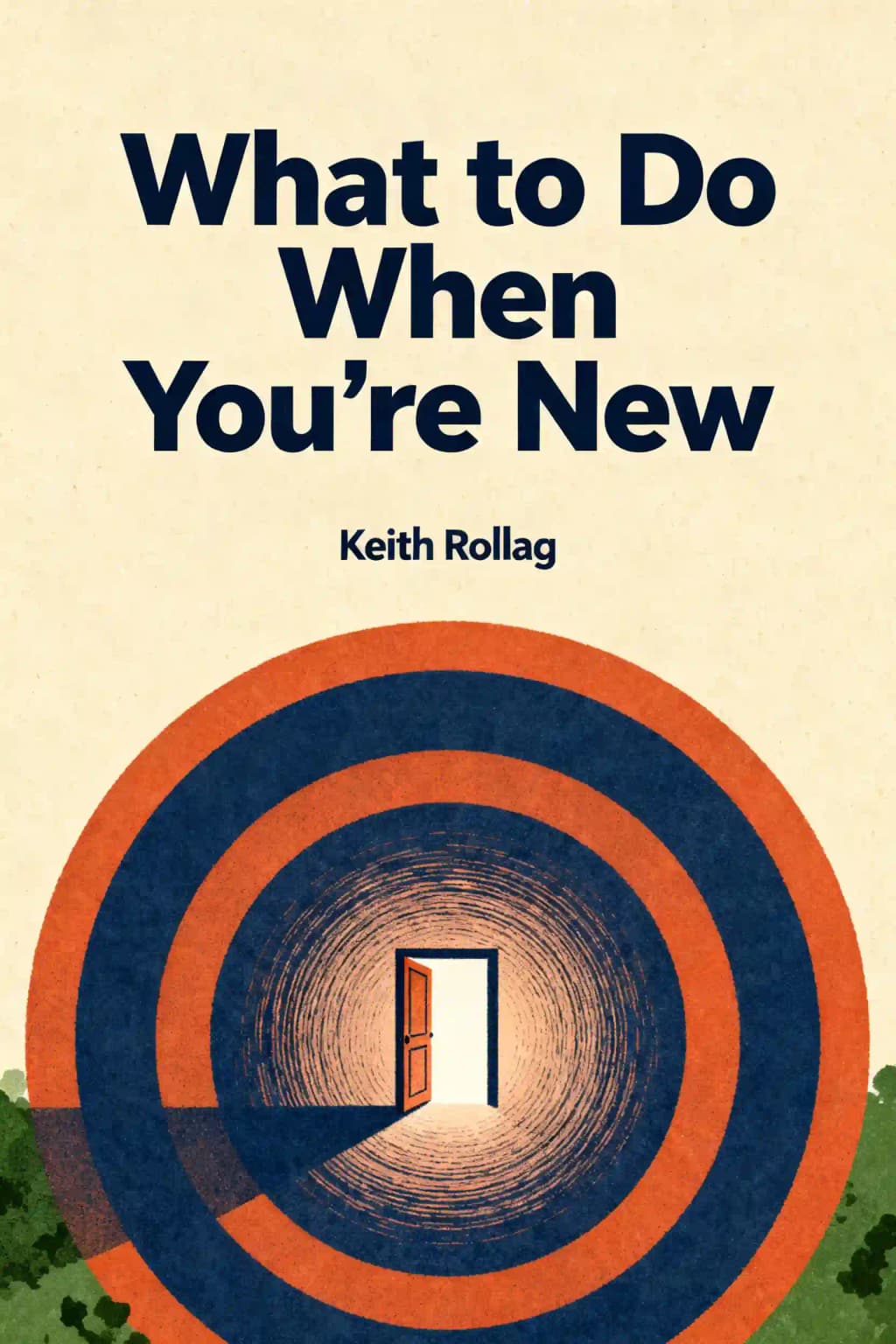
Master the art of being new with Keith Rollag's research-backed guide, featured in Harvard Business Review and Forbes. Learn three transformative mindsets that turn anxiety into opportunity. What's the one skill that determines success in every new situation? The answer will surprise you.
Siente el libro a través de la voz del autor
Convierte el conocimiento en ideas atractivas y llenas de ejemplos
Captura ideas clave en un instante para un aprendizaje rápido
Disfruta el libro de una manera divertida y atractiva
Ever notice how your stomach drops when you walk into a networking event alone? That moment when you scan the room and everyone seems locked in animated conversation while you stand there clutching your drink like a life raft? You're not broken. You're human. That anxiety coursing through your veins is the same ancient alarm system that kept your ancestors alive when encountering strangers could mean genuine danger. Today, the stakes are coffee and small talk, but your brain hasn't gotten the memo-it's still operating like you're walking into a rival tribe's territory. This disconnect between our Stone Age wiring and modern social demands explains why, despite living in the most connected era in human history, we still feel that primal dread when entering unfamiliar territory. By six months old, babies already distinguish between familiar and unfamiliar faces, showing wariness toward strangers. Then we spend twelve years in school learning that asking questions is for classrooms only and that performances expose us to judgment. Add social media's parasocial relationships-where fictional characters can't reject us and are available 24/7-and we've created convenient substitutes that let us avoid the very face-to-face connections we desperately need. Understanding this biological legacy doesn't eliminate the anxiety, but it does something equally valuable: it normalizes it. That racing heart before introducing yourself isn't weakness-it's your prehistoric brain doing exactly what evolution designed it to do.
Desglosa las ideas clave de What to Do When You’re New en puntos fáciles de entender para comprender cómo los equipos innovadores crean, colaboran y crecen.
Destila What to Do When You’re New en pistas de memoria rápidas que resaltan los principios clave de franqueza, trabajo en equipo y resiliencia creativa.

Experimenta What to Do When You’re New a través de narraciones vívidas que convierten las lecciones de innovación en momentos que recordarás y aplicarás.
Pregunta lo que quieras, elige la voz y co-crea ideas que realmente resuenen contigo.

Creado por exalumnos de la Universidad de Columbia en San Francisco
"Instead of endless scrolling, I just hit play on BeFreed. It saves me so much time."
"I never knew where to start with nonfiction—BeFreed’s book lists turned into podcasts gave me a clear path."
"Perfect balance between learning and entertainment. Finished ‘Thinking, Fast and Slow’ on my commute this week."
"Crazy how much I learned while walking the dog. BeFreed = small habits → big gains."
"Reading used to feel like a chore. Now it’s just part of my lifestyle."
"Feels effortless compared to reading. I’ve finished 6 books this month already."
"BeFreed turned my guilty doomscrolling into something that feels productive and inspiring."
"BeFreed turned my commute into learning time. 20-min podcasts are perfect for finishing books I never had time for."
"BeFreed replaced my podcast queue. Imagine Spotify for books — that’s it. 🙌"
"It is great for me to learn something from the book without reading it."
"The themed book list podcasts help me connect ideas across authors—like a guided audio journey."
"Makes me feel smarter every time before going to work"
Creado por exalumnos de la Universidad de Columbia en San Francisco

Obtén el resumen de What to Do When You’re New como PDF o EPUB gratis. Imprímelo o léelo sin conexión en cualquier momento.