Capítulo 1
Justice Reimagined: When Psychology Meets Law
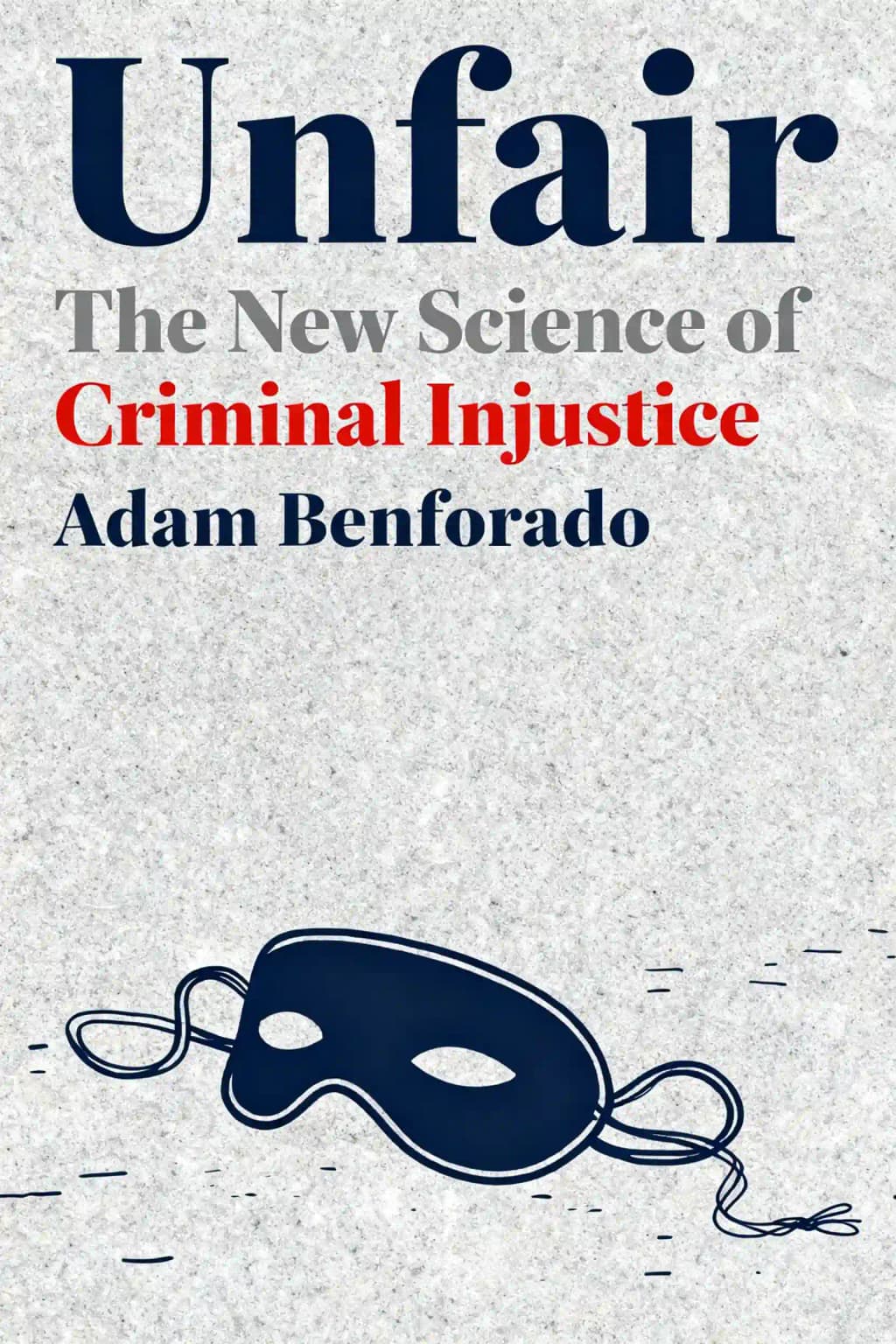
In the halls of our criminal justice system, a silent epidemic of unfairness thrives beneath the surface. Adam Benforado's groundbreaking work "Unfair: The New Science of Criminal Injustice" arrived at a critical moment in America's reckoning with its legal institutions. The book became an instant New York Times bestseller, resonating with readers across the political spectrum and earning praise from legal luminaries like Harvard Law professor Laurence Tribe, who called it "the most important criminal justice book in a generation."
What makes this work particularly compelling is how it challenges our fundamental assumptions about justice. While we believe our legal system is built on rational choices and conscious decisions, Benforado-a former law clerk and current law professor at Drexel University-reveals how our minds operate largely outside conscious awareness. Drawing from his background in both law and psychology, he demonstrates how implicit biases affect everything from police investigations to jury deliberations, creating a system that is far less fair than we imagine. The book's timing coincided with the rise of the Black Lives Matter movement and growing public awareness about wrongful convictions, making it not just academically significant but culturally transformative in how we understand justice in America.
Capítulo 2
The Hidden Biases That Shape Our Judgments
The case of David Rosenbaum illustrates how quickly our minds form judgments based on limited information. When emergency responders found him lying on a Washington D.C. sidewalk one January night, they immediately labeled him as drunk rather than injured, despite evidence suggesting otherwise. This snap judgment had fatal consequences-Rosenbaum had actually been violently assaulted and died from his injuries after receiving delayed medical care.
Our brains constantly create coherent narratives from incomplete information, often leading to dangerous misperceptions. Research demonstrates this tendency consistently: in one study, people rated the same child as below grade level when shown in an urban setting, but above grade level when placed in a suburban environment-despite identical performance.
Context dramatically shapes perception. While neighbor Claude Pritchett initially described Rosenbaum as "dressed nicely," hours later a hospital physician saw him as "very disheveled, unkempt... like our typical alcoholic." The vomit on his jacket triggered disgust-a powerful emotion that affects both physical and moral judgments. Studies show that disgust from physical stimuli makes people's moral judgments more severe. This disgust likely caused responders to maintain physical distance from Rosenbaum, preventing proper examination of his injuries, while simultaneously creating moral distance by attributing his condition to drunkenness rather than injury.
The labels we assign to victims profoundly impact how their cases are handled. We unconsciously value certain victims more-studies show ten-year-olds receive priority over both older individuals and babies. Being labeled an "alcoholic" is particularly damaging as addiction is viewed as "chosen," making people less sympathetic. Research reveals that disgust toward groups like homeless people and addicts activates brain regions associated with objects rather than people-we literally dehumanize them.
Once we label someone, we unconsciously seek confirming evidence while dismissing contradictory information. This "tunnel vision" is a major cause of medical errors and a pervasive problem in criminal investigations. Even supposedly objective DNA testing is susceptible to confirmation bias. When analysts were told a DNA sample was from a gang-rape case with a cooperating witness, they found a match to the suspect. But when seventeen other experts analyzed the same evidence without this backstory, only one found a match.
Capítulo 3
False Confessions and the Power of Interrogation
When investigators begin with a presumption of guilt, they become predisposed to view ambiguous behaviors as deceptive and pursue more aggressive interrogation tactics. Studies show interrogators who start with a guilt mindset are 20% more likely to confirm guilt than those who begin with an innocence mindset.
Juan Rivera's case demonstrates this problem vividly. Despite numerous factual contradictions in his confession (like describing changing a baby's diaper when the baby wasn't in diapers), detectives didn't question his guilt but instead conducted additional questioning to "clean things up." Once a confession exists, everyone views the case through a guilt lens-making eyewitness identifications seem more reliable and jailhouse informants more credible. Defense attorneys may work less diligently, judges may be tougher, and investigators often stop pursuing other leads.
Even DNA evidence excluding a suspect may not overcome a confession's power. In eight of the first 250 DNA exoneration cases, suspects confessed to crimes that pretrial lab results showed they didn't commit-yet police, prosecutors, judges and jurors ignored the DNA evidence.
Rivera's case ended with his release in 2012 after the Illinois Court of Appeals overturned his conviction, but only after he spent nineteen years-half his life-in prison for a crime he didn't commit. His freedom required tireless work from unpaid lawyers, professors, and law students, along with media attention and three full trials. Meanwhile, the real killer remained free and was later linked through DNA to another murder committed years after Holly's death.
The broader problem of plea bargaining compounds these issues, with 90-95% of defendants admitting guilt to receive leniency rather than risk harsher sentences at trial. This system means most convictions occur without anyone presenting proof of guilt or jurors evaluating evidence. Even innocent people like James Ochoa plead guilty when facing overwhelming pressure-he served sixteen months and was stabbed in prison before the actual perpetrator was caught. A study showed over half of innocent college students falsely admitted to cheating when faced with similar pressures.
Capítulo 4
How Environment Shapes Criminal Behavior
Our environments powerfully influence behavior, sometimes overriding genetic predispositions and fundamentally shaping our choices and actions. The compelling case of Whitey and Bill Bulger from South Boston demonstrates how different surroundings at critical moments can send siblings on dramatically divergent life paths. While Whitey became one of America's most notorious gangsters, his brother Bill rose to become President of the Massachusetts Senate - their divergent paths shaped by different peer groups, mentors, and opportunities during their formative years.
Our surroundings can directly trigger criminal behavior in surprising and measurable ways. Research shows that masks and costumes increase aggressive behavior and stealing in children by up to 300%, but this effect disappears when anonymity is removed through simple identification measures like name tags. Similarly, simply holding a gun can bias perception, making ambiguous objects appear threatening - suggesting that having a weapon literally changes how we see the world. In controlled studies, participants holding guns were 45% more likely to interpret neutral facial expressions as hostile.
Physical environments shape behavior in profound ways. The "broken windows" theory, now supported by extensive empirical research, shows that neighborhood disorder (graffiti, litter, visible rule-breaking) encourages more rule-breaking by signaling that deviant behavior is acceptable. One study found that visible disorder increased littering by 40% and minor theft by 27%. Conversely, urban green spaces correlate with reduced crime rates - neighborhoods with 10% more tree coverage experience, on average, 12% less crime.
The famous Milgram experiments demonstrated how situational factors can lead ordinary people to commit harmful acts. By manipulating minor environmental elements like proximity to the victim or the presence of authority figures, researchers could get compliance rates for administering potentially lethal shocks to vary between 0-92.5%. Similar results were found in Zimbardo's Stanford Prison Experiment, where ordinary students quickly adopted cruel behavior when placed in guard roles. This supports Hannah Arendt's observation about the "banality of evil" - that monstrous acts often come from ordinary people placed in toxic situations, not inherently evil individuals.
Acknowledging the power of situation implicates society in crime causation. When we fail to regulate weapons, leave neighborhoods blighted, cut social programs, or provide few opportunities beyond gang membership, we become partially responsible for resulting crimes. Studies show that areas with higher unemployment rates (above 10%) experience up to 30% more property crime. Communities with strong social programs and economic opportunities consistently show lower crime rates. Recognizing these environmental influences eliminates the comfortable barrier between "us" and "criminals," fostering empathy and encouraging systemic interventions rather than just punishment. This understanding has led to successful crime reduction strategies in cities like Boston and Chicago, where environmental improvements and community programs have reduced violent crime by up to 30% in targeted areas.
Capítulo 5
The Fallibility of Eyewitness Memory
Erroneous witness identifications are particularly damaging because they influence other evidence. When police receive a positive identification, they work harder to find corroborating evidence and interpret ambiguous evidence in ways that confirm guilt. This creates a dangerous feedback loop where one mistake leads to another.
The statistics are alarming: of the first 250 DNA exonerations in the United States, more than 75% involved mistaken eyewitness identifications. Despite this, one of the most widely shared misconceptions is that memory works like a video camera, perfectly recording events for later playback. In reality, our memories are highly selective, reconstructive, and malleable.
We don't notice everything around us-in one study, researchers found that fewer than 25% of participants could locate fire extinguishers they passed regularly. We're best at remembering the gist of events rather than specific details, which fade quickly. Even emotionally charged events, contrary to popular belief, don't guarantee accurate memory.
Memory is a constructive process, not a reproductive one. When retrieving a memory, we don't simply replay it-we rebuild it, filling gaps with assumptions, expectations, and information acquired after the event. This makes our memories highly susceptible to suggestion and distortion.
Our false memories aren't fabricated from nothing-they're logical extensions of what we expect or want to have happened. Research shows people's recollections are only about 80% accurate, yet we remember with great confidence-a quarter of inaccurate memories come with total certainty.
Memory accuracy depends on numerous factors we underestimate. Cross-racial identifications increase error rates by 50%, and stress and fear severely impair memory. Physical exertion also compromises memory-officers who exercised to exhaustion were half as likely to identify suspects correctly.
Even subtle police behaviors can corrupt witness memories. A simple cough, sigh, or gesture can dramatically influence perception-in one study, when an experimenter merely stroked his chin, people were three times as likely to report seeing a beard on a clean-shaven man. Most officers receive little training in proper interview techniques, often interrupting too much, asking suggestive questions, or urging witnesses to work harder to uncover details that "must be there"-frequently leading to false memories.
Capítulo 6
Prosecutorial Misconduct and the Psychology of Dishonesty
The adversarial system itself promotes dishonesty by allowing attorneys to feel less responsible for outcomes. Omissions (like failing to turn over evidence) are easier to justify than commissions (actively bribing someone). This explains why Brady violations-where prosecutors fail to disclose exculpatory evidence-are particularly common. Rigid hierarchies in prosecutors' offices can also create diffusion of responsibility, providing a "ladder for misconduct."
Dishonesty thrives in groups rather than with lone individuals. Research shows we measure our actions against those around us rather than absolute moral standards. In one study, participants were more likely to cheat when someone from their own group cheated publicly, but less likely when the cheater was from a rival group.
In adversarial legal systems, strong group identifications make lawyers particularly susceptible to moral cues from colleagues. Justice Ginsburg's dissent in Thompson's case highlighted that "no fewer than five prosecutors" had acted to deprive Thompson of his rights-not just one rogue actor as Justice Scalia claimed. The prosecution team systematically withheld multiple pieces of exculpatory evidence, including the blood type report, audiotapes of a witness discussing reward money, police reports with inconsistent descriptions, and more.
Dishonesty can spread when the perceived norm is to bend rules. Moreover, our own past behavior influences future actions-small infractions often lead to bigger ones through a slippery slope effect. Even wearing counterfeit designer sunglasses in an experiment doubled cheating rates, as participants adopted a dishonest self-image. For prosecutors, initial minor ethical breaches can cascade into more serious violations as their moral standards shift and they increasingly believe others are also cheating.
Remarkably, people often reframe unethical behavior as morally good-righting a wrong or serving justice. Research shows people who feel mistreated are more likely to justify dishonest behavior. Prosecutors may rationalize misconduct when they feel disadvantaged by judges, opposing counsel, long hours, lower pay, or inexperience.
Capítulo 7
Bias in the Jury Box
When Deputy Clinton Reynolds attempted to stop a speeding Cadillac driven by nineteen-year-old Victor Harris, it triggered a high-speed chase joined by Officer Timothy Scott. After receiving permission to "take him out," Scott rammed Harris's car, causing it to crash and leaving Harris paralyzed from the neck down.
Harris sued Scott for unreasonable seizure under the Fourth Amendment, arguing that using potentially lethal force was unjustified for a simple speeding violation. The case reached the Supreme Court, where the justices reviewed dashboard camera footage of the chase. Justice Scalia called it "the scariest chase I ever saw since The French Connection," and the Court ruled that no reasonable juror could possibly see the events differently-the video "utterly discredited" Harris's version.
In reality, our race, gender, age, politics, religion and countless other identity markers color what we see. When researchers tested the Supreme Court's conclusion by showing the chase video to 1,350 diverse Americans, they found clear perception rifts along cultural and demographic lines. Camera perspective dramatically influences judgment-studies show that simply shifting camera angles in confession videos can double conviction rates.
Victor was a nineteen-year-old black man in Georgia being pursued at night by multiple police cars. At the time, he was working at a temp agency while attending Griffin Technical College full-time. Exhausted after leaving home at 4 a.m. and working all day, he panicked when caught speeding because his license was suspended for unpaid tickets. For many young African American men, fleeing police can be instinctual-there's no expectation of fair treatment. "It wasn't my intention to put anyone's life in danger," Victor later explained. "I was nineteen years old and I was scared."
The Sixth Amendment promises "an impartial jury"-a promise we don't keep. Jury diversity matters: white Americans are overrepresented while other groups are underrepresented, creating unfairness for defendants like Victor Harris. We should pay jurors adequately, provide transportation and childcare, and rethink screening. Research shows that biases affect jurors differently-for example, male jurors are more likely to convict overweight female defendants than thin ones, with slim men showing the strongest bias.
Capítulo 8
The Myth of Judicial Impartiality
Despite Chief Justice Roberts' famous claim that judges are merely neutral umpires who "call balls and strikes," research shows judges cannot check their identities at the courtroom door. Studies of federal court decisions reveal significant partisan bias, with Democratic appointees more likely to favor minorities, workers and immigrants, while Republican appointees favor big business and government. Personal characteristics like gender, race, and life experiences inevitably shape judicial perception-male judges with daughters, for instance, are 16% more likely to decide in favor of women's rights.
Judges rely heavily on intuitive decision-making rather than pure deliberative reasoning. While sometimes helpful, these mental shortcuts often lead to systematic errors. Research demonstrates judges are susceptible to anchoring effects, cannot disregard inadmissible evidence, and struggle with mental depletion. Israeli parole board studies revealed judges granted parole 65% of the time after food breaks but almost never right before breaks-regardless of case merits.
Judges rarely feel they're acting with bias, vigorously denying that irrelevant factors influence their decisions. Legal training reinforces this myth of impartiality by teaching students to approach sensitive issues without emotion and presenting law as ordered, predictable rules. Interpretive approaches like Justice Scalia's textual originalism provide a false sense of objectivity while actually allowing judges to attach preferred meanings to ambiguous texts.
The widespread practice of justices conducting their own factual research further demonstrates this problem-they tend to make gut decisions first, then selectively search for supporting evidence while discarding contradictory information. Counterintuitively, more knowledgeable individuals often demonstrate greater bias, as additional information makes it easier to support erroneous but preferred conclusions.
Most judicial bias operates subtly, like a slightly misaligned subway step that trips people daily until someone collects data revealing the pattern. Judges need similar feedback about their decisions-whether they grant more paroles in the morning, show leniency toward white petitioners, or how female attorneys fare before them. With declining investigative journalism, courts should implement their own bias-monitoring systems.
Capítulo 9
America's Punishment Problem
America accounts for less than 5% of the world's population but nearly 25% of its prisoners. With less than 5% of the world's population but nearly 25% of its prisoners, the United States has created a system of mass incarceration unprecedented in human history. Even the Soviet gulags at their height never approached our current numbers. For every 100,000 Americans, 716 are imprisoned, compared to just 284 in Iran, 118 in Canada, and 79 in Germany. This system disproportionately impacts minorities, creating what some call the "new Jim Crow." The explosion stems from increasingly punitive legal codes, mandatory minimum sentences, and criminalizing behaviors that other countries handle through alternative means.
The contrast between American and European penal systems is stark. In Norway, Germany, and the Netherlands, prison sentences rarely exceed two years, while the average American serves three years. The U.S. stands alone among Western nations in maintaining capital punishment, ranking fifth worldwide in executions. Our three-strikes laws remain in effect despite modest reforms, with cases like Leandro Andrade's-who received 50 years for shoplifting videotapes under California's law-upheld by the Supreme Court.
The reality of solitary confinement is brutal. You wake with no control over the electric light in your cell. You roll from your bed onto cold concrete in a space perhaps thirteen by eight feet-smaller than a parking spot. There are no windows, just a toilet, sink, and concrete slab for a bed. This is where you sit, sleep, and exist for twenty-three hours a day. Human contact is virtually non-existent; doors are often solid metal with only a slot for food trays. For many, this slot's opening is their only connection to others.
Humans are fundamentally social creatures. Research shows that infants can literally die without adequate human contact, even when given proper nutrition. Social isolation is as devastating as physical deprivation. Having adequate social relationships is as important to survival as quitting smoking. When the U.S. military studied Chinese brainwashing techniques against American POWs, they discovered isolation was more effective than physical torture. Even John McCain, who endured over two years of solitary confinement as a POW, described it as an unendurable torture.
Capítulo 10
Toward a More Just Future
Just as other fields have evolved to rely less on human judgment, our criminal justice system must recognize that humans created it but aren't ideal operators of its processes. Many legal procedures could be eliminated or improved by technology, reducing our dependence on fallible human faculties. In-court witness identifications, which are highly suggestive and given undue weight by jurors, could be eliminated. Peremptory strikes during jury selection could be abolished since they're often used to tilt juries rather than remove biased jurors.
Another promising approach is limiting the discretion of legal actors prone to bias. For Supreme Court justices who tend to find exactly what they're looking for while avoiding contradictory data, an independent research group could provide objective reports to all justices. Partisan expert witnesses could be replaced by independent witness panels funded jointly by both parties. These panels could even make binding decisions on matters requiring expertise, rather than leaving complex issues like memory reliability to jurors who don't understand the factors that can lead to memory distortions.
While it sounds radical, disposing of live trials could significantly reduce bias. By moving proceedings to a virtual environment where participants interact through avatars, we could eliminate biases based on appearance, race, age, or mannerisms. When jurors can't observe a witness's demeanor or a defendant's skin color, they're forced to focus solely on testimony content. Virtual trials would also benefit lawyers and judges by preventing assumptions based on juror demographics.
Making our system fairer requires being less reliant on faulty human processes and more compassionate. We must stop viewing those we arrest, prosecute, and imprison as evil and less than human-a toxic combination that drives us to hurt and makes brutish treatment seem justified. Our system is pervaded by powerful group divisions: criminals versus cops, prosecutors versus defense attorneys, prisoners versus guards. These dynamics make it easier for officers to mistreat suspects, encourage lawyers to cut corners, and confirm our sense that prisoners are fundamentally different from us.
What if we treated crime like a public health issue rather than a moral failing? The more we understand genetic and environmental factors in criminal behavior, the more it resembles disease and the less justifiable our blame framework appears. Problem-solving courts embrace this philosophy by working collaboratively rather than adversarially. Drug courts treat addiction as a disease, expecting relapse and using empirically validated techniques to modify behavior rather than harsh punishments. Research shows these more humane approaches are more effective-mental health courts reduce recidivism and improve mental health outcomes, while drug courts reduce drug use and are cost-effective.
Norway's Halden Prison offers a striking alternative to American incarceration. Despite housing murderers and rapists, it has no bars on windows and its massive security wall is hidden by trees. Built for rehabilitation rather than punishment, it features sleek architecture, comfortable private rooms with flat-screen TVs, and communal kitchens where inmates cook together. Prisoners work in workshops, save money for groceries, and dine with tablecloths and proper utensils. Staff focus on building relationships rather than enforcing rules, and the prison encourages family connections. As Halden's governor explains, this approach makes sense-these men will eventually be their neighbors again.