Capítulo 1
From Hope to History: Obama's Journey Through a Changing World
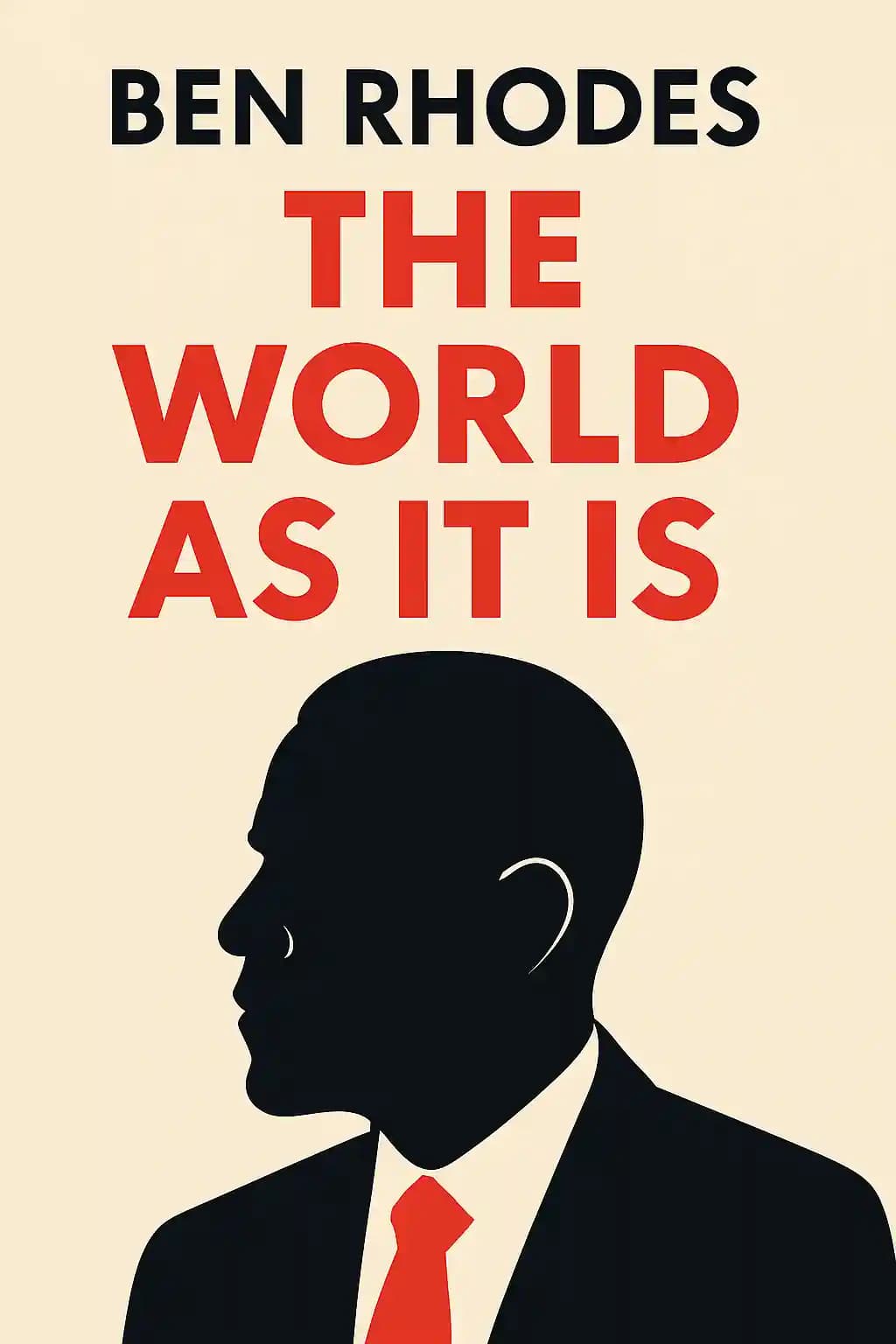
In the final days of his presidency, Barack Obama found himself in Lima, Peru, surrounded by anxious world leaders seeking reassurance about America's future under Donald Trump. As he and his trusted advisor Ben Rhodes drove through Lima's streets, Obama posed a question that revealed his deepest doubts: "What if we were wrong?" Had they pushed too far with their vision of progressive globalism? Despite maintaining a brave public face, Obama wondered if perhaps he had been "ten or twenty years too early." This moment of vulnerability from a man who had inspired hope across the globe captures the essence of Rhodes' intimate account. The book has become required reading in political science programs nationwide, with figures from Hillary Clinton to John Kerry citing it as the most revealing window into Obama's foreign policy thinking. Even Obama's critics acknowledge its value in understanding how his worldview shaped America's global positioning during a pivotal decade of international upheaval.
Capítulo 2
The Making of a Presidential Partnership
Ben Rhodes' journey with Barack Obama began unexpectedly in May 2007, when he was invited to help with debate preparation for a relatively unknown senator considering a presidential run. Having volunteered for months writing speeches and policy statements, Rhodes finally had his chance to work directly with Obama. The session concerned whether Obama should vote for a bill funding the Iraq surge-a topic Rhodes knew intimately from his work with the Iraq Study Group, where he'd witnessed firsthand the war's devastating reality: soldiers facing constant danger, children with vacant expressions, and horrific sectarian violence.
Despite his liberal instincts, Rhodes had initially supported the Iraq War after Colin Powell's UN presentation, eager to establish credibility within Washington's foreign policy establishment. But the Iraq Study Group's conclusion that "the situation in Iraq is grave and deteriorating" convinced him that changing policy required changing decision-makers. This drew him to Obama, who had opposed the war from the beginning.
During that pivotal meeting, Rhodes overcame his fear of public speaking to advise Obama to vote against funding the surge, arguing it contradicted Obama's own position. After the meeting, Obama personally introduced himself, and later followed Rhodes' advice, voting no. Shortly after, Rhodes was offered a campaign position, beginning a partnership that would span both terms of Obama's presidency.
The early campaign days were characterized by a sense of mission despite long odds. Working from a small Chicago apartment, Rhodes found camaraderie with fellow staffers who believed they were part of something historic despite trailing Hillary Clinton by 20 points in polls. His intellectual anchor was Samantha Power, whose interventionist yet anti-Iraq War stance represented the alternative foreign policy they hoped to create.
Rhodes' role expanded to include both speechwriting and foreign policy advising. When Obama was criticized for saying he'd talk to Iran without preconditions, Rhodes learned to hold firm against experienced advisors when representing Obama's authentic positions. This early stance on diplomatic engagement would later become a cornerstone of Obama's foreign policy approach, culminating in the Iran nuclear deal years later.
Capítulo 3
Redefining America's Global Voice
The Cairo speech of 2009 marked a pivotal moment in Obama's attempt to reset America's relationship with the Muslim world. What began as a campaign promise evolved into an expectation among Muslim populations who had high hopes for a president named Barack Hussein Obama with Muslim relatives. After debating whether to give the speech at all, Obama chose Cairo over Jakarta, saying bluntly, "The problems are in the Arab world, not Indonesia."
Rhodes gathered input from academics, religious leaders, and Muslim Americans, discovering that many Muslims heard "radical Islam" as an attack on their faith, not just extremists. Polling showed Muslims cared most about poverty, corruption, and unemployment, wanting partnership on education and entrepreneurship-while perceiving U.S. policy as focused on oil, Israel, and weakening the Muslim world.
Obama wanted to begin with colonialism and the Cold War, acknowledging how the Middle East had been treated as peripheral. He envisioned a new framework for cooperation, where "the West has to reeducate itself about Islam and its contributions" while Islam recognizes universal Western principles. Drawing on his unique background, Obama wanted to show how he appreciated cultural differences while recognizing universal human aspirations-opportunity for children, family, faith.
The most scrutinized section addressed Israel and Palestinians, drawing on Obama's complex background-deep roots in Chicago's Jewish community alongside empathy for Palestinians. Rather than offering a peace plan, Obama called for halting Israeli settlements encroaching on land needed for a Palestinian state. In the final speech, the administration balanced its "unbreakable" bond with Israel with language about "daily humiliations" of occupation and declaring the Palestinian situation "intolerable."
When Obama opened with "Assalamu alaikum," the carefully selected audience erupted in cheers. The crowd represented all Egyptian factions who would later fight in the streets-secular activists, intellectuals, political leaders, clerics, women's rights activists, and Muslim Brotherhood members-each applauding different parts of the speech.
Years later, a Palestinian-born woman told Rhodes the speech's impact wasn't just the words but Obama himself: "The young people saw him, a black man as president of America, someone who looked like them. And they thought, why not me?" This moment illustrated how Obama's very existence as president could inspire hope for change beyond American borders.
Capítulo 4
Obama's War: Afghanistan and the Military
When Obama took office, America had been fighting in Afghanistan for seven years-longer than our involvement in the Revolution, Civil War, World War I, or World War II. Yet the media labeled it "Obama's War" simply because he had supported it during his campaign and called for additional combat brigades.
During his first year, Obama faced relentless pressure to send more troops to Afghanistan. After approving General McKiernan's request for 10,000 additional troops in February-fulfilling his campaign promise-Obama ordered a policy review that emphasized treating Afghanistan and Pakistan with a common strategy.
The Afghanistan debate became a proxy for disagreements about what went wrong in Iraq. While Obama believed the Iraq failure was the initial invasion decision, war supporters saw the eventual counterinsurgency success as proof that strategy, not the war itself, had been the problem.
Key players shaped the debate: Defense Secretary Bob Gates-competent, calculating, and occasionally hypocritical-had thrived in Washington for decades. General David Petraeus wielded enormous influence over military thinking, delivering advice in studious paragraphs. Hillary Clinton typically sided with the military on war decisions. Vice President Biden was the only senior official consistently opposing more troops, launching into long discourses about the futility of nation-building in Afghanistan.
General McChrystal's leaked report to the Washington Post warned that without 40,000-80,000 additional troops within a year, the Afghanistan conflict "will likely result in failure." This brazen leak, which Obama first read about in newspapers, was clearly designed to box him into sending more troops and set him up to take blame for any failures if he refused.
After hearing all principals endorse McChrystal's troop request, Obama asked for Rhodes' opinion privately in the Oval Office. Rhodes hesitantly agreed with counterterrorism advisor John Brennan that they needed a surge to push back the Taliban while focusing on targeting al Qaeda and training Afghans before transitioning out.
Obama ultimately decided to send thirty thousand American troops with NATO providing the remainder to reach forty thousand. The surge would be temporary-troops would begin withdrawing in eighteen months. This essentially adopted the Petraeus-McChrystal approach for two years before shifting to the Biden-Brennan approach. At Biden's suggestion, Obama had all principals document their agreement in writing-a lesson from Vietnam to limit escalation.
In crafting his West Point speech announcing the decision, Obama consistently removed language about "winning" or "victory." As he prepared to address the young cadets, he simply noted, "They're so young."
Capítulo 5
The Arab Spring: Hope and Disillusionment
The Arab Spring began with a small news item on Rhodes' BlackBerry during Obama's Hawaii vacation-a Tunisian fruit vendor named Mohamed Bouazizi had set himself on fire, initiating protests that would soon engulf the region. Despite these tremors, intelligence initially doubted other regimes would fall. A generational divide emerged in the administration-younger staffers like Rhodes sympathized with protesters while senior officials prioritized stability.
When Egypt erupted, Rhodes drafted statements supporting protesters' rights and political change, only to see senior officials attempt to strip this language, writing "balance" in the margins. The cabinet-level principals consistently advocated for stability-Gates, Clinton, and Mullen echoed the Egyptian government's view that protests would die down. Saudi Arabia and the UAE pushed this perspective too, with King Abdullah dismissing protesters as terrorists despite evidence they represented a broad cross-section of society.
Obama sensed this disconnect and told Rhodes to speak up in meetings despite his junior status: "You know where I'm coming from. And we're younger." When Mubarak addressed Egypt promising to serve out his term but not seek reelection, Obama immediately declared "That's not going to cut it" and called Mubarak directly, telling him he needed to step down.
As protests in Libya escalated after Mubarak's fall, Gaddafi's security forces fired into crowds while rebels seized Benghazi. We watched Gaddafi, dressed in burnt-orange robes, defiantly vow to "purify Libya inch by inch." On March 15, Obama convened his National Security Council to decide our position at the UN. Maps showed Gaddafi's forces approaching Ajdabiya, the last stop before Benghazi-a siege that foreshadowed massacre.
After learning a no-fly zone alone wouldn't stop Gaddafi's ground assault, Obama angrily demanded "real options." Hours later, he chose to go beyond a no-fly zone, supporting a UN resolution for "all necessary measures" to protect civilians-a euphemism for war. He insisted European allies take the lead after "days, not weeks" of American involvement.
The hopeful chapter of the Arab Spring ended during an Africa trip in June 2013. From Tanzania, Obama called Egyptian President Mohamed Morsi as protests mounted against his government. Obama urged Morsi to reach out to his opposition, citing Nelson Mandela's example of inclusion. Days later, Morsi was toppled in a military coup and imprisoned. General Abdel Fattah el-Sisi took power with Saudi and UAE backing.
By mid-2013, the door that history had opened in 2011 had been slammed shut. Assad fought to the death with Russian and Iranian backing. Libya descended into factional fighting. The Saudis and Emiratis stamped out dissent in Egypt. Netanyahu spoke of peace while building settlements that made it impossible. There would be more war and suffering until-someday-old men would make peace.
Capítulo 6
Bin Laden: The Mission That Defined a Presidency
In April 2013, Rhodes was summoned urgently to John Brennan's office, where he and Denis McDonough revealed they might have a lead on bin Laden. They described a compound in Abbottabad, Pakistan, near a military academy, that intelligence suggested might house the world's most wanted terrorist. The compound's unusual characteristics - high walls, few windows, burned trash, and residents who never left - had caught analysts' attention. Rhodes was being brought in to plan how any action would be communicated to the world, a task that would require absolute secrecy and precise messaging.
His life narrowed to this single secret he couldn't share with anyone, not even his closest colleagues or family. The weight of the information affected every interaction, every meeting, every conversation. At the final decision meeting in the Situation Room, Obama demonstrated intimate knowledge of the intelligence details, having studied every aspect of the compound and its inhabitants. He cut through percentage debates with characteristic clarity: "Ultimately, this is a fifty-fifty call." The room divided along clear lines: Defense Secretary Gates strongly opposed the raid, vividly referencing Carter's Desert One disaster in Iran, while military leaders McRaven and Mullen advocated for action, confident in their operational plan. Biden expressed serious concerns about Pakistani relations and regional stability, while Clinton, after careful consideration, called it a "51-49 call" but ultimately supported taking action.
The night before the raid, Rhodes attended the White House Correspondents' Dinner, an surreal experience of moving through Washington's elite while carrying this momentous secret. The room was filled with journalists, politicians, and celebrities, none aware of what would unfold within hours. Making eye contact with others who knew - Obama's closest advisers and security team - they exchanged subtle nods of recognition, bound by their shared knowledge. Obama's performance that night was remarkable; he delivered a masterful comedy routine skewering Donald Trump's birtherism claims without betraying any hint of the mission ahead.
When reports of a helicopter crash in Abbottabad began appearing on Twitter and news sites, Obama made the crucial decision to announce the operation that night rather than wait. Rhodes drafted the president's remarks in under an hour, drawing on their shared journey since 9/11 and America's long pursuit of justice. He ended with Obama's desired message that "America can do big things" - a reminder of the nation's capabilities and resilience. Standing at the back of the East Room during the address, Rhodes watched as phrases like "Justice has been done" became instant history, knowing they would be repeated for generations.
When Rhodes left the White House that night, the streets of Washington were filled with celebrating Americans, many college students too young to fully remember 9/11 but understanding its significance. However, the victory's purity faded quickly as partisan politics resumed, with debates erupting over operational details, credit-taking, and the handling of information. When Obama decided against releasing bin Laden's death photos, stating firmly "We're not going to spike the football," Rhodes realized his earlier argument for complete transparency had been wrong. The moment called for dignity rather than triumphalism, a lesson in leadership that would shape future decisions.
Capítulo 7
The Red Line: Syria and the Limits of Power
On August 21, 2013, while beginning his first vacation in over a year, Rhodes learned of a potentially catastrophic chemical weapons attack in Syria. This crisis had been building since July 2012, when they first received reports that Assad might use his sarin gas stockpiles. Obama had warned publicly that chemical weapons use would be "a red line" that would "change my calculus"-words that would become defining in his presidency.
After the attack, Rhodes joined a secure video meeting where officials reported with "high confidence" that a sarin attack had killed over a thousand people. Nearly everyone, including previously cautious military leaders, advised Obama to order a strike. Only Denis McDonough urged caution, questioning the legal basis and potential consequences.
Obama's efforts to build international support faltered. When British Parliament voted against joining U.S. strikes on Syria, a shell-shocked David Cameron called Obama to apologize. The hangover from Iraq had left America staggering toward military intervention with minimal international support and a hostile Congress.
Later that afternoon, Obama called Rhodes to the Oval Office. Looking more relaxed than he had all week, he announced, "I've got a big idea"-he had decided to seek congressional authorization for strikes on Syria. He argued that a president alone couldn't keep America on perpetual war footing, moving from one Middle Eastern conflict to the next. "It is too easy for a president to go to war," he said. "That quote from me in 2007-I agree with that guy. That's who I am."
In the days that followed, they pivoted to seeking congressional support. Despite endorsements from foreign policy luminaries, Clinton, AIPAC, and Saudi Arabia, no wave of support materialized. At the G20 in Russia, Obama reflected candidly: "Maybe we never would have done Rwanda... People always say never again, but they never want to do anything."
Four days after returning to Washington, Syria announced they would give up their chemical weapons. The congressional vote never took place. Thousands of tons of chemical weapons would be removed and destroyed-far more than military strikes could have eliminated. The war would continue, but Barack Obama would keep the United States out of it.
Capítulo 8
Secret Diplomacy: Opening Cuba and Iran
After Obama asked Rhodes on Air Force One what projects he'd like to take on, he began keeping a mental file of an "affirmative agenda"-Cuba, Colombia, Burma, exchange programs, African development-places where U.S. investment might make a positive difference. Shortly after Obama signaled interest in Cuba, Denis McDonough asked Rhodes if he would "actually do Cuba"-not just run policy meetings but lead direct negotiations with the Cubans to secure Alan Gross's release.
In June 2013, Rhodes flew to Ottawa where Canadians discreetly hosted a meeting at a secluded lakeside house. Alejandro Castro, Raul's son, arrived with three others. He began by saying Cuba wanted an open channel of communication, noting that Obama was respected in Cuba and that Raul wanted to offer him "political space" to improve relations.
Rhodes responded by noting his relative youth: "I wasn't even born when a lot of this happened. President Obama wasn't even born when the Bay of Pigs took place. He sent me here to look forward." During lunch, Alejandro expressed surprise at how they treated them "with respect... as equals."
The negotiations gained unexpected help when Obama met with Pope Francis at the Vatican. The Pope proved enthusiastic about supporting their efforts, approaching the issue "from a pretty high level." They arranged for Cardinal Ortega to deliver identical letters from Pope Francis to both Obama and Raul Castro, offering Vatican assistance in resolving prisoner issues and improving U.S.-Cuba relations.
Meanwhile, a similar diplomatic opening was unfolding with Iran. When Hassan Rouhani was elected president of Iran in June 2013, representing the moderate faction against the Supreme Leader's preferred candidate, Obama proposed taking advantage of this opening by sending Rouhani a letter proposing nuclear discussions. Working through Oman as an intermediary, Jake Sullivan and Bill Burns established a secret diplomatic channel with Iran, developing a framework where Iran would freeze its nuclear program in exchange for limited sanctions relief.
This led to the historic fifteen-minute phone conversation between Obama and Rouhani as the Iranian president was driving to the airport-the first direct presidential contact since 1979. Though the content was unremarkable, the symbolism moved many, including Rhodes' Iranian-American former assistant who wept at this gesture of reconciliation.
As the Iran nuclear negotiations intensified in spring 2016, Rhodes became more involved as the barometer for congressional support. Obama balanced security, science and politics while Kerry and Energy Secretary Ernie Moniz spent seventeen days in Vienna finalizing details. On July 13, Obama approved the final agreement after eight years of effort. "We should call that YouTube guy," he joked, referring to the 2007 debate question about engaging adversaries.
Capítulo 9
The World As It Is: Trump and the End of an Era
The morning after Trump's victory, Rhodes went through his normal routine-intelligence briefing, egg and sausage burrito-fighting off overwhelming sadness. Obama gathered the communications staff in the Oval Office, most of them in tears. He remained optimistic: "We are leaving this country indisputably better off than we found it eight years ago."
After meeting with Trump, Obama seemed stupefied, noting Trump had steered their conversation toward rally sizes and seemed unattached to firm positions on anything. "I'm trying to place him in American history," Obama said. Rhodes suggested Trump represented the American bullshit peddler character going back to Huckleberry Finn.
Shortly after the election, Obama convened an NSC meeting on Russia, ordering a comprehensive intelligence review of election meddling. "We need to learn the lessons about what they did, because they're going to do it again," he said. The intelligence briefing revealed Russian interference was worse than Rhodes had previously known-more expansive, clearly designed to aid Trump.
In January, intelligence leaders briefed Obama on the full Russia report, painting a stark picture of Putin's methodical campaign for Trump. Obama remained stoic while Biden couldn't hide his incredulity. Their time was ending, and government would soon be led by the very people Putin had worked to install.
On Inauguration Day, Rhodes struggled past heightened security into a transformed White House-Obama's photos replaced with empty frames awaiting Trump's, the Oval Office already remodeled with Reagan-era yellow curtains and a new rug. After the ceremony, he joined a small group accompanying the Obamas on their final flight to Palm Springs.
Obama compared the presidency to Pac-Man: "Sometimes I felt like I was just outrunning people, trying to avoid getting tripped up before I got to the end of the board." When Rhodes asked what he'd do with his first morning of freedom, he simply said, "Sleep in."
They landed at a regional airport due to bad weather, with no red carpet or arrival party-just a few SUVs waiting on the tarmac. Rhodes watched the Obamas depart without ceremony, heading to begin their post-presidential lives. Flying back on the nearly empty plane, he wandered through the cabin remembering countless briefings, decisions, and crises that had once seemed so urgent.
Lying on the floor of the senior staff cabin, Rhodes reflected on his journey from the young man who walked Chicago's streets during the campaign to the person he'd become. He thought about the world as it is: markets recovered from crisis, idle Iranian centrifuges, refugees in camps, suffering in Syrian prisons, Putin's revanchist regime, American troops in Afghanistan, the Paris climate accord, and countless lives touched by Obama's presidency.