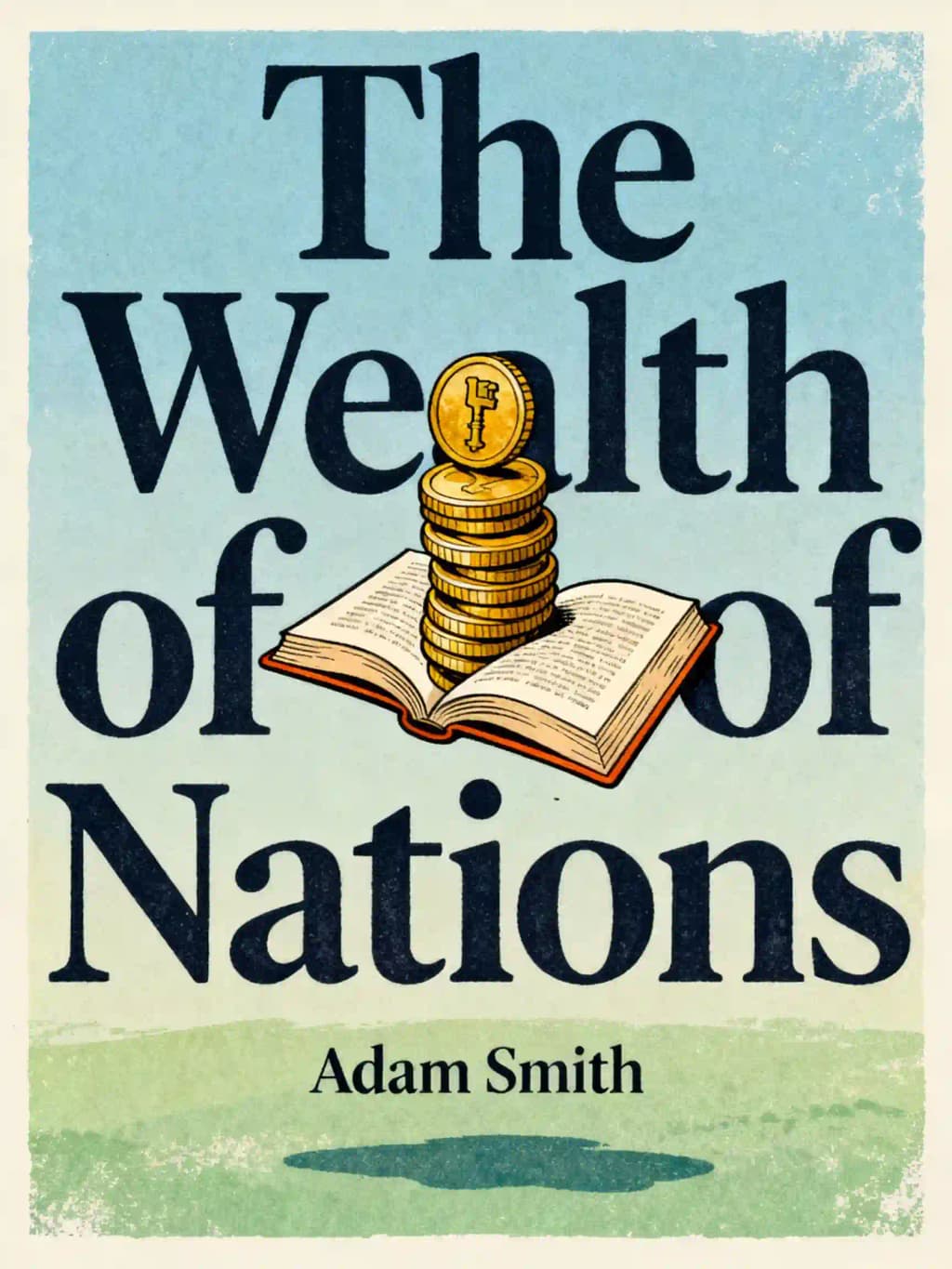
Resumen de La riqueza de las naciones
Publicado en 1776, "La riqueza de las naciones" revolucionó la economía, ocupando un lugar más alto en los cursos universitarios que Shakespeare. La teoría de la "mano invisible" de Adam Smith influyó en figuras desde Hamilton hasta Marx, convirtiendo esta obra maestra de la Ilustración en algo esencial para comprender los mercados, el trabajo y por qué los gobiernos no deberían interferir.
Temas clave en La riqueza de las naciones
- invisible hand
- division of labor
- free market capitalism
- labor theory of value
- limited government intervention
Citas de La riqueza de las naciones
It is not from the benevolence of the butcher...that we expect our dinner, but from their regard to their own interest.
The government that governs least, governs best, particularly in matters of commerce and industry.
Labor, therefore, is the real measure of the exchangeable value of all commodities.
The real price of everything...is the toil and trouble of acquiring it.
The statesman who should attempt to direct private people...would not only load himself with a most unnecessary attention...
Personajes en La riqueza de las naciones
- Adam SmithThe author and primary narrator of the work
Descargar resumen de La riqueza de las naciones
Obtén el resumen de La riqueza de las naciones como PDF o EPUB gratis. Imprímelo o léelo sin conexión en cualquier momento.