Capítulo 1
The Courage to Be Exactly as You Are
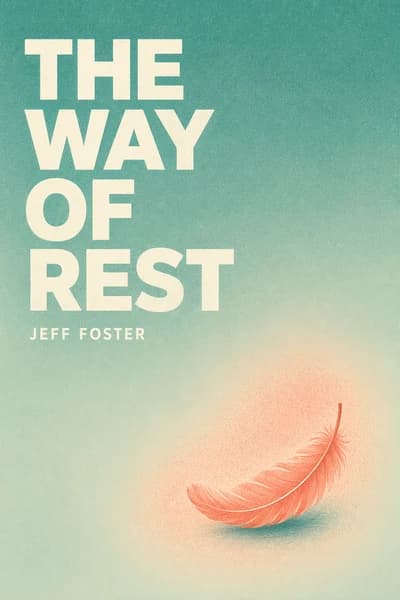
Ever feel like you're constantly running from discomfort, chasing happiness, or trying to fix yourself? Jeff Foster's "The Way of Rest" offers a radical alternative: stop trying to heal yourself. This counterintuitive approach has made the book a favorite among mindfulness practitioners, therapists, and celebrities like Russell Brand and Eckhart Tolle, who praise its gentle wisdom. Since its 2016 publication, it has quietly transformed countless lives with its simple yet profound message: your pain, sorrow, and doubts aren't mistakes-they're asking to be held in the loving arms of present awareness. As someone who suffered deeply and found his way through, Foster invites us to embrace life's totality-both joy and sorrow-and discover that what we fear isn't death but too much life.
Capítulo 2
Embracing Your Perfect Imperfection
As humans, we're taught to strive for perfection, to fix our flaws and hide our weaknesses. Yet Foster suggests something revolutionary: you are perfectly imperfect, gloriously flawed, your story forever unresolved. Your quirks, wrinkles, and scars sing of a life fully lived. When you look in the mirror and feel disappointment or shame, remember that these feelings aren't you-they're just visitors passing through your awareness.
Try seeing yourself through the eyes of a loving mother who finds you precious regardless of pimples, deformities, or birthmarks. Your beauty requires no earning-it lies in your willingness to embrace your imperfections as divine art.
The pressure to "fit in" is perhaps the greatest burden we carry. Objects fit in-things fit in. But humans cannot fit in unless they've reduced themselves to numbed lumps. The truth? Everyone is trying to fit in, and nobody feels like they do-even when they seem to! Fitting in would come at the cost of your mental health, inner peace, and authenticity. You'd have to play a role, squeeze out your aliveness, numb your deepest longings.
When life takes unexpected turns-perhaps through illness or loss-remember that a terminal diagnosis isn't life's end, but the end of the life you expected. It's your story taking an unexpected direction. True healing goes deeper than symptom removal-it's discovering who you really are beyond any diagnosis.
Foster encourages us to bow to our awkwardness, kneel at the altar of our failures, smile at our clumsiness. Perfection is unattainable in time but found only in presence. Don't bore yourself into a spiritual coma trying to be perfect. Say the wrong thing. There's freedom in allowing yourself to screw up and being kind to your mistakes.
When you fail (and you will), slow down and get curious. Allow yourself to become fascinated with the actual feeling of failure. Where do you sense it in your body? Don't run from these sensations; give them space to move. From shattered expectations, a new life may grow. Your greatest failure may become your greatest beginning-where you discovered humility, courage, and radical self-love.
Capítulo 3
The Sacred Art of Not Knowing
In our information-saturated world, we're constantly seeking answers, certainty, and control. But Foster invites us to pause this endless quest and embrace not knowing as a sacred state. Whatever is happening in your life, stop. Just for a moment. Bring your attention to the here and now. Let this moment become fascinating.
Sometimes while walking down a familiar path, questions rage within you-what to do with this precious life? Which choice to make? How to hold everything together? And suddenly, these questions shatter into silence because a tiny bird has perched before you, anchoring you in the here and now rather than the there and then where you seek answers. Your eyes meet, and you know everything is okay.
The mind can only guess at a future, but life demands we be willing to not know, to stumble sometimes, to bow before the unknown. Stop thinking your way through life, analyzing before living. Feel all energies waiting for your warm attention-joy and sorrow, boredom and bliss. Let questions stay; they are intimate friends while answers remain strangers.
When facing indecision, do not try to decide now. Honor this place of not knowing; bow before this bubbling mess of creativity. Slow down. Breathe. Sink into wonderment and befriend where you stand. Decisions make themselves when defenses drop; answers appear when questions have been fully honored.
Even when everything feels like it's falling apart and spiritual words sound like meaningless drivel, remember there are no true endings, only transformations. Old dreams die, the false falls away-painful, yes!-but destruction always contains seeds of the new. This devastation is an invitation to let go of every idea about how life was "supposed to be."
Foster reminds us there is no urgency. Summer doesn't rush toward autumn. Grass doesn't compete to grow faster. This ancient universe is in no hurry. So slow down. Take a conscious breath. Trust this place of "no answers yet"-it's sacred, 100 percent life, saturated with possibility.
Do not fear doubt or see it as weakness or spiritual failure. It takes great courage to doubt; to keep looking when everything screams certainty; to remain curious when everyone seems so sure. Stay close to your doubt-it's a gateway to mystery and deepest humility.
Capítulo 4
Finding Rest in Pain and Devastation
Pain is not failure, weakness, punishment, or meaningless-it contains great intelligence if you know how to look. There's a profound difference between physical pain and your suffering about it. How much are you actually connecting with raw sensations versus thinking about your pain?
Accept pain as it is-not liking it, but aligning with its presence. When you resist pain, you become its victim. Healing begins by abandoning stories that "pain should be gone" or "it will never go away." Meet pain with gentle curiosity-explore its sensations, location, qualities. Breathe into it with tenderness.
Foster shares the story of a woman with lifelong neck and shoulder pain who'd tried everything with only temporary relief. When invited to feel the discomfort more deeply-to breathe into it, give it space, allow it to intensify or move-suddenly terror welled up. Her body began shaking violently for minutes. When it stopped, she laughed and cried with relief. The pain was gone. Instead of trying to "get rid of" her pain, she finally met it, made a home for it.
One unhelpful cultural myth is that healing should "feel good." Sometimes discomfort intensifies as darkness emerges into light and unconscious material enters awareness. Pain isn't wrong or a mistake-it may indicate healing is intensifying, not stalling.
When facing heartbreak-perhaps from a relationship ending-it feels like death without actual death. Everything reminds you of the person who's gone. It feels like living in the wrong reality, a rupture in the space-time continuum. But perhaps this breaking open of your heart is really the breaking apart of dreams. Perhaps you're being called to let go of an old reality. True love can never be lost-death cannot touch it.
Sometimes you must commit to feeling worse to feel better. Sometimes you must lose hope of improvement before improvement begins. Healing often means staying present through powerful waves of energy moving through your body. The mind says "I'm getting worse" while the heart knows you're okay.
Every day, violence beyond comprehension unfolds across our world. How to hold this pain in your fragile heart? Focus on what's "wrong" with the world, and you'll feel paralyzed; focus only on what's "right," and you're burying your head in sand. Beyond right and wrong lies a field of indescribable light. Focus there. Acknowledge reality but use it as motivation to burn brighter, love more unconditionally, forgive radically.
Capítulo 5
The Exquisite Gift of Melancholy
There is an aloneness that isn't loneliness or despair-a profound closeness with your own being, an intimacy with the quiet passing of things, friendship with the broken. This exquisite melancholy contains no pathology, for it contains no self at all. The heart breaks open and cannot close again. Everything seems made of crystal that could shatter any moment.
Don't medicate this melancholy away-go deeper. It contains healing information. They may call you depressed or mad, but you'll smile like a daffodil never wanting to be understood. You'll take this imperfect life over none at all, this broken world blasted with gratitude over a half-remembered perfect one.
You are not half of a whole, friend. That was the lie. You are whole, regardless of who enters or exits your life. If you seek a partner because you feel incomplete, you bring them into your field of unhappiness. Find happiness within. Discover the joy of your aloneness, the loveliness of your solitude.
Sometimes it's okay to just feel sad without knowing why, how it got there, or worrying about its duration. Feel sad without trying not to feel sad, without self-judgment. Experience the raw energy directly-the chest's tenderness, the throat's lump, the belly's shakiness. Don't resist this energy, nor worry about resistance.
Don't fear loneliness-it's your salvation. Risk everything for truth's love. Let loneliness end the "you" you know yourself to be, or at least end the illusion of separation from totality. Your loneliness is alive; don't wall it off, numb yourself, seek distraction, or solidify it as "mine." Let loneliness breathe. Dive into its depths.
On the awakening path, you may feel more alone than ever-not the aloneness of a separate self, not loneliness or isolation or cosmic abandonment, but the aloneness of an entire universe. This exquisite, intimate aloneness resides at existence's burning core-perfect solitude. Paradoxically, you feel more connected than ever, closer to every being, knowing in your bones we share the same essence.
When loneliness strikes, it's not another person you're missing but your own warm presence. Searching for another, you've disconnected from yourself-the greatest pain. Turn toward where you are. Reconnect with a breath, the morning breeze, rain's sound, a silent tea cup, the sensations dancing through your body. Be here.
Capítulo 6
Embracing Discomfort as a Doorway
Your sadness, fear, loneliness, and despair are remarkably fragile, ready to break open at any moment. A single musical note, a stranger's kind glance, spring breeze on your face, or a bird's shadow in flight can shatter your sorrow into nothingness-that's how insubstantial it truly is.
Don't believe the biggest lie: that you should be "over" something or someone "by now," that you should be better, immune, healed, or more enlightened. If you are "over," who is "under"? If you're "better," who is "worse"? Don't split yourself in two.
The more intensely you feel life's joy, the more intensely you'll feel its sorrow. That is the deal. If you want only half of life-light without darkness, pleasure without pain, non-duality without duality's play-you may wish to turn back now.
Disappointment can be your greatest teacher. It comes in forms both subtle and shocking, from gentle "Oh wells" to crushing heartbreak. Despite our best efforts to create the perfect life, sometimes life doesn't go according to plan. Dreams are crushed, fantasies ruined, promises broken.
Just sitting with discomfort, without trying to escape or numb it, without expectation or goals, without seeking "comfort"-that's the juicy place of creative transformation where newness shines. Instead of escaping discomfort, let it reveal its deeper secrets. Watch all boundaries between "me" and "my discomfort" melt away, until it's no longer "me sitting with my discomfort" at all-there is only unspeakable embrace.
If you find yourself suffering, pause and call into your heart all people on this planet experiencing similar pain. Remember your brothers and sisters in heartbreak across the world and throughout the cosmos. Don't see yourself as isolated or this as a meaningless event-remember your connection to all there is, has been, and will be.
Your tiredness has dignity! Don't rush to pathologize or push it away-it may contain great intelligence, even medicine. Bow before your tiredness; don't fight it. There's no shame in admitting you cannot go on. Even the courageous need rest.
Be gentle with anger. Bow before it-it's not what you think. Let it come closer, enter you if it must. Feel its power until there's no division between "self" and "anger," until you can't call it "anger" at all, until there's only fire, passion, but no violence. Anger is a lion's roar, a universe longing to be born.
Don't try to be happy-you'll make yourself unhappy. You'll compare your present experience with the mind's secondhand version of "happiness" and wage war against any unhappiness, splitting yourself in two. True happiness is the absence of trying to be happy, of trying to live up to some outdated image. It's an invitation to be whole, grounded, present, right where you are.
Capítulo 7
Dancing with Impermanence
All your loved ones will die, change, or leave you-your mother, father, children, friends, lovers, teachers, students. Or you'll change, evolve, lose memory, or your body will collapse. All external sources of happiness follow laws of impermanence. All forms are ephemeral, like ocean waves existing momentarily before changing shape.
This seems "depressing" only to the ego, which thrives on attachment and possession, clinging to people and objects for survival, making time into an enemy or addiction. But from the perspective of who you really are, the uncontrollability of things, unpredictability of others, and beautiful fragility of form make every moment infinitely precious.
Impermanence arrives without warning-a cancer diagnosis, loss of livelihood, a relationship's end, a shattered dream. It was always lurking in the background while we were distracted by illusions of permanence. These aren't mistakes but reminders of the Uncontrollable, invitations to find what remains permanent amid constant change. In cancer, loss, devastation, what cannot be lost? Love remains. Connection. Presence.
When someone dies, weep and wail, but don't worry. They haven't gone anywhere-they've simply lost location and time. You can no longer find them in material form, but they were never defined by their physical bodies. You're being called to remember a deeper, universal love that knows no bounds, that remains present as you go about your days.
Let us commit to the field of love, not its form. Forms change-we are lovers, friends, wedded, divorced, together, apart. We are bright and active, then bed-bound needing help to eat. We take unexpected paths, never staying still. Is there a love that survives all these changes?
Everything ends. Everyone we love is here briefly. We try to avoid this truth, calling it "depressing" or "negative," distracting ourselves with platitudes and positive thinking. Yet underneath lurks anxiety about loss and impermanence. But facing death is the portal to awakening-we stop taking things for granted, stop living in "tomorrow," and turn toward today.
Sometimes life shatters unexpectedly-a death, a diagnosis, a relationship collapse. In these moments, our defenses crumble and we touch the unfathomable mystery underlying existence. Impermanence bursts through our reality, revealing the groundlessness of life. We recoil, desperate to return to "normal," hiding in distractions. But normality is the problem, not the solution.
Sometimes you reach your limit after fighting to change something for so long. You realize it won't change-not today, maybe not tomorrow. So you begin to accept it, even love it as it is. You bow to its present existence. Your resistance melts away. You remember your inner peace doesn't depend on change. And then, mysteriously, held in this non-resistant love, feeling no pressure to change, cradled in deep acceptance, the thing begins to change.
Capítulo 8
Finding Sacredness in Ordinary Moments
These are the days of our lives. No other days are coming. These are the days when we meet each other, talk or remain silent, feel what we feel. These are days of ordinariness and miracles, of breathing and blood pumping through veins. Days that seem eternal yet fleeting, where we remain close to life's warmth, tenderness and ferocity.
Let your present experience become the most fascinating thing in all the universe. Whatever arises-confusion, fear, anger, pain-let it captivate you completely. And if you can't allow it in, allow that too! Accept your inability to accept. Let the whirlpool of this moment become a stream, then a river flowing into the ocean.
Today... Dare to allow yourself to be seen. Dare to tell the truth. Dare to stop pretending. Dare to stay present to the secret fire that burns inside. Dare to be wildly inconsistent. Dare to let another in. Dare to fail. Dare to mess everything up. Dare to fall to the ground, humbled again, laughing.
You never knew you had so much courage. The courage to wake each morning. To feel each surge of joy, doubt, frustration, anger, pain, ecstasy-broadcast in real-time on the aware screen of life. Not necessarily to be unafraid, but to be even unafraid of being afraid. To think your thoughts, and feel your feelings. To begin again, now.
There is always something to be grateful for. Even when things go horribly wrong, when dreams die and plans crumble, you can contact a place of humility, surrender, even awe. Gratitude for each breath. For clothes on your body. For your organs. For the kindness of strangers.
Living and dying are not polar opposites, but lovers. To live is to die to the old dreams, the old ways, to allow fantasies to be destroyed in Presence. To live is to let go of the story of "me," the story of past and future and status, and courageously open your heart to the living present.
Happiness is the absence of the need to be happy. Peace is not a destination but the absence of the seeker. Love is the death of hope for a better tomorrow and the full embrace of today in its tender brokenness. This is the path of the helpless and hopeless, no longer seeking happiness in time, but finding grace in unlikely places.
When confused, celebrate-you're free from having to know. When doubting, celebrate-you've remained curious. When fearful, celebrate-you're moving into the unknown as your armor breaks apart. When angry, celebrate-life surges through you raw and unfiltered; you're finding your song.
Give yourself to the first light of dawn, the crack in the supermarket wall, the blackbird laying eggs, the sound of distant thunder. Give yourself to life in her myriad forms, and she will give all of herself in return. Sink into your aloneness where, instead of loneliness, you find connection with all creation.
Capítulo 9
The Abundance of Your True Nature
Abundance isn't about money, trophies, credentials, or adoring fans. It's your connection to each breath, your sensitivity to every sensation, your delight in each unique moment. It's knowing yourself as presence, the power that creates worlds. It's your open heart, your willingness to embrace what needs holding, the freshness of each morning unencumbered by memory.
Try to get what you want, and it's already far away. Be what you want, know it in your heart, and it's already yours. The rest is details. The rest, you never really wanted anyway. From lack to abundance, in a heartbeat.
How can you carry on when such beauty exists? A bird's morning song of joy and heartache, a last kiss before departure, broken promises transforming into grace, unexpected kindness, a single note taking your breath away, fragile emotions greeting you at waking-how can your tiny heart hold it all? One step at a time. Make room for occasional devastation.
When you shift focus from what's absent to what's present, from what's missing to what's given, from who you're not to who you are, from linear time to the immediacy of Now, you reconnect with love, truth, and beauty-abundance becomes yours effortlessly. Nothing is lacking where you are, nothing missing from your life's present scene.
What you truly seek has always been seeking you. What you never really wanted will never arrive or will soon leave. Move from a place of presence, not lack-be soft, receptive, close to doubt. Everything will come: success and failure, pleasure and pain, joy and heartache. Trust what comes and goes, what stays and leaves.
Capítulo 10
The Boundless Heart of Love
Love has nothing to do with others-it's closer, it's what you are. Raw electricity, uncontainable. Love doesn't split between lover and beloved, doesn't long for perfection, comes before separation, grasping or striving. I cannot love you; you cannot give me love or take it away.
You never fall in love with another person; they're just catalysts. You fall in love with Life itself and its staggering possibilities. You sink deeper into your own Presence, the unchanging vastness at your core-and credit another person. It's all you, for your healing and theirs, for the world's salvation.
The heart is an unlimited room. There is always enough space for this moment's contents. The highest joy, the deepest agony, thoughts that won't stop spinning-the heart can hold it all. Embrace is all it knows, space is its nature. It needs no time and asks nothing, yet gives everything in return.
When someone treats you with unkindness, they're likely repeating unconscious patterns from their own past wounds, searching for a love they cannot find. This isn't an excuse, but a way to begin finding compassion, to stop taking their behavior personally, to break the cycle of violence.
A life without pain is no life at all. True growth requires the heroic journey into darkness. Pain destroys ego, awakens compassion, and guides us into our own sweet presence. An enlightenment promising total detachment from humanity is rooted in fear. Like the sun burning to shine, our burning hearts make our light shine more brightly.
Every dream of "love" will burn in the fall. Security, hopes, promises-all questioned as you descend past imagined futures and spun pasts, through layers of effluent and pain, through all the unspoken words and hidden secrets. Hitting bottom, surprised to be alive, you'll realize love was the only reason, the only answer, the only meaning.
Love is not always "safe" like a Hallmark card. It's a furnace, unsentimental, burning anything unreal in its path. It holds both joy and terror, togetherness and profound loneliness. Your heart was formed with all other hearts in the pressure of a dying star-the same heart beating in saint and sinner alike.
No one can be erased from your heart once they've touched you deeply. The heart knows no time, absence, or separation. We are haunted by the past until we face it. A closed heart, which seems like protection, becomes imprisonment. There's a pain greater than pain-running from our pain.
They taught you that you were small, incomplete, deficient. That love was conditional, something to earn by being better, faster, smarter. It was all a lie. You were lovable exactly as you were from the beginning-whole, complete, worthy of love, attention, empathy, safety, and dignity.
Because the earth could crack open at any moment, because there are things in our hearts we'll never express in words, because we are all here so fleetingly on this fragile blue planet, let today be the day we finally speak our truth, even through trembling.
Capítulo 11
The Journey Is the Destination
Do not follow anyone. Listen, take what you need, but do not follow. Following keeps you dependent, looking outward, and your leaders may themselves be blind. Leave the path prescribed for you. Drop the map-it was always someone else's. Feel rejected? Then feel rejected. Feel like an outcast? Feel like an outcast. Dive into that aloneness, explore its depths.
Suddenly you notice the destination has become more important than the journey. Your urgency to reach the goal has pushed every precious step out of focus. The focus shifts from the imagined future to the present scene. You feel your living body again-heart thumping, breath flowing, ground supporting you.
If you want to "feel good" all the time, forget about waking up. If you want to wake up, forget about "feeling good." If you long for raw truth, prepare for shattering status quos, heartbreak, devastation of dreams. Everything you know about yourself will be smashed. Prepare to allow unimaginable sorrow and unbearable joys.
Don't wait until you are dying. You are dying. So live. Live this precious, immediate day pregnant with potential and wonder. Tomorrow is just a wish; yesterday served its purpose. Today is all that's left. Feel life pumping through your veins. Risk. Speak out. Forget normality. Be unexpected. Make a mess. Ruin your image. Laugh at the idea of a fixed "self."
In reality, nothing happens to you, but everything happens for you-for your awakening, growth, inspiration, exploration. When there is no fixed destination, you cannot lose your path. Your path is what happens, and what happens is your path. Everything is a gift-the laughter, tears, sorrow, loss, pain, confusion, heartbreak.
Dedicate your life to love today, for death is near. This isn't depressing-it's the Way. Death comes to all without discrimination, switching off life's movie mid-scene. Without death, life would lose meaning. If we lived forever, everything would lose its preciousness-we'd put off speaking truth, healing wounds, serving others. Our days would lose their bittersweet urgency.
Nothing is more glorious than beginning the path. Trembling but alive, you walk. It was never about reaching the finish line but falling in love with beginnings. Life is always beginning-each breath, each dawn, each chance to trust. The ocean's waves don't end; they fall back into their Source, emerging again like children of infinity.
You cannot fail. You can fall to your knees, stand in the rubble of shattered dreams, lose your way, stumble in darkness-but you cannot fail. You can stop, breathe, feel life surging as heartbreak or despair, feel vulnerable as a baby overwhelmed by existence, but failure is impossible. You're alive, breathing the breath of a sparkling cosmos.