The Teenage Brain book cover

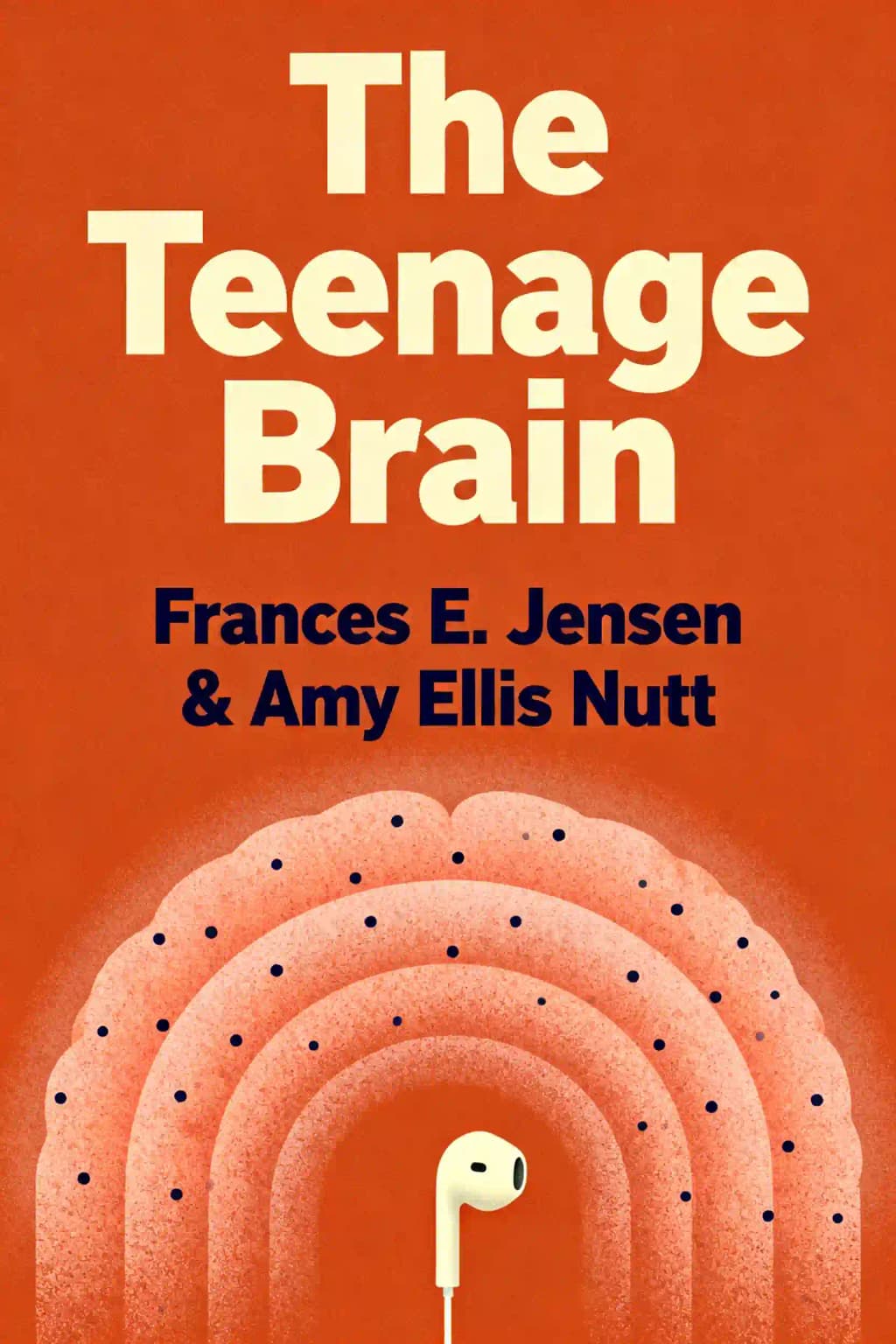
The Teenage Brain

Frances E. Jensen & Amy Ellis Nutt
3.77 (5929 Reviews)

Resumen de The Teenage Brain

Why is your teenager's brain wired for risk? Dr. Jensen's bestselling neuroscience guide reveals the teenage brain isn't fully developed until 25, reshaping how parents and educators understand adolescent behavior. Discover why teens are uniquely vulnerable to addiction and how digital technology affects their developing minds.

Temas clave en The Teenage Brain

  • adolescent neurobiology
  • synaptic plasticity
  • frontal lobe development
  • myelination process
  • teenage sleep patterns

Citas de The Teenage Brain

  • Teenage sleep patterns represent normal physiological changes rather than signs of rebellion.

  • The teenage brain combines peak learning efficiency with underdeveloped attention...a powerful but sometimes chaotic combination.

  • The teenage brain isn't simply an adult brain with less experience-it's fundamentally different in structure and function.

  • The brain's complexity comes not just from neurons themselves but from their connections.

Personajes en The Teenage Brain

  • Frances E. JensenAuthor, neurologist, and mother of two sons
  • Amy Ellis NuttCo-author of the book

Sobre el Autor

Sobre el autor de The Teenage Brain

Frances E. Jensen, MD, and Amy Ellis Nutt are the authors of The Teenage Brain: A Neuroscientist's Survival Guide to Raising Adolescents and Young Adults, a book that combines cutting-edge neuroscience with accessible parenting advice.

Dr. Jensen is the chair of neurology at the University of Pennsylvania’s Perelman School of Medicine and a member of the National Academy of Medicine. She leverages her decades of research on adolescent brain development, epilepsy, and neuroplasticity in the book.

Amy Ellis Nutt, a Pulitzer Prize-winning Washington Post science journalist, adds narrative depth through real-world cases and sociological context as the co-author. This nonfiction work bridges developmental neuroscience and practical guidance, addressing topics like addiction risks, stress resilience, and technology’s cognitive impacts, rooted in Jensen’s dual perspective as a researcher and mother of two.

Dr. Jensen’s NIH-funded studies and frequent lectures to educators and parents underpin the book’s authority, while Nutt’s award-winning science communication ensures clarity. Translated into more than 25 languages and a New York Times bestseller, the book has become a global resource for understanding adolescence’s transformative neurology.

Descargar resumen de The Teenage Brain

Obtén el resumen de The Teenage Brain como PDF o EPUB gratis. Imprímelo o léelo sin conexión en cualquier momento.

Preguntas Frecuentes Sobre Este Libro

The Teenage Brain explores adolescent neurological development, debunking myths about teen behavior through neuroscience. Dr. Jensen explains how brain remodeling during puberty affects decision-making, emotional regulation, and vulnerability to addiction or trauma. The book combines research on learning, memory, and risk-taking with practical advice for parents and educators navigating adolescence.

Parents, educators, and caregivers of adolescents will benefit most, as the book offers science-backed strategies to communicate with teens. It’s also valuable for teenagers seeking to understand their own brain development. Healthcare professionals and policymakers gain insights into adolescent-specific challenges like substance use and mental health.

Yes—it bridges cutting-edge neuroscience with real-world applications, providing actionable advice for managing teen behavior. Dr. Jensen’s dual perspective as a neurologist and parent lends credibility, while case studies and data make complex concepts accessible. It’s a foundational resource for anyone supporting adolescents.

Adolescent brains have underdeveloped frontal lobes, impairing impulse control and long-term planning. Myelination (insulating neural pathways) and synaptic pruning (eliminating unused connections) are ongoing, making learning efficient but risk-taking more likely. Hormonal surges during puberty further amplify emotional reactivity.

Even occasional marijuana use can cause lingering memory issues due to the brain’s heightened plasticity. Long-term use may lower IQ and impair decision-making, as THC disrupts developing neural circuits. Adolescents are more susceptible to addiction than adults.

Teen circadian rhythms shift naturally, delaying melatonin production and making early sleep difficult. This biological shift clashes with school schedules, exacerbating fatigue and impacting learning. Chronic sleep deprivation worsens emotional volatility and risk-taking.

Prolonged stress during adolescence can permanently alter brain structure, increasing susceptibility to anxiety and depression. The amygdala (emotional center) becomes hyperactive, while stress hormones weaken prefrontal cortex connections. Supportive environments mitigate these effects.

Dr. Jensen advises setting consistent boundaries while explaining the “why” behind rules, as teens’ reasoning skills are still developing. Encourage open dialogue, validate emotions, and model calm problem-solving. Avoid punitive reactions to risk-taking, focusing instead on teaching consequences.

It challenges assumptions like “teens are just hormonal,” showing that brain structure—not just hormones—drives behavior. Another myth dispelled is that teens recover faster from substance use; their brains are actually more vulnerable to long-term damage.

Dr. Jensen chairs the University of Pennsylvania’s neurology department and published over 150 papers on brain development. As a mother of two sons, she blends clinical expertise with relatable parenting experiences. Her TED Talks and lectures further establish her authority.

Both address adolescent behavior, but Jensen focuses on neurobiology, while Damour emphasizes psychological and social dynamics. The Teenage Brain provides more data-driven insights into risk-taking and learning, whereas Untangled offers broader strategies for communication.

Yes—the book notes that brain plasticity continues into adulthood, though at a slower pace. Adults can adopt strategies like mindfulness to strengthen neural pathways, and understanding adolescent trauma can aid in addressing long-term mental health.

Explora Tu Forma de Aprender

The Teenage Brain no es solo un libro — es una clase magistral en Psychology. Para ayudarte a absorber sus lecciones de la manera que mejor te funcione, ofrecemos cinco modos de aprendizaje únicos. Ya seas un pensador profundo, un aprendiz rápido o un amante de las historias, hay un modo diseñado para tu estilo.

Modo Resumen Rápido

Lee o escucha el resumen de The Teenage Brain en 10 minutos

Desglosa las ideas clave de The Teenage Brain en puntos fáciles de entender para comprender cómo los equipos innovadores crean, colaboran y crecen.

play
00:00
00:00

Modo Divertido

Lecciones de The Teenage Brain Contadas en Historias de 24 Min

Experimenta The Teenage Brain a través de narraciones vívidas que convierten las lecciones de innovación en momentos que recordarás y aplicarás.

play
00:00
00:00

Modo Personalizar

Experimenta The Teenage Brain con tu propio estilo de aprendizaje

Pregunta cualquier cosa, elige tu estilo de aprendizaje y co-crea ideas que realmente resuenen contigo.

Personalize Mode

Creado por exalumnos de la Universidad de Columbia en San Francisco

BeFreed Reúne a una Comunidad Global de 1,000,000 Mentes Curiosas

"Instead of endless scrolling, I just hit play on BeFreed. It saves me so much time."

@Moemenn
platform
star
star
star
star
star

"I never knew where to start with nonfiction—BeFreed’s book lists turned into podcasts gave me a clear path."

@Chloe, Solo founder, LA
platform
comments
12
likes
117

"Perfect balance between learning and entertainment. Finished ‘Thinking, Fast and Slow’ on my commute this week."

@Raaaaaachelw
platform
star
star
star
star
star

"Crazy how much I learned while walking the dog. BeFreed = small habits → big gains."

@Matt, YC alum
platform
comments
12
likes
108

"Reading used to feel like a chore. Now it’s just part of my lifestyle."

@Erin, Investment Banking Associate , NYC
platform
comments
254
likes
17

"Feels effortless compared to reading. I’ve finished 6 books this month already."

@djmikemoore
platform
star
star
star
star
star

"BeFreed turned my guilty doomscrolling into something that feels productive and inspiring."

@Pitiful
platform
comments
96
likes
4.5K

"BeFreed turned my commute into learning time. 20-min podcasts are perfect for finishing books I never had time for."

@SofiaP
platform
star
star
star
star
star

"BeFreed replaced my podcast queue. Imagine Spotify for books — that’s it. 🙌"

@Jaded_Falcon
platform
comments
201
thumbsUp
16

"It is great for me to learn something from the book without reading it."

@OojasSalunke
platform
star
star
star
star
star

"The themed book list podcasts help me connect ideas across authors—like a guided audio journey."

@Leo, Law Student, UPenn
platform
comments
37
likes
483

"Makes me feel smarter every time before going to work"

@Cashflowbubu
platform
star
star
star
star
star

"Instead of endless scrolling, I just hit play on BeFreed. It saves me so much time."

@Moemenn
platform
star
star
star
star
star

"I never knew where to start with nonfiction—BeFreed’s book lists turned into podcasts gave me a clear path."

@Chloe, Solo founder, LA
platform
comments
12
likes
117

"Perfect balance between learning and entertainment. Finished ‘Thinking, Fast and Slow’ on my commute this week."

@Raaaaaachelw
platform
star
star
star
star
star

"Crazy how much I learned while walking the dog. BeFreed = small habits → big gains."

@Matt, YC alum
platform
comments
12
likes
108

"Reading used to feel like a chore. Now it’s just part of my lifestyle."

@Erin, Investment Banking Associate , NYC
platform
comments
254
likes
17

"Feels effortless compared to reading. I’ve finished 6 books this month already."

@djmikemoore
platform
star
star
star
star
star

"BeFreed turned my guilty doomscrolling into something that feels productive and inspiring."

@Pitiful
platform
comments
96
likes
4.5K

"BeFreed turned my commute into learning time. 20-min podcasts are perfect for finishing books I never had time for."

@SofiaP
platform
star
star
star
star
star

"BeFreed replaced my podcast queue. Imagine Spotify for books — that’s it. 🙌"

@Jaded_Falcon
platform
comments
201
thumbsUp
16

"It is great for me to learn something from the book without reading it."

@OojasSalunke
platform
star
star
star
star
star

"The themed book list podcasts help me connect ideas across authors—like a guided audio journey."

@Leo, Law Student, UPenn
platform
comments
37
likes
483

"Makes me feel smarter every time before going to work"

@Cashflowbubu
platform
star
star
star
star
star

"Instead of endless scrolling, I just hit play on BeFreed. It saves me so much time."

@Moemenn
platform
star
star
star
star
star

"I never knew where to start with nonfiction—BeFreed’s book lists turned into podcasts gave me a clear path."

@Chloe, Solo founder, LA
platform
comments
12
likes
117

"Perfect balance between learning and entertainment. Finished ‘Thinking, Fast and Slow’ on my commute this week."

@Raaaaaachelw
platform
star
star
star
star
star

"Crazy how much I learned while walking the dog. BeFreed = small habits → big gains."

@Matt, YC alum
platform
comments
12
likes
108

"Reading used to feel like a chore. Now it’s just part of my lifestyle."

@Erin, Investment Banking Associate , NYC
platform
comments
254
likes
17

"Feels effortless compared to reading. I’ve finished 6 books this month already."

@djmikemoore
platform
star
star
star
star
star

"BeFreed turned my guilty doomscrolling into something that feels productive and inspiring."

@Pitiful
platform
comments
96
likes
4.5K

"BeFreed turned my commute into learning time. 20-min podcasts are perfect for finishing books I never had time for."

@SofiaP
platform
star
star
star
star
star

"BeFreed replaced my podcast queue. Imagine Spotify for books — that’s it. 🙌"

@Jaded_Falcon
platform
comments
201
thumbsUp
16

"It is great for me to learn something from the book without reading it."

@OojasSalunke
platform
star
star
star
star
star

"The themed book list podcasts help me connect ideas across authors—like a guided audio journey."

@Leo, Law Student, UPenn
platform
comments
37
likes
483

"Makes me feel smarter every time before going to work"

@Cashflowbubu
platform
star
star
star
star
star

¿Ver Más Historias?

Cómo la gente habla de BeFreed en la web
1.5K Ratings4.7
Comienza tu viaje de aprendizaje, ahora