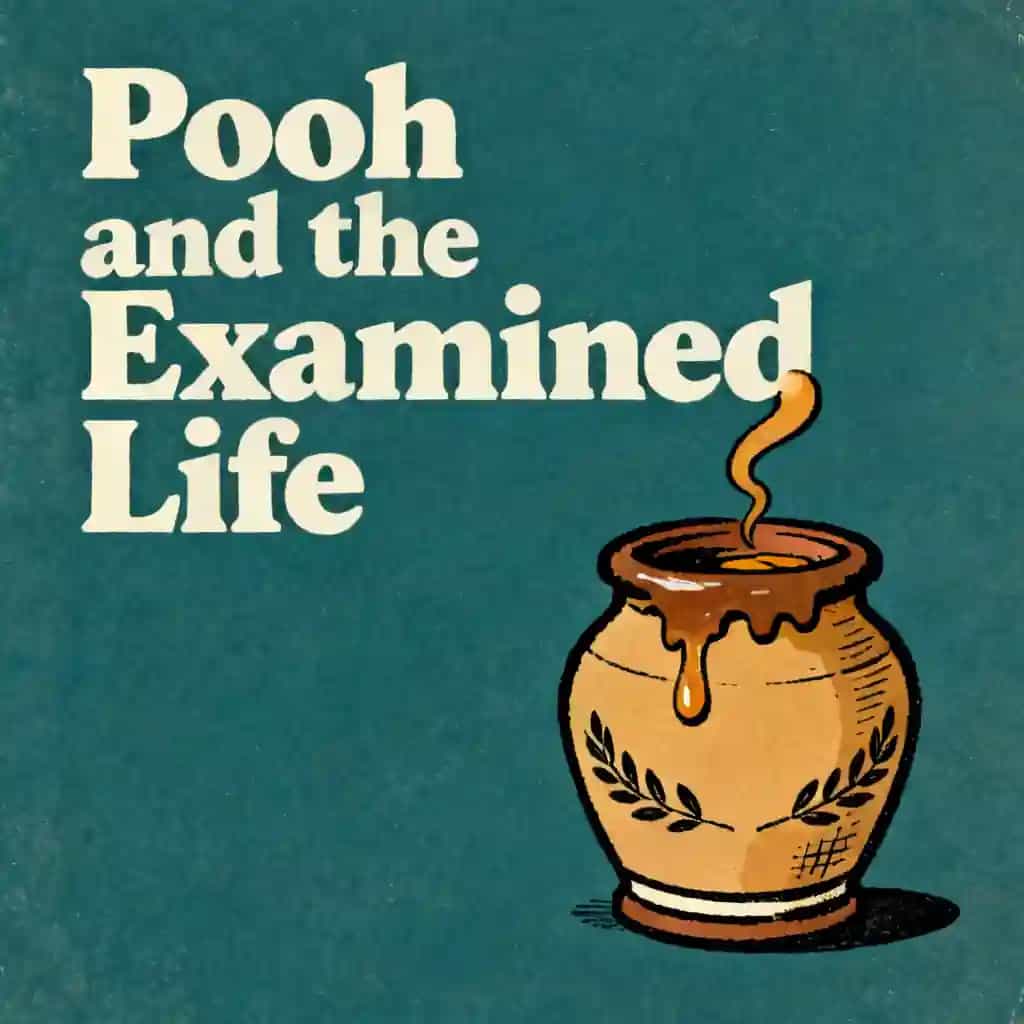
Discover how Winnie-the-Pooh explains Taoism in this international bestseller that spent 49 weeks on the NYT list. Readers claim it "changed my life," blending Eastern wisdom with Western whimsy. What makes this children's bear a philosophical genius?
Siente el libro a través de la voz del autor
Convierte el conocimiento en ideas atractivas y llenas de ejemplos
Captura ideas clave en un instante para un aprendizaje rápido
Disfruta el libro de una manera divertida y atractiva
What if the secret to contentment wasn't hidden in ancient scrolls or academic treatises, but sitting right there in the Hundred Acre Wood with a pot of honey? Three million readers discovered this unlikely truth when a relatively unknown writer named Benjamin Hoff paired Winnie-the-Pooh with Taoist philosophy in 1982. The book landed on college reading lists, corporate training agendas, and bedside tables from Hollywood to Main Street. Its power lies in a radical premise: that wisdom doesn't require intellectual gymnastics or spiritual marathons. Sometimes the bear of very little brain understands more than the rest of us combined. What Pooh grasps intuitively-and what ancient Taoists spent lifetimes articulating-is that fighting against life's current exhausts us, while floating with it carries us exactly where we need to go. Picture three ancient philosophers standing around a vat of vinegar, each taking a taste. Confucius puckers at the sourness, seeing life as fallen from heaven's perfect order, fixable only through rigid rules and social hierarchy. Buddha grimaces at the bitterness, recognizing existence itself as suffering that can only be transcended through detachment from worldly desire. But Lao-tse, founder of Taoism, smiles. The vinegar tastes sweet to him-not because he's delusional, but because he accepts reality as it is rather than mourning what it isn't or escaping what it contains. This fundamental difference shapes everything. Where Confucius imposes structure and Buddha seeks transcendence, Taoism embraces what it calls "the dust of the world." The Tao-meaning "the Way"-represents the natural current underlying all existence, like water finding its path downhill without effort or strategy.
Desglosa las ideas clave de The Tao of Pooh en puntos fáciles de entender para comprender cómo los equipos innovadores crean, colaboran y crecen.
Destila The Tao of Pooh en pistas de memoria rápidas que resaltan los principios clave de franqueza, trabajo en equipo y resiliencia creativa.

Experimenta The Tao of Pooh a través de narraciones vívidas que convierten las lecciones de innovación en momentos que recordarás y aplicarás.
Pregunta lo que quieras, elige la voz y co-crea ideas que realmente resuenen contigo.

Creado por exalumnos de la Universidad de Columbia en San Francisco
"Instead of endless scrolling, I just hit play on BeFreed. It saves me so much time."
"I never knew where to start with nonfiction—BeFreed’s book lists turned into podcasts gave me a clear path."
"Perfect balance between learning and entertainment. Finished ‘Thinking, Fast and Slow’ on my commute this week."
"Crazy how much I learned while walking the dog. BeFreed = small habits → big gains."
"Reading used to feel like a chore. Now it’s just part of my lifestyle."
"Feels effortless compared to reading. I’ve finished 6 books this month already."
"BeFreed turned my guilty doomscrolling into something that feels productive and inspiring."
"BeFreed turned my commute into learning time. 20-min podcasts are perfect for finishing books I never had time for."
"BeFreed replaced my podcast queue. Imagine Spotify for books — that’s it. 🙌"
"It is great for me to learn something from the book without reading it."
"The themed book list podcasts help me connect ideas across authors—like a guided audio journey."
"Makes me feel smarter every time before going to work"
Creado por exalumnos de la Universidad de Columbia en San Francisco

Obtén el resumen de The Tao of Pooh como PDF o EPUB gratis. Imprímelo o léelo sin conexión en cualquier momento.