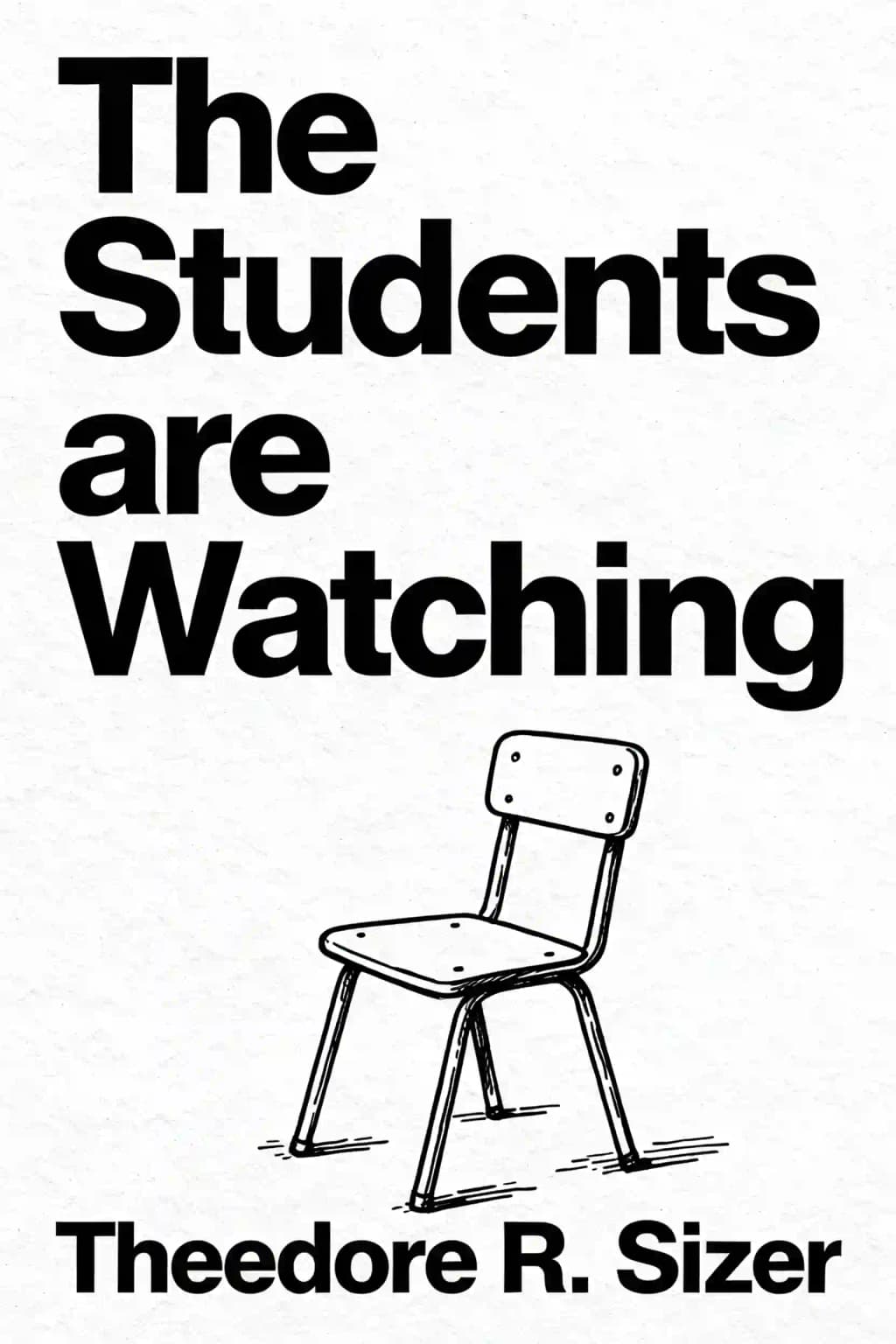
In "The Students Are Watching," the Sizers reveal how schools silently teach moral lessons through everyday practices. This influential work sparked nationwide conversations about educational inequality, inspiring reforms that challenge traditional tracking systems that perpetuate privilege. What hidden curriculum is shaping your child's moral compass?
Theodore Ryland Sizer (1932–2009), author of The Students Are Watching: Schools and the Moral Contract (co-written with educator Nancy Faust Sizer), was a pioneering figure in American educational reform and progressive pedagogy.
A Yale and Harvard-educated scholar, Sizer served as Dean of Harvard’s Graduate School of Education and Headmaster of Phillips Academy Andover. He was also the founder of the Coalition of Essential Schools, which reshaped over 600 institutions through its focus on personalized learning and equity.
His "Horace Trilogy" (Horace’s Compromise, Horace’s School, Horace’s Hope) revolutionized conversations about curriculum design, teacher-student relationships, and depth-over-breadth instruction. The Students Are Watching, grounded in his hands-on experience co-leading Massachusetts’ Francis W. Parker Charter School, examines how schools model ethical behavior and intellectual rigor.
Sizer’s works, including The Red Pencil and Places for Learning, Places for Joy, remain foundational texts in teacher training programs. His Coalition of Essential Schools framework continues to influence global education reform, emphasizing small classrooms, interdisciplinary projects, and restorative practices over punitive discipline.
The Students Are Watching examines how schools implicitly teach moral and ethical lessons through daily routines, teacher behavior, and institutional culture. Theodore and Nancy Sizer argue that students learn lifelong values not just from curricula but from observing how adults model integrity, handle challenges, and structure learning environments. Key themes include the dangers of "bluffing" instead of authentic learning and the importance of fostering intellectual responsibility.
Educators, school administrators, and policymakers will find this book critical for understanding how school culture shapes student ethics. Parents interested in educational reform and students studying pedagogy will also benefit from its insights into the unintended lessons schools transmit about accountability, critical thinking, and societal norms.
Yes, for its timeless analysis of how schools influence moral development. The Sizers blend real-world examples with actionable frameworks, making it essential for anyone invested in creating equitable, thoughtful learning environments. Critics praise its emphasis on teacher-student dynamics but note its ideals may clash with systemic constraints in modern education.
The book asserts that school culture—through rituals, discipline, and even physical spaces—teaches students about fairness, effort, and community. For example, inconsistent grading or prioritizing speed over depth signals that "bluffing" is acceptable. The Sizers urge intentional design of school norms to align with stated educational values.
This central idea underscores that students constantly observe adult behavior, even in mundane moments. If teachers cut corners or administrators tolerate inequities, students internalize these actions as morally acceptable. The authors stress that every interaction is a lesson in ethics.
The Sizers criticize rigid, bureaucratic systems that prioritize compliance over critical thinking. They highlight how overcrowded classrooms and standardized testing force teachers to "compromise," reducing opportunities for meaningful mentorship or tailored instruction—a theme expanded in Theodore Sizer’s Horace’s Compromise.
The term refers to schools’ implicit responsibility to model integrity, fairness, and intellectual rigor. When schools fail to uphold this contract (e.g., tolerating low expectations), they betray students’ trust and reinforce cynicism. The authors advocate for transparency and consistency in upholding this covenant.
Its analysis of inequitable resource allocation, teacher burnout, and performative compliance remains relevant. With rising focus on social-emotional learning post-pandemic, the book’s emphasis on ethical modeling offers a framework for addressing student disengagement and mental health challenges.
Some argue the Sizers overly idealize small-scale school reform without addressing systemic funding or policy barriers. Others note that their focus on teacher-student dynamics overlooks broader societal inequities impacting schools.
While Horace’s Compromise critiques structural flaws in high schools, The Students Are Watching zooms in on cultural and moral dimensions. Both advocate for student-centered learning, but the latter emphasizes ethical accountability over organizational redesign.
Parents can adopt the Sizers’ emphasis on modeling integrity, encouraging curiosity over rote achievement, and critiquing systems that prioritize rankings over growth. The book reinforces that children learn values through observation, not just instruction.
Siente el libro a través de la voz del autor
Convierte el conocimiento en ideas atractivas y llenas de ejemplos
Captura ideas clave en un instante para un aprendizaje rápido
Disfruta el libro de una manera divertida y atractiva
Schools teach character through their everyday routines and structures.
Students flourish in environments where they're known, respected, challenged, and supported.
Powerless people lose the instinct to help when repeatedly rejected.
We consistently underestimate young people's capacity for serious thought.
Desglosa las ideas clave de The Students Are Watching en puntos fáciles de entender para comprender cómo los equipos innovadores crean, colaboran y crecen.
Destila The Students Are Watching en pistas de memoria rápidas que resaltan los principios clave de franqueza, trabajo en equipo y resiliencia creativa.

Experimenta The Students Are Watching a través de narraciones vívidas que convierten las lecciones de innovación en momentos que recordarás y aplicarás.
Pregunta lo que quieras, elige la voz y co-crea ideas que realmente resuenen contigo.

Creado por exalumnos de la Universidad de Columbia en San Francisco
"Instead of endless scrolling, I just hit play on BeFreed. It saves me so much time."
"I never knew where to start with nonfiction—BeFreed’s book lists turned into podcasts gave me a clear path."
"Perfect balance between learning and entertainment. Finished ‘Thinking, Fast and Slow’ on my commute this week."
"Crazy how much I learned while walking the dog. BeFreed = small habits → big gains."
"Reading used to feel like a chore. Now it’s just part of my lifestyle."
"Feels effortless compared to reading. I’ve finished 6 books this month already."
"BeFreed turned my guilty doomscrolling into something that feels productive and inspiring."
"BeFreed turned my commute into learning time. 20-min podcasts are perfect for finishing books I never had time for."
"BeFreed replaced my podcast queue. Imagine Spotify for books — that’s it. 🙌"
"It is great for me to learn something from the book without reading it."
"The themed book list podcasts help me connect ideas across authors—like a guided audio journey."
"Makes me feel smarter every time before going to work"
Creado por exalumnos de la Universidad de Columbia en San Francisco

Obtén el resumen de The Students Are Watching como PDF o EPUB gratis. Imprímelo o léelo sin conexión en cualquier momento.
A working-class teenager looks his middle-class teacher in the eye and asks, "What are you doing in a dump like this?" The question cuts deeper than simple rudeness-it reveals a painful truth. The student has already absorbed what his crumbling school building, outdated textbooks, and overcrowded classrooms are teaching him: that he doesn't matter. This moment, captured in a profound exploration of moral education, reveals something most of us would rather not acknowledge. Schools don't just teach algebra and history. They teach values through every peeling paint chip, every dismissive interaction, every sorting mechanism that separates the "gifted" from the "regular." Young people are constantly watching us-not listening to our speeches about character, but observing how we actually behave when we think no one's paying attention. They notice when we preach equality while maintaining separate tracks for rich and poor students. They see when we demand honesty while cutting corners ourselves. The real moral curriculum isn't written in any handbook. It's enacted daily through the structures we build, the shortcuts we take, and the uncomfortable truths we choose to ignore.