Capítulo 1
The Entrepreneur's Blueprint: Wisdom from Startup Legends
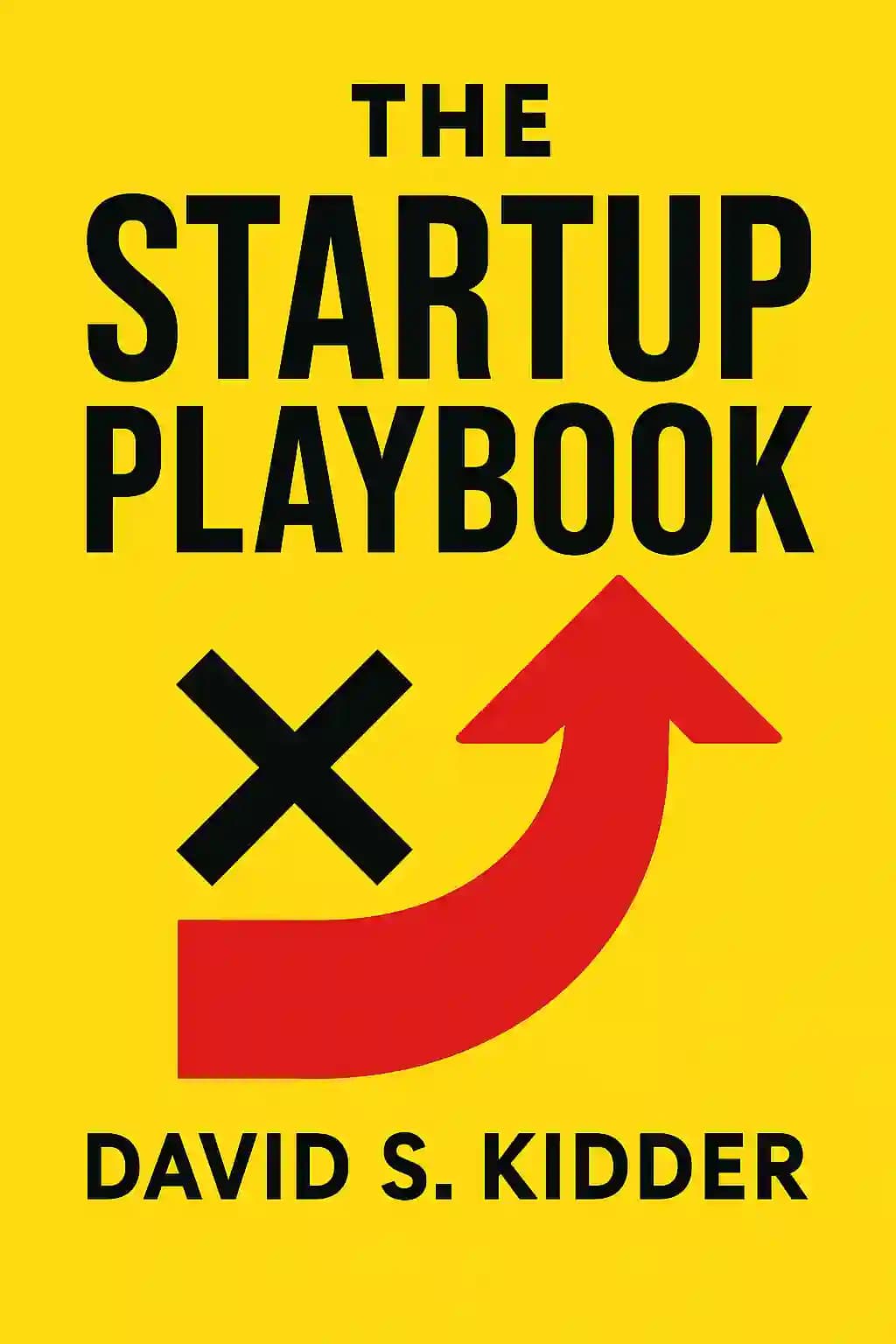
In an era where 90% of startups fail, what separates the exceptional few who build billion-dollar enterprises from those who crash and burn? "The Startup Playbook" by David S. Kidder offers a rare glimpse into the minds of some of the world's most successful entrepreneurs. This isn't just another business book-it's a collection of battle-tested wisdom from founders who've jumped off the entrepreneurial cliff and successfully "assembled the airplane on the way down," as Reid Hoffman memorably describes it. The book has become required reading in Silicon Valley, with tech luminaries like Peter Thiel calling it "essential knowledge for any ambitious entrepreneur." Beyond business circles, it's gained cultural significance as the entrepreneurial mindset has become central to modern career development. As Chris Dixon notes within its pages, "Building a startup will be the homeownership of the next century"-the new American Dream isn't buying a house but creating your own company.
Capítulo 2
The Founder's Mindset: Know Thyself and Your True North
The most fundamental lesson across all successful entrepreneurs is startlingly simple: know yourself. While conventional wisdom suggests finding market whitespace first, the playbook's masters advocate the opposite approach. Start with your personal strengths and passions, then find markets where these create competitive advantage. This inside-out approach has proven repeatedly more successful than chasing trending markets or copying existing business models.
Sara Blakely, who transformed the undergarment industry with Spanx, exemplifies this principle. She didn't begin with market research but with personal frustration-cutting the feet off her pantyhose to create a seamless look under white pants. Crucially, she kept her idea secret for a year while developing it, protecting her "infant idea" from premature criticism. "I didn't tell anyone about my idea," she explains, "especially friends and family who might discourage me." This selective approach to feedback protected her vision while she refined it. Her journey from fax machine saleswoman to billionaire founder demonstrates how personal pain points can lead to revolutionary products.
This self-knowledge extends beyond product ideas to understanding your own psychological makeup. Reid Hoffman, LinkedIn's founder, emphasizes that successful entrepreneurs embrace "contrarian thinking"-the willingness to pursue ideas others dismiss as impossible or unwise. When launching LinkedIn, Hoffman faced nearly unanimous feedback that he was "crazy" for trying to build a new network product from scratch. Despite widespread skepticism about professional networking online in 2002, he recognized that digital connections would become increasingly vital to career development. This contrarian streak must be balanced with brutal intellectual honesty-the ability to recognize when you're wrong and pivot accordingly.
The most successful founders also understand their personal operating principles. They recognize they've "won humanity's lottery" simply by having the opportunity to take entrepreneurial risks. This perspective keeps them humble and grateful, even during challenging times. They follow their own paths rather than comparing themselves to others, understanding that imitation dilutes authentic innovation. Steve Jobs exemplified this when he followed his calligraphy interests, which later influenced Apple's revolutionary focus on typography and design.
Successful entrepreneurs focus exclusively on their strengths while quitting activities that drain their energy. Jeff Bezos calls this "regret minimization framework" - making decisions based on what you'll regret least when looking back at age 80. They maintain deep empathy and forgiveness toward others, recognizing that contempt is toxic to building anything meaningful. This emotional intelligence allows them to build strong teams and navigate the inevitable conflicts of company building.
The founder's journey also requires understanding your risk tolerance and personal motivations. Some, like Elon Musk, are willing to bet everything repeatedly, while others prefer a more measured approach. Neither is inherently better - success comes from aligning your business strategy with your authentic risk profile and values. This self-awareness helps founders make decisions that feel right for them, rather than following someone else's playbook.
Capítulo 3
Build Painkillers, Not Vitamins: Solving Real Problems
A consistent theme among successful entrepreneurs is their focus on solving genuine, painful problems rather than creating "nice-to-have" products. As Hosain Rahman of Jawbone puts it, "What threshold do you have to cross such that customers perceive value in your offer and continue to use it?" The answer lies in addressing what customers truly care about - problems that cause significant frustration, waste time, or cost money.
The distinction between "vitamins" and "painkillers" is fundamental to entrepreneurial success. Vitamins are nice-to-have products that people can easily live without - think social media filters or luxury accessories. Painkillers, on the other hand, address urgent needs that customers will actively seek solutions for and willingly pay to solve immediately. Examples include services that save significant time, reduce costs, or eliminate major frustrations in daily life.
Charles Best founded DonorsChoose.org after witnessing firsthand how chronic underfunding hindered teachers and students in the South Bronx. Teachers were spending their own money on basic supplies, while potential donors had no reliable way to help specific classrooms. His platform ingeniously connects donors directly with teachers' classroom needs, solving a real problem for both educators lacking resources and philanthropists wanting transparent impact. The venture began modestly - Best anonymously funded the first eleven projects himself to create the impression that donors were waiting to support teachers' dreams. This "false rumor" spread across the Bronx, attracting hundreds of teacher requests and eventually leading to a platform that has channeled over $1.3 billion to classrooms nationwide, helping more than 40 million students.
Similarly, Cyrus Massoumi created ZocDoc after rupturing his eardrum while traveling and spending four frustrating days finding a doctor despite having excellent insurance. His initial concept evolved when market research revealed a crucial insight: even wealthy patients prioritized staying in-network to avoid paperwork hassles and unexpected costs. This pivoted ZocDoc toward becoming a general online medical-booking system that included insurance information - solving a real pain point for both patients seeking convenient appointments and medical practices struggling with unfilled slots and scheduling inefficiencies. The platform now serves millions of patients monthly and has expanded to include telehealth services.
As Jay Walker, Priceline's founder, emphasizes: "Most people won't admit to having a problem until presented with a solution." The entrepreneur's job is to identify these hidden pain points and create solutions so compelling that customers recognize their value immediately. Successful examples include Uber addressing the unreliability of taxi services, Airbnb solving affordable travel accommodation issues, and Square simplifying payment processing for small businesses. These companies didn't just create nice-to-have features - they solved fundamental problems that affected millions of people daily.
The key to building painkillers rather than vitamins lies in deep customer understanding. This requires extensive market research, customer interviews, and often personal experience with the problem. Entrepreneurs must ask: Does this solution save significant time or money? Does it eliminate a major source of frustration? Would customers be willing to pay for this solution immediately? If the answer is yes to these questions, you're likely building a painkiller rather than a vitamin.
Capítulo 4
Be Ten Times Better: Creating Category-Defining Products
In today's hypercompetitive marketplace, incremental improvements aren't enough to capture market share and sustain long-term success. Ben Horowitz, co-founder of Andreessen Horowitz, insists that successful products must be "at least ten times better than existing solutions." This principle stems from deep human psychology - people are fundamentally resistant to change and won't adopt new technology unless the benefits dramatically outweigh the cognitive and emotional costs of switching. Incumbents comfortably profit from familiar offerings, so disrupting their business requires breakthrough innovations that fundamentally reshape customer expectations.
Elon Musk exemplifies this principle across multiple industries, consistently pursuing order-of-magnitude improvements. At Tesla, he didn't just create a slightly better electric car-he reimagined the entire automotive experience from purchasing to maintenance. The Model S didn't merely match gas-powered luxury vehicles; it surpassed them in acceleration, safety, and technological innovation. Similarly, with SpaceX, he's not making incremental improvements to rocket technology but developing fully reusable orbital rockets that could reduce launch costs by 100x. The Falcon 9's ability to land vertically and be reused multiple times represents a fundamental paradigm shift in space transportation. As Musk explains, "The most fundamental principle for entrepreneurs is focusing on creating an exceptional product or service. Success comes from constantly learning from market feedback and adjusting accordingly."
This "10x better" philosophy extends beyond product features to the entire customer experience. Tony Hsieh built Zappos around extraordinary customer service, famously offering free shipping both ways, 365-day returns, and surprising customers with overnight upgrades. The company's call center representatives were empowered to spend unlimited time with customers and weren't measured by traditional metrics like call duration. When Hsieh relocated the company from San Francisco to Las Vegas, 70 of 90 employees chose to follow-demonstrating extraordinary commitment to his vision of customer service excellence. This culture of extreme service created such strong customer loyalty that Amazon acquired the company for $1.2 billion.
The entrepreneurs who achieve this level of differentiation share a common trait: they're willing to question fundamental industry dogmas and reimagine entire business models. Chip Conley revolutionized the boutique hotel business by challenging the conventional wisdom that "no one wants to eat in a hotel restaurant." He recognized this wasn't because customers preferred bad restaurants, but because that's all they'd been offered. By creating restaurants that became destinations in themselves - places locals would love and recommend to visitors - he transformed the hotel dining experience. His Joie de Vivre hotels achieved occupancy rates 10-15% higher than competitors largely due to this innovative approach to hospitality.
This commitment to category-defining excellence requires what Kevin Efrusy calls "avoiding incrementalism"-the tendency to make small improvements rather than fundamental reimaginations. Successful entrepreneurs must resist the temptation to iterate marginally and instead pursue transformative innovation. As Efrusy notes, "Success requires creating something at least ten times better than existing solutions." Companies like Apple demonstrate this principle - the iPhone wasn't just a better phone, it revolutionized mobile computing and created entirely new categories of applications and services.
Capítulo 5
Think Like a Monopolist: Planning for Market Domination
Peter Thiel's advice to "build monopolies" resonates throughout the playbook. While small businesses emphasize their uniqueness within competitive markets, major tech companies publicly downplay their monopolistic advantages while privately leveraging their unique platforms in numerous ways.
This monopolistic thinking begins with market selection. As Ben Horowitz bluntly states, "Bad markets always beat good teams." No matter how talented your team, trying to build in a shrinking or oversaturated market leads to diminishing returns. Conversely, positioning yourself in growing markets with structural advantages can yield outsized returns even with execution mistakes.
LinkedIn's Reid Hoffman exemplifies this approach. When launching LinkedIn, he focused on professional networking-a market with unique characteristics that created natural monopoly effects. Professional identity is more stable than social identity, people maintain fewer professional connections than social ones, and the value of those connections is more clearly defined. These factors created powerful network effects that competitors couldn't easily replicate.
The monopolist mindset extends beyond market selection to execution strategy. Mitch Free, founder of MFG.com, advises entrepreneurs to "scale into market demand." When building his manufacturing marketplace, Free targeted a developed industry where millions were already seeking solutions. "Because we built a product that served a clear, unmet need in a large marketplace, it shifted category and we were able to achieve massive distribution and scale almost overnight."
This approach requires planning for market domination from day one. Robin Chase, Zipcar's founder, designed her business model around network effects and data advantages that would compound over time. Each new Zipcar member and vehicle made the service more valuable to existing users, creating a virtuous cycle that competitors struggled to match.
The monopolist mindset isn't about anti-competitive behavior but about creating such compelling value that customers naturally gravitate toward your solution. As Elon Musk explains, "The best way to get customers to give you money is by giving them something they genuinely enjoy."
Capítulo 6
Execute Relentlessly: From Vision to Reality
While vision is essential, execution ultimately determines success. As Kevin Ryan, founder of Gilt Groupe, explains: "Most people believe the myth that you can only succeed as an entrepreneur if you come up with a crazy idea that no one has ever thought of before. But three months after starting a business, however crazy you thought the idea was, it's not rare to find five other teams doing the same thing. To succeed, you need to leverage that three-month head start."
This execution focus begins with team building. Linda Rottenberg, who founded Endeavor to support entrepreneurs globally, emphasizes finding the right partners: "You need someone who will tell you when you're wrong and provide honest feedback. The ideal partnership resembles a sibling relationship or marriage-someone you won't abandon when things get difficult."
The Diamants, founders of Skip Hop, demonstrate how complementary partnerships drive execution. Michael creates a "bubble" for Ellen's creative work, handling business operations while she focuses on product design. This clear division of responsibilities allows each to excel in their domain while creating a whole greater than its parts.
Execution excellence also requires brutal prioritization. Stephen Messer recommends categorizing priorities as "air," "water," and "food" rather than high, medium, and low. "You can survive minutes without air, days without water, and weeks without food. This framework makes it easier to determine what truly needs immediate attention versus what can wait."
For Jim McCann, founder of 1-800-FLOWERS, execution means "focusing on what's important" amid constant demands. "We all work incredibly hard and are constantly busy, but without focusing on the right priorities, you'll be the busiest guy on the way to the poor house." The key is determining what truly matters-what you absolutely must do well-and tolerating imperfection elsewhere.
This relentless execution mindset extends to personal discipline. Adeo Ressi, founder of the Founder Institute, emphasizes that "being devoted to an idea goes beyond hours. Your whole person has to be devoted to solving a problem. If you are going to survive after the first year or two, it will only be because your devotion has led you to create something exceptional."
Capítulo 7
Building Resilient Cultures: The People Factor
Beyond products and markets, successful companies are fundamentally about people, starting with culture. Tony Hsieh built Zappos around ten core values, with the most profound being simply: "Be humble." As he explains, "Businesses often fail when they lose their sense of humility-the people start believing their own press releases and feeling like they can do no wrong."
This humility must be balanced with confidence. Scott Harrison transformed charity: water by bringing design excellence and transparency to nonprofit work. Rather than apologizing for investing in brand quality, Harrison created an "epic brand" with striking visuals and high production values. This approach attracted supporters who might otherwise ignore traditional charities.
Successful cultures also balance optimism with realism. Matt Blumberg recommends including both optimists and pessimists on management teams, as CEOs must simultaneously be the most optimistic and pessimistic person in the company. The optimist sees possibilities; the pessimist identifies obstacles before they become crises.
Culture extends to how companies handle failure. Sara Blakely redefines failure as "not trying" rather than a poor outcome. Hosain Rahman notes that "if failures don't kill you, they will give you the valuable experience of getting kicked in the teeth and feeling blood slosh around in your mouth. Remember what that tasted like and use it to inform your next decision."
The most resilient cultures create environments where people genuinely want to work. Tom Gardner emphasizes creating workplaces people would sacrifice to join, highlighting the Motley Fool's core value "Be Fun-Revel in Your Work." This isn't about superficial perks but about meaningful engagement with challenging work.
Perhaps most importantly, culture must be intentionally designed rather than left to chance. Jeffrey Hollender learned this lesson the hard way at Seventh Generation. Despite the company's environmental reputation, he failed to institutionalize values in the corporate structure, eventually leading to his dismissal. "Core values need to be officially ingrained in company structures and bylaws to survive management changes," he warns.
Capítulo 8
The Long Game: Building Companies That Last
While media attention often focuses on quick exits and overnight successes, the playbook's masters are playing a longer game. Steve Case, who co-founded America Online in 1985 when only 3% of Americans were online, spent a decade building foundations before experiencing explosive growth in the 1990s. His unwavering passion for getting everyone online sustained him through difficult early years, including three rounds of layoffs in the first five years. This persistence eventually led AOL to become one of the most valuable companies in the world, demonstrating how early vision can translate into long-term success when properly nurtured.
This long-term perspective extends to how entrepreneurs view and manage capital. Robin Chase advises practicing frugality both personally and professionally, noting how Zipcar's early days involved operating from her home and using personal credit cards to fund operations. Adeo Ressi recommends "starving the company until you prove that it can live, and then start feeding it a healthy diet. Hungry startups grow faster." This approach forces founders to focus on fundamental business metrics and customer needs rather than burning through capital without proven results. Companies like Mailchimp and Basecamp exemplify this philosophy, bootstrapping their way to significant success without external funding.
The long game also means building sustainable business models rather than chasing vanity metrics. Chris Dixon warns against "vanity metrics" like download counts, emphasizing active users and demographic reach instead. He points to examples of companies that appeared successful based on user acquisition numbers but failed due to poor retention and engagement. Seth Goldman built Honest Tea around sustainable organic sourcing and fair trade principles, even when these choices limited short-term growth. This commitment to authenticity and sustainability eventually led to Coca-Cola's acquisition of the company while maintaining its core values.
Perhaps most importantly, playing the long game means maintaining perspective through inevitable ups and downs. As Hosain Rahman puts it, "Yesterday's home run didn't win today's game; you're only as good as your next hit." This mindset keeps entrepreneurs focused on continuous improvement rather than resting on past successes. Jeff Bezos exemplified this approach at Amazon, consistently reinvesting profits into new opportunities and innovations, even when Wall Street questioned this strategy.
The ultimate long game is creating companies that outlast their founders. Reid Hoffman designed LinkedIn with this mindset, building systems and culture that could evolve beyond his direct involvement. He established clear governance structures, developed strong leadership teams, and created scalable processes that would survive leadership transitions. Similarly, Linda Rottenberg measures Endeavor's success not by its current impact but by whether it creates lasting change in entrepreneurial ecosystems worldwide. This includes building self-sustaining local offices, developing mentor networks, and creating frameworks that can be replicated across different markets and cultures.
Successful long-game players also focus on building strong organizational cultures that can weather market cycles. Companies like Patagonia and REI have shown how strong values and mission-driven approaches can create lasting competitive advantages and customer loyalty over decades, not just quarters. They demonstrate that patient capital, coupled with unwavering commitment to core principles, often leads to more sustainable and impactful outcomes than rapid-growth strategies.
Capítulo 9
The Entrepreneur's Journey: More Than Just Business
At its core, entrepreneurship is about more than building companies-it's about personal transformation. The journey forces founders to confront their limitations, overcome fears, and grow in ways they never anticipated.
Jacqueline Novogratz, founder of Acumen Fund, emphasizes that entrepreneurship requires "walking with humility and a reverence for the human endeavor." Her approach to "patient capital" investments in developing countries recognizes that building meaningful businesses takes time and requires deep respect for local contexts.
This humility is balanced with audacious ambition. Elon Musk approaches his ventures with a clear-eyed assessment of humanity's greatest challenges-sustainable energy, space exploration, and artificial intelligence. His companies aren't just businesses but vehicles for advancing civilization.
The entrepreneurial journey also transforms how founders view failure. Jay Walker advises "clinically analyzing mistakes and moving on." When mistakes happen, acknowledge them without letting them define you. "Remember you can always make a fresh start with better knowledge. Winners simply refuse to quit."
Perhaps most profoundly, entrepreneurship reveals character. As Sara Blakely observes, "Money is a magnifying glass" that amplifies who you already are. Success doesn't change people so much as reveal their true nature more clearly.
For many in the playbook, entrepreneurship ultimately becomes a vehicle for purpose beyond profit. Scott Harrison founded charity: water with a mission to bring clean water to the billion people worldwide who lack it. His innovative approach combines nonprofit purpose with for-profit efficiency, ensuring 100% of public donations go directly to water projects while operating costs are covered separately.
This sense of purpose sustains entrepreneurs through inevitable challenges. As Seth Goldman explains, when building Honest Tea: "I need to be protected against a private equity firm or hedge fund trying to force me to maximize profitability rather than affecting the future of humanity in a positive way."
The entrepreneurial journey is indeed "stupidly hard," as David Kidder acknowledges in his introduction. It requires irrational commitment, resilience through failure, and unwavering belief in possibility. Yet for those who embrace it, it offers not just financial rewards but the profound satisfaction of creating something meaningful that didn't exist before-a legacy that extends far beyond business success.