Capítulo 1
The Dazzling Rise and Hidden Truths of a Hollywood Legend
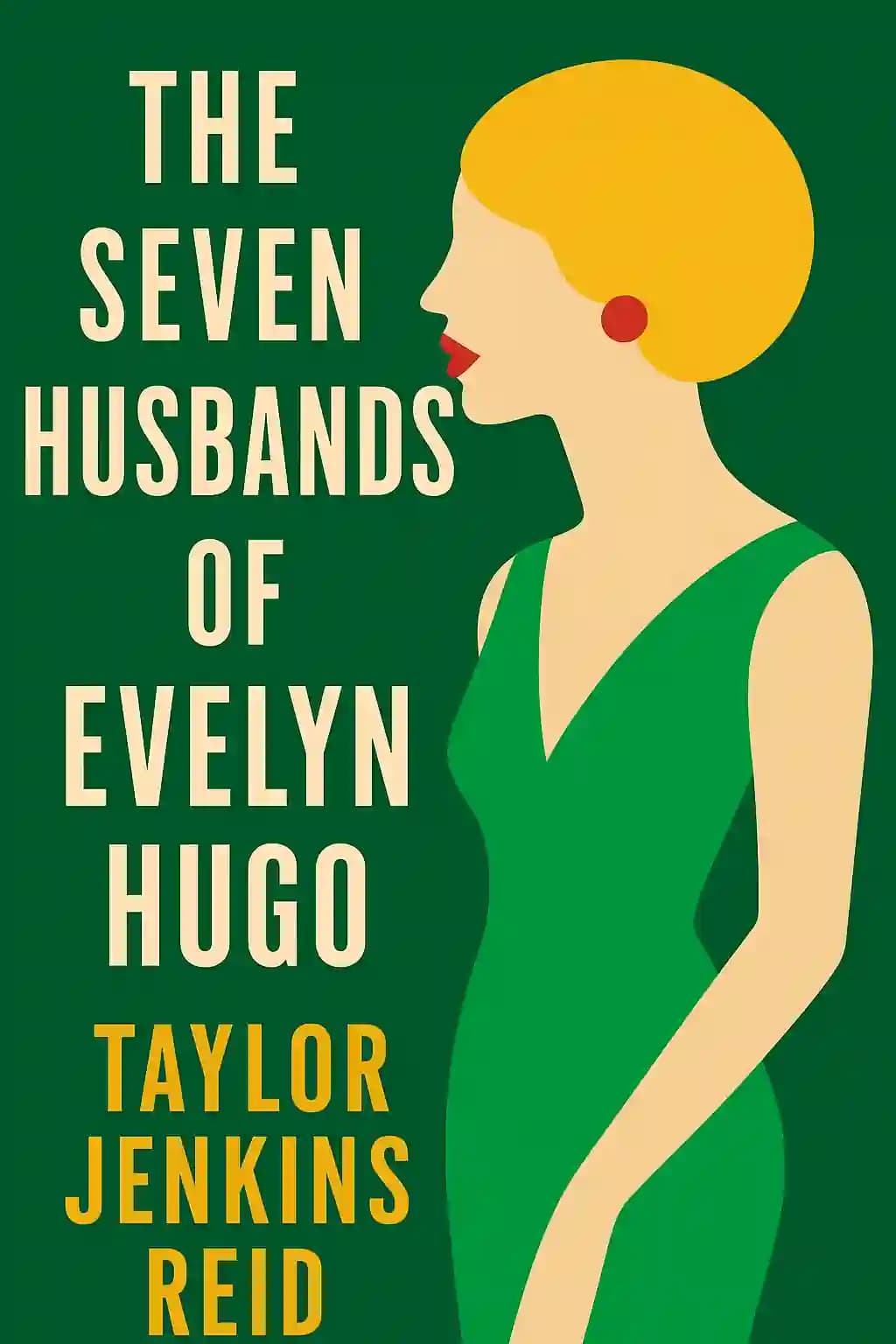
In the heart of Hollywood's golden era, a Cuban immigrant's daughter transformed herself into one of cinema's most enduring icons. Taylor Jenkins Reid's "The Seven Husbands of Evelyn Hugo" has captivated millions with its unflinching portrayal of ambition, identity, and love behind the glittering facade of fame. Since its 2017 publication, this novel has become a cultural phenomenon, spending over 80 weeks on the New York Times bestseller list and inspiring countless TikTok tributes. Celebrities from Reese Witherspoon to Taylor Swift have praised its emotional depth, while Netflix is currently adapting it into what promises to be a blockbuster film. What makes this story so compelling isn't just its glamorous setting, but its raw examination of how we construct our identities and what we sacrifice for success. As we peel back the layers of Evelyn Hugo's scandalous marriages, we discover a woman whose greatest love story was never the one splashed across tabloid headlines.
Capítulo 2
The Unexpected Interview That Changes Everything
Monique Grant can't figure out why legendary film actress Evelyn Hugo has specifically requested her for an exclusive interview with Vivant magazine. As a relatively unknown writer whose biggest accomplishment to date is a handful of feature articles, Monique feels overwhelmed by the magnitude of this opportunity. Her editor seems equally puzzled by Evelyn's request, having initially suggested more seasoned writers for the assignment. When she arrives at Evelyn's luxurious Upper East Side apartment, housed in a pre-war building with a white-gloved doorman, she's immediately struck by the actress's commanding presence. At seventy-nine, Evelyn still radiates the star quality that made her famous-perfect posture, glowing skin, and those signature thick eyebrows now turned gray but still as striking as they were in her heyday. She's dressed in a crisp white pantsuit that likely costs more than Monique's monthly rent.
The interview takes an unexpected turn when Evelyn, serving coffee in delicate bone china cups, reveals her true intentions. She doesn't want a simple magazine piece about her upcoming charity auction of iconic gowns - a collection spanning decades of Hollywood history and worth millions. Instead, she wants Monique to write her tell-all biography, to be published only after Evelyn's death. The potential payoff is staggering-twelve million dollars-and Evelyn offers Monique all the proceeds, a sum that could change her life forever. The catch? Complete discretion and unwavering commitment to telling the whole story, no matter how shocking.
"I'm giving you the chance to tell the truth," Evelyn explains, her eyes sharp and calculating. "My truth, to be specific. Every scandal, every love affair, every calculated decision that built my career."
When Monique questions why she was chosen over more experienced writers, Evelyn deflects with the practiced ease of someone who's spent decades handling the press. "I call the shots," she says, her tone brooking no argument. "You'll know everything you need to know by the end." There's something in her voice that suggests layers of meaning beneath her words.
Despite concerns about betraying her employer and the potential professional consequences, Monique accepts the opportunity, recognizing it as her chance to advance her stalled career and prove herself in the cutthroat world of journalism. As they settle into their roles as subject and biographer, Evelyn reveals her motivation with characteristic frankness: "Everyone I loved is dead now. There's no one left to protect." She pauses, touching an emerald ring she always wears. "It's time for the world to know who I really am, not just who they think I was."
What follows is a mesmerizing journey through seven marriages, countless scandals, and the hidden truths behind one of Hollywood's most fascinating figures. From the sun-drenched studios of 1950s Hollywood to the glittering premieres of the 1960s, Evelyn's story encompasses the golden age of cinema and its darker underbelly. As Evelyn's story unfolds, Monique finds herself increasingly drawn into the actress's world, captivated by tales of forbidden love, strategic alliances, and the brutal price of fame. Yet she never suspects that their lives are connected in ways she couldn't possibly imagine - a revelation that will shake both women to their core.
Capítulo 3
From Hell's Kitchen to Hollywood: The Making of Evelyn Hugo
Evelyn Elena Herrera was born to Cuban immigrants in Hell's Kitchen, New York, during the harsh economic climate of the post-war era. Her mother, Maria, worked as a chorus girl at various nightclubs - though whispers suggested she supplemented her income through prostitution - and struggled to maintain their tenement apartment. When pneumonia claimed Maria's life during a particularly brutal winter when Evelyn was eleven, it left the young girl alone with her father, a violent alcoholic who spent what little money they had at local bars.
By thirteen, Evelyn's precocious physical development had become both a blessing and a curse. Her curves and striking features drew constant attention from neighborhood men, including her father's drinking companions. After two traumatic sexual encounters - one with a local shopkeeper who offered her free groceries, another with her father's friend - Evelyn had an epiphany that would shape her entire approach to life: "I could be the one doing the choosing."
At fourteen, watching the deterioration of her neighborhood and her prospects, Evelyn crafted her first strategic move. She identified Ernie Diaz, a young man with Hollywood ambitions, as her ticket out. Calculating every detail, she seduced him, traded her virginity, and convinced him to marry her, using forged documents to hide that she was only fifteen. While Ernie found work as a grip at a small studio, Evelyn executed the next phase of her plan, spending hours at the Formosa Cafe, a known industry hangout near Paramount Studios, studying how successful actresses carried themselves.
"I wasn't going to be poor anymore," Evelyn tells Monique with steely determination. "I wasn't going to be dependent on anyone else for anything. And I wasn't going to live a life that wasn't interesting. I'd make sure of it. Hell's Kitchen had taught me that waiting for rescue was a fool's game."
Her persistence paid off when Harry Cameron, a talent scout from Sunset Studios, noticed her magnetic presence. However, at seventeen, Evelyn faced her first major industry battle when she discovered she was being relegated to stereotypical "spitfire" roles due to her Cuban heritage. When Harry proved unwilling to help, she methodically seduced Ari Sullivan, a married executive, trading intimate encounters in his office for progressively better parts and more control over her image.
The studio's transformation of Evelyn was brutal and complete. They bleached her naturally dark hair to a signature platinum blonde, had her nose subtly reshaped, and created an entirely fictional backstory about a middle-class upbringing in Kansas. The name "Evelyn Hugo" was chosen specifically to downplay her Latin heritage while maintaining a hint of exotic appeal. The publicity department worked overtime, crafting a public image that walked the delicate line between wholesome ingenue and sensual temptress - the perfect combination to captivate post-war America.
"Poor Ernie Diaz," Evelyn reflects, her voice carrying not remorse but cool pragmatism. "He served his purpose. He got me out of Hell's Kitchen, got me to Hollywood. And then I was done with him. In this town, sentimentality is a luxury poor girls can't afford."
This pattern of using relationships as strategic stepping stones would become Evelyn's trademark approach to fame. Her calculated ambition enabled her to manipulate a system designed to exploit young women, but the cost was steep. The transformation from Evelyn Herrera to Evelyn Hugo marked both her greatest triumph over circumstances and the beginning of a lifelong struggle with identity, authenticity, and belonging. Each bleach treatment and publicity photo moved her further from her roots while propelling her closer to her dreams, creating a dichotomy that would haunt her throughout her legendary career.
Capítulo 4
The Price of Fame: Don Adler and the Dark Side of Hollywood
Evelyn's second marriage to Don Adler, Hollywood's golden boy, began like a fairy tale. Unlike other men who wanted to possess beautiful women, Don initially treated Evelyn like a person, appreciating her without trying to own her. Their first date at the Mocambo club was magical-dancing past midnight, meeting celebrities, and feeling a genuine connection.
"I was completely smitten," Evelyn confesses. "I was experiencing both love and lust for the first time."
Their lavish 300-guest wedding at the Beverly Hills Hotel felt sacred despite being controlled by Don's parents and Sunset Studios. But the dream quickly turned into a nightmare. Just six weeks into their marriage, during filming in Puerto Vallarta, Don's true nature emerged. When Evelyn refused his demand that she quit acting to have children, Don slapped her across the face.
Though he apologized tearfully, this became a pattern in their marriage-violence followed by remorse. "A man hits you once and apologizes, and you think it will never happen again," Evelyn explains. "But it does happen again. And again. And again."
Despite the abuse, Evelyn remained with Don, partly because she still loved him and partly because of their public image. When gossip columns began criticizing her for being cold and selfish, refusing Don's desire for children, Evelyn and Harry Cameron devised a plan. They staged a fake miscarriage, firing their maid Paula who they knew would leak the story to the tabloids. The strategy worked perfectly, with magazines publishing sympathetic pieces about the couple's fertility struggles.
This incident reveals the elaborate performance required to maintain Hollywood stardom-a performance that extended far beyond the movie screen. Evelyn learned to manipulate the press and public perception, skills that would serve her throughout her career. Yet the price of this fame was living in constant fear, both of Don's violence and of the truth being discovered.
"I wanted both him and the spotlight," Evelyn admits. "And that made leaving impossible."
The Don Adler chapter of Evelyn's life represents the dark underbelly of Hollywood glamour-the abuse hidden behind perfect smiles, the calculated manipulation of public sympathy, and the impossible choices women faced in an industry that valued their beauty above all else.
Capítulo 5
Finding True Love in the Spotlight: Celia St. James
While filming "Little Women," Evelyn met nineteen-year-old actress Celia St. James, who would become the great love of her life. Their relationship began as a strategic alliance-Celia offering acting coaching in exchange for Evelyn's help becoming a star. But it quickly evolved into something deeper and more complex.
One evening, while Don was away, Evelyn invited Celia over. As they shared wine in Evelyn's kitchen, their conversation grew increasingly intimate. When wine spilled on Celia's shirt and Evelyn took her upstairs to borrow clothes, something shifted between them. Evelyn realized she trusted Celia completely with her secrets, experiencing a profound moment of emotional intimacy.
"True intimacy isn't about sex," Evelyn explains to Monique. "It's about truth. When you can show yourself to another person, reveal your true self completely and absolutely, and they accept you and love you anyway-that's intimacy."
Their relationship faced immediate challenges. At a film premiere after-party, Evelyn learned two devastating truths simultaneously: Celia was rumored to be a lesbian, and Don was upstairs cheating on her. Rather than focusing on her husband's betrayal, Evelyn's first thought was, "I have to find Celia."
When they confronted each other, Evelyn impulsively kissed Celia. The kiss was transformative-"Celia's lips were soft in a way Don's never were, and she smelled like flowers instead of cologne, but the feeling was the same. My heart raced. My skin tingled." This moment forced Evelyn to recognize her bisexuality at a time when society lacked the language and acceptance for such identities.
After fleeing Don, Evelyn hid at Celia's apartment for over a week. When Harry delivered divorce papers-Don was divorcing her on grounds of abandonment-Evelyn finally stopped denying her feelings. That night, she and Celia became lovers, beginning a relationship that would span decades, though often hidden from public view.
"That night, we slept nude together," Evelyn recalls. "Finally unashamed, at least within those four walls."
Their love story represents the core emotional truth of Evelyn's life-a relationship based on mutual understanding and acceptance rather than calculation or convenience. Yet the very industry that made them stars also forced them to hide their love, creating a tension that would define their relationship for years to come.
Capítulo 6
Strategic Marriages: The Mick Riva Scandal and Beyond
When gossip columns began speculating about Evelyn and Celia's relationship, they faced a terrifying reality. In the 1960s, being exposed as gay or bisexual meant not just career suicide but potential institutionalization. Evelyn devised a plan to divert attention: a whirlwind marriage to singer Mick Riva, followed by a quick annulment.
"If we continue on this path," Evelyn told Celia, "we will lose everything. Our careers, our money, our freedom. They could put us in mental institutions."
The Mick Riva marriage exemplifies Evelyn's strategic approach to fame. Wearing a stunning cream-colored dress with diamonds, she manipulated him at a club, suggesting they fly to Vegas. On the plane, she carefully balanced seduction with restraint, claiming she didn't have sex outside marriage. At the casino, she ensured they were photographed together. When he proposed, she feigned surprise before accepting.
After their hasty wedding, she deliberately disappointed him in bed, making herself as unappealing as possible. By morning, Mick suggested an annulment-exactly as she had planned. The tabloids ate up the scandal, and attention shifted away from her relationship with Celia.
This pattern continued with her marriage to Rex North, her co-star in "Anna Karenina." Their relationship was built entirely on box office potential-"tacky and fake, yet one of the most honest arrangements I've ever made," as Evelyn describes it. They negotiated living arrangements, maintained separate beds, and allowed each other freedom with discretion. Their strategic courtship culminated in marriage two weeks before their film's release, creating publicity that legitimized their on-screen romance while boosting ticket sales.
When Rex fell in love with Joy Nathan and got her pregnant, Evelyn proposed they both claim to have had affairs-Rex with Joy and Evelyn with Harry Cameron-making their divorce a victimless scandal that would still sell movie tickets. The resulting publicity helped their film "Carolina Sunset" set box office records.
These marriages reveal Evelyn's mastery of Hollywood's publicity machine. She understood that scandals could be assets if properly managed, and she used her personal life as currency in the fame economy. Yet each strategic marriage took her further from authentic connection and deeper into a web of public performance that became increasingly difficult to separate from her true self.
Capítulo 7
Family by Choice: Harry Cameron and Motherhood
Among Evelyn's seven husbands, Harry Cameron stands apart. Their relationship began as a professional partnership when he discovered her at the Formosa Cafe, but it evolved into a profound friendship. When Harry subtly revealed his homosexuality to Evelyn during her wedding reception with Don, she accepted him unconditionally, calling him her best friend.
After Evelyn's scandalous "affair" with Harry ended her marriage to Rex North, Harry proposed they make their fake relationship real-they could marry and raise a family together, each discreetly pursuing their own romantic interests. This arrangement created what Evelyn called "four beards"-two men sleeping together (Harry and John Braverman) married to two women sleeping together (Evelyn and Celia).
At thirty-six, Evelyn decided to have a child with Harry. Though her career would suffer-"Hollywood treated 'woman' and 'mother' as mutually exclusive," she notes-the desire for motherhood became overwhelming. When their daughter Connor was born, Evelyn fell in love instantly. "Her round blue eyes reminded me of Celia," she recalls.
Harry proved to be an exceptional father and partner. During a period when Celia was away filming, Evelyn and Harry lived like a traditional married couple-he cooked breakfast, ran her baths, and supported her through new motherhood while she cared for Connor.
"If there are all different types of soul mates," Evelyn told Harry, "then you are one of mine."
"I need you more than anyone," he replied. "The only exception being-"
"Connor," Evelyn finished.
Their relationship represents a different kind of love story-one based on mutual respect, shared values, and chosen family. In an era when conventional families were the only acceptable model, Evelyn and Harry created their own definition of family that centered on love and commitment rather than societal expectations.
When Harry died suddenly of an aneurysm, Evelyn lost not just her husband but her best friend and co-parent. His death devastated both Evelyn and fourteen-year-old Connor, who spiraled into self-destructive behavior. This loss forced Evelyn to reconsider her priorities, eventually leading her to retire from acting and move to Spain with Connor and her final husband, Robert Jamison (Celia's brother).
Through Harry, Evelyn discovered that family could be chosen rather than inherited, and that the deepest bonds often transcend conventional categories of relationship.
Capítulo 8
The Cost of Ambition: Losing Celia and Finding Peace
Despite their profound love, Evelyn and Celia's relationship was repeatedly tested by Evelyn's career ambition. When Evelyn agreed to film an explicit love scene with Don Adler for "Three A.M." without discussing it with Celia first, she crossed a line that couldn't be uncrossed.
"Sex is sacred between us," Celia reminded her. When Evelyn insisted "It's not real," Celia pointed out that audiences would be watching something Don and Evelyn had already done in real life. Despite Evelyn's desperate pleas, Celia couldn't accept it: "I can't live with my heart half-broken all the time."
This painful separation lasted for years, during which both women pursued their careers separately. Evelyn won an Oscar for "All for Us," a film Harry directed, while Celia continued her own successful career. It wasn't until 1988, when Celia won an Academy Award for playing Lady Macbeth, that they began to reconnect through letters.
When they finally reunited at Spago, Celia delivered devastating news: she had chronic obstructive pulmonary disease from smoking and probably wouldn't live past sixty. Despite this prognosis, they chose to be together for whatever time remained.
"I'd rather survive losing you than never feel loving you again," Evelyn told her.
They created a life together in Spain, with Robert Jamison serving as Evelyn's legal husband while she and Celia lived as partners. In this seaside retreat, Evelyn finally embraced her Cuban heritage, speaking Spanish again and cooking her mother's recipes.
One night, knowing Celia's health was deteriorating, Evelyn proposed marriage-a spiritual promise between them. Without rings, they used hair ties instead, exchanging vows in bed. "I have been married seven times," Evelyn told Celia, "and never once has it felt half as right as this."
Six years later, Celia died of respiratory failure in Evelyn's arms. "I had lost her-my love, my Celia, my soul mate," Evelyn recalls. "The woman whose love I'd spent my life earning was simply gone, irrevocably and forever."
This loss, followed by the deaths of Robert and, most devastatingly, Connor from breast cancer at 41, left Evelyn truly alone. Her story ends with profound regret about the choices she made prioritizing fame over love: "I should have apologized and sent roses and stood on top of the Hollywood sign and shouted, 'I'm in love with Celia St. James!' and let them crucify me for it."
Capítulo 9
The Final Revelation: Truth, Legacy, and Redemption
As Evelyn concludes her story, she reveals the true reason she selected Monique to write her biography. The man who died alongside Harry Cameron in the car accident was James Grant-Monique's father. This shocking connection explains why Evelyn sought out Monique specifically, wanting to make amends before her own death from breast cancer.
The revelation devastates Monique, who must reconcile her childhood memories with this new information about her father's sexuality and death. Yet despite her anger, Monique recognizes that without Evelyn's influence, she wouldn't have found the courage to end her unhappy marriage, stand up to her boss, or pursue this career-changing opportunity.
During Evelyn's final photo shoot for Vivant magazine, Monique observes the actress's undeniable star quality even at nearly eighty. After everyone leaves, Monique realizes with horror that Evelyn plans to take her own life. Evelyn chose Monique partly because of an article she wrote supporting the right-to-die movement-because Monique understands the need for dignity in death.
After agonizing indecision, Monique ultimately decides not to intervene, believing it would be a betrayal to stop Evelyn from dying on her own terms. Days later, news breaks of Evelyn's death from an "accidental overdose," with her estate largely bequeathed to LGBTQ+ charities.
In her Vivant article about Evelyn, Monique reveals that the actress wanted the world to know she was bisexual and spent most of her life in love with Celia St. James. This posthumous coming out was Evelyn's "greatest political act" and reflected her lifelong commitment to LGBTQ+ visibility, even if she couldn't live that truth openly during her career.
Monique concludes with Evelyn's response when asked if she was embarrassed by her seven marriages becoming her headline story: "No, because they are just husbands. I am Evelyn Hugo. And anyway, I think once people know the truth, they will be much more interested in my wife."
Through this final act of truth-telling, Evelyn transforms her scandalous reputation into a powerful statement about authentic love and identity. Her story challenges us to consider what parts of ourselves we sacrifice for success, and whether any achievement is worth losing the people we truly love. In the end, Evelyn Hugo's greatest legacy isn't her films or her fame, but her courage to finally tell the truth-about herself, about love, and about the price of the American Dream.