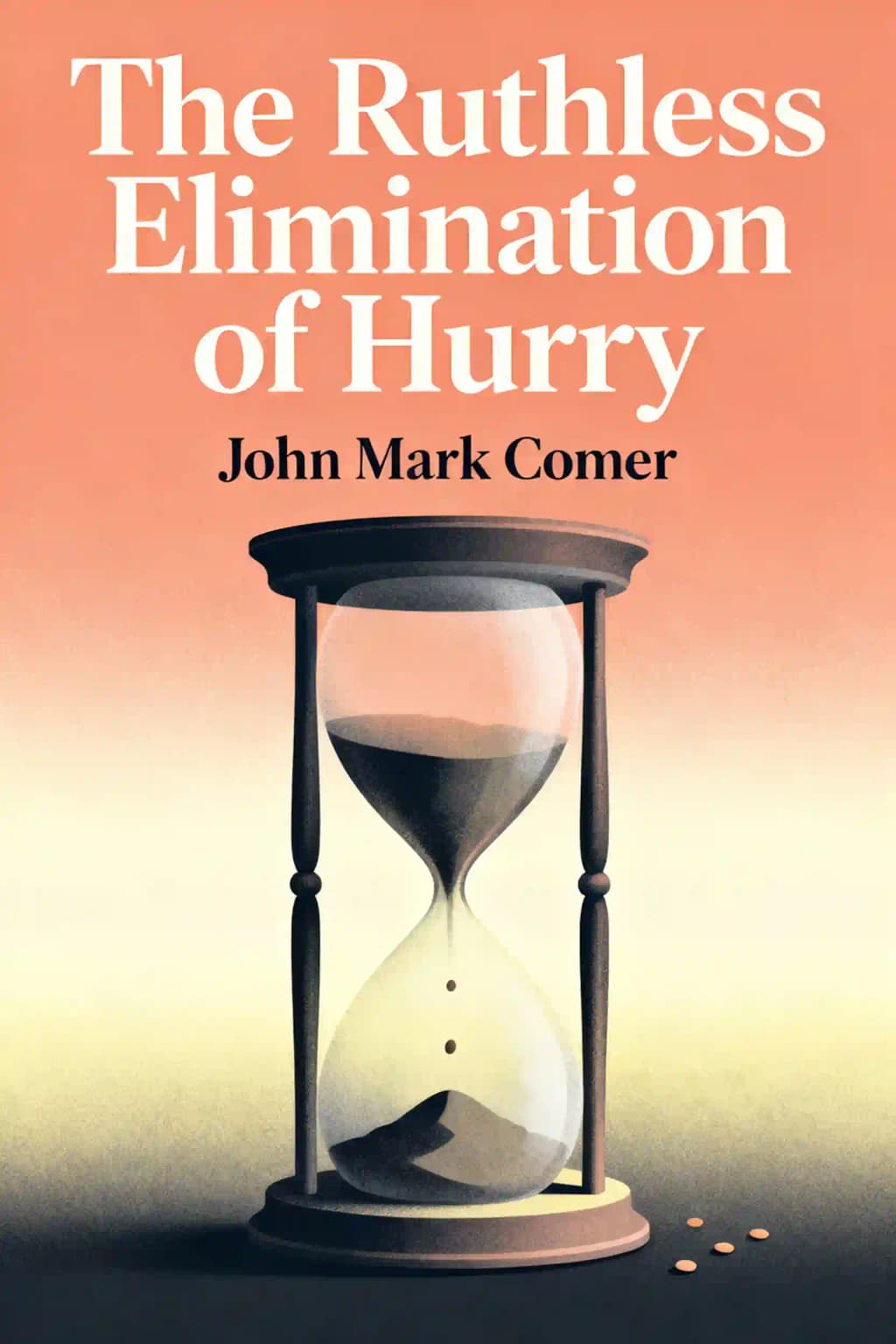
In a world of chronic busyness, John Mark Comer's bestseller offers salvation from the disease of hurry. Endorsed as "required reading" by influential pastor Jon Tyson, this ECPA Top 15 hit poses a radical question: What if your exhaustion isn't just modern life - but a spiritual crisis?
John Mark Comer, New York Times bestselling author of The Ruthless Elimination of Hurry, is a leading voice in Christian spiritual formation and modern discipleship. A pastor for over two decades, Comer founded Bridgetown Church in Portland and now leads Practicing the Way, a nonprofit creating resources to integrate ancient spiritual practices into contemporary life.
His work focuses on themes of contemplative living, simplicity, and resisting the chaos of modern culture—ideas rooted in his academic background (MA in Biblical Studies from Western Seminary) and his own journey of balancing ministry, family, and inner peace.
Comer’s other influential books, including Live No Lies and God Has a Name, explore similar terrain of faith and cultural engagement. Through his podcast and teachings at Vintage Church LA, he continues to guide audiences in adopting Jesus’ rhythms of work, rest, and prayer. The Ruthless Elimination of Hurry has sold millions of copies worldwide, became an airport-bestseller staple, and catalyzed a global conversation about slowing down—solidifying Comer’s reputation as a trusted guide for spiritually hungry readers.
The Ruthless Elimination of Hurry explores how modern busyness harms spiritual and emotional health, offering a roadmap to slow down through practices like Sabbath, silence, and solitude. John Mark Comer argues that hurry is a cultural addiction that disconnects us from God, others, and ourselves, drawing on Jesus’ contemplative rhythms as a model for sustainable living.
This book is ideal for Christians overwhelmed by modern life’s pace, seekers of spiritual balance, or anyone feeling drained by constant busyness. It’s particularly relevant for those interested in spiritual formation, mindfulness, or integrating ancient Christian practices into contemporary routines.
Yes—readers praise its actionable insights for cultivating peace in a chaotic world. The book blends biblical wisdom with practical steps, making it a standout guide for spiritual renewal. Its popularity stems from relatable examples and Comer’s accessible writing style.
Comer advocates four key practices: Sabbath (weekly rest), silence and solitude (disconnecting from noise), simplicity (reducing clutter), and slowing (mindful living). These disciplines aim to reorient lives around presence rather than productivity, echoing Jesus’ rhythm of work and rest.
Hurry is described as a “frantic effort rooted in inadequacy, fear, and guilt” that fractures our connection to God and others. Comer links it to terms like “hurricane” and “uproar,” emphasizing its destabilizing effect on spiritual and emotional health.
The title derives from Dallas Willard’s advice: “Hurry is the great enemy of spiritual life… You must ruthlessly eliminate hurry from your life.” Comer expands this idea, framing hurry as a destructive force that requires intentional, systematic resistance.
Comer critiques digital distraction, urging readers to limit screen time and create “tech-free zones.” He argues that constant connectivity fuels anxiety, advocating practices like digital fasting to reclaim focus and inner stillness.
Some note Comer’s fragmented, conversational writing style—short paragraphs that mimic a podcast tone. Others critique his avoidance of traditional evangelical themes like penal substitution, favoring a discipleship model focused on imitation of Jesus.
Comer posits that hurry creates “soul fatigue,” making prayer, reflection, and community engagement unsustainable. By eliminating hurry, individuals rediscover capacity for love, joy, and purpose—fruits of a deeper connection to God.
Sabbath is a weekly “stop day” to rest, worship, and reconnect with loved ones. Comer frames it as a countercultural act of trust in God’s provision, freeing individuals from the tyranny of productivity.
Unlike theoretical works, Comer merges theology with actionable steps, akin to Dallas Willard’s The Divine Conspiracy or Richard Foster’s Celebration of Discipline. However, his emphasis on postmodern cultural critique distinguishes it from classic texts.
A “Rule of Life” is a personalized set of spiritual rhythms (prayer, rest, work) that structure daily life around Christ-like habits. Comer views it as a “trellis” supporting growth toward emotional health and spiritual maturity.
Siente el libro a través de la voz del autor
Convierte el conocimiento en ideas atractivas y llenas de ejemplos
Captura ideas clave en un instante para un aprendizaje rápido
Disfruta el libro de una manera divertida y atractiva
Hurry is not of the devil; hurry is the devil.
God moves at the speed of love.
I cannot live in the kingdom of God with a hurried soul.
Hurry not only keeps us from love, joy, and peace...but also from God himself.
Desglosa las ideas clave de The Ruthless Elimination of Hurry en puntos fáciles de entender para comprender cómo los equipos innovadores crean, colaboran y crecen.
Destila The Ruthless Elimination of Hurry en pistas de memoria rápidas que resaltan los principios clave de franqueza, trabajo en equipo y resiliencia creativa.

Experimenta The Ruthless Elimination of Hurry a través de narraciones vívidas que convierten las lecciones de innovación en momentos que recordarás y aplicarás.
Pregunta lo que quieras, elige la voz y co-crea ideas que realmente resuenen contigo.

Creado por exalumnos de la Universidad de Columbia en San Francisco
"Instead of endless scrolling, I just hit play on BeFreed. It saves me so much time."
"I never knew where to start with nonfiction—BeFreed’s book lists turned into podcasts gave me a clear path."
"Perfect balance between learning and entertainment. Finished ‘Thinking, Fast and Slow’ on my commute this week."
"Crazy how much I learned while walking the dog. BeFreed = small habits → big gains."
"Reading used to feel like a chore. Now it’s just part of my lifestyle."
"Feels effortless compared to reading. I’ve finished 6 books this month already."
"BeFreed turned my guilty doomscrolling into something that feels productive and inspiring."
"BeFreed turned my commute into learning time. 20-min podcasts are perfect for finishing books I never had time for."
"BeFreed replaced my podcast queue. Imagine Spotify for books — that’s it. 🙌"
"It is great for me to learn something from the book without reading it."
"The themed book list podcasts help me connect ideas across authors—like a guided audio journey."
"Makes me feel smarter every time before going to work"
Creado por exalumnos de la Universidad de Columbia en San Francisco

Obtén el resumen de The Ruthless Elimination of Hurry como PDF o EPUB gratis. Imprímelo o léelo sin conexión en cualquier momento.
What if the greatest threat to your soul isn't some dramatic moral failure but simply the pace at which you're living? A striking statement from psychologist Carl Jung captures this perfectly: "Hurry is not of the devil; hurry is the devil." While we might identify theological disagreements, cultural shifts, or moral temptations as our greatest spiritual challenges, hurry quietly undermines everything we hold dear. Satan doesn't typically appear with a pitchfork-he shows up as constant notifications, endless to-do lists, and the perpetual feeling of having too many commitments. The problem isn't being busy. Jesus himself was busy. The problem is having too much to do, forcing us to constantly rush. A global survey identified busyness as Christians' major spiritual distraction, creating a vicious cycle: we assimilate to hurry culture, marginalize God, damage our relationship with Him, become vulnerable to secular assumptions, and conform further to busyness. This manifests in shortened prayer times, skipped church services, and neglected spiritual disciplines. Hurry makes love impossible-and in Christ's kingdom, love has the highest value. All our worst moments as parents, spouses, and friends happen when we're hurried. There's a reason we "walk" with God rather than "run"-because God moves at the speed of love.