Capítulo 1
When Bad Girls Meet Hockey Stars: A Game of Hearts and Risks
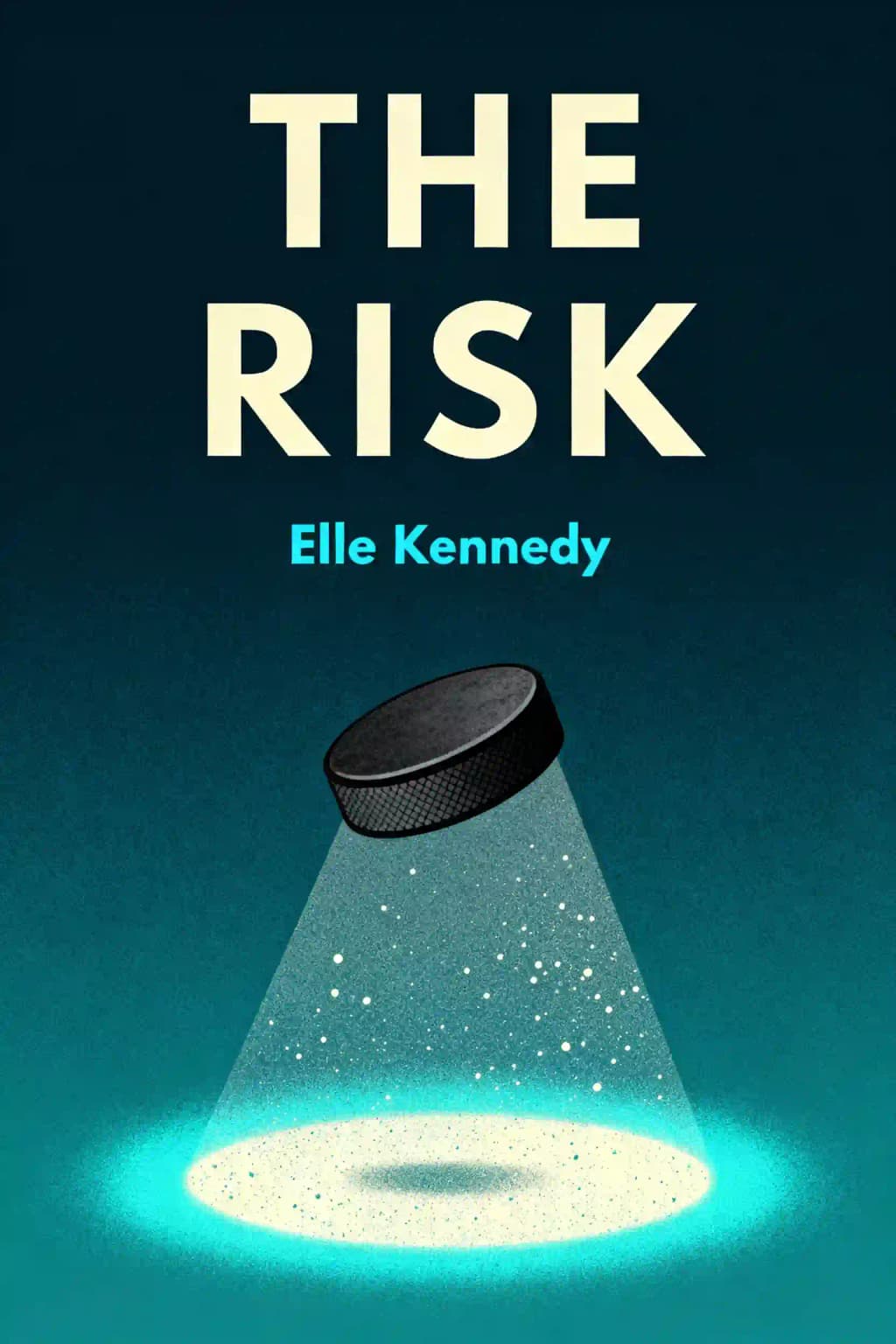
Elle Kennedy's "The Risk" has taken the romance world by storm, captivating readers with its perfect blend of forbidden love, hockey culture, and complex family dynamics. This enemies-to-lovers tale has garnered praise from celebrities like Taylor Swift, who called it "the perfect escape read," and has consistently topped BookTok recommendation lists since its release. Kennedy's ability to craft characters with genuine depth while maintaining sizzling chemistry has established her as one of the romance genre's most reliable voices. In a literary landscape increasingly hungry for stories featuring strong-willed heroines and emotionally available heroes, "The Risk" delivers both with remarkable authenticity, exploring how sometimes the greatest risk isn't on the ice, but in opening your heart.
Capítulo 2
Forbidden Attraction: The Dangerous Game Begins
Brenna Jensen isn't your typical college girl. As the daughter of Briar University's head hockey coach, she's grown up in the shadow of the sport, developing a thick skin and razor-sharp wit that's earned her both admirers and enemies. Her trademark red lipstick - a shade she carefully selects each morning - serves as both fashion statement and emotional armor against a world that's always watching the coach's daughter. The hockey arena has been her second home since childhood, where she learned to navigate the complex politics of college sports and the expectations that come with her last name.
When Jake Connelly - Harvard's star forward and her father's sworn enemy's prized player - slides into her booth at Della's diner after she's been stood up, their chemistry is immediate and electric. He carries himself with the easy confidence of someone used to commanding attention, his dark eyes studying her with an intensity that makes her pulse quicken. The worn leather of his jacket and the faint scent of ice and cologne create an oddly intoxicating combination that Brenna finds herself noticing despite her better judgment.
Their first encounter sets the tone for their relationship: combative, charged, and complicated. Jake demands she stop hooking up with his teammate McCarthy, claiming she's distracting him from hockey. His voice carries the authority of Harvard's team captain, but there's an undercurrent of something else - jealousy, perhaps - that makes the conversation crackle with tension. Brenna, never one to take orders, especially from a Harvard player, refuses outright. "I don't take orders from Harvard dickheads," she tells him, watching with irritation as he devours two slices of apple pie with obscene pleasure noises that affect her more than she'd like to admit. The way he licks his fork clean shouldn't be legal, and she hates that she can't look away.
What makes their attraction so compelling is the forbidden nature of it. Brenna knows that getting involved with Jake would be catastrophic - her father would be furious, viewing it as the ultimate betrayal from the daughter he raised in Briar's black and gold colors. Her friends would feel betrayed, especially those on Briar's hockey team who view Harvard as their most bitter rivals. Her reputation at Briar, already complicated by her father's position, would be tarnished beyond repair. Jake, meanwhile, is laser-focused on winning the championship and securing his future NHL career with the Edmonton Oilers, who've already expressed serious interest in drafting him. Neither can afford distractions, yet they find themselves gravitating toward each other in crowded rooms, exchanging loaded glances across busy cafes, and manufacturing reasons to cross paths.
The push-pull dynamic between them creates a delicious tension that permeates their every interaction. When Jake orchestrates McCarthy's breakup with Brenna via text - a move that's both calculating and surprisingly protective - she's furious. The message pings her phone at midnight, McCarthy's words clearly influenced by his team captain. "Jake Connelly just declared war," she thinks, applying a fresh coat of her armor-like red lipstick, not realizing this is just the opening salvo in a battle neither of them is prepared to lose - or win. Their game of cat and mouse is about to become far more complicated than either of them anticipated, with stakes higher than just their hearts.
Capítulo 3
Career Dreams and Gender Barriers
Beyond the romance, "The Risk" offers a compelling look at the challenges women face in male-dominated industries, particularly through the lens of sports journalism. Brenna's dream of becoming a sports journalist puts her on a collision course with the deeply entrenched sexism of the sports media world. Her interview at HockeyNet with Ed Mulder serves as a painful microcosm of the discrimination women routinely encounter - he repeatedly calls her "Brenda" despite multiple corrections, questions why a "pretty girl" wants to work behind the camera instead of in front of it, and makes condescending remarks about female applicants' supposed lack of technical knowledge.
The systemic nature of gender bias becomes starkly apparent when news breaks about hockey player Roman McElroy's arrest for domestic abuse. Mulder not only abandons the interview to cover the story but actively dismisses the female analyst on staff, claiming she might give it a "feminist bullshit spin." This moment crystallizes the uphill battle Brenna faces, highlighting how women's perspectives are often dismissed as biased, particularly on issues directly affecting women, while male viewpoints are considered neutral and objective.
What's remarkable about Brenna's character is her unwavering resilience in the face of constant microaggressions and overt discrimination. She recognizes that sports journalism isn't merely unwelcoming to women - it's actively hostile. Yet she refuses to abandon her passion, displaying a pragmatic determination that feels authentic rather than idealistic. "I'll have to deal with men like Mulder throughout my career," she acknowledges, steeling herself for the fight ahead. Her strategy involves careful documentation of discriminatory incidents, building a network of allies, and maintaining unwavering professionalism even when faced with blatant disrespect.
This storyline resonates deeply in our current cultural moment, where conversations about gender equality in workplaces continue to evolve. Through Brenna's experiences, Kennedy highlights how women must often work twice as hard for half the recognition, navigate casual sexism without appearing "too sensitive," and somehow maintain their enthusiasm for their chosen field despite constant undermining. The author particularly excels at showing the emotional toll of these daily battles - the exhaustion of always being the only woman in the room, the frustration of having to repeatedly prove basic competence, and the anger of watching less qualified male colleagues advance more quickly.
When Brenna finally meets her idol Georgia Barnes, a pioneering female sports broadcaster, their conversation becomes a powerful moment of intergenerational solidarity. Barnes shares her own war stories from decades in the industry and encourages Brenna not to give up because "a change is coming." This interaction feels like both a personal victory and a broader commentary on the slow but necessary progress toward equality in male-dominated fields. Through mentorship networks and persistent advocacy, women like Brenna and Georgia are gradually reshaping the landscape of sports journalism, though the novel makes clear that significant barriers remain.
The strength of Kennedy's portrayal lies in its nuanced examination of how gender discrimination operates at both institutional and interpersonal levels, while offering hope for change without minimizing the challenges ahead.
Capítulo 4
Family Wounds and Healing
The complex father-daughter relationship between Coach Jensen and Brenna forms the emotional backbone of the novel. Their interactions are fraught with tension, misunderstanding, and unspoken pain. Coach Jensen speaks to Brenna "the way he speaks to his players-curt, impatient, and unforgiving," a stark contrast to the tender father who once called her "Peaches" after her mother died in a car accident when she was seven.
The source of their estrangement gradually unfolds throughout the story. When Brenna's basement apartment floods, forcing her to move back in with her father temporarily, their strained dynamic becomes impossible to ignore. "I hate that he still sees me as that self-destructive girl with poor decision-making skills, when I haven't been her for a long time," Brenna reflects, hinting at past troubles that created the rift between them.
The breakthrough comes when Brenna finally confronts her father, apologizing for getting pregnant years ago and admitting she's always believed he was ashamed of her. His response is heartbreaking and unexpected-he begins crying, something Brenna has never witnessed before. He explains he was never ashamed; he was traumatized by finding her bleeding on the bathroom floor, which reminded him of identifying her mother's body after her accident. "You're the spitting image of her corpse," he confesses, revealing that his emotional distance came from fear of losing her too.
This moment of vulnerability transforms their relationship. "Hockey is a game. You're my life," he tells her, offering a path toward reconciliation. Their agreement to start fresh and get to know each other as adults represents one of the novel's most poignant arcs. Through this storyline, Kennedy explores how unprocessed grief can damage even the closest relationships, and how honest communication, even when painful, is essential for healing.
Capítulo 5
The Consequences of Past Mistakes
Eric Royce's character serves as a powerful cautionary tale about how quickly promising futures can unravel. Once a first-round NHL draft pick with Chicago - celebrated for his lightning-fast slapshot and strategic playmaking - Eric's life spiraled into drug addiction after his tumultuous breakup with Brenna when she was fifteen. Though their relationship was just one factor in his downfall, his pre-existing tendencies toward substance abuse had already manifested in concerning ways. His post-breakup behavior became increasingly erratic - missing crucial practices, showing up intoxicated to games, and eventually failing multiple drug tests - which irreparably damaged his NHL prospects and ended what could have been a stellar professional career.
When Eric calls Brenna at 3 AM, disoriented and lost during a meth binge in a seedy motel on the outskirts of town, Jake and Brooks help her track him down. What they find is devastating: a hollow shell of the once-vibrant hockey player, gaunt and trembling, with dilated pupils and track marks visible on his arms. This harrowing encounter forces Brenna to confront her complicated feelings about her ex-boyfriend and the crushing guilt she carries about his downfall, while giving Jake intimate insight into Brenna's past and the heavy emotional burdens she shoulders. The scene is particularly poignant as Eric, in his drug-induced haze, repeatedly apologizes for "letting everyone down" - a sentiment that echoes Brenna's own feelings of responsibility.
The Eric storyline illustrates how past relationships can leave lasting imprints on our lives, sometimes in ways we never anticipated or intended. For Brenna, Eric represents more than just a failed first love - he embodies a painful chapter she can't fully close, partly because she feels responsible for his decline despite others' assurances that his choices were his own. For her father, Eric symbolizes the pivotal moment he began to lose trust in his daughter's judgment, leading to years of strained communication and overprotective behavior that Brenna still struggles against.
Kennedy doesn't offer easy answers or neat resolutions to this complex subplot. Eric's addiction isn't magically cured through an intervention or rehab stint, and Brenna doesn't suddenly shed her guilt after one meaningful conversation. Instead, the novel acknowledges the messy reality that some wounds never fully heal - we simply learn to carry them differently. Through careful character development and realistic dialogue, the story explores how addiction's tentacles reach far beyond the addict, affecting family dynamics, future relationships, and personal growth. This nuanced approach to addressing addiction and its ripple effects on families and relationships adds remarkable depth to what might otherwise be a straightforward romance, while highlighting the lasting impact of teenage decisions and the complexity of healing from past trauma.
Capítulo 6
Ambition vs. Connection: The Hockey Player's Dilemma
Jake Connelly's character embodies the classic conflict between professional ambition and personal connection. As Harvard's star forward with a guaranteed spot on the Edmonton Oilers, Jake has his future mapped out. Hockey has always been his priority-until Brenna Jensen complicates everything.
His decision to break up with Brenna to focus on hockey highlights this internal struggle. "I can't be a hypocrite," he tells her, explaining that he made everyone on his team sacrifice their distractions for the playoffs, but hasn't given up his own: her. Despite admitting he's "smitten" with her, Jake suggests they "cool it," prioritizing his career over their relationship.
This moment resonates because it reflects a universal dilemma: how do we balance our professional goals with our personal lives? Jake's friend Hazel reinforces his doubts when she reminds him that hockey has always been his priority and suggests that maintaining a relationship will distract him from his professional debut. "You've never been in a real relationship before," she points out, raising valid concerns about how they'll handle the long-distance when he moves to Edmonton.
The irony, of course, is that ending things to avoid "distractions" creates an even bigger disruption in Jake's performance. After breaking up with Brenna, he's distracted during practice, slower on the ice, and mentally unfocused-exactly what he was trying to avoid. This reversal cleverly subverts the typical "sacrifice love for career" trope, suggesting that sometimes our attempts to compartmentalize our lives only lead to greater dysfunction.
Through Jake's journey, Kennedy explores how our definitions of success evolve as we mature. While Jake initially sees his hockey career as separate from his personal life, he gradually realizes that true fulfillment might require integration rather than separation of these aspects. His ultimate realization-"I made a huge mistake"-marks his growth from seeing relationships as distractions to understanding them as essential components of a well-rounded life.
Capítulo 7
The Power Dynamics of Fake Dating
The fake dating trope takes center stage when Brenna impulsively tells her HockeyNet interviewer that Jake is her boyfriend, leading to an invitation for "them" to attend a dinner party. This predicament forces Brenna to ask Jake for help, offering to pay him for his time. Jake refuses payment but counters with his own proposal: he'll be her fake boyfriend for the dinner if she agrees to go on a real date with him.
This arrangement creates an interesting power dynamic between them. Initially, Brenna needs Jake more than he needs her-her potential internship depends on maintaining the boyfriend charade. But Jake's insistence on a real date reveals his genuine interest in her, shifting the balance slightly.
At Mulder's dinner party, the fake relationship exposes the sexism Brenna faces in her chosen industry. While Jake joins the men in Mulder's den for hockey talk, Brenna is relegated to the sitting room with the other women. "I was banished to the sitting room with the other women," she later tells Jake, highlighting how even with her extensive hockey knowledge, she's excluded from professional conversations because of her gender.
What makes the fake dating scenario particularly effective is how it forces both characters to confront their true feelings. Pretending to be a couple requires physical proximity and public displays of affection that blur the lines between fiction and reality. After the dinner party, when Jake suggests they get a drink before heading to the station, their pretense begins to crumble. "I want to kiss you," he finally admits when she challenges him to state what he really wants.
The transition from fake dating to real connection feels earned because Kennedy establishes genuine chemistry between Jake and Brenna from their first meeting. Their arrangement merely provides the excuse they both needed to explore what was already simmering beneath the surface of their antagonistic relationship.
Capítulo 8
Vulnerability Behind Tough Exteriors
Both Jake and Brenna project confidence and toughness to the world, but their private moments reveal profound vulnerabilities. Brenna's trademark red lipstick serves as her emotional armor, preventing her from breaking down in tears when Jake breaks up with her. Jake, meanwhile, maintains a laser focus on hockey partly because it's safer than risking emotional investment in relationships.
Their moments of vulnerability with each other create the novel's most intimate scenes. When Jake climbs through Brenna's window after she refuses to go outside in the rain, they end up having a genuine conversation about their backgrounds. Jake reveals he's a clam diver with his grandfather during summers, while Brenna admits she went to community college for two years before transferring to Briar. These small confidences, shared in the privacy of her bedroom, build trust between them that transcends their physical attraction.
Similarly, when Brenna helps Jake find her ex-boyfriend Eric during his meth binge, she shows Jake a side of herself few people see-her compassion for someone who hurt her, her sense of responsibility, and her ability to handle crisis situations with grace. Jake's willingness to help, despite his jealousy and reluctance, reveals his own capacity for selflessness.
Kennedy excels at writing characters who feel authentic because they contain multitudes. Brenna isn't just the coach's sassy daughter with a sharp tongue; she's also someone who carries guilt about her ex's addiction, fears disappointing her father, and dreams of breaking into a male-dominated industry. Jake isn't just a confident hockey star; he's also a devoted son who worries about his father's health, a loyal friend, and someone learning to balance ambition with emotional connection.
By allowing her characters these moments of vulnerability, Kennedy creates a romance that feels substantive rather than superficial. The physical attraction between Jake and Brenna matters because it's anchored in genuine emotional intimacy-they've seen each other's weaknesses and accepted them without judgment.
Capítulo 9
Finding Home in Unexpected Places
As the novel progresses, both Jake and Brenna discover that "home" isn't necessarily a physical place but a feeling of belonging with another person. When Brenna's basement apartment floods, she's forced to move back in with her father-a house that no longer feels like home. Her bedroom there has "plain white furniture and lack of personal touches," and she misses the colorful quilt and "PEACHES" sign from her childhood bedroom.
Jake's condo, shared with his wealthy teammate Brooks, is luxurious but temporary-a stopping point before his move to Edmonton. Neither character feels fully settled in their current living situations, mirroring their emotional states of transition and uncertainty.
Their growing relationship creates a new sense of home for both of them. When Brenna stays at Jake's place after the Eric incident, she experiences a comfort and safety she hasn't felt in years. Similarly, Jake finds himself increasingly distracted when Brenna isn't around, suggesting that his sense of belonging is becoming tied to her presence rather than any physical location.
This theme culminates in the epilogue, where Brenna watches the Frozen Four championship in St. Paul, Minnesota, surrounded by Jake's parents and Hazel. Though far from her physical home, she feels a sense of belonging in this makeshift family. Her excitement about being "the first face Jake sees when he exits the locker room" speaks to her understanding that home is wherever they're together.
Kennedy's exploration of "home" extends beyond romantic relationships to include family reconciliations and friendships. When Brenna and her father finally clear the air about their past, they create space for a new kind of relationship-one where their house might actually feel like home again. Similarly, the camaraderie between the hockey players and their friends forms a kind of chosen family that provides stability amid life's uncertainties.
Capítulo 10
The Ultimate Risk: Choosing Love
The novel's title takes on multiple meanings throughout the story. Initially, "the risk" seems to refer to Brenna's potential relationship with Jake-a Harvard player whose team rivals her father's. "Nothing good can come from sneaking around with Jake-my father would kill me, my friends would revolt, and my career is on the line," she acknowledges early on.
But as the story unfolds, the true risk emerges as something deeper: the courage to be vulnerable with another person despite past hurts and future uncertainties. For Brenna, who's been burned by her relationship with Eric and estranged from her father, opening herself to Jake represents a leap of faith. For Jake, who's always prioritized hockey above all else, investing emotionally in Brenna means reconsidering his life's priorities.
The climactic moment comes when Jake realizes breaking up with Brenna was "the biggest mistake of my dumbass life," as Hollis so eloquently puts it. Jake's determination to win her back after the championship game represents his willingness to risk his carefully constructed plans for the chance at something meaningful with her.
Similarly, Brenna's decision to attend Jake's championship game, despite their breakup, shows her own willingness to risk further heartbreak. Her excitement about potentially working at ESPN while supporting Jake's move to Edmonton indicates her commitment to finding balance between career ambitions and personal relationships-something neither character thought possible at the story's beginning.
Kennedy's message becomes clear: the greatest risk in life isn't following your ambitions or breaking rules; it's allowing yourself to love and be loved without guarantees. When Brenna stands waiting to be "the first face Jake sees when he exits the locker room," she's taking that risk fully, embracing the uncertainty of their future together with hope rather than fear.
Through Jake and Brenna's journey from antagonism to genuine connection, "The Risk" reminds us that sometimes the things that seem most dangerous to our carefully constructed plans-like unexpected love-are precisely what make those plans worth pursuing in the first place.