Capítulo 1
The Identity Revolution: How a Radical View of Self Transformed Society
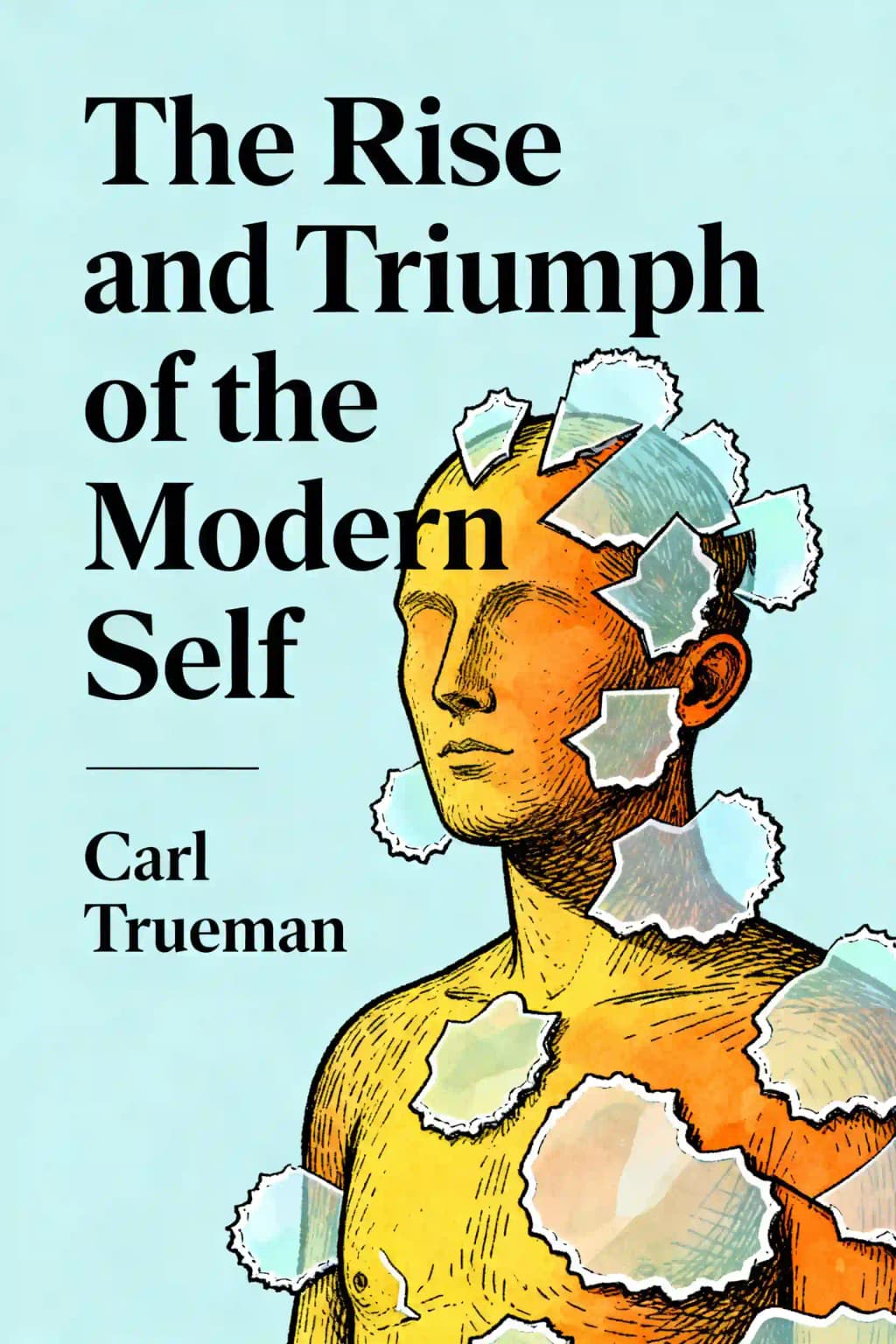
What would your grandfather think if someone told him they were "a woman trapped in a man's body"? Just thirty years ago, such a statement would have been considered nonsensical. Today, questioning it marks you as ignorant or bigoted. This remarkable transformation isn't merely about sexual politics-it represents a profound revolution in how we understand human selfhood. Carl Trueman's groundbreaking analysis has earned praise from intellectuals across the political spectrum, with The New York Times calling it "the most important analysis of our cultural moment" and Oprah selecting it for her "Books That Help Me Through" collection. As social psychologist Jonathan Haidt notes, "If you want to understand the philosophical roots of our current cultural conflicts, this book is indispensable."
Capítulo 2
The Modern Self: Psychology Trumps Biology
The sexual revolution sweeping Western society isn't merely about expanded sexual freedoms. It represents something far more fundamental-a complete reimagining of human identity. What makes our era unique isn't the existence of homosexuality or pornography, which have existed throughout history, but their normalization and celebration as valid expressions of authentic selfhood. This shift marks a dramatic departure from traditional understandings of human nature and identity.
This transformation reflects a deeper shift in how we understand selfhood. Drawing on philosopher Charles Taylor's work, three crucial developments stand out: the prioritization of psychological inner life as decisive for identity, the affirmation of ordinary life over heroic or religious ideals, and the notion that nature provides an inner moral source. These changes have revolutionized how individuals conceptualize themselves and their place in society, moving from external social roles to internal psychological states as the primary source of identity.
The statement "I am a woman trapped in a man's body" perfectly encapsulates this revolution. It prioritizes psychological conviction over biological reality, separates gender from sex, and connects to broader political movements around civil rights and personal autonomy. Such a claim would have been unintelligible to previous generations not because they were ignorant or prejudiced, but because they lacked the conceptual framework that makes such statements comprehensible. The very idea that one's internal psychological state could contradict and take precedence over physical reality would have seemed nonsensical in earlier eras.
Modern technology has accelerated these changes, with social media and the internet creating spaces where individuals can explore and express identity free from traditional social constraints. The rise of virtual communities has further separated identity from physical reality, allowing people to construct and present themselves in ways previously impossible.
Two common mistakes plague analysis of these cultural shifts. First, attributing everything to vague principles like "sin" or "individualism" explains nothing specific and obscures the complex interplay of factors at work. Second, treating symptoms in isolation-like being shocked by the rapid movement from gay marriage to transgender rights-fails to recognize the underlying conditions that made both inevitable. These developments follow a coherent internal logic once the foundational shifts in how we understand selfhood are recognized.
No historical phenomenon causes itself. Like the French Revolution or World War I, our sexual revolution emerged from a matrix of technological, philosophical, and political factors that made it possible, plausible, and finally actual. Understanding this requires examining how our concept of selfhood transformed over centuries through intellectual shifts that have become intuitive parts of our cultural imagination. From Enlightenment individualism to Romantic expressivism to modern psychological theories, each development has contributed to our current understanding of identity as primarily psychological rather than biological or social.
The implications of this transformation extend far beyond sexual politics into every aspect of modern life, from education and career choices to religious belief and family structure. We now live in a world where personal authenticity and psychological self-determination are considered fundamental human rights, dramatically reshaping social institutions and moral frameworks that once seemed immutable.
Capítulo 3
Rousseau and the Birth of Psychological Man
Our journey begins with Jean-Jacques Rousseau, whose ideas have become so embedded in Western culture that we rarely recognize their source. As a progenitor of both the French Revolution and Romanticism, Rousseau articulated ideas now fundamental to how we understand ourselves.
In his groundbreaking autobiography, "Confessions," Rousseau declared his intention "to show my fellow-men a man in all the truth of nature; and this man is to be myself." Unlike Augustine's earlier "Confessions," which traced a spiritual journey toward God, Rousseau's work focused on psychological self-revelation: "It is the history of my soul that I promised." For him, the authentic self resided in inner psychological life.
Three incidents from his autobiography illuminate his understanding of human nature. When recounting his theft of asparagus as a youth, Rousseau rejected the notion of innate depravity. Unlike Augustine, who attributed his own childhood theft to sinful nature, Rousseau blamed social pressure for corrupting his naturally good intentions. This reflects his fundamental belief: humans aren't naturally depraved but corrupted by society.
Rousseau distinguished between two forms of self-love: amour de soi-meme (natural self-preservation) and amour propre (competitive pride). In the natural state, humans possess only the first-a basic desire for survival. The second emerges in society when "everyone began to look at everyone else and to wish to be looked at himself," creating "vanity and contempt on the one hand, shame and envy on the other."
This framework established several ideas now taken for granted: that authentic selfhood involves acting according to inner psychological conviction rather than external constraints; that society corrupts naturally good individuals; and that sentiment and empathy form the basis of ethics rather than abstract principles. These concepts provide the philosophical foundation for modern expressive individualism, where identity stems from inner psychological conviction rather than physical characteristics-precisely the logic underlying transgender ideology.
Capítulo 4
The Romantics: Poetry, Politics, and Sexual Liberation
The Romantic poets transformed Rousseau's ideas into cultural expressions that would fundamentally reshape Western consciousness, establishing a new paradigm that continues to influence modern thought. William Wordsworth, perhaps the movement's most influential voice, argued that authentic human nature is found by turning inward, away from artificial social constructs. Like Rousseau, he posited a fundamental antithesis between nature and culture, viewing sophisticated society as a corrupting force that obscures our universal human nature.
Poetry became the primary vehicle for reconnecting with authentic selfhood, with Wordsworth leading this artistic revolution through works like "Lyrical Ballads." By representing uncorrupted rural life in emotionally resonant forms, the poet helps people grasp what is authentic and universal in human experience. In "The Prelude," his autobiographical masterpiece, Wordsworth describes his own education through direct exposure to untamed nature, where his soul was "fostered alike by beauty and by fear." His experiences skating on frozen lakes, stealing birds from traps, and wandering through mountain storms became metaphors for authentic human development uncontaminated by social convention.
Percy Bysshe Shelley expanded this vision dramatically, viewing poetry as a mystical medium revealing universal, changeless truths obscured by life's particulars. Using the metaphor of an "Aeolian lyre" played by the wind, he portrayed the poet as an instrument through which nature's forces express themselves directly. The poet assumes a "priestlike" status in society, helping humanity reconnect with deeper reality through artistic expression. This elevated view of the poet's role would influence generations of artists who saw themselves as prophetic voices speaking truth to power.
Crucially, Shelley connected sexual liberation with political freedom, developing a comprehensive critique of traditional morality. He attacked conventional sexual mores, dismissing chastity as "cheaply virtuous" and advocating for a return to natural sexual expression freed from religious restraints. In both his personal life and writings like "Queen Mab," he challenged Victorian sexual conventions. Marriage, in his view, was "the most odious of all monopolies" that created jealousy and social corruption. He defined happiness in hedonistic terms as "pleasurable sensation" and argued marriage should exist only for mutual satisfaction, to be dissolved when no longer pleasurable-precisely the logic that would later inform modern no-fault divorce laws.
This revolutionary connection between sexual and political freedom would later be developed by twentieth-century thinkers like Wilhelm Reich and Herbert Marcuse, who merged Marxist political theory with Freudian psychology. The sexual revolution of the 1960s drew heavily on these ideas. But it was the Romantics who established the essential philosophical framework: authentic selfhood requires liberation from traditional moral constraints, especially sexual ones. Their vision of personal authenticity through rebellion against social conventions would become a defining feature of modern consciousness, influencing everything from contemporary art to relationship norms.
Lord Byron's scandalous lifestyle and radical politics further exemplified this fusion of personal, sexual, and political liberation. His poetry and personal example suggested that breaking social taboos was not merely permissible but necessary for authentic self-expression. This helped establish the modern archetype of the artist as social rebel and sexual revolutionary.
Capítulo 5
The Death of Human Nature: Nietzsche, Marx, and Darwin
For plastic, self-creating individuals to emerge, the concept of fixed human nature needed to be dismantled. Three nineteenth-century thinkers-Friedrich Nietzsche, Karl Marx, and Charles Darwin-delivered decisive blows to this concept, paving the way for our current understanding of humans as beings without fixed identities.
Nietzsche's famous declaration that "God is dead" wasn't merely stating God doesn't exist-it was asserting that Enlightenment philosophy had purposefully rendered God implausible. Yet philosophers failed to draw the necessary metaphysical and moral conclusions. Removing God isn't like dismissing unicorns; it destroys the very foundation of Western metaphysics and morality.
At root, Nietzsche's attacks on metaphysics, morality, and Christianity are fundamentally attacks on the concept of human nature. For him, the basic error humans make is giving themselves a nature-a transcendent category greater than any individual. This enslaves them to moral codes and imposes heteronomous teleology they don't intrinsically possess.
Marx connected social and economic conditions to how we constitute the world. For him, human nature exists in a state of potential flux-as economic conditions change, so does the instantiation of human nature. Observing the Industrial Revolution, Marx saw how industrial capitalism remade society through technological innovation, causing human beings to find their very identities caught up in these frenetic changes.
Darwin's theory of natural selection effectively made metaphysical claims about life's origins irrelevant. By removing teleology from nature, Darwin inevitably removed it from human beings too. Without teleology, humanity requires fundamental revision-no longer the crown of creation with God-given status, no transcendent ethical standards to conform to.
Though few people today have firsthand familiarity with these thinkers, their key ideas profoundly shape our social imaginary. Nietzsche's influence manifests in our culture's historicist relativism and deep suspicion of traditional authority. Marx's contribution appears in our suspicion that history is fundamentally about oppression. Darwin's evolutionary theory has become widely accepted because of its intuitive simplicity and the cultural authority of science.
All three offer rationales for a world imagined in terms of poiesis (creation) rather than mimesis (imitation). The result is the same: meaning must be created by humans, not discovered as given.
Capítulo 6
Freud and the Sexualization of the Self
If Rousseau psychologized the self, Sigmund Freud sexualized it. His genius lay in articulating ideas foreshadowed by figures like Shelley and Blake but doing so in a scientific idiom that carries rhetorical power in the modern age. Through careful clinical observation and theoretical development, Freud constructed a comprehensive framework that would fundamentally alter how we understand human nature and motivation.
Freud's revolutionary idea was that sexuality begins at birth rather than puberty, making sexuality essential to humanity itself. In "Three Essays on the Theory of Sexuality," he categorized sexual development through distinct stages: the oral stage (breast feeding, thumb sucking, pleasure through mouth), anal stage (focus on defecation and toilet training, issues of control), phallic phase (discovery of genitals, masturbation, Oedipus complex), latency period (sexual impulses dormant, focus on learning), and finally the genital phase (mature sexuality, seeking sexual partners). This framework recast human development in thoroughly sexual terms, with no life stage free from sexual desire. Each stage, Freud argued, could produce specific neuroses if not successfully navigated.
In "Civilization and Its Discontents," Freud articulates the fundamental trade-off at civilization's heart: the curbing of sexual drives to make society possible. Civilization represents a sexual contract where humans exchange uninhibited sexual license for security and social stability. Society enforces this bargain through external moral codes that cultivate shame and an internalized conscience (the superego) that regulates individual behavior. This repression manifests in various neurotic symptoms, from anxiety to obsessive behaviors, which Freud saw as the price of civilized existence.
This sexual contract explains why civilization necessarily produces discontent: the price of social order is sexual frustration. Freud argues that true happiness is impossible in civilization, as fulfillment depends on satisfying sexual desires that must be curbed. The result is a perpetual tension between individual desires and social demands, creating what he termed "ordinary human unhappiness." This conflict manifests in various ways: neuroses, sublimation into art or work, and the constant search for substitute satisfactions.
Though his scientific methodology is now largely discredited, Freud's central notion - that humans are fundamentally sexual beings whose desires shape thinking and behavior in profound ways - has become deeply embedded in our social imaginary. His influence extends far beyond psychology into art, literature, and popular culture. He reconfigured human destiny by emphasizing sexual fulfillment as the essence of happiness, enclosing human purpose within present satisfaction rather than future goals or spiritual aspirations. This shift from transcendent to immanent forms of fulfillment marks a crucial turning point in how we understand human nature and purpose.
The legacy of Freud's ideas can be seen in everything from advertising that exploits sexual desires to modern therapy's emphasis on early childhood experiences. His concepts of the unconscious, repression, and the importance of sexuality in human development continue to influence how we think about ourselves and our relationships, even as many of his specific theories have been challenged or abandoned.
Capítulo 7
The New Left: When Marx Met Freud
The fusion of Marxist and Freudian thought began with Frankfurt School members like Max Horkheimer and Erich Fromm, who saw useful connections between the two thinkers. Both viewed human character in dynamic terms-Marx through material social conditions shaping self-consciousness, Freud through psychological development of sex drives.
Wilhelm Reich transformed this marriage into a genuine synthesis through his concept of "sex economy," using Marx's class conflict to deepen Freud's sexual repression theory. Reich addressed why people act against class interests by drawing on Freud's Oedipus complex while criticizing Freud for not examining the sociological origins of such behavior.
Reich argued that sexual morality and political consciousness are intimately connected, with the patriarchal family functioning as the primary unit of ideological control for oppressive regimes. He advocated for state intervention against adults who hinder children's sexual development, effectively proposing coercion against families upholding traditional sexual codes.
Herbert Marcuse offered a more nuanced view through his concepts of "performance principle" and "surplus repression." He historicized Freud's reality principle, arguing that different economic systems create different forms of behavioral control. The "performance principle" represents how economic contexts shape behavior, while "surplus repression" describes the excessive sexual restrictions imposed by dominant classes beyond what's rationally necessary for society.
Marcuse's thought creates a potent revolutionary mix by fusing sexuality with politics. His view that educational institutions are key places for dismantling "false consciousness" leads to his shocking proposal that "freedom of thought" requires "rigid restrictions" on speech and teaching. This makes perfect sense within his framework: if psychology perverted by false consciousness is the key problem, words become powerful weapons that must be regulated.
This explains the increasing popularity of views that free speech is harmful rather than virtuous. Marcuse's approach reveals an inherent elitism-only the Left can see through the false consciousness of Western consumerist culture and determine political strategies for freedom.
Capítulo 8
The Triumph of the Erotic: How Sex Became Identity
Sex now pervades every aspect of modern life, from education to media to the highest courts. This transformation occurred not through scientific argument but through cultural media-particularly surrealism and the increasing social acceptance of pornography.
Surrealism, founded on Freudian thought, sought to give artistic expression to the unconscious. Andre Breton declared he was "completely occupied with Freud" and impressed by the psychoanalyst's emphasis on dreams. For surrealists, dreams weren't just artistic material but potential solutions to "the fundamental questions of life." These questions increasingly took on political dimensions aligned with revolutionary Marxism.
Like Freud, surrealists placed sex at the core of the unconscious, evidenced by their rehabilitation of the Marquis de Sade, whom Breton praised as "the great sexual surrealist" for behavior "free from any control by reason, aesthetics, or morals." Eroticism-the glorification of sexual desire as the subversive norm for reconstructing personhood and society-formed the center of the surrealist political project.
While surrealism transformed sexually radical politics into popular art, pornography achieved even greater cultural penetration. Hugh Hefner's genius lay in removing pornography's social stigma by combining titillating photographs with serious interviews of cultural figures. Between 1962-1969, Playboy featured conversations with musicians, politicians, philosophers, and literary figures alongside nude photography-a brilliant marketing strategy that presented the magazine not as sleazy exploitation but as representing a sophisticated lifestyle.
Pornography fundamentally detaches sex from real bodily encounter, interpersonal narrative, future consequences, and ethical context. Traditional sexual morality assumed legitimate sexual activity required actual interpersonal bodily encounter within ongoing relationships, necessitating respect for others' needs and wishes-a principle that survives today only in the minimal requirement of consent.
The LGBTQ+ movement exemplifies what Philip Rieff calls an "anticulture"-defined negatively by rejection of past norms and erasure of history, even requiring cultural amnesia regarding its own internal conflicts. It functions as a "deathwork" by appropriating traditional language of marriage, love, and family while profaning their content and shattering their meaning.
Capítulo 9
The Triumph of the Therapeutic: Law, Ethics, and Campus Life
The triumph of the therapeutic, a phrase coined by Philip Rieff in his 1966 book, has transformed all areas of public life over the past fifty-plus years. This transformation is particularly evident in matters of public ethics-whether defined by law, influential thinkers, or campus behavior.
The Supreme Court's 2015 Obergefell v. Hodges ruling, which found a constitutional right to gay marriage, exemplifies this cultural shift. The decision rested on four principles that reveal the triumph of expressive individualism: personal choice in marriage reflects individual autonomy; marriage is fundamental because it supports a unique two-person union; marriage safeguards children and families; and tradition makes marriage a "keystone of social order." This reasoning represents a breathtaking nominalism-using tradition to overthrow tradition by changing the meaning of key terms.
Princeton bioethicist Peter Singer represents the sophisticated academic expression of these cultural pathologies. His ethical framework rests on rejecting "speciesism"-the idea that humans deserve special moral consideration simply for belonging to Homo sapiens. Instead of species membership, Singer proposes consciousness as the foundation of personhood, requiring self-awareness across time, autonomy, and rational decision-making capacity. By these criteria, fetuses aren't persons and deserve no more protection than animals at similar developmental stages.
On campus, the expressive individualism of psychological man has fundamentally transformed higher education. In a world where the self is psychologized, concepts of harm shift from physical to psychological. When therapeutic values dominate, freedom of speech is reinterpreted as potentially harmful rather than beneficial. The Middlebury students' opposition to Charles Murray reveals this therapeutic underpinning-their language emphasizes "messy and emotional" writing connected to "lived experiences" and written with "passion, love, and anger," rendering reason secondary to emotional authenticity.
Capítulo 10
Navigating the Revolution: Reflections for the Future
The pervasive influence of expressive individualism is too deeply entrenched to be overthrown soon, supported by consumer economics, internet pornography, technology's promises, and the collapse of traditional institutional authority. However, several countercurrents may shape future developments.
The sexual revolution's morality faces internal contradictions. Despite society's casual treatment of sex, the universal horror at sexual assault reveals our intuitive understanding that sex involves more than recreation-it touches the core of personhood. The #MeToo movement further exposes the inadequacy of consent as the sole moral framework for sexual activity.
The transgender issue differs fundamentally from gay marriage. The author argues the LGBTQ+ alliance is inherently unstable, with philosophical differences between groups and objections from some lesbian and gay community members about transgender inclusion. Powerful countercurrents oppose transgenderism's normalization: it's tearing feminism apart internally, creating strange alliances between radical feminists and conservative Christians, and affects everyone through bathroom policies and parental rights issues.
Religious liberty faces growing hostility in modern society, despite expressive individualism seemingly supporting freedom of choice. This decline stems from decreasing religious commitment in Western societies and the elevation of sexual identity as central to personal expression. The fundamental conflict between traditional religion and modern sexual identities represents the clash between second-world culture and third-world anticulture-a conflict with no possible compromise since they rest on completely opposed premises about human identity.
The contemporary revolution in selfhood presents challenges without easy solutions. Understanding its intellectual and cultural roots doesn't provide simple answers but does illuminate why these issues generate such profound conflict. The debate isn't merely about sexual behavior but about the very nature of human identity-whether we are beings with fixed natures or self-creating individuals whose authentic selves exist primarily in psychological conviction rather than biological reality. This revolution has transformed not just our politics but our very understanding of what it means to be human.