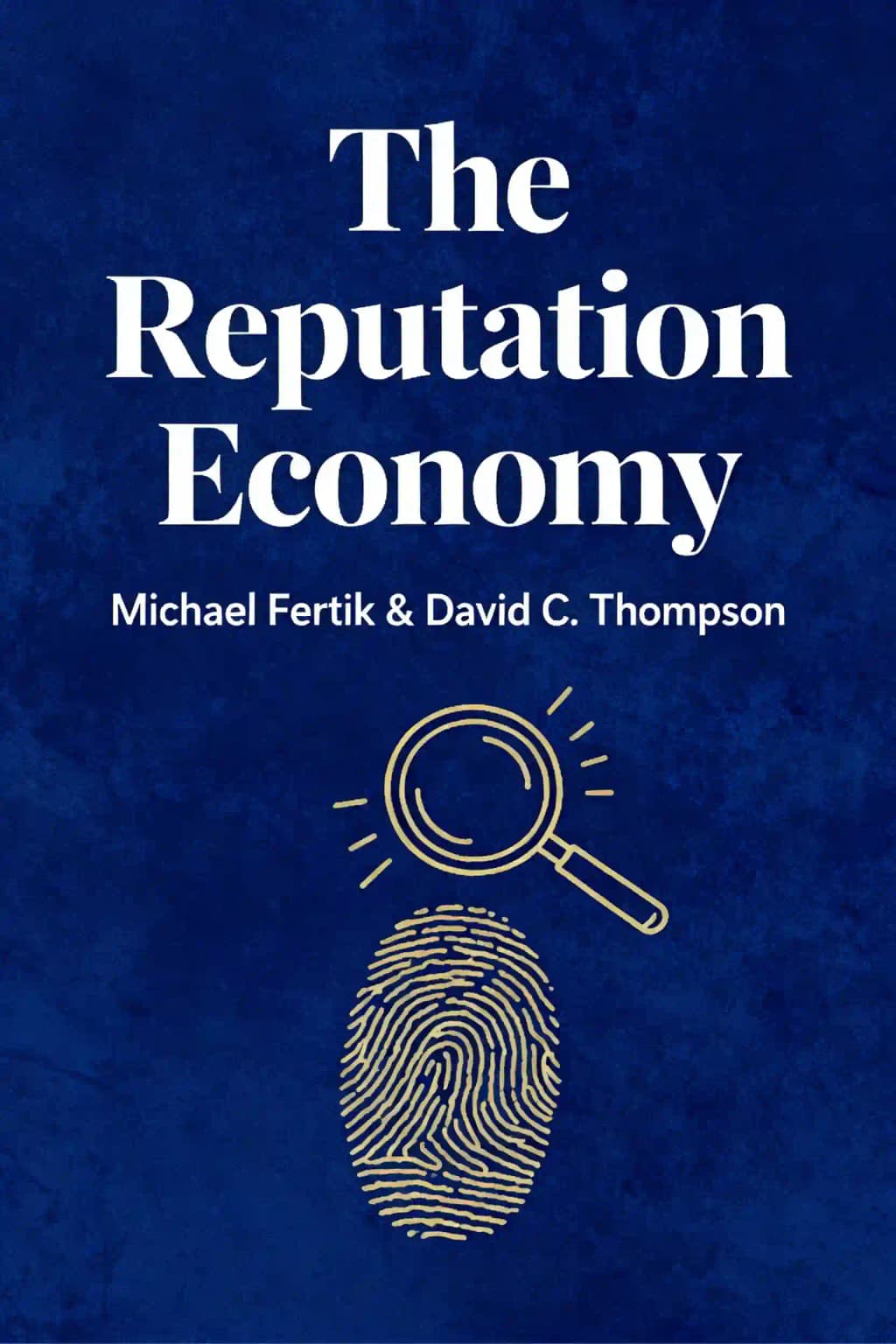
In "The Reputation Economy," Fertik reveals how your digital footprint determines your future opportunities. This 2015 game-changer transformed how Silicon Valley's elite manage their online presence. Did you know your digital reputation now outweighs traditional credentials when doors open - or close?
Michael Fertik is the bestselling co-author of The Reputation Economy: How to Optimize Your Digital Footprint in a World Where Your Reputation Is Your Most Valuable Asset and a serial entrepreneur specializing in digital privacy and online identity management. As the founder of Reputation.com, Fertik has advised Fortune 500 companies and governments on data ethics, cementing his authority in the intersection of technology and personal branding.
David C. Thompson, his collaborator, brings decades of expertise in business strategy and risk management, with a focus on how digital footprints impact professional success. Together, they blend insights from Silicon Valley innovation and corporate governance to address modern reputation challenges.
Their work has been cited in major publications like The New York Times and Forbes, reflecting its relevance in today’s data-driven economy. Fertik’s thought leadership extends to keynote speeches at tech summits, while Thompson’s background in risk assessment adds rigor to their actionable frameworks. The Reputation Economy remains a foundational guide for professionals navigating privacy, AI, and personal branding, praised for its prescient analysis of how algorithms shape careers and consumer trust.
The Reputation Economy explores how digital footprints now determine personal and professional success, arguing that algorithms analyze online behavior to create "reputation scores." Michael Fertik, a pioneer in online reputation management, provides strategies to curate digital identities, address misinformation, and leverage reputation for career growth. The book blends case studies with actionable advice on navigating a world where data-driven judgments shape opportunities.
Michael Fertik is a Harvard-educated entrepreneur who founded Reputation.com, a trailblazer in online reputation management. Recognized as inventing the industry, he advises the World Economic Forum on internet security and has authored multiple books addressing digital privacy. His work combines legal expertise with tech innovation, focusing on how data impacts modern credibility.
Professionals, job seekers, and business leaders seeking to safeguard or enhance their digital presence will benefit most. The book offers value to marketers managing brand reputations, HR teams using AI hiring tools, and individuals navigating social media’s career implications. Fertik’s insights are particularly relevant for those in tech-driven industries or facing online misinformation challenges.
Yes—it’s a critical guide for understanding how algorithms judge personal and professional worth. While some criticize its employer-centric angle, the book provides actionable steps to audit digital footprints, respond to false claims, and build "reputation capital." Its focus on AI-driven hiring and financial scoring makes it timely for 2025’s data-centric landscape.
Fertik advises regularly auditing search results, using tools to suppress negative content, and proactively sharing professional achievements. He emphasizes responding calmly to false claims and building "reputation buffers" through niche expertise. The book also recommends adjusting privacy settings and curating social media to align with career goals.
Critics argue the book overemphasizes catering to employers’ needs rather than worker empowerment. Some question its optimism about algorithmic fairness, noting biases in data collection. Others highlight gaps in addressing systemic inequities perpetuated by reputation systems, such as outdated information affecting marginalized groups.
Fertik explains how employers use AI to analyze social media, purchase histories, and even gaming behavior to predict job performance. He warns that inconsistent online activity (e.g., conflicting LinkedIn and Instagram profiles) lowers algorithmic trust scores, potentially disqualifying candidates. The book advises streamlining digital footprints to match career aspirations.
A reputation score is a data-driven assessment of trustworthiness, often combining social media activity, financial history, and online reviews. Fertik compares it to a credit score but broader—impacting job offers, loan approvals, and social opportunities. Scores are generated by opaque algorithms, making proactive reputation management essential.
Fertik recommends addressing factual inaccuracies directly through platform disputes or legal channels if necessary. For subjective criticisms, he advises publishing counter-narratives via blogs or professional networks to "dilute" negative content. The book also highlights reputation management services that prioritize positive search results.
The book links reputation scores to loan eligibility, insurance rates, and even dating app matches. Fertik cites examples where erratic social media behavior lowered creditworthiness assessments. He advises maintaining consistent, professional online activity to avoid algorithmic red flags in financial systems.
With AI now dominating hiring and finance, Fertik’s strategies for algorithmic transparency remain critical. The book anticipates trends like employer-mandated social media audits and AI-driven "reputation inflation" where curated personas distort reality. Its warnings about permanent digital footprints align with 2025’s debates over data privacy laws.
While Atomic Habits focuses on personal behavior change, Fertik’s work examines external perceptions shaped by digital traces. Both emphasize incremental improvements, but The Reputation Economy prioritizes managing how others—especially algorithms—interpret those habits. It’s a complementary read for professionals balancing self-improvement with online image curation.
Siente el libro a través de la voz del autor
Convierte el conocimiento en ideas atractivas y llenas de ejemplos
Captura ideas clave en un instante para un aprendizaje rápido
Disfruta el libro de una manera divertida y atractiva
Your reputation isn't just about what people think of you anymore; it's about what machines calculate about you.
Information wants to be free.
Programming time to delete data costs far more than simply keeping it.
These systems reduce our complex human traits to simple numerical values.
Desglosa las ideas clave de The reputation economy en puntos fáciles de entender para comprender cómo los equipos innovadores crean, colaboran y crecen.
Destila The reputation economy en pistas de memoria rápidas que resaltan los principios clave de franqueza, trabajo en equipo y resiliencia creativa.

Experimenta The reputation economy a través de narraciones vívidas que convierten las lecciones de innovación en momentos que recordarás y aplicarás.
Pregunta lo que quieras, elige la voz y co-crea ideas que realmente resuenen contigo.

Creado por exalumnos de la Universidad de Columbia en San Francisco
"Instead of endless scrolling, I just hit play on BeFreed. It saves me so much time."
"I never knew where to start with nonfiction—BeFreed’s book lists turned into podcasts gave me a clear path."
"Perfect balance between learning and entertainment. Finished ‘Thinking, Fast and Slow’ on my commute this week."
"Crazy how much I learned while walking the dog. BeFreed = small habits → big gains."
"Reading used to feel like a chore. Now it’s just part of my lifestyle."
"Feels effortless compared to reading. I’ve finished 6 books this month already."
"BeFreed turned my guilty doomscrolling into something that feels productive and inspiring."
"BeFreed turned my commute into learning time. 20-min podcasts are perfect for finishing books I never had time for."
"BeFreed replaced my podcast queue. Imagine Spotify for books — that’s it. 🙌"
"It is great for me to learn something from the book without reading it."
"The themed book list podcasts help me connect ideas across authors—like a guided audio journey."
"Makes me feel smarter every time before going to work"
Creado por exalumnos de la Universidad de Columbia en San Francisco

Obtén el resumen de The reputation economy como PDF o EPUB gratis. Imprímelo o léelo sin conexión en cualquier momento.
Every time you post on social media, make an online purchase, or even browse a website, you're leaving behind digital breadcrumbs that form your online reputation. This isn't just about what friends or colleagues think of you anymore-it's about how algorithms and machines evaluate your worth. In "The Reputation Economy," Michael Fertik reveals a profound shift: your digital reputation has become your most valuable asset in today's interconnected world. While most people remain blissfully unaware, sophisticated algorithms are already analyzing your online behavior to determine everything from your creditworthiness to your employability. The most unsettling part? This isn't some distant future scenario-it's happening right now, silently shaping opportunities that either come your way or pass you by. Imagine applying for your dream job, only to be rejected because an algorithm flagged something in your digital history that you didn't even know existed. Or picture being charged higher insurance premiums because your online shopping patterns suggest you're a higher risk. This is the new reality we're living in.