Capítulo 1
The Power of Coaching: Transforming Lives and Creating Prosperity
When Steve Jobs was asked who had the biggest influence on his life, he didn't name a tech guru or business titan. He named his coach, Bill Campbell. "He's had the greatest impact on me," Jobs admitted. The same coach who guided Jobs also mentored Google's founders, Twitter's CEO, and countless Silicon Valley legends. What made Campbell so valuable? He didn't just offer advice-he transformed how these visionaries saw themselves and their potential.
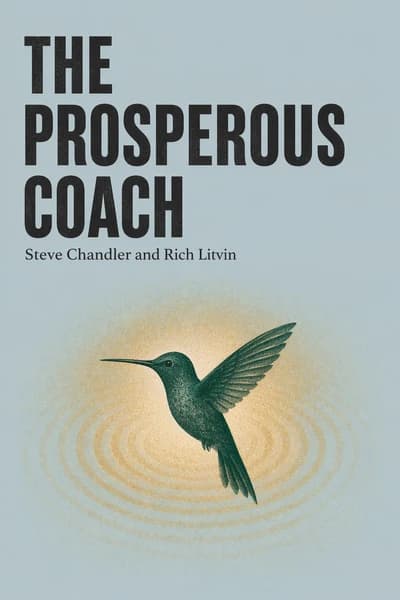
"The Prosperous Coach" by Steve Chandler and Rich Litvin has become the underground bible for coaches worldwide, selling over 100,000 copies primarily through word-of-mouth. Unlike typical business books that promise quick fixes, this book has gained cult status among serious professionals who recognize its revolutionary approach to creating a thriving practice through deep service rather than marketing gimmicks. Endorsed by coaching legends like Michael Neill and used as required reading in elite coaching programs, it challenges conventional wisdom about how to build a successful coaching business.
Capítulo 2
The Transformation from Struggling to Prosperous
Rich Litvin sat hunched over his computer at 7 AM, staring at his nearly empty bank account. Despite a year of intensive coach training and knowing his coaching was powerful, he was broke and desperate. Like many coaches, he had invested thousands in certification programs, attended workshops, and refined his skills, yet struggled to translate his expertise into a sustainable income. His client roster was sporadic, and his pricing strategy consisted mainly of hoping clients wouldn't balk at his rates.
When he reached out to Steve Chandler, a renowned coach known for helping coaches become prosperous, Rich made an extraordinary offer: "Let me attend your Coaching Prosperity School for free, and I'll pay you double by the end." This desperate plea revealed the common mindset trap many coaches fall into - trying to negotiate their way out of investing in themselves while expecting clients to invest in them.
Steve's response crushed him: "Rich, I want you to be the coach who can create the money first." This seemingly harsh reply carried a profound lesson about the importance of stepping into abundance rather than operating from scarcity. It challenged Rich to confront his relationship with money and value.
This moment of truth forced Rich to make a pivotal decision. Despite his fear, he wrote a check that drained his last savings - a move that terrified him but demonstrated his commitment to transformation. Two months later, he'd made ten times his investment. For the first time, potential clients were asking, "How do I pay you?" rather than "How much do you charge?" - a subtle but crucial shift that indicated they were sold on his value before discussing price.
This transformation illustrates the book's central premise: coaching success isn't about marketing tactics or social media presence-it's about mastering the client-acquisition process through powerful service. While coaching associations reported the average coach making less than minimum wage, coaches in Steve's school were billing $3,000, $5,000, and often more than $10,000 weekly. These successful coaches weren't necessarily better at coaching - they had simply mastered the art of creating value and communicating it effectively.
The missing piece in the coaching profession wasn't coaching skills but the ability to build a client list without succumbing to common psychological barriers: sales fear, call reluctance, money fear, and confusion of service with personal worthiness-diseases that often fatally plague coaching practices. Many coaches excel at helping others overcome limiting beliefs while harboring their own around money and worth. Rich's story demonstrates that addressing these internal blocks is often more crucial than acquiring more certifications or marketing techniques.
The transformation from struggling to prosperous coach requires a fundamental shift in mindset - from seeing oneself as a service provider seeking clients to becoming a confident professional who creates deep value and attracts ideal clients naturally. This shift often begins, paradoxically, with being willing to invest in oneself at the level one expects clients to invest.
Capítulo 3
The Miracle Business: Creating Extraordinary Results
At its core, coaching is about creating miracles. Not supernatural events, but transformations so profound they seem impossible until they happen. These breakthroughs occur when clients transcend their self-imposed limitations and tap into their innate potential. The process involves helping people see beyond their current circumstances to envision and achieve what they previously thought unattainable.
Consider these transformative examples from Rich's practice:
A mother of three dreamed of having a famous billionaire write the foreword to her book and become president of her charitable organization. Initially, she faced repeated rejections and moments of deep doubt. Through weekly coaching sessions, she learned to reframe setbacks as stepping stones and developed a compelling outreach strategy. She persisted through disappointment and took increasingly bold actions, including crafting personalized video presentations and leveraging her network in unexpected ways. Within months, she not only secured the billionaire's agreement to both requests but was flown to California to meet Oprah, opening doors to additional high-profile partnerships.
An Olympic athlete struggled with fundraising, selling $17 calendars to fund her Olympic bid while berating herself as a "loser." Her negative self-talk had created a cycle of diminishing results and growing frustration. When Rich helped her connect with her deeper purpose-creating a foundation teaching children that everyone was capable of Olympic-sized feats-everything shifted. She developed a compelling narrative that resonated with corporate sponsors, crafted a professional presentation, and learned to communicate her vision with confidence. The result: she raised $40,000 in corporate sponsorship within 24 hours, and went on to create a successful youth mentoring program.
A new coach who'd made just $15,000 his first year felt stuck in a cycle of undercharging and overdelivering. Working closely with Rich for a full year, he applied the principles in this book: developing a clear niche, creating powerful enrollment conversations, and building genuine confidence in his value. Despite facing initial resistance and several setbacks, he stayed committed to his vision and began enrolling high-performing clients who recognized his unique expertise. By word of mouth alone, he filled his practice and billed $400,000 in his second year, while maintaining work-life balance and serving clients he truly loved working with.
These results aren't magic tricks-they come from helping clients fundamentally shift how they see themselves and their world. When perception shifts, new possibilities emerge, behavior changes, and previously impossible results become attainable. The transformation often begins with small shifts in thinking that cascade into major breakthroughs. That's the miracle of coaching: helping people bridge the gap between where they are and where they want to be, often in ways they never imagined possible.
Capítulo 4
Authentic Connection: The Foundation of Client Creation
Most coaches waste valuable time and energy communicating without making meaningful connections. They rely on shallow interactions-lunch meetings, coffee dates, networking events, and social mixers-that ultimately diminish their chances of landing serious clients. These casual settings often lead to unfocused conversations that fail to demonstrate the power of coaching. One coach in Steve's school made a dramatic transformation, increasing her monthly billings from $3,000 to $18,000 simply by ruling out lunch, dinner, and "coffee" as options for first meetings with prospects. She instead opted for focused, purposeful coaching conversations in dedicated spaces.
Instead of social settings, successful coaches deliberately create a clearing where real transformation can happen. This means establishing a professional environment-whether virtual or physical-where deep conversations can flourish without distractions. If you just "have lunch," prospects will never feel the true value of coaching-they'll just think you're fun to chat with or, worse, see you as someone seeking friendship rather than a professional relationship. Traditional marketing approaches, endless social media posting, elaborate personal branding exercises, and people-pleasing sales tactics don't work effectively in coaching. This profession demands authenticity and is fundamentally for those genuinely devoted to making a profound difference in others' lives.
The coaching profession currently faces a significant two-fold problem: an extremely low bar for entry and an incredibly high bar for success. Anyone can call themselves a coach now-some companies even offer certification for free, making unrealistic promises of immediate wealth and success. This flood of undertrained coaches means many people experience coaching at the lowest end of the skill spectrum, often from practitioners with minimal training or real-world experience. Despite the remarkable, life-changing results that professional coaching can generate, many potential clients have had poor experiences that color their perception of the entire industry.
But you don't have to be one of those coaches operating at the minimum level. You can become extraordinary if you're willing to invest the necessary time, continuously educate yourself, and approach coaching as a serious profession rather than a side hobby. The high bar for success can actually work to your advantage-while others quit when faced with challenges, committed coaches who persist in developing their skills and maintaining high standards find themselves in an elite category with less competition and higher-quality clients. Success comes from viewing coaching as a craft to be mastered rather than a quick path to easy income.
The key lies in creating genuine connections through focused, professional interactions that demonstrate your expertise and commitment to transformational change. This means having real coaching conversations from the first meeting, setting clear expectations, and maintaining professional boundaries that separate you from the masses of casual coaches flooding the market.
Capítulo 5
Designing Your Coaching Practice and Lifestyle
Coaches ultimately fall into one of three categories: Pro coaches who make their primary living through coaching with income comparable to other professionals; Part-time coaches who charge good fees but have another primary income source; and Personal Growth Coaches who have training but don't coach professionally, using their skills in other roles.
None of these levels is better than another. The authors have trained coaches who now make six- and seven-figure incomes, others who enjoy coaching part-time while maintaining careers they love, and some who use coaching skills to advance in their existing companies.
Not understanding these three levels of engagement will result in one thing only: a Struggling coach-someone who says they want clients but have few or none, who wants a six-figure income but fears charging for coaching, who hasn't invested in their own coaching.
The Struggling coach wants to coach everyone, fears asking for money, waits for perfection, and obsesses over marketing. In contrast, Pro coaches love selling coaching and understand that fees are just filters for clients they'd love to coach. Pro coaches know confidence comes from taking action, not before it. They sell by giving people a powerful experience of coaching rather than selling the concept.
Most coaches never consider their ideal lifestyle until they're years into their career, working longer hours than before they became self-employed. Rich shares how he helped a client transitioning to consulting protect her Fridays for her young son by labeling them "Meeting with Executive Board" in her calendar. She turned down a $350,000 consulting offer that required Friday work, only to have the company call back accepting her terms.
Rich designed his own lifestyle around his love for travel, choosing to coach clients by phone and meet in beautiful locations. The book encourages coaches to outline their dream lifestyle now, even if it seems out of reach, by imagining life five or ten years ahead with dream clients and preferred locations.
Capítulo 6
The Client Creation Process: A Revolutionary Approach
The book challenges conventional wisdom about how clients are acquired. You don't get, acquire, or attract clients-clients are created. "Getting" clients puts success in others' hands and creates an aggressive mindset that puts clients on edge. "Attracting" clients is trendy but passive, like making a vision board and waiting. The better approach combines imagination with action.
High-performing, high-paying clients are only created through impactful, life-changing coaching conversations. Successful coaches don't need traditional marketing, pipelines, websites, business cards, or networking events. Rich's business grows by invitation and referral only. Despite earning just $4,500 his first year coaching and $22,500 his second (with marketing "experts"), everything changed when he focused on people and relationships instead of money and "attracting" clients.
The powerful process is simple: Connect + Invite + Create + Propose = CLIENTS.
1. Connect: Simply connect with people you'd love to speak with. Call them with genuine curiosity about their life, family, business, projects, and challenges.
2. Invite: Two questions change everything for coaches creating clients: "Would you like some help with that?" and "Who do you know?" If someone says yes to help, don't coach them immediately-be professional and schedule a proper session. Block out two hours and promise a life-changing coaching experience.
3. Create: Most coaches focus on logistics-meeting frequency, free resources, membership sites-but clients don't care about any of that. They only care about one question: can you help me? The real magic is helping clients dive deeper than ever into what they truly want. Show up present, be bold, coach powerfully, be relentless.
4. Propose: A proposal is explicitly stating, "It will cost $X to work with me for Y months" after discovering what would be an inspiring vision for a potential client. It's telling them "It's either a Hell Yeah! for both of us or it's a clear No." Most coaches don't know how to make a proposal and instead dive into logistics, packages and options, or promise to "put something in writing."
When meeting with potential clients, never spend less than two hours in conversation. This principle comes from Dee Hock, CEO of VISA, the first trillion-dollar company, who said, "As a leader, I'll never schedule a meeting for less than two hours. Anything less than that and the issue should be dealt with by someone else."
Capítulo 7
Fearless Coaching: The Art of Transformation
Fearless coaching isn't about magical techniques but creates magical impact through powerful client service. The key is not to wait until someone hires you-use these principles in your very first conversation with potential clients to demonstrate their power immediately.
The magic of fearless coaching isn't in the coach but in the person being coached. It's not about style, system, or technique-it's not magic, but it is magical in its impact. Rich outlines eighteen key components of fearless coaching, including being bold, searching for the client's "Glimpse of Genius," going deeper than anyone has before, embracing silence, and staying attuned to your internal feelings.
One of the primary mistakes coaches make is allowing the end of an intake conversation to focus on fee, price, or affordability. This creates a context of scarcity rather than possibility. Never let anyone hang up or walk out if the last words exchanged were about money. Always bring the conversation back to what your prospect wants and their opportunities.
About eighty percent of coaches end every call on the subject of money-a total buzz-kill. When you practice the discipline of ending conversations on the highest possibility for the client, with them describing that possibility, you become prosperous.
New coaches often face a boom-bust cycle: they enroll clients, enjoy coaching them, then suddenly find themselves with no clients when agreements end. This cycle is tiring and dispiriting. The solution is to always be creating clients. Potential clients are everywhere-on planes, in supermarket lines, at beaches-they just need an experience of you and an invitation.
Capítulo 8
The Inner Work: Developing Yourself as a Coach
Coaching has evolved from being seen as a luxury to an essential part of professional development. With endorsements from Google's CEO Eric Schmidt and studies showing ROI of six times the program cost, coaching has become a billion-dollar industry embraced by 25-40% of Fortune 500 companies.
The real challenge for coaches isn't market saturation but rather not knowing how to create high-paying, high-performing, committed clients. Success comes from dropping pessimism about competition and embracing the real opportunity.
There is no single secret to coaching success-each coach must find their own authentic path. Some write newsletters, others use internet marketing, some coach in person, others by phone. Rich coaches for thirteen months minimum to witness transformation, while his friend only commits to three-month engagements. The beauty of coaching is that you get to create your own approach-being creative, authentic, and truly yourself.
Success comes through consistent practice of the coaching elements shared in the book. The eighteen magical components of fearless coaching and eighteen fearless disciplines for client acquisition only work if you practice them regularly.
When clients pay for coaching, they're not just paying for the hour-they're paying for your entire life experience. Like Picasso charging $20,000 for a napkin sketch that "only took five minutes," you bring everything you've ever done to each coaching session: your reading, seminars, personal coaching, and accumulated wisdom. Your clients pay for this whole package, not just your time.
Most coaches play an incremental game-raising prices slightly, obsessing over business cards, or making small improvements. But exponential growth comes from radical approaches. When Rich offered 1,000 free coaching sessions, he built his skills dramatically by coaching 400 people in just 90 days. Another coach applied their principles and signed a $50,000 client within a week.
Capítulo 9
Transforming Your Practice Through Discipline and Authenticity
Treating coaching like a blue collar job means creating a schedule and following it regardless of mood or energy levels. Just as truck drivers don't experience "trucker's block," coaches should establish measurable activities and consistent routines that don't depend on fluctuating emotions.
The key is measuring activities (conversations, invitations, proposals) rather than results, and committing to them daily. Many coaches fail because they approach their work based on feelings rather than discipline. True success comes from putting in the hours consistently-just like any other profession-and engaging in genuine service that naturally lifts your mood.
Clients aren't really paying for coaching-they're paying for their dreams. When you help someone connect with their deepest aspirations and show them how you can help make those dreams reality, the money becomes secondary. Their dreams are priceless. Money is simply a reflection of your impact, service, and creativity in the world.
Success comes from staying in the game when others quit. Like Rich's friend Chrys who continued martial arts training for twenty years while others plateaued and gave up, prosperous coaches persist through rejection and mistakes. Samuel Beckett had it right: "Ever tried. Ever failed. No matter. Try again. Fail again. Fail better."
When coaches complain about "bad weeks" or feeling burned out, what's missing isn't attitude-it's routine. The beauty of a routine is that it doesn't depend on enthusiasm or "feeling like" doing something. It's a committed practice you follow regardless of mood.
No sale ever takes place outside of a conversation. Rich once kept a captain's journal, logging in when he spoke to someone and logging out when finished. He knew that every moment spent outside of conversation was wasting precious time and hurting his business. As he increased those minutes of conversation, his business took off. These minutes were the final cause of his success-not some magic marketing bullet.
Capítulo 10
The Journey to Coaching Mastery
Building a coaching practice progresses through distinct levels like martial arts belts: STUDENT (training to be a coach), BEGINNER (coached at least fifty clients), NOVICE (had at least ten paid individual clients), COMPETENT (covering monthly expenses with coaching income), PROFICIENT (creating clients by invitation or referral only), VIRTUOSO (creating clients whenever you choose), and MASTERY (taking extended vacations and/or creating income while you sleep).
This progression isn't about restricting success but informing it-you must master skills at each level before advancing. Knowing these levels gives you permission to slow down and master where you are while playing full out at your current level.
Rich spent years searching for a secret principle or special teacher to show him the way to success. He met many successful coaches and tried to be like them, but it never worked. The more he tried to be like others, the less authentic he became-and it's hard to do what you love when feeling inauthentic.
Gradually, he realized that world-class coaches weren't trying to be anyone else. The more he risked being himself, the more wonderful his life became. Be YOU-among billions of people, you're a scarce commodity. The more authentic you become, the more you'll attract the right people, have fun, and command higher fees. As Dolly Parton said: "Figure out who you are and then do it on purpose."
There's an old riddle: five frogs are sitting on a log. Four decide to jump off. How many are left? The answer is five-because deciding isn't the same as doing. There's a big difference between deciding and taking action. Take tiny actions today to create your next client, and then actually do them. Don't wait for complete readiness-when you're 80% ready, go for it. Risk messing up. Failing isn't a problem; it's how you get there.
Like Hollywood romances that end when the couple gets together (which is really just the beginning), the end of this book marks the beginning of your coaching practice's next stage. Let go of seeking a "magic" system for creating clients and instead focus entirely on serving the person in front of you right now. Ask yourself how you can serve them so powerfully they'll never forget the experience. When you do this, miracles can occur.




![How to Become a Transformation Coach [2026 Edition]](/_next/image?url=https%3A%2F%2Fd1y2du6z1jfm9e.cloudfront.net%2Fassets%2Fpodcast%2Fyellow.png&w=1024&q=50)