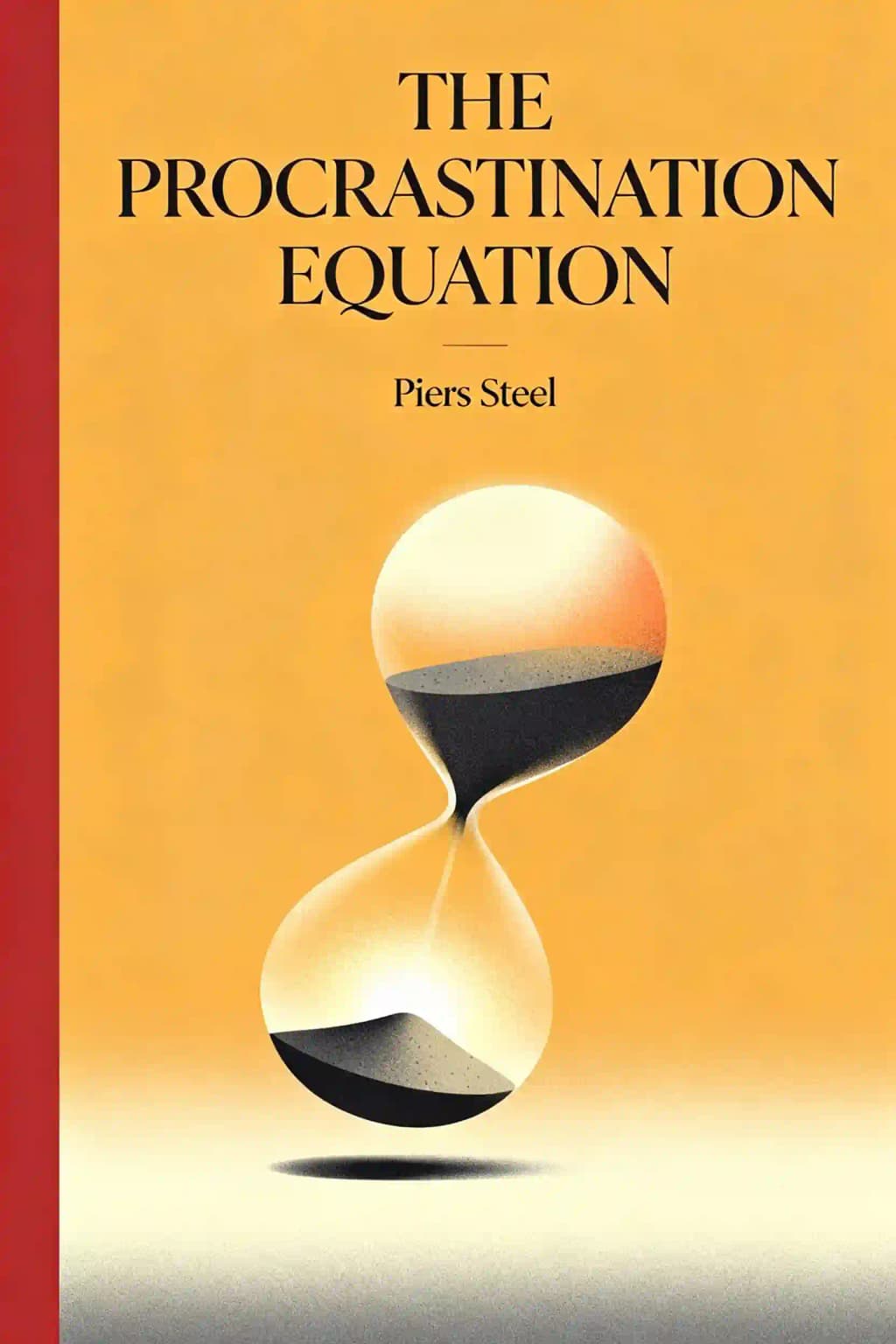
The Procrastination Equation
How to Stop Putting Things Off and Start Getting Stuff Done
Resumen de The Procrastination Equation
Discover the science behind why we delay and how to finally conquer it. Piers Steel's evidence-based formula (Motivation = Expectancy x Value / Delay x Impulsiveness) has transformed productivity for thousands. Brian Johnson calls it "heroic" - what could you accomplish without procrastination holding you back?
Temas clave en The Procrastination Equation
- motivation equation
- impulse control
- temporal discounting
- expectancy theory
- task valuation
Citas de The Procrastination Equation
Procrastination is not an immutable character flaw.
Self-doubt is often just procrastination in disguise.
Fatigue increases impulsiveness.
The time to act is now.
Your future self will thank you for it.
Personajes en The Procrastination Equation
- Piers SteelAuthor and researcher of motivation science
Descargar resumen de The Procrastination Equation
Obtén el resumen de The Procrastination Equation como PDF o EPUB gratis. Imprímelo o léelo sin conexión en cualquier momento.
Preguntas Frecuentes Sobre Este Libro
The Procrastination Equation explains procrastination through a scientific formula: Motivation = (Expectancy × Value) / (Impulsiveness × Delay). Dr. Piers Steel combines psychology, neuroscience, and behavioral economics to reveal why we delay tasks and how to boost motivation using evidence-based strategies.
This book suits chronic procrastinators, productivity enthusiasts, and professionals seeking to overcome deadline stress. It’s particularly valuable for those interested in data-driven self-improvement, with actionable frameworks for students, entrepreneurs, and corporate teams.
Yes—readers praise its research-backed approach to tackling拖延症, though some criticize repetitive examples. It’s ideal for analytical thinkers who want a systemic understanding of motivation, outperforming generic productivity guides with its Nobel Prize-influenced formula.
The core framework identifies four procrastination drivers:
- Expectancy (confidence in success)
- Value (task reward magnitude)
- Impulsiveness (distraction susceptibility)
- Delay (time until reward realization)
Mastering these variables helps increase motivation and reduce delay.
While both address behavior change, Steel’s work focuses specifically on quantifying procrastination’s root causes mathematically. Unlike James Clear’s habit-forming strategies, it provides diagnostic tools to calculate and fix motivation deficits for individual tasks.
Key evidence-based tactics include:
- Breaking tasks into high-success-probability steps (boost expectancy)
- Attaching immediate rewards to progress (increase value)
- Using focus apps to limit distractions (reduce impulsiveness)
- Creating artificial deadlines with penalties (shorten delay)
Some readers find the scientific explanations overly technical for casual audiences. Critics note that while the formula is robust, applying it requires substantial self-analysis—a challenge for highly impulsive procrastinators.
Steel traces拖延症to primal instincts: Our brains evolved to prioritize immediate rewards (e.g., eating) over long-term gains (e.g., crop cultivation). This survival bias makes modern abstract goals (career growth, health) neurologically harder to pursue.
Practical uses include:
- Career: Negotiating milestone-based bonuses to shorten reward delays
- Fitness: Pairing workouts with enjoyable podcasts to increase task value
- Education: Using pre-commitment contracts to reduce impulsiveness
Notable lines include:
- “Procrastination is wanting your life’s consequences without your life’s choices.”
- “Motivation is the battle between limbic cravings and cortical calculations.”
These emphasize the internal conflict between short-term desires and long-term goals.
With remote work increasing distractions and AI automating deadlines, Steel’s formula helps navigate digital-age productivity challenges. Its focus on managing impulsiveness aligns with modern struggles like social media addiction and constant notifications.
The concept of “irrational delay”—postponing tasks despite knowing the consequences—distinguishes procrastination from strategic deferral. This key definition helps readers identify真正的拖延症versus deliberate prioritization.