Capítulo 1
The Deadly Price of Illusion: A Tale of Obsession, Rivalry, and Sacrifice
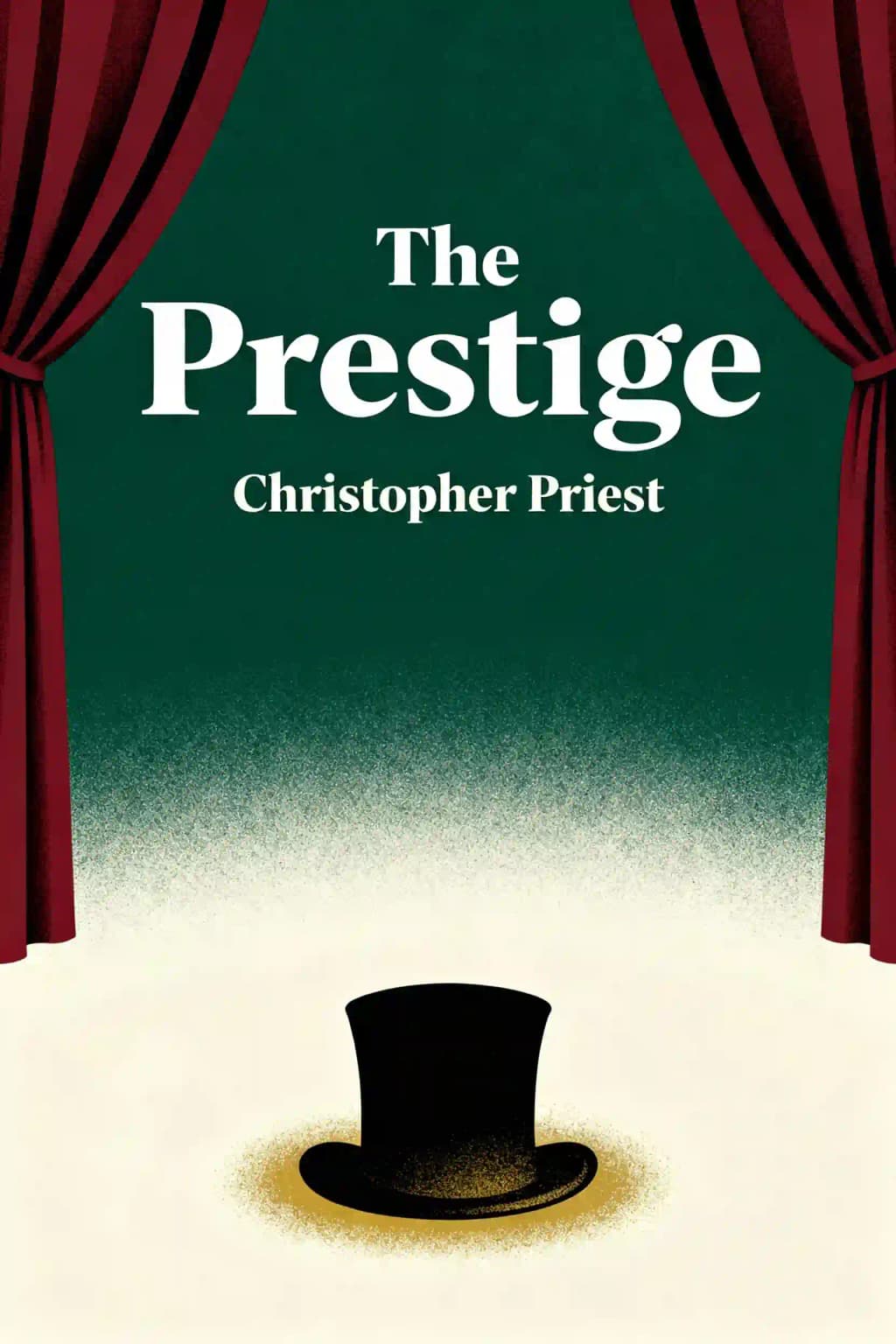
The Prestige isn't just another historical fiction novel-it's a masterclass in narrative deception that has captivated readers since its 1995 publication and gained even wider recognition through Christopher Nolan's acclaimed 2006 film adaptation. This Victorian-era tale of rival magicians has become a cultural touchstone for exploring the dangerous lengths to which people will go for their art. Stephen King praised it as "a dizzying magic show of a novel," while Neil Gaiman called it "one of the most dazzling novels of its generation." The book won the prestigious World Fantasy Award and continues to appear on lists of the most ingenious plot twists in literature. Beyond entertainment, it raises profound questions about identity, obsession, and the moral compromises we make in pursuit of our passions-themes that resonate across artistic disciplines and have made it required reading in some film studies programs exploring narrative structure and unreliable narrators.
Capítulo 2
Dueling Diaries and Unreliable Narrators
The Prestige unfolds through multiple first-person narratives spanning more than a century, beginning with Andrew Westley, a journalist in contemporary England who feels an inexplicable connection to a phantom twin. This sensation - a persistent feeling of incompleteness - haunts him throughout his adult life. When Kate Angier invites him to her ancestral home, she reveals her belief that their families share a dark history involving rival Victorian magicians - Andrew's ancestor Alfred Borden and her great-grandfather Rupert Angier. The story then plunges into their intertwined past through a series of discovered diaries and letters.
What makes these narratives so compelling is their inherent unreliability. Borden's diary explicitly warns readers: "The lie is contained in these words, even in the very first of them." This admission sets the tone for a narrative where truth and deception become inseparable, much like the art of magic itself. He illustrates the deceptive nature of magic by describing the Chinese illusionist Ching Ling Foo, who maintained his famous goldfish bowl illusion by permanently altering his gait - shuffling awkwardly his entire life to preserve the illusion that he couldn't possibly conceal such a heavy object beneath his robes. This dedication exemplifies "the extent of the prestidigitator's wish to deceive, the way in which the apparent defiance of normal laws becomes an obsession which governs every moment of his life."
The dueling diaries reveal how each magician perceives the other as the villain in their shared story, creating a complex web of accusations and counter-accusations. Borden portrays Angier as an exploitative fraud preying on grieving families through fake spiritualism, describing in detail how Angier manipulates bereaved individuals with carefully researched personal information and theatrical seances. Meanwhile, Angier's account paints Borden as a malicious saboteur whose actions lead to increasingly dangerous confrontations, culminating in Angier's bizarre half-death - a state between existence and non-existence that defies scientific explanation.
The unreliability extends beyond their mutual antagonism into the very structure of their lives. Both men maintain elaborate deceptions that blur the line between their public personas and private selves. Their diaries serve not just as records but as instruments of misdirection, each carefully crafted to preserve their secrets while revealing just enough to maintain credibility. The truth, as in any great magic trick, lies somewhere in the carefully constructed misdirection - a reminder that in both magic and storytelling, what we choose to believe is often more important than what actually occurred.
The contemporary frame story adds another layer of uncertainty, as Andrew and Kate attempt to piece together these historical accounts while grappling with their own mysterious connection to the past. Their investigation raises questions about heredity, identity, and the way family secrets echo through generations - suggesting that some illusions never truly end.
Capítulo 3
The Anatomy of Illusion: Setup, Performance, Prestige
"Every great magic trick consists of three parts," Borden explains. First comes the setup, where the magician shows something ordinary. Next is the performance, where that ordinary object does something extraordinary. But the third part-the prestige-is what transforms a mere trick into true magic. This is when the vanished object returns, the torn card is restored whole, or the assistant reappears unharmed.
Borden categorizes all magic into six fundamental types: Production (making something appear), Disappearance (making something vanish), Transformation (changing one thing into another), Transposition (moving something from one place to another), Defiance of Natural Laws (levitation, etc.), and Secret Motive Power (making inanimate objects move). His signature illusion, "The New Transported Man," incorporates at least four of these categories in a single performance.
The novel delves into the meticulous preparation behind seemingly effortless magic. Borden describes his performance as beginning with the Chinese Linking Rings-a mesmerizing routine where gleaming metal rings mysteriously link and unlink. He follows with the Modern Cabinet illusion, rotating an empty cabinet before the audience, passing through it himself, then slamming it shut only to reveal a beautiful woman inside when reopened. After some intimate card tricks performed at the footlights, he produces a colorful explosion of flags, streamers, and silks from seemingly nowhere.
These preliminary illusions build to his masterpiece: The New Transported Man. With dramatic flair, Borden explains that this miracle harnesses dangerous electrical forces. The apparatus gleams with polished metal, golden coils, and crackling electrical discharges. After demonstrating its power with blinding flashes, he dons protective gauntlets and lies on the platform amid humming electrical tension. A brilliant flash-he vanishes!-and instantly appears in a cabinet across the stage, having seemingly transmitted his body through empty space in an instant.
Capítulo 4
The Faustian Bargain: Tesla's Intervention
The rivalry between Borden and Angier reaches a pivotal turning point with the introduction of Nikola Tesla, whose presence transforms their competition from mere theatrical antagonism into a moral nightmare. Angier, consumed by his obsession to surpass Borden's seemingly impossible transportation trick "The Transported Man," tracks down the reclusive inventor at his laboratory in Colorado Springs. Tesla - brilliant, enigmatic, and operating on the fringes of accepted science - initially dismisses Angier's request as mere entertainment, but eventually agrees to help, perhaps recognizing in Angier's desperation a reflection of his own obsessive pursuit of breakthrough technology.
The machine Tesla creates defies the fundamental laws of nature. Unlike traditional stage illusions that rely on misdirection and clever engineering, Tesla's device achieves the impossible: genuine matter duplication. During Angier's first test, he experiences something that shatters his understanding of reality - watching himself appear across the room, not as a reflection or trick of light, but as a complete, conscious duplicate. Both versions share identical memories, personalities, and claims to being the "real" Angier. This multiplication of self presents not just a logistical problem but a profound philosophical crisis.
The new illusion, which Angier names "In a Flash," becomes the most spectacular magic act in London. However, its terrible secret weighs heavily: each performance creates a new Angier while leaving the original intact. This forces him to make an impossible choice - one version must die to maintain the illusion and prevent questions about duplicate Angiers walking the streets of London. The surviving prestiges - those duplicates created during each performance - are secretly transported to the family vault beneath Caldlow House, where they remain as silent testimony to Angier's horrific sacrifice for his art.
This Faustian bargain fundamentally alters the nature of their rivalry. While Borden relies on traditional stagecraft and lifelong dedication to maintain his illusion, Angier embraces a technological solution that requires him to become both murderer and victim. The moral implications are staggering - each night, a version of Angier must decide whether to be the one who dies or the one who lives, knowing that both versions are equally "real" and have equal claim to his identity and life.
The terrible price of this bargain becomes catastrophically apparent when Borden sabotages the machine during a performance. The result is even more horrifying than death - one version of Angier becomes a half-formed spectral entity, neither fully alive nor dead, while the other retains physical form but is cursed with a lingering, painful decline. This tragic outcome serves as the ultimate commentary on the price of obsession and the dangers of pursuing perfection through shortcuts rather than genuine mastery.
Capítulo 5
The Secret Lives of Alfred Borden
Perhaps the most shocking revelation comes from Borden's diary, which initially appears disjointed and contradictory but ultimately unveils an extraordinary truth. His celebrated transportation illusion relies not on innovative technology or clever stagecraft but on an even more profound sacrifice - Borden is actually two people, identical twins sharing a single identity and life. The diary's strange shifts in perspective, contradictory emotional states, and seemingly schizophrenic entries suddenly crystallize when we realize that two different men are writing in it, sometimes addressing each other directly, sometimes maintaining the pretense of a single identity even in private.
"We are one person in all respects but one," Borden confesses in a rare moment of complete honesty. The twins have lived their entire adult lives as a single man, orchestrating an elaborate performance that extends far beyond the stage. While one twin appears in public, the other remains hidden, studying people's reactions, planning their next moves, or maintaining their separate lives. This explains how "Borden" can appear to transport instantly across the stage - one twin enters the cabinet while the other emerges elsewhere. But the cost of this deception is enormous: neither twin can ever live a complete, authentic life. They must share everything - their career, reputation, wife, mistress, children, and even their most private moments. Neither can claim full ownership of any relationship or achievement, forever living as half of a whole.
Borden's narrative reveals the devastating psychological toll of this arrangement. His diary contains increasingly desperate passages where he seems to argue with himself: "I write this as myself, but who is that? We have been one person for so long that sometimes I forget which experiences belong to me and which to him." The twins frequently disagree about their emotional attachments - particularly regarding their wife Sarah and their mistress/assistant Olive. They maintain separate apartments in different parts of London, with one twin living with each woman, periodically switching places to maintain the illusion. Neither woman knows the truth, though both sense something deeply unsettling in their lover's inconsistent behavior, fluctuating emotional availability, and occasional profound distance.
This complex deception explains Borden's obsessive interest in Angier's competing transportation illusion - he needs to know if his rival has discovered the same terrible secret or found another method entirely. When he finally witnesses Angier's performance, he's baffled by how quickly the transportation occurs - even with twins, the time between disappearance and reappearance seems impossibly brief. This observation haunts both brothers, suggesting that Angier may have discovered something even more extraordinary - and potentially more devastating - than their own sacrifice.
The twins' commitment to their shared identity is so complete that even their closest associates never suspect the truth. They've developed intricate systems for sharing information, maintaining consistent behaviors, and seamlessly switching roles. Yet this perfect illusion comes at the cost of their individual identities, creating a psychological prison from which neither can escape without destroying both their professional success and personal relationships.
Capítulo 6
The Ghost in the Machine: Identity and Existence
After Borden's sabotage creates a partial transportation, Angier exists in two forms simultaneously: a wraith-like being with consciousness but limited physical presence, and a dying body with full corporeality but fading life. This division creates profound questions about identity-which is the "real" Angier? The physical body that continues his public life but is dying, or the ghostly consciousness that can move unseen through the world?
The wraith-Angier discovers he can control his visibility, becoming nearly invisible in his stage clothes or somewhat visible when wearing different clothes with greasepaint to give his features solidity. He exists in a half-world, neither fully alive nor dead, his mind liberated and alert while his physical form remains frustratingly insubstantial. Objects slip through his grasp, and people react with terror when they notice his hollow eyes or the gaps between his sleeves and gloves.
This existential horror drives wraith-Angier to attempt murder. He follows Borden to a theater, waits until he's napping between shows, then enters his dressing room with a knife. As he raises the blade, Borden gasps, "What are you?" When Angier demands to know which twin sabotaged him, Borden denies having a brother. Seeing Borden's terror-"mouth agape, saliva running down his jowls, his aging face contorted with fear"-Angier realizes he has become a monster and throws the knife aside. "We should never have started this," he says, "but killing you is not the way to end it."
Eventually, the wraith-Angier returns to Caldlow House where his dying physical self remains. Their reunion is described as extraordinary-"we were perfect complements. Everything I lacked was in him; everything I had, he had lost." They become inseparable, sharing a room, finishing each other's sentences, and revealing the truth to the entire household.
Capítulo 7
The Vault of Prestiges: Horror Beneath Caldlow House
The novel's most disturbing revelation unfolds in its final sections, presenting a nightmarish discovery that crystallizes the true cost of magical obsession. Andrew Westley, drawn by an inexplicable psychic connection to his lost twin, follows a series of cryptic clues through the labyrinthine passages beneath Caldlow House. The connection grows stronger as he descends, pulling him toward what will prove to be the story's darkest secret.
In a vast underground chamber illuminated by flickering fluorescent lights, Andrew discovers row upon row of identical corpses - each one a perfect replica of Rupert Angier in his prime. The bodies lie in pristine condition on metal shelves that stretch into the shadows. Each corpse wears identical evening dress: perfectly tailored tails, crisp white shirts with pearl studs, precisely tied black bow ties, and meticulously polished patent-leather shoes. Their faces are uniformly pale and aristocratic, each bearing the same aquiline nose, thin mustache, and brilliantined hair swept back from high foreheads.
These are the prestiges - the physical evidence of every performance of Angier's transportation illusion. The bodies show no signs of decomposition, appearing suspended in time, "as if frozen in life rather than dead." The preservation is unnaturally perfect, suggesting some unknown effect of Tesla's machine. Each shelf bears a carefully typed white card recording precise details: theater names ranging from London's grand venues to provincial playhouses, performance dates spanning years, exact times, and mysterious numerical codes that hint at some greater system of organization.
Among these identical corpses lies one different body - smaller, younger, but equally well-preserved: Nicholas Julius Borden, the child that Kate witnessed her father sacrifice to Tesla's machine decades earlier. This discovery confirms the horror of that long-ago night and provides the missing piece in Andrew's own fractured identity.
The macabre collection serves as a monument to Angier's ruthless pursuit of theatrical perfection - dozens of identical selves, each created for a brief moment of wonder before an audience, then condemned to this underground mausoleum. When Andrew finally lifts the preserved body of young Nicky, the psychic connection that has haunted him throughout his life suddenly vanishes, confirming that this child's corpse is indeed his missing twin.
The revelation becomes even more chilling when a thin, tired male voice echoes through the chamber: "You're a Borden, aren't you? I thought you'd come for him in the end. He is you, Borden, and these are all me. Are you going to leave with him? Or are you going to stay?" This haunting address reveals that some version of Angier - perhaps the original wraith - has survived through the decades, serving as the eternal curator of this grotesque collection of his own duplicates. His presence suggests that the price of his magical ambition wasn't just the creation of these copies, but his own transformation into something neither fully alive nor truly dead.
Capítulo 8
The Generational Cost of Obsession
The Prestige ultimately reveals how the magicians' obsessions created devastating ripples of destruction that extended far beyond their own lives, haunting subsequent generations in profound and irreparable ways. Kate Angier has lived her entire adult life traumatized by witnessing her father murder what appeared to be a child - a moment that shattered her understanding of reality and morality. This childhood trauma manifests in her inability to form lasting relationships or pursue a meaningful career, leaving her perpetually trapped in the shadow of that horrific memory. Similarly, Andrew Westley's life has been defined by an inexplicable sense of loss - the persistent feeling of a missing twin that official records steadfastly deny. This phantom connection speaks to the way magical deceptions can fracture not just identities but entire family histories.
The final scene crystallizes these themes in a haunting tableau: Andrew carrying Nicky's body through a relentless blizzard while Kate witnesses a spectral figure emerging from the vault - a man with long black hair who moves like a shadow between the trees before vanishing down the hill. This ghostly apparition suggests that even a century later, some version of Angier persists in a twilight state, neither fully alive nor dead, trapped in an endless loop of his own creation. The image serves as a powerful metaphor for how obsession can create eternal prisons, both literal and metaphorical.
What began as professional rivalry between two talented performers evolved into something far more malevolent - a destructive contest where each magician made increasingly terrible sacrifices for their art, destroying not only themselves but everyone around them. Borden's choice to live as two separate individuals sharing one identity meant neither version could ever experience a complete life or genuine relationship. Every connection was fractured, every moment of intimacy tainted by necessary deception. Angier's path proved even more devastating - his use of Tesla's machine created multiple versions of himself, each one real, each one discarded in service of an illusion. The psychological toll of essentially dying every night, while knowing another version would continue, represents an almost unimaginable form of existential horror.
The novel's title reveals layers of meaning that deepen as the story unfolds. "Prestige" refers not only to the final act of a magic trick - the restoration that completes the illusion - but also to the social status both men desperately pursued. Borden sought to transcend his working-class origins through theatrical success, while Angier struggled to reclaim and validate his aristocratic heritage. Most chillingly, the title refers to those identical bodies preserved in Angier's vault, each one a "prestige" materialized by Tesla's machine, each representing a life sacrificed for a moment of theatrical wonder. These preserved corpses serve as a grotesque monument to the ultimate price of obsession - the destruction of not just the self, but of basic human values and connections.
Capítulo 9
The Ultimate Illusion: Truth in Fiction
The Prestige brilliantly employs the very techniques it describes, transforming the novel itself into an intricate magic trick performed on its readers. Just as a magician misdirects audience attention through carefully orchestrated movements and false tells, Priest misdirects readers through unreliable narrators, competing diary accounts, and strategic partial revelations. The novel's structure precisely mirrors the three-part structure of a classic magic trick - the setup (introducing seemingly ordinary Victorian gentlemen), the performance (their increasingly extraordinary and deadly rivalry), and finally the prestige (the shocking revelations that transform our understanding of everything we've read, forcing us to reexamine every previous scene in a new light).
The layered narrative technique proves particularly effective, as each diary entry presents a different version of events, forcing readers to piece together the truth from contradictory accounts. This unreliability extends beyond simple dishonesty - each narrator genuinely believes their version of events, highlighting how personal perspective can warp reality. The story's Victorian setting, with its emphasis on propriety and appearance, provides the perfect backdrop for exploring themes of duality and deception.
The book challenges us to consider what sacrifices we might make for our own obsessions and ambitions. Would we, like Borden, surrender our individual identity, living a fractured life where every moment must be shared and divided? Would we, like Angier, repeatedly create and destroy versions of ourselves, each copy carrying the weight of existence but destined for oblivion? These questions transcend their Victorian setting and speak directly to contemporary anxieties about identity in an age of carefully curated public personas, social media presence, and personal branding.
The novel's exploration of obsession reveals how passion can corrupt when unchecked by moral constraints. Both magicians justify increasingly extreme actions through their professional rivalry - family abandonment, betrayal, murder, and ultimately the destruction of their own authentic selves. Their dedication to their art becomes a form of madness, yet one that feels disturbingly relatable to modern readers who might recognize similar patterns in their own pursuits of excellence or success.
In the end, The Prestige suggests that the most dangerous illusion is the one we perform for ourselves - convincing ourselves that our obsessions justify any cost, that the end always justifies the means. Both magicians believed their rivalry important enough to warrant terrible sacrifices, yet from outside their obsession, we see the pointless destruction they caused to themselves and others. Perhaps this is the novel's most profound insight: that passion unchecked by compassion becomes merely self-destruction disguised as ambition, and the greatest deceptions are often those we practice upon ourselves.