Capítulo 1
Reimagining Work in a Post-Pandemic World
The COVID-19 pandemic forced a grand experiment in remote work that few organizations were prepared for. Suddenly, 62% of American workers found themselves working from home-double the pre-pandemic figure. What started as crisis management revealed something profound: the traditional office wasn't as essential as we thought. Companies discovered million-dollar deals could close via Zoom, medical visits could happen virtually, and productivity didn't collapse when people worked flexible hours. For Laura Vanderkam, who had studied remote work trends for years (noting its 159% increase from 2005-2017), this upheaval presented a once-in-a-generation opportunity to fundamentally rethink our relationship with work.
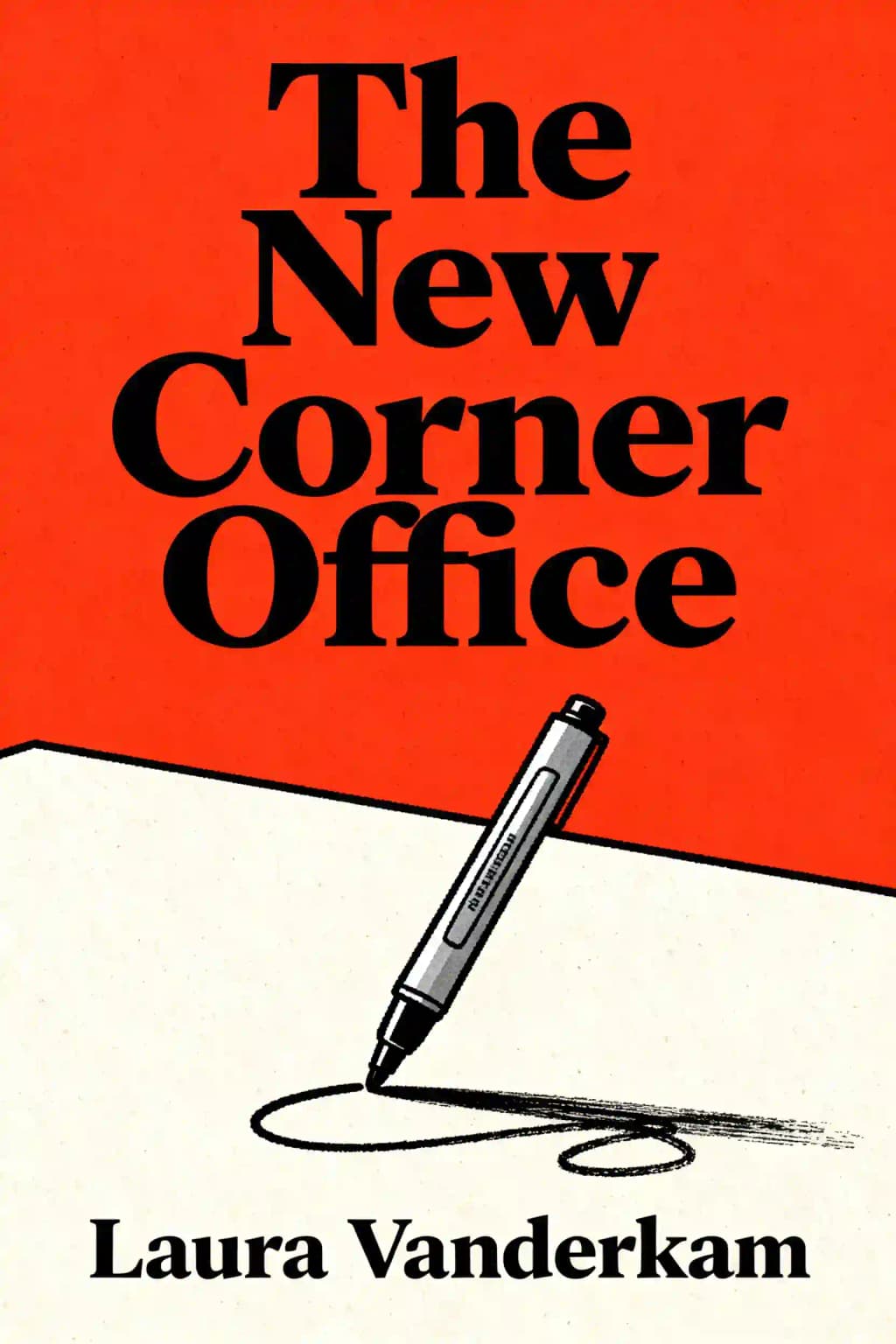
"The New Corner Office" isn't just another pandemic survival guide-it's a blueprint for a more intentional approach to work that prioritizes results over location and schedule. The book has resonated deeply with professionals seeking more autonomy, with celebrities like Arianna Huffington praising its practical wisdom. As remote and hybrid arrangements become permanent fixtures in our professional landscape, Vanderkam's insights offer a competitive advantage for both individuals and organizations ready to embrace this new paradigm where ideas matter more than ever-but shoes are optional.
Capítulo 2
Managing by Task, Not Time: The Freedom of Results-Focused Work
When Meredith Monday Schwartz became CEO of wedding venue company Here Comes the Guide in 2008, she discovered something surprising: she accomplished more working from home than at the office. This realization led her to gradually transition her entire company to remote work by 2016, developing a management philosophy focused squarely on results rather than hours worked. "I manage more to the task than to the time," she explains-an approach that proved especially valuable when COVID-19 devastated the wedding industry.
While time remains an incredibly useful concept-we live our lives in hours, after all-there's profound wisdom in focusing on accomplishment rather than mere presence. Unfortunately, many workplaces still manage primarily by time, both explicitly through billable hours and subtly by rewarding behaviors like instant email responses regardless of their actual value. This approach wastes time, money, and human potential.
Working from home successfully requires being self-directed, whether you're running your own business or employed by someone else. Without visible group norms, you must manage yourself by clearly defining your tasks. The key is establishing a weekly planning ritual-ideally on Friday afternoons. This timing has multiple advantages: it's typically low-opportunity-cost time, occurs during business hours so you can reach people while preserving your weekend, and lets you start Monday prepared rather than overwhelmed.
During your planning session, list your top priorities across career, relationships, and self. Review what's already scheduled, determine when new tasks can happen, and consider what can be canceled, minimized, or delegated. Then revisit your schedule each evening to plan the next day with greater specificity.
Many people create impossibly long daily to-do lists that function more as wish lists than realistic plans. Anne Bogel, founder of the "What Should I Read Next?" podcast, admits her "eyes are bigger than my stomach" when making lists, but has learned a doable list is short-typically three major priorities plus one ongoing project. This approach forces prioritization and creates a contract with yourself. Anything else can be assigned to future dates or placed on a "Someday/Maybe" list.
A well-edited list has another virtue for remote workers: it defines when your workday is done. Without the physical act of leaving the office at 5:00 PM, completion of your daily tasks provides necessary closure. While your list is rarely finished by mid-morning (as new items inevitably arise), estimating task duration helps create realistic expectations. Managing by task rather than time yields more productive work than requiring eight chair-bound hours, especially when combined with thoughtful planning and communication.
Capítulo 3
Rethinking Meetings: Less Time, Better Results
The fundamental concept of meetings is sound-bringing people together at an appointed time to reach decisions. However, meetings often proliferate beyond usefulness because people manage by time rather than task. They occur because "it's Tuesday at 10:00 AM" or last an hour because "that's how long meetings are." This creates secondary costs when packed schedules prevent spontaneous communication, especially in virtual environments without hallway encounters.
Virtual work presents an opportunity to innovate rather than replicate. NASA astrophysicist Dominic Benford found that when his organization went virtual, they initially had "way too many meetings." They began requiring advance agendas and recognized that structures built for in-person collaboration weren't ideal virtually. Ten-hour review panels didn't work across time zones in home offices, so they spread work over more days with shorter sessions.
Amy Laski's PR firm implemented a "just call commitment" allowing unscheduled calls during certain hours, accomplishing in two minutes what might take several emails or a scheduled meeting. This approach acknowledges that while meetings serve important purposes, they shouldn't be the default mode of collaboration.
When managing by task, accountability requires a different mindset than simply logging hours. One approach is creating a daily "to-done" or "ta-da" list of accomplishments, including both planned tasks and unexpected work that arose. This provides satisfaction and reminds you of your productivity during challenging days.
Remote work also requires clarity about what's in scope and what's not. Some employees struggle with independence, waiting for answers rather than trying new approaches. Arran Stewart of Job.com notes that managers must provide "more love in the beginning" with strong directives and routines. This support helps workers transition from an office-presence mindset to true accountability.
In knowledge work, the tyranny of urgency often sacrifices quality for speed. Remote workers, fearing they're "out-of-sight, out-of-mind," may respond instantly to messages, while managers worried about productivity might ping constantly. Yet thoughtful deliberation produces better results than rushed responses. Have honest conversations about appropriate response times and challenge the "everything needs to be done yesterday" mentality by consciously fostering a culture that prioritizes importance over artificial urgency.
Capítulo 4
Finding Your Perfect Rhythm: Designing Workdays That Work
Just as monasteries marked time with rituals like lauds at dawn and vespers at evening, a good workday needs a rhythm with clear openings and endings. The advantage of self-directed work is determining what "liturgy of hours" works best for you personally, whether that's a consistent daily template or alternating schedules for different types of work.
Without a commute to transition from home to work mode, remote workers need alternative rituals. Tim Peters, a lawyer working remotely from Michigan, walks his children to school each morning, giving him fresh air and a mental shift. Matt Altmix, who runs a photography business from home, bikes his children to school, then spends time reading, meditating, or praying before starting work at 9:00 AM.
For those without natural morning transitions, alternatives include walking around the block, quick errands, walking the dog, mindfully making coffee, reading affirmations, or creating musical cues. Katie Goudie, a marketing consultant, uses a playlist of jazz piano music for focused creative work and during social distancing listened to coffee shop ambiance streams to replicate her preferred work environment.
Most people experience peak energy around 8:00 AM and a significant dip by 2:30 PM. The tragedy of traditional office culture is scheduling important meetings during peak morning productivity hours rather than during afternoon energy slumps. Track your energy patterns and reserve your first 60-90 minutes of work for your most important projects. For those with frequently interrupted schedules, try allocating at least 60 minutes for deep work first thing in the morning, even before the normal workday begins.
To combat distractions, keep a "later list" beside you while doing focused work. When thoughts of other tasks arise, jot them down to handle during breaks. Use the journalist trick of writing "TK" (to come) for information you need to find later. Many find success with timed work intervals like the Pomodoro Technique (25 minutes of work followed by 5-minute breaks), though some prefer longer 90-120 minute focus sprints.
We're more susceptible to distractions when tired, so the most productive people design their schedules around energy peaks and valleys. Rather than taking "fake breaks" by mindlessly browsing the internet while appearing to work, plan genuine rejuvenating breaks. Create a list of short break options that boost your energy-physical activity, fresh air, social interaction, reading something relaxing, or eating. Schedule these breaks to coincide with your natural energy dips.
Try not to schedule work on Fridays, making anything due that week assigned before Thursday's end. This open space serves as a buffer for spillover when tasks take longer than expected or crises consume other days. If a full open day isn't feasible, keep a few hours open each day. Think of this open space as a "time emergency fund"-like rainy day cash that prevents a roof repair from becoming a financial crisis.
Just as days need openings, they need endings-something many companies overlooked when implementing morning check-ins but not afternoon goodbyes during social distancing. Creating your own ending rituals helps ensure sustainable progress by stopping before you're completely spent. Write your to-done list, review tomorrow's to-dos, meditate, journal, or reverse your morning's fake commute.
Capítulo 5
Building Your Team: Remote Doesn't Mean Alone
Before the pandemic, arguments against remote work often centered on relationship-building: people need relationships to work well together, and face-to-face is the best way to build them. While true, this isn't the complete picture. Many professionals maintain close working relationships with people they rarely see in person. More importantly, work isn't either/or-virtual doesn't preclude in-person interaction. Post-pandemic, many employers will likely adopt hybrid models with 2-3 days in-office and 2-3 days remote, while some may become almost entirely virtual.
Either approach can support genuine trust and collaboration, with flexible work becoming a strategic advantage for forward-thinking leaders. Remote work expands your talent pool beyond geographic limitations, serves as a valuable perk for attracting talent (some will even take pay cuts for it), and improves retention when valued team members need to relocate.
Video calls are about 75% as effective as in-person meetings for nurturing relationships. Start virtual meetings with scheduled chitchat-put it on the agenda to acknowledge that connecting is part of any meeting's purpose. Have the convener ask everyone a social question in turn to ensure all voices are heard. Replicate post-meeting conversations by calling colleagues afterward for the discussions that would have happened walking out together.
Beyond basic Zoom happy hours, thoughtful organizations create more structured social gatherings: book clubs focused on industry-related reading, virtual lunches, wine tastings with bottles sent to employees, and home office tours. The key to successful virtual social events is facilitation-someone must direct conversation using names to make cues clear, and smaller groups work better than large ones.
Office life often means overinvesting time with a small group of immediate colleagues while underinvesting in potentially valuable connections elsewhere. Remote work liberates you from this limitation. Schedule at least one lunch or coffee weekly with someone worth knowing better-after fifty such meetings a year, someone's bound to introduce a new client or send their resume when needed.
Send a note each workday to someone in your network-perhaps about an article you read about their organization, a mutual friend you spoke with, or to offer genuine congratulations on professional news. Don't limit yourself to "professional" contacts; neighbors, fellow parishioners, and your kids' friends' parents all have valuable networks.
Professional gatherings become even more important when you're not in an office regularly. At conferences, the real work happens outside formal programming-use them to meet in person with people you know virtually. Arrange coffees with people you want to chat with one-on-one, or park yourself in the hotel bar for a few hours and invite acquaintances to drop by.
When hiring for remote teams, look for people who see remote work as a benefit rather than a compromise. Seek those who work well with ambiguity and who hold themselves to high standards. Often the sweet spot is seasoned professionals with lifestyle reasons for preferring remote work.
Just as a work team expands your professional capacity, a home team lets you focus at work and enjoy your off-hours. For parents, childcare is essential-while it's possible to work without it as many discovered during COVID-19, it's incredibly frustrating. Even with in-home childcare, establish clear boundaries. When interviewing caregivers, be transparent that keeping children out of your office is part of the job. Set hard working hours so family members know when you're unavailable and when they can count on you.
Capítulo 6
Thinking Big: Building Your Empire from Home
Working from a home office doesn't mean abandoning ambition-it can still be the seat from which you build your empire. The key is giving yourself time and space to consider what you truly want from life, creating habits and structures that nudge your career forward, even without wearing a power suit.
People with fulfilling lives aren't obsessed with productivity hacks-they focus on filling time with things that deserve to be there. The "List of 100 Dreams" exercise helps you explore what you'd like to do with your time-a completely unedited bucket list that pushes beyond obvious desires to reveal what's truly important to you.
While bucket lists tend toward personal goals, with 100 items you'll have space for professional dreams too, from achievable ones like starting a mentoring program to ambitious ones like becoming CEO. Don't talk yourself out of ideas-you're not committing, just exploring possibilities.
Another big-thinking exercise is designing a "realistic ideal week"-imagining your preferred life hour by hour, within the constraints of reality. What work would you do? When would you work? Who with? When would you pursue hobbies? This is particularly valuable for remote workers who have more schedule control.
As workplaces return to normal, some will require traditional schedules again. If you want flexibility, you need leverage-and it's easier to control your hours when people come to you rather than you going to them. Building a strong professional reputation is the best career protection.
Expertise goes beyond formal credentials. Identify your professional superpower by asking colleagues when you're at your best or what seems easy to you but hard for others. Look for patterns in their responses and in your own life history.
Share your expertise through presentations to colleagues, professional networks, social media, blogs, or LinkedIn articles. Create how-to videos or research papers that position you as the resident expert on specific topics. Being a thought leader requires followers who agree you're an expert. Start collecting email addresses and consider a newsletter with interesting content.
Feedback is a gift, and formalizing the process of receiving it from thoughtful people can accelerate your career. Consider joining or starting a mastermind group with people in similar career stages. Meet regularly to present problems you're trying to solve, give and receive feedback, and cheer each other on. An accountability partner can be equally valuable-someone who nudges you to propose new projects, negotiate better terms, and seek out awards.
People who think big create space to experiment. Whether through formal retreats or self-created opportunities, stepping away from daily responsibilities allows for deeper thinking and new connections. Have a specific problem to solve during these periods, but remain open to unexpected insights. Remote work actually enables more serendipity than office life when you deliberately engineer diverse inputs and connections into your schedule.
Say yes to anything that genuinely excites you, even when uncertain about execution. You'll figure it out by tapping your network and hiring great people. But this requires not crowding your life with little commitments. Always consider opportunity cost-don't just check if you're free, but think about what else you could do with that time. Rate opportunities on a ten-point scale and avoid fives when you could be pursuing eights and nines.
All the little bets you place over time make you more broadly marketable, giving you options during uncertain times. Build financial security through emergency funds, perhaps starting with the $4,000 annually that remote workers save on commuting and work expenses. Create a portfolio of income sources beyond just your primary job. Financial security enables creative risk-taking from a position of power rather than desperation, making you the true architect of your career.
Capítulo 7
Optimizing Well-Being: The Remote Work Advantage
Remote workers tend to be happier, scoring 8.10 versus 7.42 for all workers on a ten-point happiness scale. They take fewer sick days and exercise 25 minutes more weekly than office workers. Most significantly, remote workers can handle up to 57 hours of work before experiencing work/family conflict, compared to just 38 hours for office workers. Remote work enables energy management through better sleep and exercise, creating strategic advantages for both workers and organizations.
Invest time and money in creating a comfortable, productive workspace for long-term remote work. Get proper ergonomic furniture, check your body for tension, and adjust accordingly. Position your desk near a window with a pleasant view, and take control of your environment's temperature, noise level, and ambience-freedoms not available in traditional offices.
As your own office manager, invest in quality tools that make you want to work. Good pens, a substantial stapler, a second monitor-these seemingly trivial items can significantly impact your happiness and productivity. Even extravagant office supplies are relatively inexpensive, and the pleasure they bring might spark creativity just as effectively as those serendipitous office encounters companies value so highly.
As a remote worker, you need to consciously build movement into your day since the commute from bed to home office might be just twenty-five steps. Rather than investing in expensive equipment like treadmills, opt for inexpensive resistance bands and dumbbells that can work every muscle when combined with body weight exercises. Keep these visible as a reminder to use them during breaks-do bicep curls before calls or hold planks while documents print.
Working from home enables healthier lunch choices than restaurant meals, which tend to be higher in calories and sodium. Whether you eat leftovers or prepare quick meals like salads with pre-washed lettuce and ready-made protein, or stir-fried frozen veggies over microwave brown rice, you can eat nutritiously without spending much workday time on food preparation.
When Tuesday and Saturday happen in the same place, days can blur together. Combat this by planning at least one little adventure each day to make life more memorable. Try running on a trail instead of sidewalks, have a picnic breakfast, organize a family scavenger hunt, or meet a friend at a museum for twenty minutes to ponder one artwork together. Brainstorm micro-adventures weekly and put one on your daily to-do list.
Rather than keeping work and life completely separate, experiment with making the boundaries more porous. This integration allows your children to see what you do for a living, beyond just Take Our Sons and Daughters to Work Day. You can even involve teens as occasional assistants. Integration also lets you maximize time-fitting in two 25-minute runs during breaks between calls instead of using that time for endless email. You can nurture relationships by doing low-key tasks alongside a child doing homework or enjoy a private lunch with your spouse who's also working from home. Done mindfully rather than carelessly, this integration deepens time in profound ways-just another perk of the new corner office.
Capítulo 8
The Future of Work Is Flexible
The pandemic forced us to reimagine work in ways that would have seemed impossible just months earlier. This global shift demonstrated that productivity and collaboration could thrive outside traditional office settings, with companies like Twitter, Shopify, and Microsoft leading the charge in embracing permanent remote work options. While some organizations will rush back to traditional arrangements, the most forward-thinking will recognize that flexibility isn't just a perk-it's a strategic advantage that attracts talent, improves retention, expands geographic reach, and enhances productivity.
Research shows that companies offering flexible work arrangements see up to 40% lower turnover rates and report higher employee satisfaction scores. Organizations can now recruit talent regardless of geographic location, accessing diverse skill sets and perspectives that were previously out of reach. Companies like GitLab and Automattic have proven that fully distributed teams can build billion-dollar businesses while maintaining strong corporate cultures.
The skills outlined in this book-managing by task rather than time, creating effective rhythms, building strong teams, thinking big, and optimizing well-being-aren't just survival tactics for a temporary crisis. They're the foundation of a more intentional approach to work that will serve us well regardless of where or when we do our jobs. Successful remote-first companies have demonstrated that asynchronous communication, clear documentation, and results-based performance metrics create more sustainable and efficient work environments.
In the new corner office, success isn't measured by hours logged or meetings attended, but by results achieved and lives well-lived. This shift requires new management approaches, including outcome-based evaluation systems, digital-first collaboration tools, and intentional culture-building practices. Companies like Buffer have pioneered transparent salary calculators and location-independent pay scales, while others have introduced flexible time-off policies and four-day workweeks.
By embracing these principles, we can create work arrangements that honor our humanity while unleashing our potential-proving that the best place to work might be exactly where you are right now. This future of work demands greater trust, clearer communication, and stronger leadership skills, but offers unprecedented opportunities for both individual and organizational growth. The most successful companies will be those that embrace this flexibility not as a compromise, but as a competitive advantage in attracting and retaining the best talent globally.