Capítulo 1
When the Soul Demands a Deeper Life
Have you ever felt that strange, unsettling sensation in midlife where everything you've built suddenly feels hollow? You're not alone. James Hollis's profound exploration of the midlife transition has become a cornerstone text for those navigating this turbulent passage. Praised by Oprah Winfrey as "the book that helped me understand my own midlife crisis," and frequently cited by Jungian analysts worldwide, "The Middle Passage" offers a compassionate roadmap through what many experience as life's most disorienting transition. Unlike typical self-help books that promise quick fixes, Hollis invites readers into the necessary darkness where true transformation begins. As Carl Jung himself might have said: the privilege of a lifetime is becoming who you truly are-and the middle passage is where many of us finally begin this essential journey.
Capítulo 2
The False Self We Construct
We enter this world equipped with a set of perceptual lenses not of our choosing. Our genetic inheritance, gender, culture, and family environment create the provisional personality-a defensive strategy assembled before age five to manage existential anxiety. This personality isn't who we truly are but rather how we were conditioned to see life. Like a camera with preset filters, these early lenses color every experience and relationship we encounter.
Even those raised in privileged environments experience the trauma of being thrust from cosmic connection in the womb into an exile searching for lost connectedness. The shift from perfect attunement to separation creates what psychologists call "primary anxiety" - our first taste of existential aloneness. Children interpret their experiences through three primary channels: they read emotional bonding as a statement about life's trustworthiness, internalize parental behaviors as reflections of their own worth, and observe adult struggles to form conclusions about handling the world. A child who experiences inconsistent care may develop deep-seated trust issues, while one praised only for achievement may tie their worth entirely to accomplishments.
These narrow, prejudicial beginnings form our partial vision of life. From childhood wounding-either through abandonment or being overwhelmed-complex behaviors evolve as unconscious responses, creating powerful determinants of adult personality. A child who felt invisible might become an attention-seeking adult, while one who experienced chaos may rigidly control their environment. We develop what psychologists call the "false self"-a socially acceptable persona that often bears little resemblance to our authentic nature. This adaptive mask helps us survive childhood but ultimately limits our capacity for genuine connection and self-expression.
Consider how family patterns repeat across generations. Therapists sometimes create genograms-emotional family trees-revealing how families transmit their vision of life from one generation to the next. These maps might show patterns of addiction, divorce, career choices, or relationship dynamics recurring with striking regularity. A family that values stoicism might produce generations of emotionally distant parents, while one marked by anxiety might pass down patterns of overprotection. The lens passes from parent to child, and through that refracted perspective, choices and consequences repeat with eerie similarity. Just as we see certain aspects of the world through any given lens, we inevitably miss others.
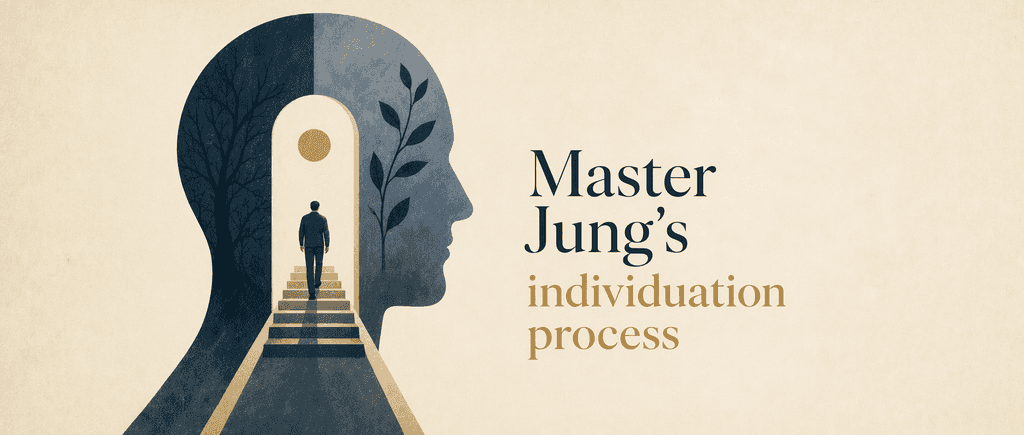
The Middle Passage represents the clash between this acquired personality and the demands of the Self-a summons to move from the provisional life to true adulthood, from false self to authenticity. It's the moment when the soul says, "Enough of this charade. Who are you really?" This crisis often emerges in midlife when our carefully constructed identity no longer serves our deeper needs and the tension between who we've become and who we're meant to be becomes unbearable.
Capítulo 3
When the Ground Begins to Shift
The Middle Passage begins as tectonic pressure building from below, a profound psychological shift that mirrors geological processes. Like earth's plates that shift and create earthquakes, the planes of personality collide as the acquired sense of self grates against the greater Self seeking realization. Warning signs appear long before consciousness of crisis: persistent depression that doesn't lift with usual remedies, patterns of substance overindulgence that become harder to justify, extramarital affairs that promise escape but deliver chaos, frequent job changes that provide temporary relief but no lasting satisfaction. These are all desperate attempts to outrun the underground pressures that signal impending transformation.
These symptoms, far from being purely negative, reveal a healthy, self-regulating psyche attempting to break through artificial constraints. As Jung noted, neurosis "must be understood, ultimately, as the suffering of a soul which has not discovered its meaning." The Middle Passage occurs when one is "radically stunned into consciousness," often through life-threatening illness that strips away illusions of immortality, relationship collapse that shatters our assumptions about love, or career failure that demolishes professional identity. It's less a chronological event than a psychological experience where kairos (time's depth dimension) intersects chronos (linear time), creating a crucible for transformation.
Childhood is characterized by magical thinking-wishes seem like possibilities, the child feels immortal and special, believing they can become anything. Parents appear as gods, and the world seems infinitely malleable to desire. Adolescence brings heroic thinking-more realistic but still projecting fantasies of grandeur, imagining oneself as the protagonist of an epic tale. This hopefulness is necessary; without it, who would venture into adulthood's uncertain territories? The Middle Passage arrives when these thought patterns no longer match lived experience, when reality repeatedly contradicts our cherished narratives about ourselves.
By midlife, we've witnessed collapsed projections and experienced our limitations in stark relief. Dreams of becoming a famous artist devolve into weekend hobbies, athletic aspirations settle into morning jogs, and career ambitions adjust to market realities. Realistic thinking emerges, bringing perspective like Greek tragedy where the protagonist might be ruined but richer for coming into proper relationship with the gods. As one friend realized after multiple failed businesses and a divorce: "My life will never be the whole, only the parts." This realization leads to the essential question: "What work, then, needs to be done with the life I actually have?"
Modern culture has lost the mythic road maps that once helped locate individuals in larger contexts. Ancient societies provided initiation rites, wisdom traditions, and communal support for life transitions. Without tribal visions or spiritual networks, we wander through life stages without guidance, models, or assistance, often mistaking personal crises for character flaws. The Middle Passage requires a metaphorical death before rebirth - death of outdated self-concepts, impossible dreams, and juvenile expectations - and is experienced in frightening isolation, made more difficult by a culture that pathologizes natural developmental struggles.
Capítulo 4
The Painful Dissolution of Projections
Projection is a fundamental psychic mechanism-what remains unconscious gets projected outward. As Jung noted, "Projection is never made; it happens." In childhood, we project omniscience onto parents; later, onto institutions, authority figures, and social roles. The Middle Passage involves the painful dissolution of these projections, a process that often feels like being stripped of our most cherished illusions.
Marriage carries perhaps the heaviest projections, laden with unconscious expectations accumulated since childhood. Few newlyweds would voice their unconscious demands: "Make my life meaningful," "Always be there for me," "Complete me," "Heal my soul." As Robert Johnson suggests, moderns have transferred soul needs to romantic love, burdening relationships with expectations once directed toward religion and community. But daily intimacy inevitably wears away projections, revealing the beloved as merely mortal-creating tremendous midlife pain. The morning coffee breath, scattered socks, and mundane disagreements slowly erode the perfect image we've constructed.
Consider how many marriages collapse at midlife, often around the fifteen to twenty-year mark. The partners have grown in opposite directions, or more accurately, grown toward their authentic selves rather than continuing to play the roles assigned by their partner's projections. One partner might have projected stability onto the other, only to face their spouse's emerging desire for adventure. The painful realization that no one person can fulfill all our needs becomes unavoidable, forcing us to confront our own completeness.
Parenthood similarly receives identity projections, perhaps even more intensely than marriage. We believe we'll avoid our parents' mistakes, yet inevitably project our unlived lives onto children. A father who gave up music might push his child toward piano lessons; a mother who never pursued medicine might subtly pressure her daughter toward medical school. When adolescents resist these projections, asserting their own paths through rebellion or indifference, it creates further midlife disappointment. Healing comes when we accept that children merely pass through our lives en route to their own mystery, carrying their own unique destinies.
Career also invites powerful projections of identity (confirmed through expertise and recognition), nurturance (fed through productivity and achievement), and transcendence (overcoming spiritual pettiness through professional accomplishment). A doctor might project healing powers onto their role, or an executive might project leadership qualities that mask inner uncertainty. When these projections dissolve and we can no longer ignore our dissatisfaction with how we're using life energy, we've entered the Middle Passage. The corner office or prestigious title no longer provides the satisfaction it once promised.
The withdrawal of projections follows five distinct stages: believing the inner experience is outer (complete identification with the projection), recognizing the discrepancy (noticing gaps between expectation and reality), acknowledging it (accepting the difference), realizing one's error (understanding the projection's nature), and searching for the projection's origin within oneself (inner work). This process enables us to take responsibility for our own satisfaction rather than expecting others to save us. It's a journey from unconscious dependency to conscious relationship with ourselves and others.
Capítulo 5
The Body's Betrayal and Time's Acceleration
Youth takes the body for granted, assuming it will always serve, protect, and replenish itself. But midlife brings the realization that an ineluctable transformation is occurring beyond one's control. The body becomes an "enemy," a "reluctant antagonist" in our heroic self-narrative. As Yeats lamented, we become "sick with desire and fastened to a dying animal." What once served the ego now opposes it; however high our spirit wishes to soar, "the withness of the body" calls us back to earth.
Similarly, time transforms from an "arena for endless play" into a trap. We suddenly recognize not only our mortality but the painful truth that we will never accomplish all our heart longs for. This sense of limit and incompleteness marks the end of first adulthood, beautifully captured in Dylan Thomas's lines about being "young and easy in the mercy of his means" while "Time held me green and dying / Though I sang in my chains like the sea."
Midlife brings a tightening of "the purse strings of the heart" as we confront our mortality and limitations. The magical thinking of childhood and heroic thinking of first adulthood prove inadequate against life's realities. Our "expansionist, imperial ego" can no longer deflect childhood insecurities through grandiosity. The bitterness of midlife directly correlates to energy invested in childhood's phantasmal wishes.
Another deflating midlife discovery is that perfect relationships don't exist. The "Intimate Other" we hoped would meet our needs and always be there turns out to be an ordinary person with their own needs and projections. This realization often ends marriages at midlife-the fragile structure between two people cannot bear the weight of childhood hopes.
Only by accepting the deflation of childhood expectations and taking responsibility for finding our own meaning can the second adulthood begin. We must recognize that no one will magically fill our inner void, and instead trust our own psyche's sufficiency to heal itself.
Capítulo 6
The Soul's Summons Through Symptoms
The Middle Passage's turbulence often manifests in neurotic symptoms that actually point toward healing. Consider one woman in her sixties, devastated by the death of her husband and father, who began therapy seeking relief from pain. A dream revealed her psychological shift: she and her deceased husband approached a bridge, but she returned for her forgotten purse. When she returned to the bridge, an unknown man joined her. Though she lamented her loneliness, he responded that solitude had been good for him. This dream showed her transition from external authority (father complex) to developing her inner masculine principle (animus)-the beginning of her journey toward authentic identity and authority at age sixty-five.
Neurosis often stems from dissociation-becoming progressively estranged from ourselves as we respond to socialization and external pressures. By midlife, the injured soul resists further insult through symptoms that demand dialogue rather than medication. As Jung noted, suffering can lead to "new adaptation."
One woman who described her Middle Passage as "fragmentation" found healing by engaging with her divided self: "I talk to this part of me, and then I listen. And I talk to that part and I listen. And I try to learn what Psyche wants of me." This dialogue between ego and Self can heal historical splits.
As Rilke beautifully observed, "perhaps all the dragons of our lives are princesses who are only waiting to see us once beautiful and brave." Our dragons-what we fear most-represent neglected parts that, when taken seriously, provide energy and meaning for life's second half. Jung defined neurosis as "suffering which has not discovered its meaning" and "inauthentic suffering"-authentic suffering requires facing our dragons rather than fleeing them.
The central project of life's first half is building ego identity-separating psychologically from parents, finding productive work that feels challenging, developing mature relationships, and engaging as a citizen in the outer world. Even successfully attained ego identity can collapse during the Middle Passage through relationship failures, career disillusionment, or other deflations.
Capítulo 7
The Journey Toward Authentic Selfhood
The Middle Passage creates a collision between persona and shadow as ego domination breaks down. The persona-our social mask and necessary fiction-helps us interface with the world but isn't our true self. Since the first half of life involves constructing and maintaining this persona, we often neglect inner reality.
The shadow contains everything repressed or unrecognized-not just problematic elements like anger and sexuality, but also joy, spontaneity and creativity. It represents the wounding of our nature to accommodate social values. As Jung noted, the shadow contains not just "morally reprehensible tendencies" but also "good qualities" like "normal instincts, appropriate reactions, realistic insights, creative impulses."
By midlife, we've repressed significant portions of our personality. Anger often erupts because socialization has constricted natural impulses. When acknowledged and channeled, this anger can drive authentic change. Other shadow encounters-with selfishness, dependency, lust, jealousy-may be painful but begin the withdrawal of projections onto others.
The shadow's emergence represents the Self's effort to restore balance. Integration requires living responsibly in society while being honest with ourselves. Through the persona's deflation, we discover we've lived provisionally; integrating inner truths, pleasant or not, brings new life and restored purpose.
Our modern world's specialization has narrowed us professionally at the expense of wholeness. Jung defined neurosis simply as "disunity with oneself"-a one-sidedness of personality that afflicts us all, especially through our education and training processes.
Jung's personality typologies (introversion/extraversion, thinking/feeling, sensation/intuition) describe how we process reality. Our dominant function emerges early, and society rewards us for developing it exclusively. The inferior function-our least comfortable mode of processing reality-remains undeveloped.
During midlife, these neglected aspects of psyche demand attention. Jung himself, an extraverted intuitive thinking type, deliberately cooked, sculpted and painted to develop his inferior sensation function. Our dreams often express this neglected side, as the inferior function serves as "the trapdoor to the unconscious."
Capítulo 8
Transforming Relationships Through Individuation
Nothing carries more potential for hurt at midlife than long-term intimacy. Relationships bear the burden of the inner child's hopes and needs, with most midlife marriages under great strain. The fusion model of relationships-where two become one-inevitably fails when projections wear away. We project our anima/animus onto partners, literally falling in love with missing parts of ourselves, creating an unsustainable dynamic.
The mature relationship model requires abandoning rescue fantasies and each partner taking responsibility for their own individuation. "No one can give me what I most deeply want," becomes the truth, replaced by celebrating what the relationship actually offers: companionship, respect, and the dialectic of opposites. Real relationship becomes a conscious desire to share the journey, where one plus one equals three-two separate beings whose relationship forms a third entity that stretches both beyond individual limitations.
When partners recognize their unhappiness and ask for support rather than rescue, renewal becomes possible. The marriage can then become a container for individuation rather than a prison of resentment. Without this shift, partners remain trapped in the exhausted patterns and gender-role scripts of first adulthood, where each serves the institution of marriage while the institution fails to serve them.
True intimacy emerges when couples share fears, dreams and disappointments-something few achieve despite years together. Men often struggle with emotional numbness, conditioned to avoid feeling and inner wisdom, while women battle negative animus voices that undermine their power and self-belief. At midlife, both must confront these patterns or remain victims of unconscious forces.
Affairs represent the imperative to reclaim what was left behind in one's development. The unconscious projects these undeveloped parts onto another who mysteriously aligns with them. What's sought is completion and wholeness, though explaining this to someone in love is nearly impossible.
The hardest task is accepting one's separateness within relationship while remaining responsive to others. True marriage transformation requires three steps: partners must take responsibility for their own psychological well-being; commit to sharing their experiences without reproach while truly hearing the other; and sustain this dialogue over time. Without such "radical conversation," marriages either limp along or dissolve.
Capítulo 9
Navigating the Soul's High Seas
The Middle Passage resembles awakening alone on a pitching ship with no land in sight. One can retreat into sleep, abandon ship, or take the wheel and sail on. This moment of decision represents the soul's highest adventure-choosing to navigate the journey despite its terror and loneliness. Only by grabbing the wheel and accepting responsibility can we escape the neurotic aversions of our first adulthood and move toward integrity.
Poet Marianne Moore wrote that "the best cure for loneliness is solitude." This paradox points to a crucial distinction. Loneliness is not new-Blaise Pascal observed how the court jester was invented to distract kings from their loneliness, while Nietzsche noted our tendency to "drug ourselves with social life" to avoid silence. We fear what might be whispered in our ear during quiet moments. True healing requires solitude-that psychic state where one is wholly present to oneself.
Birth itself is our first traumatic separation, followed by the parent-child relationship that shapes our capacity for solitude. Ironically, those with more troubled parental relationships become more dependent on relationships generally. To achieve necessary solitude, we must ask daily: "How am I avoiding myself and my own journey out of fear?" We must identify where parental patterns lurk in our responses to others, and risk loneliness to achieve true solitude.
Many cling to terrible relationships or constricting professions rather than face loneliness. Confronting this fear requires courage and can be supported through personal rituals-daily periods of quiet solitude without distractions where we listen to silence. Though initially uncomfortable, persistence allows the silence to speak. When we no longer feel lonely while alone, we've achieved true solitude.
We carry not just one inner child but a whole kindergarten of them-the artist, rebel, clown, and the spontaneous child at one with the world. At midlife, these neglected aspects become potential sources of healing. Jung himself built sand castles and played with toys during his Middle Passage, knowing that when we're stuck, we're saved by what lies within. The difference between being childlike and childish is consciousness.
Capítulo 10
Embracing Life's Luminous Pause
Campbell advised "follow your bliss," but Hollis prefers "follow your passion"-that which fuels us and, like vocation, comes as a summons rather than a choice. Passion transforms us through the experience that draws us deeply into life, even when it hurts. At midlife, permission to live passionately must be seized, not requested. Fear of our own depths is the enemy, yet we should fear the unlived life even more.
Individuation aims for wholeness, not ego triumph. The swamplands of the soul-loneliness, grief, doubt, depression, anxiety, guilt-are not to be avoided but waded through for their meaning. Grief acknowledges the value of what's been experienced; doubt opens us to new understanding; depression signals something vital has been "pressed down." Rather than fleeing these states, we must ask what they mean and what our psyche is telling us.
Jung used the term Auseinandersetzung for the necessary dialogue with ourselves-"setting one thing out against another." This internal dialectic shifts from the ego-world axis of early life to the ego-Self dialogue of maturity. Dreams offer the richest access to this dialogue, presenting personal mythology from the nocturnal depths.
Death, once the centerpiece of cultural rituals, has become the unmentionable in modern society. At midlife, we confront the grim awareness of time and finitude as magical childhood thinking and heroic adult delusions fall away. Yet mortality gives life its meaning-without it, nothing would truly matter. Those who face death consciously often discover what Angela, a dying patient, realized: "This is the best thing that ever happened to me," as terminal illness finally summoned her to truly live.
Life, as Jung defined it, is "a luminous pause between two great mysteries which yet are one." The Middle Passage reveals that our journey has no final destination-as Cavafy's poem "Ithaca" suggests, the journey itself is the purpose. After midlife's spiritual turning point, the ego-urgencies of first adulthood lose their grip. The crisis we experience isn't the collapse of our essential selves but of our assumptions.
Those who navigate the Middle Passage successfully learn to hear the inner voice amid the cacophony of the outer world. We separate who we are from internalized expectations, moving from magical to heroic to human thinking. Our relationships become less dependent as we ask more of ourselves and less of others. Though anxiety accompanies this transformation, an awesome freedom emerges-a vital connection with ourselves that balances outer losses with inner richness. We become gracious hosts to the mysterious energy that briefly inhabits us, consciously assenting to life's luminous pause.