Capítulo 1
The Chilling Legacy of the Handyman
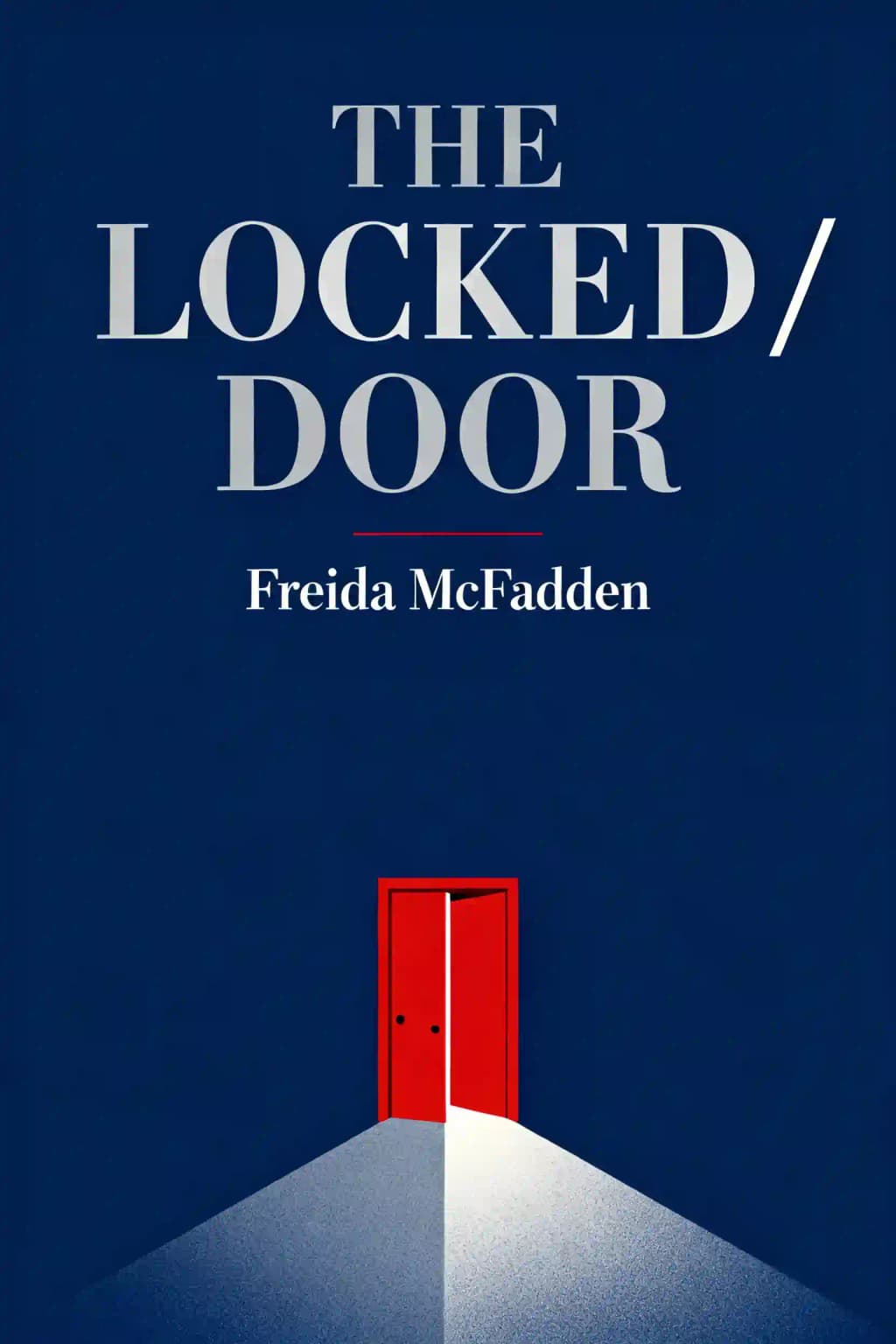
Freida McFadden's "The Locked Door" rocketed to the top of bestseller lists upon its release, captivating readers with its psychological depth and twisted family dynamics. This thriller has become a book club favorite, with celebrities like Reese Witherspoon and Stephen King praising its unpredictable plot turns. The novel's exploration of nature versus nurture has sparked heated debates online, with readers divided on whether we can truly escape our genetic inheritance. McFadden, a practicing physician herself, brings medical authenticity to her protagonist's surgical career while weaving a tale that keeps readers guessing until the final page.
Capítulo 2
In the Shadow of a Monster
Twenty-six years ago, Aaron Nierling was arrested after police discovered the remains of Mandy Johansson behind the locked door of his basement workshop, along with bones from seventeen other victims. Known as "The Handyman" for his signature of removing his victims' hands, this charismatic genius had evaded authorities for decades while murdering at least thirty women across three states. A respected carpenter by day, Nierling maintained a facade of normalcy - coaching his daughter's soccer team, attending PTA meetings, and hosting neighborhood barbecues. His wife Sarah, charged as an accessory after evidence emerged of her helping to dispose of evidence, committed suicide in her prison cell using a bedsheet, leaving behind a note that simply read "I couldn't save them." This psychopathic killer who murdered without remorse is Dr. Nora Davis's father.
Now a successful pediatric surgeon at Stanford Medical Center, Nora has spent her entire adult life distancing herself from her birth name - Nora Nierling - and the horrific legacy it carries. She lives a carefully controlled existence: a modest house in Mountain View with security cameras at every entrance, a sensible dark green Toyota Camry she replaces every three years, and most importantly, no close relationships beyond professional courtesies. Her colleagues know her as efficient and skilled, but none have ever been invited to her home. Every week for twenty-six years, she's received a letter from her imprisoned father at San Quentin State Prison. And every week, without fail, she tears it into pieces without reading it, watching the fragments scatter into her garden's koi pond.
Nora's carefully constructed life begins to unravel when she feels someone watching her at Christopher's bar, where she occasionally allows herself one glass of wine before heading home. Though she escapes an uncomfortable encounter with a former patient whose child didn't survive surgery, she notices headlights following her through three deliberate wrong turns. Rather than confronting the stalker, she drives to the local police station, circling the block twice before leaving - unable to enter the building that brings back painful memories of being questioned for seventy-two hours after her father's arrest. This pattern of avoidance has defined her existence - keeping people at arm's length, refusing to form attachments, changing her phone number quarterly, and living in constant fear that someone will discover who she really is.
What would it be like to live under the weight of such a terrible legacy? How does one build an identity separate from a parent whose crimes shocked the nation and inspired three true-crime documentaries? Nora's story forces us to consider whether we can ever truly escape our origins, or if blood will always tell in the end. Her father's genes are present in every cell of her body - a fact that keeps her awake at night, wondering if the capacity for evil can be inherited like eye color or height.
Capítulo 3
The Past Never Stays Buried
Nora's carefully maintained facade begins to crack when she encounters Brady Mitchell, the bartender at Christopher's who turns out to be her college boyfriend. Their reunion stirs long-dormant feelings and memories of a time when Nora might have chosen a different path. Brady's reappearance in her life represents everything she's denied herself-connection, intimacy, the possibility of a normal future.
When the same car continues following her the next night, Nora makes a decision that reveals the darker side of her nature. Instead of calling the police, she leads her pursuer down a narrow, winding road in the pouring rain and accelerates through a sharp turn she knows well. The pursuing car crashes violently into a tree. Despite being a doctor sworn to help others, Nora calls 911 but doesn't stop to provide medical assistance. As she drives away, she reflects on her father's dangerous nature and the saying that "the apple doesn't fall far from the tree."
This moment represents a crucial turning point. Has Nora just proven that she carries her father's capacity for calculated cruelty? Or was this simply self-preservation against a threatening stalker? The line between protection and predation blurs, leaving us to wonder how much of Aaron Nierling lives on in his daughter.
The past continues to haunt Nora through flashbacks to her childhood. We see eleven-year-old Nora on her birthday, when her father gives her a white mouse as a pet despite her mother's concerns about previous pets. We glimpse the always-locked basement door that smells strongly of lavender-her father's workshop where he supposedly builds furniture. These memories are interwoven with present-day scenes of Nora's surgical practice, creating a dissonant contrast between the life she's built and the one she fled.
What secrets do we keep locked away, even from ourselves? How do childhood experiences shape who we become? Nora's story suggests that sometimes the most dangerous doors are the ones in our own minds.
Capítulo 4
The Surgeon's Blade
Nora's surgical career provides both redemption and temptation. As a lead surgeon at Corey and Davis Surgical Associates, she saves lives daily - a pointed contrast to her father who took them. Her hands, which once trembled at the memory of her father's violence, now move with practiced precision through complex procedures. Yet her professional competence also gives her power over vulnerable bodies, a parallel that doesn't escape her notice. In the operating room, she wields complete control, deciding where to cut, how deep to go, when to stop - decisions that carry life-or-death consequences.
During a post-operative examination of Mr. Kellogg, Nora observes telltale signs of domestic abuse - a fading bruise under Mrs. Kellogg's eye, flinching when her husband moves suddenly, and his harsh, controlling treatment. Though she discreetly passes Mrs. Kellogg a note during vitals check asking if he's hurting her, the woman denies it with a practiced smile that Nora recognizes all too well. Frustrated and angry, Nora deliberately makes the removal of Mr. Kellogg's last staple painful, twisting slightly as she pulls. This small act of retribution reveals how easily Nora can justify causing pain when she believes it's deserved - a dangerous parallel to her father's twisted sense of justice.
Her competitive relationship with her surgical partner Philip Corey further illuminates her character. They maintain meticulous spreadsheets tracking surgical cases, success rates, and recovery times, with yearly bragging rights at stake. Nora "intends to crush Philip this year," approaching their rivalry with an intensity that borders on obsession. This drive to win, to dominate in her field, provides a socially acceptable channel for her darker impulses. Surgery allows her to cut into human bodies with precision and purpose - a sanctioned form of the violence her father perpetrated. Each successful operation feels like a small victory over his legacy.
When Harper, their receptionist, reveals she's studying biology with hopes of becoming a doctor, Nora takes her under her wing, offering mentorship and encouragement. Yet when Harper's blue eyes and dark hair momentarily remind Nora of Mandy Johansson, one of her father's victims, we see how the past intrudes even into her professional sanctuary. The moment triggers a panic attack that forces Nora to excuse herself mid-consultation. She has chosen career over relationships, maintaining strict professional boundaries and avoiding personal attachments, believing this will prevent her from becoming like her father. But has she simply found a different expression for the same controlling tendencies?
The operating room becomes both haven and hunting ground - a place where Nora can exercise power while maintaining the illusion of complete control over her inherited darkness. Her surgical excellence serves as both shield and sword, protecting her from intimate connections while allowing her to battle death itself. How do we channel our inherited traits into positive outlets? Can professional success compensate for personal isolation? Nora's surgical career represents both her escape from her father's legacy and her unconscious embodiment of it - a paradox she must ultimately confront.
Capítulo 5
Patterns of Predation
The novel's most disturbing flashbacks reveal young Nora's calculated fixation on Marjorie Baker, an unpopular classmate who endures relentless bullying from their peers. Marjorie - with her ill-fitting clothes, nervous habits, and desperate attempts to please others - represents the perfect target. Rather than defending Marjorie from the daily torments, Nora becomes obsessed with her vulnerability, recognizing in her classmate's isolation an opportunity for exploitation. She meticulously stalks Marjorie, following her circuitous route home, watching through windows as the girl does homework alone, and carefully documenting her routines in a small blue notebook.
These scenes mirror with haunting precision what we later learn about Aaron Nierling's methods of selecting and stalking his victims. His pattern emerges through police reports: targeting women who lived alone, observing their schedules for weeks, and gaining their trust through seemingly chance encounters. When Nora insists their friendship must remain secret and forbids Marjorie from telling anyone, even her parents, we recognize the classic grooming tactics of a predator. Young Nora methodically experiments with power and control, testing whether she can make someone do what she wants through calculated manipulation - just as her father did with his victims.
In one particularly chilling flashback, Nora convinces Marjorie to play a game called "Hunter and Prey" in the dense woods behind the school. She insists Marjorie remove her shoes and socks, claiming "real animals don't wear sneakers," before giving her a five-minute head start. As Nora watches Marjorie waddle away barefoot, struggling on twigs and rocks, she experiences a rush of power knowing catching her will be "pathetically easy." The scene becomes more disturbing as Nora reaches into her backpack for a razor-sharp penknife - a recent birthday gift from her father, given with a knowing smile.
These childhood scenes create an unsettling question that haunts the entire narrative: Was Nora born with her father's predatory instincts, carrying some genetic predisposition toward violence? Or was she being systematically groomed by him to follow in his footsteps, shaped by subtle encouragement and carefully chosen gifts like the penknife? The novel refuses simple answers, instead showing how environment and genetics create a complex interplay of influences that shape human behavior. Small moments - her father's proud smile when she shows cunning, his quiet approval of her manipulative games - suggest both nature and nurture at work.
What makes a monster? Is it nature, nurture, or conscious choice? Through Nora's childhood memories, we're forced to consider how darkness can be passed from one generation to the next - through DNA, through example, through subtle encouragement, or through some intricate combination of all three. The parallel between father and daughter becomes most chilling in the details: both keep meticulous notes on their victims, both derive pleasure from the hunt rather than the capture, and both display an innate understanding of human vulnerability.
Capítulo 6
When the Past Comes Knocking
Nora's meticulously constructed life begins to unravel on an ordinary Tuesday morning when Detective Ed Barber appears unannounced at her office. His presence - authoritative yet cautious - immediately sets her on edge. The detective's questions about a patient named Amber Swanson seem routine at first, until he reveals the horrifying detail: the young woman was found murdered in the San Joaquin River, both hands surgically removed - the unmistakable signature of her father, the infamous "Handyman." When Barber probes deeper into Nora's whereabouts and her relationship with her father, her professional composure cracks. She becomes visibly defensive, her hands trembling as she reaches for her phone to call an attorney.
The situation deteriorates further when, just a week later, Barber returns with more devastating news. Another of Nora's patients, Shelby Gillis, has been discovered murdered in the same ritualistic manner. The pattern becomes impossible to ignore - someone is systematically targeting women who fit her father's preferred victim profile: young, dark-haired women with striking blue eyes, all connected to Nora through her practice. The implications are chilling: either someone is orchestrating an elaborate scheme to frame her, or the unthinkable is true - she's following her father's murderous path.
The confrontation with Amber Swanson's mother marks a turning point. Mrs. Swanson storms into Nora's office during a therapy session, her grief and rage palpable. "I know who you are, Nora Nierling," she spits out, wielding Nora's true identity like a weapon. Her threat to expose Nora to the media isn't just about revenge - it's about destroying the careful facade Nora has built over fifteen years. Despite Nora's desperate explanations and pleas, Mrs. Swanson remains unmoved, delivering her verdict with ice-cold precision: "Well, good. Because that's what you deserve, you... you monster."
These mounting external pressures force Nora to confront her deepest, most primal fears. She must face the possibility that she carries her father's darkness within her - a thought that has haunted her since childhood. Her carefully constructed identity as Dr. Nora Davis, respected therapist and pillar of the community, threatens to crumble like a house of cards. Every mirror now seems to reflect back a disturbing question: is she seeing herself, or glimpses of Aaron Nierling's legacy?
The murders create a psychological crucible in which Nora must examine fundamental questions about identity and inheritance. How much of our parents' nature truly lives within us? Can we ever fully separate ourselves from their actions? The public's reaction to her father's crimes raises uncomfortable questions about collective guilt and redemption. Even as she maintains her innocence, Nora must grapple with society's tendency to view children as extensions of their parents' crimes - a prejudice that proves as difficult to escape as her own DNA.
Capítulo 7
Behind Locked Doors
As the murders continue and evidence mounts against her, Nora realizes she must finally confront the source of her nightmares-her father. Despite her grandmother's warnings that he was "the devil" and nothing good could come from seeing him, Nora flies to Oregon State Penitentiary for their first meeting in twenty-six years.
The encounter shatters her expectations. Instead of the imposing figure from her childhood, she finds a gray-haired, hunched old man who shuffles in shackles. Yet his dark eyes-identical to hers-remain unchanged, locking onto her with the same intensity she remembers. When she demands to know who killed the girls, his shocking response is, "It was you. You killed them. Didn't you?"
This accusation strikes at Nora's core fear-that she inherited not just her father's eyes but his murderous impulses. He reminds her of the dead animals her mother kept finding when Nora was a child and suggests she became a surgeon because she enjoys cutting into people. Though Nora rejects these claims, they haunt her.
The visit reveals another crucial flashback: as a child, Nora discovered her father's basement wasn't just a woodworking shop. After hearing strange noises and muffled talking, she tried the usually locked door and found it open. Inside, she discovered her father's workbench with disturbing items: a razor-sharp knife, bleach, and lavender-scented air freshener. The bench was covered in brownish stains, and in the corner, she found a sheet-covered cage with a human eye peering out.
Most disturbingly, her father revealed he had deliberately left the door unlocked, wanting her to discover his secret. He told young Nora she was "like him" and that he wanted to teach her. When she agreed, he promised their "lessons" would begin soon.
What doors do we keep locked in our own lives? What happens when we finally open them? Nora's confrontation with her father forces her to face the possibility that evil isn't just something that happened to her family-it might be something within her.
Capítulo 8
The Truth Unraveled
As evidence against Nora mounts, including a severed hand planted in her car trunk, she begins to suspect everyone around her. Could it be Brady, whose locked room in his apartment raises suspicions? Or Philip, who had access to her patient list and could have planted evidence? The paranoia that has always simmered beneath Nora's controlled exterior boils over as she realizes someone close to her is orchestrating her downfall.
The devastating truth is revealed when Nora discovers Philip tied to a chair in her basement with his left hand severed. To her shock, Harper-her receptionist whom she had mentored and encouraged-stands before her with a gun. Drugged from soup Harper had given her earlier, Nora struggles to comprehend as Harper reveals herself to be Nora's younger half-sister.
Harper explains their mother was five months pregnant when Nora reported their father to police. After learning what her husband had done, their mother committed suicide in prison, but Harper survived. While Nora was taken in by their grandmother, Harper was put up for adoption. Years later, Harper sought out their father in prison, who told her everything and turned her against Nora.
The elaborate revenge plot becomes clear: Harper has been setting up Nora to look like she followed in their father's footsteps by creating a basement dungeon and framing her for Amber and Shelby's murders. In a desperate fight for survival, Nora manages to distract Harper long enough to attack her before Brady arrives unexpectedly and points the gun at Harper instead of Nora.
This revelation forces us to reconsider everything we've learned about Nora. Was she truly a victim of circumstance, or did she contribute to the cycle of violence? The final twist suggests that perhaps Nora isn't as innocent as she appears-Harper witnessed her helping Mrs. Kellogg poison her abusive husband with calcium gluconate, making his death look like a heart attack. "You never know when information like that will come in handy," Harper notes ominously.
Are we defined by our worst actions or our best intentions? Can justice and vengeance ever truly be separated? The tangled relationships between Nora, Harper, and their father demonstrate how trauma creates ripples that extend far beyond the initial crime.
Capítulo 9
Breaking the Cycle
One year after Harper's dramatic arrest, Nora and Brady are navigating their new life together, spending a crisp autumn morning at the local farmers' market. Their relationship blossomed slowly and deliberately - after three months of careful dating, Nora finally met Brady's precocious daughter Ruby. To her own surprise, Nora discovered that she "actually doesn't hate kids," finding herself drawn to Ruby's infectious laugh and curious nature. The stray cat that proved instrumental in saving Nora's life has become an beloved family member, dubbed "Meowsie" by Ruby, who delights in spoiling the once-feral creature with treats and toys.
Harper's fate was sealed with two consecutive life sentences for the murders, while her manipulative boyfriend Sonny received twenty years for his role in the crimes. Every week, like clockwork, Harper's letters arrive at Nora's doorstep - and every week, Nora maintains her ritual of tearing them up unopened, just as she did with her father's desperate attempts at connection. Philip's career as a surgeon ended with the loss of his hand, but he's found new purpose teaching anatomy at medical school, sharing his expertise with future doctors. He's slowly rebuilding his life and has begun dating someone who accepts his past. Though Nora still battles nightmares that leave her gasping in the dark, Brady's steady presence and unwavering support help ground her in reality.
Their engagement came naturally, with Brady proposing during a quiet moment at home rather than with grand gestures. They're now searching for their perfect home - specifically one without a basement, a non-negotiable requirement that Brady immediately understood without explanation. At the bustling farmers' market, among stands of fresh produce and artisanal goods, Nora spots a familiar face: Marjorie, the young woman she chose to spare in the woods during her darkest hour, now peacefully selling maple syrup from her family's farm. The fact that Marjorie doesn't recognize her brings Nora profound relief - it's concrete proof that she's successfully shed her former identity.
This resolution suggests that redemption isn't just possible but achievable through conscious choice and persistent effort. Nora has gradually dismantled her emotional walls, allowing herself to form genuine connections and trust that genetics aren't destiny - that sharing DNA with a monster doesn't condemn her to become one. She's learned that vulnerability, while frightening, can lead to authentic happiness.
However, the novel deliberately maintains certain ambiguities. The question of whether Nora assisted Mrs. Kellogg in her husband's death remains unanswered, raising uncomfortable questions about justice and morality. If she did help, has she truly broken free from her father's influence, or has she simply refined her darker impulses into more socially acceptable forms of vigilante justice? These lingering uncertainties force readers to confront complex questions about human nature.
The story challenges us to examine fundamental questions about identity and redemption. Can someone's essential nature truly change, or do we simply learn to better manage our darker impulses? Is redemption something that must be earned through actions, or can it be claimed through intention and effort? While Nora's journey from isolation to connection offers hope for overcoming inherited trauma, the shadow of the past remains - symbolized by those unopened letters that continue to arrive from prison, persistent reminders that while we can move forward, we can never completely outrun our history.