Capítulo 1
When Gods Walk Among Us: Percy Jackson's Extraordinary Journey
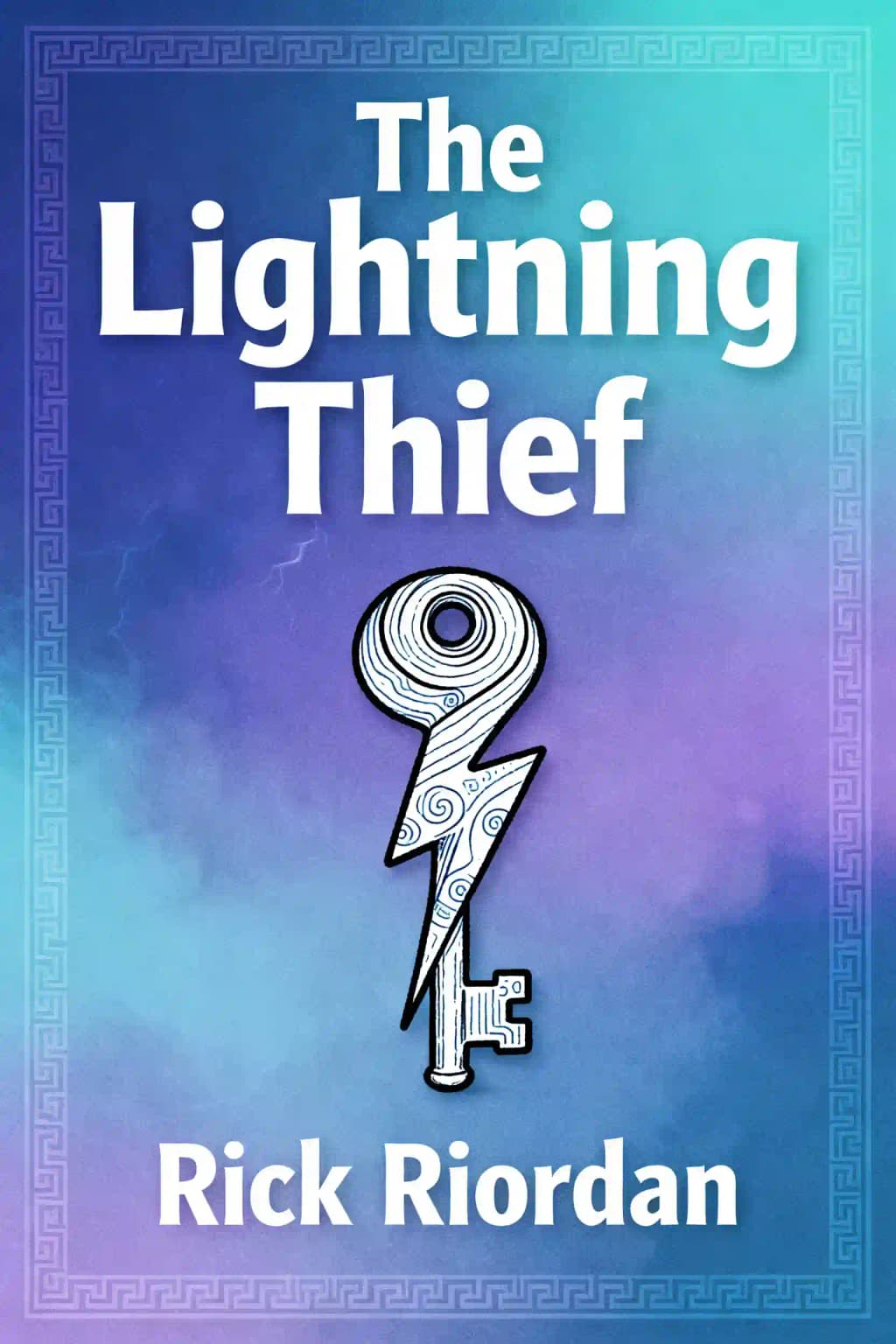
Have you ever wondered what it would be like to discover you're not entirely human? Rick Riordan's "The Lightning Thief" has captivated millions by answering this question through the eyes of a troubled twelve-year-old boy. Since its 2005 publication, this modern mythology masterpiece has sold over 100 million copies worldwide, been translated into 42 languages, and spawned a major film adaptation. Even celebrities like Lin-Manuel Miranda and Stephen King have praised its perfect blend of ancient mythology and contemporary teenage angst. What makes this story so compelling isn't just its fantastical elements, but how it transforms learning difficulties like ADHD and dyslexia into superhero traits, giving hope to countless young readers who see themselves in Percy Jackson's journey from outcast to hero.
Capítulo 2
Ordinary Boy, Extraordinary Heritage
Percy Jackson's life is anything but normal. At twelve years old, he's been kicked out of six schools in six years, diagnosed with ADHD and dyslexia, and labeled a "troubled kid." During a field trip to the Metropolitan Museum of Art, Percy's pre-algebra teacher, Mrs. Dodds, transforms into a leathery-winged monster and attacks him. His Latin teacher, Mr. Brunner, tosses him a pen that becomes a bronze sword, allowing Percy to defeat the creature. Afterward, everyone acts as if Mrs. Dodds never existed, leaving Percy questioning his sanity.
Strange occurrences continue to haunt Percy. He overhears Mr. Brunner and his friend Grover discussing a "Kindly One" at school and keeping Percy alive until some summer solstice deadline. On a bus ride home, three elderly women knit enormous socks and cut a yarn with gold and silver shears - an omen Grover interprets as death.
When Percy returns home to his loving mother Sally and abusive stepfather Gabe, Sally surprises him with a trip to their special beach cabin at Montauk. There, she finally reveals fragments about Percy's father - a powerful, handsome man who was only with her for one summer and never saw his son. Their peaceful retreat is shattered when Grover appears at their door with goat legs instead of human ones, warning they're in danger.
The night becomes a nightmare as they flee from the Minotaur - a massive bull-man who catches Sally and causes her to dissolve into golden light. Enraged, Percy manages to break off the monster's horn and drive it into its side, killing it. Dragging an unconscious Grover to safety, Percy collapses at the entrance to what will become his new home - Camp Half-Blood.
"Sometimes the hardest part isn't discovering you're different," Percy might reflect, "it's realizing that being different might be the only thing that saves you."
Capítulo 3
Welcome to Camp Half-Blood: A Sanctuary for Demigods
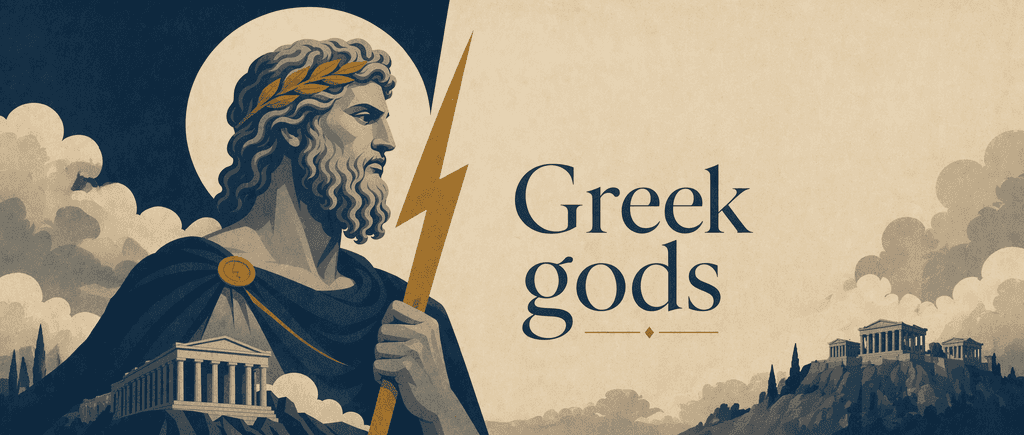
Percy awakens to discover a world hidden from mortal eyes - Camp Half-Blood, a sanctuary for demigods like himself. His Latin teacher, Mr. Brunner, reveals himself as Chiron, an immortal centaur who has trained heroes for millennia. The camp director, Mr. D (actually Dionysus, god of wine), explains with irritable indifference that the Greek gods are real, have moved with Western civilization to America, and continue to have children with mortals.
The camp itself is a marvel - strawberry fields tended by satyrs playing enchanted pipes, an arena for sword fighting, archery ranges where campers never miss, and twelve unique cabins arranged in a U-shape, each representing a different Olympian god. Percy is temporarily placed in Cabin Eleven (Hermes), which houses all "undetermined" demigods whose divine parents haven't claimed them.
Percy struggles to adjust, showing no particular talent in archery, foot racing, or wrestling. His only natural skill seems to be canoeing - hardly the heroic ability one expects from someone who defeated the Minotaur. Fellow camper Annabeth Chase, daughter of Athena, watches him closely, muttering about "the one" and prophecies.
During his first sword-fighting lesson with Luke Castellan, head counselor of Hermes cabin, Percy discovers an unexpected talent when he disarms the camp's best swordsman. Later, during a game of capture the flag, Percy is ambushed by Ares cabin's Clarisse La Rue and her siblings. When pushed into a creek, Percy experiences a surge of strength and energy, defeating five attackers single-handedly. As the game concludes, a glowing green trident appears above Percy's head - the symbol of Poseidon claiming his son.
This revelation changes everything. As Chiron announces, "Poseidon. Earthshaker, Stormbringer, Father of Horses. Hail, Perseus Jackson, Son of the Sea God," Percy realizes his life will never be the same. Being a child of one of the "Big Three" (Zeus, Poseidon, Hades) marks him as especially powerful - and especially dangerous.
Imagine discovering your dyslexia exists because your brain is hardwired for Ancient Greek, not English. Or that your ADHD is actually battlefield reflexes keeping you alive. Camp Half-Blood doesn't just give Percy a place to belong; it transforms his perceived weaknesses into strengths - a powerful message for anyone who's ever felt like an outsider.
Capítulo 4
A Divine Conflict: Zeus's Missing Thunderbolt
Percy's newfound identity brings immediate complications. Zeus's master lightning bolt - the most powerful weapon in existence - has been stolen, and the king of gods believes Percy is the thief. The accusation stems from an ancient oath broken by Poseidon's acknowledgment of Percy, violating a pact made after World War II (which was actually a conflict between the children of the Big Three) that Zeus, Poseidon, and Hades would have no more demigod children.
With summer solstice just days away, Zeus has demanded his bolt's return or war will erupt between the gods. Such a conflict would devastate the mortal world with natural disasters and catastrophic weather. Percy, who only just learned about his heritage, must now prevent a divine war.
Chiron directs Percy to consult the Oracle - a mummified woman in the camp's attic who speaks through green mist. Her prophecy is troubling: Percy will go west to face a god who has turned, retrieve what was stolen, be betrayed by a friend, and fail to save what matters most.
Despite the dangers, Percy accepts a quest to clear his name and prevent war. Grover volunteers to accompany him despite his fear of underground places, and Annabeth joins them, eager to prove herself despite the ancient rivalry between Athena and Poseidon. They must travel to the Underworld in Los Angeles, where Chiron suspects Hades has orchestrated the theft to provoke war between his brothers.
The stakes couldn't be higher for Percy - not only must he navigate a world of monsters and gods he barely understands, but he carries the weight of preventing a catastrophic war that could destroy civilization itself. All this while processing the revelation that his father is an immortal god who's been absent his entire life.
"The hardest part about being a hero," Percy might observe, "isn't facing monsters - it's carrying responsibilities you never asked for."
Capítulo 5
Monsters, Medusa, and Mechanical Spiders: Trials on the Road
Percy's journey west becomes a crash course in surviving the mythological world. Their first challenge comes when three elderly women board their bus - the Furies from the Underworld, servants of Hades. Using Annabeth's Yankees cap of invisibility, Percy narrowly escapes, but the confrontation ends with their bus exploding after being struck by lightning - Zeus's warning shot.
Trudging through New Jersey woods, they discover "Aunty Em's Garden Gnome Emporium," where a veiled woman offers them food. Too late, they realize "Aunty M" is actually Medusa, whose gaze turns living beings to stone. The statues surrounding them are her previous victims. Using a glass ball to see her reflection, Percy manages to decapitate the monster, keeping her severed head as a potential weapon.
In St. Louis, they visit the Gateway Arch where Percy encounters Echidna and the Chimera. Outmatched and poisoned, Percy plunges from the Arch into the Mississippi River. Instead of dying, he discovers he can breathe underwater and even heal there - gifts from his father. A river spirit delivers a message: visit Santa Monica beach before entering the Underworld.
Their journey continues with unexpected help from Ares, god of war, who sends them to retrieve his shield from an abandoned water park. The "favor" turns out to be a trap - Ares had left his shield during a rendezvous with Aphrodite, triggering a humiliating spectacle designed for Olympian entertainment. When thousands of mechanical spiders pour out (exploiting Annabeth's greatest fear as a child of Athena), Percy summons water from the pipes to create a dramatic escape.
Later, they're tricked into the Lotus Hotel and Casino, where time passes differently. What feels like hours turns out to be five days, nearly causing them to miss their deadline. They barely escape with the help of taxi drivers bribed with unlimited LotusCash cards from the hotel.
Each encounter reveals more about Percy's companions. Annabeth's strategic brilliance comes with deep-seated fears stemming from her difficult childhood and the ancient feud between Athena and Arachne. Grover carries the burden of his previous failure protecting Thalia, Zeus's daughter, who sacrificed herself and was transformed into the pine tree that now guards Camp Half-Blood's borders.
These trials aren't just physical challenges; they're psychological ones that force Percy to question everything - including whether Hades is truly their enemy. The monsters they face aren't random; each has significance to their parentage or past, suggesting someone is orchestrating these encounters to test or delay them.
"In the mythological world," Percy might reflect, "nothing happens by accident. Every monster has a purpose, every god has an agenda, and being a hero means figuring out which is which before it kills you."
Capítulo 6
The Underworld's Unexpected Truths
Percy's descent into the Underworld reveals a realm both familiar and alien - a massive cavern with stalactites, millions of ghostly spirits wandering aimlessly in the Fields of Asphodel, and the distant paradise of Elysium reserved for heroes and the virtuous. The most shocking discovery isn't the landscape but what happens when they reach Hades's obsidian palace.
The Lord of the Dead, with his albino skin and mesmerizing aura of power, accuses Percy of stealing not only Zeus's master bolt but also his own symbol of power - the Helm of Darkness. When Hades commands Percy to open his backpack, Zeus's master bolt mysteriously appears inside, revealing they've been manipulated all along.
Hades then reveals his bargaining chip - Percy's mother, preserved in a golden light. He offers to release her in exchange for his helm, creating an impossible choice. With only three magic pearls from the sea nymph (gifts that "return to the sea what belongs to the sea"), Percy must decide whether to save himself and both friends, or leave someone behind for his mother.
After an emotional debate where both Grover and Annabeth volunteer to stay, Percy makes the heartbreaking decision to leave his mother behind, promising to return for her. They escape by crushing the pearls at their feet, rising through the solid rock in protective bubbles that burst from the ocean floor in Santa Monica Bay.
But the most significant revelation awaits them on the beach - Ares, god of war, with Hades's helm in his possession. The war god admits to manipulating their quest, having intercepted the original thief and hidden both divine symbols of power. He planted Zeus's bolt in Percy's backpack, timed to appear only in the Underworld to frame Percy and ignite war between the gods.
Yet something doesn't add up in Ares's behavior. When questioned about his motives, he briefly falls into a trance-like state, as if listening to another voice. Percy realizes someone else is pulling Ares's strings - the presence from a pit in the Underworld that nearly pulled Grover in. Something ancient and evil is orchestrating events from Tartarus itself.
Enraged at being exposed, Ares challenges Percy to a duel on the beach. Against all odds, Percy manages to wound the god by using his connection to the ocean, forcing Ares to retreat but not before cursing Percy to feel his wrath whenever he raises a weapon in battle.
This confrontation reveals the true puppet master behind the theft - Kronos, lord of the Titans, stirring in Tartarus and manipulating events to pit the gods against each other. The revelation transforms Percy's understanding of his quest and the larger forces at work in the mythological world.
"Sometimes the most dangerous enemy," Percy might observe, "isn't the one standing in front of you with a weapon, but the one whispering in their ear."
Capítulo 7
Olympus Above: Confronting the Gods
With Zeus's master bolt recovered and Hades's helm returned by the Furies, Percy faces his most intimidating challenge yet - delivering the lightning bolt to Zeus and confronting the king of gods on Mount Olympus. Despite the risk of flying in Zeus's domain, Percy boards a plane to New York, clutching the master bolt wrapped in a ski cap.
Olympus itself is breathtaking - a floating mountain above the Empire State Building with mansions of white marble and golden streets winding through gardens and markets. The throne room is equally magnificent, with twelve massive thrones arranged in a U pattern like the cabins at camp, each sized for a twenty-foot-tall god.
Zeus and Poseidon await him - Zeus in a dark blue pinstriped suit emanating ozone, and Poseidon in beach shorts and a Hawaiian shirt with weathered features and sea-green eyes identical to Percy's. The contrast between them is stark: Zeus formal and suspicious, Poseidon casual yet distant.
Percy returns the master bolt and recounts his discoveries about Kronos's manipulation. When he mentions feeling the Titan lord's presence in the pit, Zeus and Poseidon exchange worried glances, briefly discussing "Father" in Ancient Greek before Zeus abruptly ends the conversation. Though Zeus acknowledges Percy's service, he warns him never to fly again or return to Olympus.
After Zeus departs, Percy has a brief, awkward moment with his father. Poseidon confirms Percy's suspicion about Kronos but dismisses the possibility of the Titan rising from Tartarus. Before they part, Poseidon expresses regret for Percy's birth, explaining that he's given him a hero's fate - always tragic. Yet his final words affirm Percy as his true son, filling his eyes with pride that burns like fire.
This encounter on Olympus reveals the complex dynamics between gods and their children. Despite their immense power, the gods are constrained by ancient laws that prevent direct intervention in mortal affairs. Their immortality has made them distant from human concerns, yet they remain vulnerable to manipulation by older, darker forces.
For Percy, meeting his father brings mixed emotions - pride in being acknowledged, resentment at years of absence, and the sobering realization that being a hero means walking a dangerous path with little divine protection. The gods may be his family, but they offer no safety net.
"The gods might be immortal," Percy might reflect, "but that doesn't make them good parents. Sometimes I wonder if they envy us mortals - at least our mistakes don't last forever."
Capítulo 8
Betrayal and Prophecy: The Enemy Revealed
Returning to Camp Half-Blood as a hero, Percy enjoys a brief period of celebration and normalcy. His cabin no longer feels lonely, and at night he senses his father watching over him. Good news arrives from home - his mother has mysteriously rid herself of Gabe (transformed into a statue through Medusa's head) and begun pursuing her dreams of writing and college.
This peace shatters when Luke invites Percy to the woods for a farewell talk before summer ends. There, the son of Hermes reveals his true nature - he was the lightning thief, working for Kronos. His hatred for the gods stems from feeling abandoned and used by his father Hermes and by the Olympians who sent him on a failed quest that left him scarred. Luke explains how he stole both Zeus's bolt and Hades's helm during the winter solstice field trip, only to be caught by Ares, whom Kronos manipulated through dreams.
When Percy refuses to join Luke's cause, Luke summons a pit scorpion that stings Percy before he can react. As poison spreads through Percy's body, Luke vanishes, leaving him to die alone. Only the intervention of wood nymphs saves Percy's life.
This betrayal fulfills the Oracle's prophecy about being betrayed by a friend, forcing Percy to reevaluate everyone and everything he's come to trust. Luke - his mentor, cabin counselor, and friend - had been manipulating him from the beginning, even gifting him cursed flying shoes meant to drag him into Tartarus.
The revelation of Luke's betrayal and Kronos's influence establishes a far greater threat than the conflict between the gods. While Zeus, Poseidon, and Hades might fight among themselves, they at least maintain the current order. Kronos represents a return to an older, darker time when Titans ruled through fear and cruelty.
As summer ends, Percy makes two significant choices: to return to his mother rather than stay year-round at camp, and to eventually hunt down Luke with Annabeth's help. These decisions reflect his growing maturity - balancing his mortal and divine worlds while accepting responsibility for confronting threats to both.
"The hardest betrayals," Percy might observe, "aren't the ones that hurt you physically, but the ones that make you question every good memory you thought you had."
Capítulo 9
Finding Home Between Two Worlds
As Percy's first summer at Camp Half-Blood concludes, he stands at a crossroads between two worlds - the mortal realm where he grew up and the mythological one he's just discovered. Unlike many campers who stay year-round because they have nowhere else to go, Percy chooses to return to his mother in Manhattan, attending a new school while maintaining his connection to camp.
This decision reflects Percy's unique position - he has a loving mortal parent who accepts his divine heritage, unlike many demigods who are abandoned or rejected by their mortal families. Sally Jackson represents Percy's anchor to humanity, while Camp Half-Blood offers community with others like himself. Rather than choosing between these worlds, Percy attempts to bridge them.
The summer's events have transformed Percy from an insecure, troubled kid into someone beginning to understand his place in a larger cosmic order. His dyslexia and ADHD - once sources of shame and academic failure - are now recognized as aspects of his demigod nature. His impulsiveness and defiance, which got him expelled from six schools, become assets in battle against monsters and gods.
Percy's journey also redefines his understanding of family. Having grown up without a father, he now has a complicated relationship with an immortal parent who acknowledges him but remains distant. At camp, he's found siblings of sorts - fellow demigods who share his struggles and understand his challenges in ways mortals never could.
As he leaves camp wearing his new bead necklace - black with a sea-green trident - Percy carries both the burden of prophecy and the comfort of belonging. He's no longer alone in his strangeness, yet the knowledge that he's a child of one of the Big Three marks him for an extraordinary and dangerous destiny.
Standing at Half-Blood Hill, Percy makes a silent promise to his father that he'll survive until next summer, accepting both the gift and curse of his heritage. This moment encapsulates the central theme of Percy's journey - finding strength in his dual nature rather than being torn apart by it.
"Maybe being a hero," Percy might reflect, "isn't about choosing between being human or divine, mortal or god. Maybe it's about finding the strength in both sides of yourself, especially when the world wants you to choose."
Capítulo 10
Legacy of Lightning: How Percy's Journey Resonates
Percy Jackson's story transcends its fantasy elements to speak directly to anyone who has ever felt different, misunderstood, or out of place. By reimagining ancient myths in a contemporary setting, "The Lightning Thief" creates a powerful metaphor for adolescence - that confusing time when we discover our identities often through conflict and challenge.
The genius of Riordan's world lies in how it transforms perceived weaknesses into strengths. Percy's ADHD becomes battle reflexes that keep him alive in combat. His dyslexia exists because his brain is hardwired for Ancient Greek. These transformations mirror the real journey of adolescence, where aspects of ourselves that once seemed like liabilities often become our greatest assets when placed in the right context.
Percy's relationships form the emotional core of his journey. His unwavering loyalty to his mother drives many of his decisions. His growing friendship with Annabeth challenges him intellectually and emotionally. His promise to protect Grover shows his capacity for selflessness. Even his complicated feelings toward his absent father reflect the universal human desire for parental approval and connection.
The book's enduring appeal also stems from its perfect balance of humor and danger. Percy's irreverent first-person narration keeps even the most perilous situations from becoming too dark, while the genuine threats ensure the story never becomes trivial. This balance creates a world where gods might discuss world-ending catastrophes while eating cheeseburgers, and where defeating a monster might involve a rubber ball and basic dog commands.
Beyond entertainment, "The Lightning Thief" has had tangible impacts on education and literacy. Teachers report reluctant readers becoming enthusiastic about books through Percy's adventures. The series has sparked interest in Greek mythology, history, and ancient languages among young readers. By making ancient stories accessible and relevant, Riordan has created a gateway to classical education disguised as entertainment.
Perhaps most importantly, Percy's journey offers hope to anyone who has ever felt like an outsider. His story suggests that what makes us different might also make us special, that our greatest challenges often reveal our greatest strengths, and that finding where we belong sometimes requires a journey through places we never imagined existed.
"The most powerful magic in Percy's world isn't divine power or monster-slaying weapons," we might observe, "but the discovery that being different isn't a curse - it's what makes heroes possible in the first place."