Capítulo 1
When Opposites Attract: The Extraordinary Power of Introvert-Extrovert Partnerships
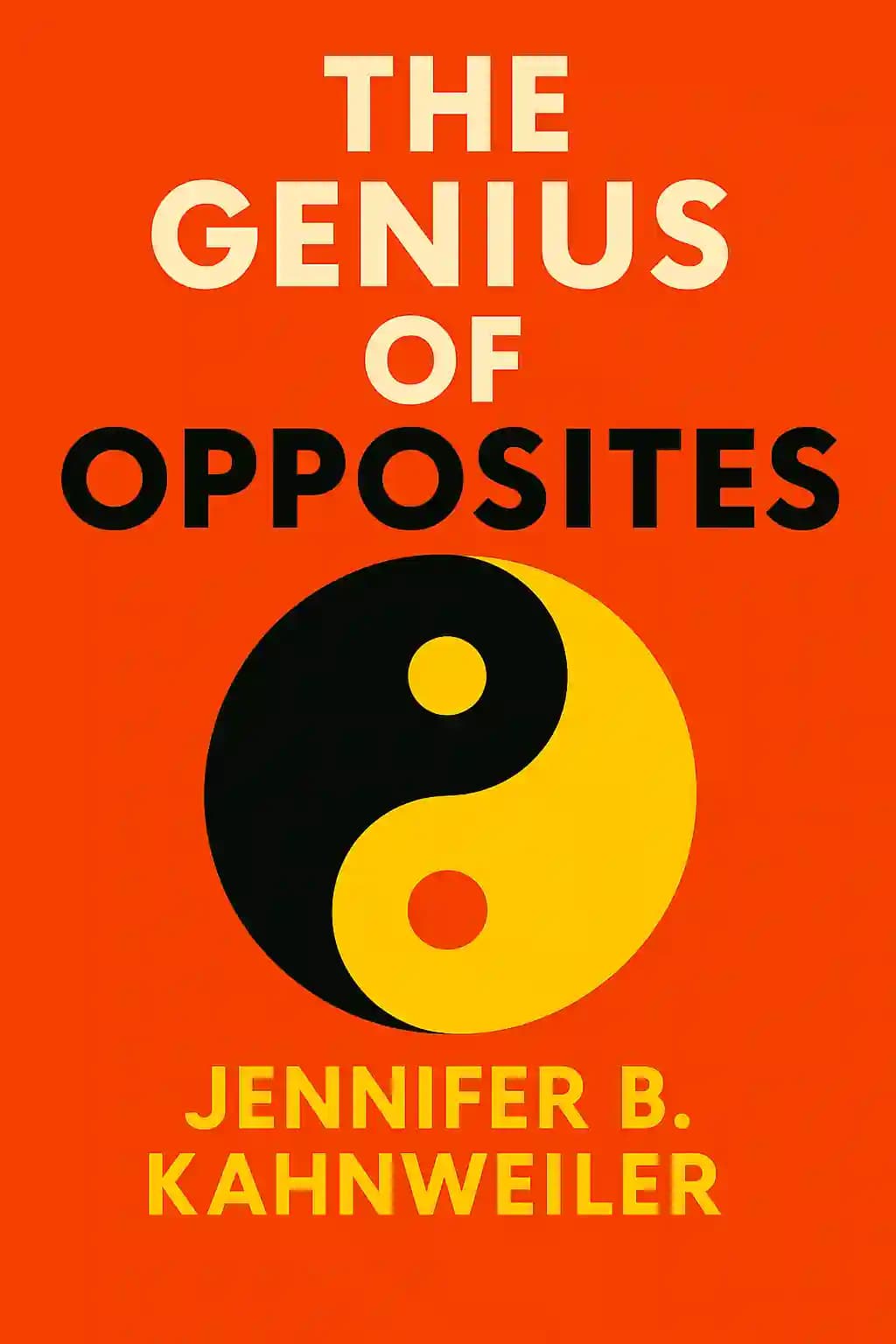
Imagine a world where your greatest frustrations become your greatest strengths. Where the colleague who drives you crazy becomes your secret weapon for success. This is the promise of "The Genius of Opposites," Jennifer Kahnweiler's groundbreaking exploration of introvert-extrovert partnerships. The book has become a cornerstone text for forward-thinking organizations, with companies like Google and Microsoft incorporating its principles into their team-building strategies. Kahnweiler's work has been featured in The Wall Street Journal, Harvard Business Review, and Forbes, with Susan Cain (author of "Quiet") calling it "essential reading for anyone who works with someone different from themselves-which is all of us." Drawing from her thirty years of research, Kahnweiler reveals the five essential steps that transform challenging personality differences into extraordinary collaborative results.
Capítulo 2
The Delicate Dance: Why Opposites Both Attract and Repel
Think of the most iconic partnerships in history: Lennon and McCartney, Jobs and Wozniak, Sandberg and Zuckerberg. What do they have in common? They're all introvert-extrovert duos who achieved remarkable things by harnessing their differences rather than fighting against them.
These partnerships aren't just additive-they're multiplicative. When an introvert's thoughtful analysis combines with an extrovert's enthusiastic action, the result isn't just the sum of their contributions but an exponential increase in creative power. The introvert brings depth while the extrovert brings breadth; one reflects while the other connects; one listens while the other speaks. Together, they create a complete circuit of human capability.
Yet for every successful partnership, there are four or five that crash and burn. Why? Because these relationships are deceptively difficult to maintain. The very differences that make them powerful also create natural friction points. The extrovert's tendency to process thoughts aloud can feel invasive to the introvert who needs quiet reflection. The introvert's need for solitude can feel like rejection to the extrovert who craves connection.
The fundamental wiring differences between these types create predictable challenges. Introverts recharge through solitude while extroverts gain energy from social interaction. Introverts process internally before speaking while extroverts think out loud. Introverts share personal information selectively while extroverts connect through immediate disclosure.
These differences aren't just preferences-they reflect neurological realities. Introverts process information through the acetylcholine pathway, which requires more time but creates deeper neural connections. Extroverts rely more on dopamine pathways that reward quick action and social engagement. Neither approach is superior, but they create fundamentally different ways of experiencing the world.
Understanding these differences is the first step toward transforming potential conflict into creative synergy. As Anthony Morris, a thoughtful introvert who built a thriving online training business with his extroverted partner Errol la Grange, puts it: "We don't create unison-we create harmony." This musical metaphor perfectly captures the genius of opposites: different notes played together creating something more beautiful than either could produce alone.
Capítulo 3
The ABCDE Framework: A Roadmap for Opposite Partnerships
How do you transform a challenging relationship into a genius partnership? Kahnweiler's extensive research with over forty successful opposite pairs across industries and disciplines revealed a consistent pattern-a comprehensive five-step process she calls the ABCDE framework. This evidence-based approach provides practical strategies for leveraging differences:
Accept the Alien: Successful opposites recognize they can't change their partner's fundamental wiring. Instead of trying to make their opposite more like themselves, they embrace differences as a source of strength. For example, an analytical CFO learned to appreciate his creative marketing partner's seemingly chaotic brainstorming process when it consistently led to innovative campaigns. This acceptance requires actively resisting the natural urge to "fix" your opposite and instead viewing their different approach as complementary.
Bring on the Battles: Productive disagreement leads to better outcomes. When opposites engage in honest conflict focused on ideas rather than personalities, they reach solutions neither would find alone. The key is establishing ground rules for constructive debate. One tech company pair developed a "challenge protocol" where they dedicated specific meeting time for pushing back on each other's ideas, resulting in more robust product designs.
Cast the Character: Each partner must play to their natural strengths and share credit appropriately. Like a well-cast film, each person takes roles that match their abilities. This means clearly defining responsibilities based on individual talents rather than traditional role expectations. A successful restaurant partnership thrived when the detail-oriented introvert handled operations while the extroverted partner managed customer relations and marketing.
Destroy the Dislike: Moving beyond mere tolerance to genuine respect and even friendship creates a foundation for lasting success. This requires intentional effort to understand your opposite's perspective and value system. Regular informal meetings, shared experiences outside work, and celebrating joint successes help build authentic connections. One engineering team instituted monthly "perspective swap" sessions where each partner had to advocate for the other's viewpoint.
Each Can't Offer Everything: Recognizing individual limitations allows partners to create a whole greater than the sum of its parts. This means being honest about weaknesses and actively seeking your partner's complementary strengths. Successful pairs regularly audit their skillsets to identify gaps and opportunities for leveraging their differences.
The framework's implementation is supported by the Genius of Opposites Quiz, a diagnostic tool helping partners assess their current relationship dynamics and identify specific areas for improvement. The assessment examines five key dimensions: communication patterns, conflict resolution, role clarity, mutual respect, and collaboration effectiveness.
What makes this approach particularly powerful is its focus on practical results rather than personality analysis. Instead of getting stuck in "why can't you be more like me?" thinking, partners learn to ask "how can our differences help us achieve our shared goals?" This shift in perspective transforms potential conflict into creative collaboration.
The process requires commitment and often involves productive discomfort. Dr. Alice Stewart's groundbreaking work with statistician George Kneale illustrates this perfectly. Their opposite approaches - her intuitive leaps balanced by his rigorous skepticism - created tension but ultimately led to their discovery of the link between prenatal X-rays and childhood cancer. Kneale's contrarian approach, summarized in his statement "My job is to prove Dr. Stewart wrong," provided the essential counterbalance that strengthened their research methodology and conclusions.
Capítulo 4
Accepting Your Alien: The Foundation of Productive Partnership
The journey begins with acceptance-not just tolerating differences but genuinely appreciating them. This is harder than it sounds because our natural tendency is to view our own approach as correct and others' as problematic. Extroverts often see introverts as unnecessarily cautious or withdrawn; introverts frequently perceive extroverts as impulsively talkative or overwhelming. These initial judgments can create invisible barriers that prevent truly effective collaboration.
Anthony Morris and Errol la Grange demonstrate the power of acceptance in their decade-long partnership running a successful Australian online training business. Despite their opposite styles-Anthony the thoughtful introvert who processes internally and needs time for reflection, and Errol the energetic extrovert who thinks out loud and thrives on rapid interaction-they've built a thriving enterprise by embracing their differences. They've developed specific strategies to bridge their communication gaps: scheduled reflection time for Anthony, structured brainstorming sessions for Errol, and regular check-ins that accommodate both styles. They've learned to sense what the other feels and talk through conflicts, ultimately reaching better solutions together than either could alone.
Acceptance matters for two key reasons: it builds empathy and strengthens the partnership. Like experiencing a "blind walk" where you must trust another person to guide you, stepping into your opposite's world awakens dormant parts of yourself. This process often reveals unexpected insights - introverts might discover the value of thinking aloud in certain situations, while extroverts might learn the power of strategic silence. You begin to see value in approaches that once seemed alien, creating a more versatile partnership capable of handling diverse challenges.
This acceptance is tested most severely under stress. When pressure mounts, introverts tend to withdraw further into their internal world, seeking solitude to process and plan, while extroverts typically increase their verbal processing and social interaction-amplifying their differences precisely when alignment is most needed. Economic downturns, tight deadlines, and organizational changes all create pressure points that can fracture partnerships unless acceptance remains strong. Successful pairs develop specific stress protocols: agreed-upon signals when one partner needs space, scheduled check-ins during critical periods, and explicit acknowledgment of each other's coping mechanisms.
The solution isn't to change your opposite but to understand them deeply and adapt your approach accordingly. Learning about personality styles through frameworks like Myers-Briggs or Big Five, speaking your partner's language (whether that's direct communication for extroverts or written updates for introverts), and recognizing that your opposite isn't trying to drive you crazy but is simply wired differently brings relief and reduces judgment. As Sarah Chen, a successful tech entrepreneur, puts it, "I used to think my partner's need for constant discussion was deliberately disruptive. Now I understand it's how she processes information and makes decisions. This awareness has transformed our partnership from a source of friction to a catalyst for innovation."
Successful partnerships often create specific protocols that honor both styles: quiet zones for focused work, designated times for open discussion, and hybrid meeting formats that include both immediate dialogue and delayed reflection. These structured approaches help partners navigate their differences while maintaining productivity and mutual respect.
Capítulo 5
Bringing on the Battles: The Productive Power of Conflict
Conflict avoidance is the enemy of innovation. Successful opposites understand that disagreement isn't just inevitable-it's necessary for reaching better outcomes. The key is making conflict productive rather than personal, transforming potential friction points into catalysts for growth and innovation.
Consider Dr. Alice Stewart and statistician George Kneale, whose opposite personalities and working styles led to a groundbreaking medical breakthrough. Stewart was outgoing, empathetic, and intuitive in her approach to medical research; Kneale was reclusive, analytical, and preferred working with pure data. His approach-"My job is to prove Dr. Stewart wrong"-created productive conflict that sharpened her thinking and methodology. Their intellectual sparring, while sometimes intense, ultimately led to their revolutionary discovery about prenatal X-rays causing childhood cancer, a finding that transformed maternal healthcare practices worldwide.
Bringing on battles matters for three key reasons: it's best for the organization, leads to better solutions, and provides clear paths to outcomes. Partners like Betsy Polk and Maggie Ellis Chotas demonstrate this principle in action at their consulting firm Mulberry. They acknowledge that "even in the toughest tug of wars we want what is best for Mulberry." This shared commitment to a larger purpose keeps conflict focused on ideas rather than personalities, allowing them to challenge each other's assumptions while maintaining mutual respect.
However, productive conflict requires psychological safety and equal standing between partners. When one partner is seen as more important or when concerns remain hidden, the process breaks down, often leading to passive-aggressive behavior and decreased productivity. Lawyer partners Kendra and Carolyn learned this lesson the hard way when an imbalanced workload created deep-seated resentment. Only after a marathon four-hour conversation, where both partners felt safe enough to express their true feelings, did they find a resolution that strengthened their partnership.
Successful opposites develop practical strategies for navigating conflict effectively. They:
• Acknowledge and respect energy differences between introverts and extroverts
• Clearly communicate needs and expectations upfront
• Manage crises together rather than delegating responsibility
• Bring in neutral third parties when needed to mediate complex disputes
• Take strategic time-outs when emotions run high
• Use "walk and talk" meetings that accommodate both personality types
• Schedule regular check-ins to address issues before they escalate
• Document agreements and decisions to prevent future misunderstandings
These approaches transform potential battlegrounds into laboratories for innovation, where different perspectives can safely collide and combine in new ways.
The goal isn't to eliminate tension but to channel it productively. As Roger Martin emphasizes in "The Opposable Mind," the ability to hold opposing ideas in creative tension leads to breakthrough thinking. When opposites bring their different perspectives to bear on a problem, they create a dynamic that homogeneous teams simply cannot match. This creative friction, when properly managed, becomes a powerful force for innovation and growth.
The most successful partnerships embrace conflict as a tool for growth, using their differences as a catalyst for innovation rather than a source of division. They understand that the temporary discomfort of disagreement is far outweighed by the long-term benefits of stronger solutions and more resilient partnerships.
Capítulo 6
Casting the Character: Playing to Natural Strengths
Successful opposites understand the importance of playing to each other's natural strengths and casting the right roles. Like a well-directed film, each partner takes on responsibilities that match their abilities and temperament, creating a dynamic where both individuals can thrive while complementing each other's capabilities.
Jack Ma, the flamboyant extroverted founder of Alibaba, and his introverted successor Jonathon Lu exemplify this dynamic perfectly. While Ma dressed in costume and sang to thousands of employees, energizing the company culture through his theatrical leadership style, Lu operated effectively behind the scenes, focusing on operational excellence and strategic execution. Their complementary relationship worked because they recognized their different strengths-"He looks forward and outside of the box; I focus on the present." This partnership demonstrated how contrasting styles can create a more complete leadership approach.
Casting the right character matters for three key reasons: it allows opposites to step into their natural strengths, creates effective "straight man/woman" dynamics, and leads to unexpected positive outcomes. The Burns and Allen comedy duo perfectly demonstrated this-George as the calm, rational husband and Gracie as the "out-there" ditzy wife. Their success came from embracing these roles fully rather than fighting against them. As Roger Rosenblatt noted, "The essence of the straight man is that he gives. He gives the best lines, the stage and the spotlight." This principle extends beyond entertainment into business and creative partnerships.
When casting breaks down, several common problems arise: roles become unclear or unfair, one person takes all the credit, or partners trap each other in rigid expectations. Jonas Salk's failure to acknowledge his research team's contributions in developing the polio vaccine created lasting resentment, while Sari's expectation that Rashid would always welcome her interruptions damaged their working relationship. These examples highlight how misaligned roles can undermine even the most promising partnerships.
Successful opposites employ specific strategies to maintain healthy role dynamics. They get their own house in order first by clearly defining responsibilities, actively advocate for each other in public and private settings, and occasionally break out of expected roles to keep things fresh and avoid stagnation. They carefully match tasks to personality types, understanding that introverts might excel at detailed analysis while extroverts shine in client-facing roles. When necessary, they get agreements in writing to prevent misunderstandings and provide on-the-spot coaching to help partners grow into their roles. These practices ensure that each partner contributes their best while feeling valued for their unique contributions.
The most effective partnerships aren't static-they evolve as partners learn from each other and adapt to changing circumstances. Introverts may become more comfortable with public speaking through their extroverted partner's influence; extroverts may develop deeper analytical skills by observing their introverted counterpart's approach. This mutual growth doesn't erase fundamental differences but enriches the partnership's capabilities over time, creating a more resilient and adaptable team. Examples include Warren Buffett developing his public speaking skills while Charlie Munger refined his investment approach, showing how opposite pairs can help each other develop complementary skills while maintaining their core strengths.
Capítulo 7
Destroying the Dislike: From Tolerance to Friendship
Film critics Gene Siskel and Roger Ebert initially "hardly had a single conversation" despite working together. Their fundamental differences-with extroverted Roger telling introverted Gene to "sound a little excited" and Gene telling Roger to "sound a little less excited"-created friction that could have derailed their partnership. Yet over time, they realized they were "building something together." When Siskel died in 1999, Ebert revealed their deep connection: "We had all kinds of little vibes that we shared... we could read each other's minds."
Their evolution from competitors to collaborators illustrates the power of destroying dislike. This doesn't mean becoming best friends overnight-it means developing genuine respect and affection that transcends personality differences.
Destroying dislike matters for three key reasons: it drives results, expands your world, and creates relationships that evolve positively over time. In Perth, Australia, extroverted Ron Alexander and his introverted colleague Graham bonded over shared goals to build capacity and leave a legacy, leading to a respected sports complex. Similarly, Steve Jobs (extrovert) and Steve Wozniak (introvert) weren't natural friends but built on shared passions for music and electronics, creating Apple and revolutionizing technology.
When dislike persists, communication breaks down, as dental assistant Leila discovered with her introverted dentist-boss Jake. Without dialogue to resolve tension, the office atmosphere suffered. Similarly, extroverted salesperson Eula damaged her potential relationship with introverted account manager Sophia by forcing friendship too quickly, making Sophia distance herself.
Successful opposites keep their vision front and center, find inspiration in common symbols, remain open to even short-term friendships, balance privacy needs with information sharing, talk openly about their differences, and even learn to appreciate how they "drive each other a little nuts." As Victor Borge said, "laughter is the shortest distance between two people," helping opposites relax, support each other, and remain friends while working together.
The transformation from dislike to respect doesn't happen overnight. It requires intentional effort and a willingness to see beyond surface irritations to the value beneath. But when opposites make this journey, they create partnerships capable of extraordinary achievements that homogeneous teams rarely match.
Capítulo 8
Each Can't Offer Everything: The Power of Complementary Skills
When introverted Stephanie and extroverted Jane work together at their video production company, clients experience a seamless, "unstoppable" partnership. Their complementary traits-Stephanie's deep focus and Jane's energetic client engagement-create exceptional service that neither could provide alone.
This principle-that each partner can't offer everything-is fundamental to successful opposite partnerships. Rather than competing or trying to be well-rounded individually, partners recognize their limitations and leverage their combined strengths to provide a wider range of options and perspectives.
This approach matters for three key reasons: clients experience a seamless flow rather than competing approaches, they get a choice of personalities to match their needs, and they benefit from a range of views rather than a forced consensus. As consultants Mike Wittenstein and Stan Phelps discovered, "Clients like to have personalities to pick from to match their audiences. They like to know that when they hire one of us, they get both of us."
However, this delicate balance breaks down when one style dominates the partnership, when partners ignore personality preferences under pressure, when they fail to prepare together, or when they overlook necessary buy-in. Extroverted library director Daniel learned this lesson when he enthusiastically brokered a deal with a nonprofit without consulting his introverted librarian Walt, creating anxiety and implementation problems.
Successful opposites "speed-read" their clients' preferences and match their energy accordingly, flex their styles without changing who they are fundamentally, model openness about their differences, gather regular feedback about what's working, strengthen each other's performance through coaching, and collaborate behind the scenes before client interactions.
Sales manager Ricky and his introverted partner Liz use whiteboards to list pros and cons, role-play customer interactions, and air concerns before making decisions. This deliberate preparation allows them to leverage their different strengths-Liz's careful data analysis and Ricky's action orientation-to create optimal solutions that neither could develop alone.
The result is a partnership where the whole truly exceeds the sum of its parts-where clients receive not just competent service but exceptional value that often exceeds their expectations.
Capítulo 9
From Inspiration to Action: Implementing the Genius Process
Creating extraordinary outcomes with your opposite doesn't happen automatically-it requires working through frustration and confusion. The key is maintaining a vital, active relationship while focusing on shared goals rather than differences in process. Opposites must continually return to the question: "What is the common goal we want to emerge from all of this?" This question serves as a north star during challenging moments and helps partners realign when tensions arise.
The implementation of the Genius of Opposites Process requires consistent attention and practice. Keep the ABCDE framework (Accept the Anxiety, Bring on the Battles, Cast the Character, Destroy the Dislike, and Each Can't Offer Everything) visible in daily interactions. Post it on your desk, create digital reminders, or incorporate it into team meeting agendas. Draw inspiration from successful partnerships like Steve Jobs and Steve Wozniak, or Walt and Roy Disney, who leveraged their differences to build legendary companies.
To make the process actionable, start with small experiments. Commit to trying three new approaches with your opposite each week, such as deliberately seeking their perspective before making decisions, scheduling regular check-ins, or creating shared documentation systems that accommodate both working styles. Measure progress by retaking the partnership assessment after thirty days, noting specific improvements in communication and collaboration.
Apply these tools systematically to current work projects where you're stuck with an opposite. For example, if you're a quick-decision maker paired with a methodical analyzer, create a hybrid decision-making process that incorporates both rapid prototyping and thorough analysis. Practice these techniques with family and friends to build confidence and refine your approach in lower-stakes environments.
The journey from frustration to synergy isn't always smooth. There will be setbacks and moments of doubt. Partners might revert to old patterns during stress, or face resistance from team members used to more homogeneous working styles. But with persistence and the right framework, opposite partnerships can achieve results that homogeneous teams rarely match. As Anthony and Errol discovered in their decade-long partnership, "We don't create unison-we create harmony."
This harmony-this genius of opposites-represents one of the most powerful yet underutilized resources in today's organizations. In a world increasingly divided by differences, learning to leverage opposing perspectives rather than being limited by them offers a pathway not just to better business results but to more fulfilling human connections. Successful opposite partnerships have been shown to increase innovation by 70% and improve problem-solving efficiency by 50% compared to homogeneous teams.
When we move beyond merely tolerating differences to actively embracing them, we discover that what once frustrated us most can become our greatest source of strength. This transformation occurs through deliberate practice, mutual respect, and unwavering commitment to shared goals. That's the promise and the potential of the genius of opposites-a partnership where 1 + 1 equals something far greater than 2, creating breakthrough innovations and sustainable success that neither partner could achieve alone.