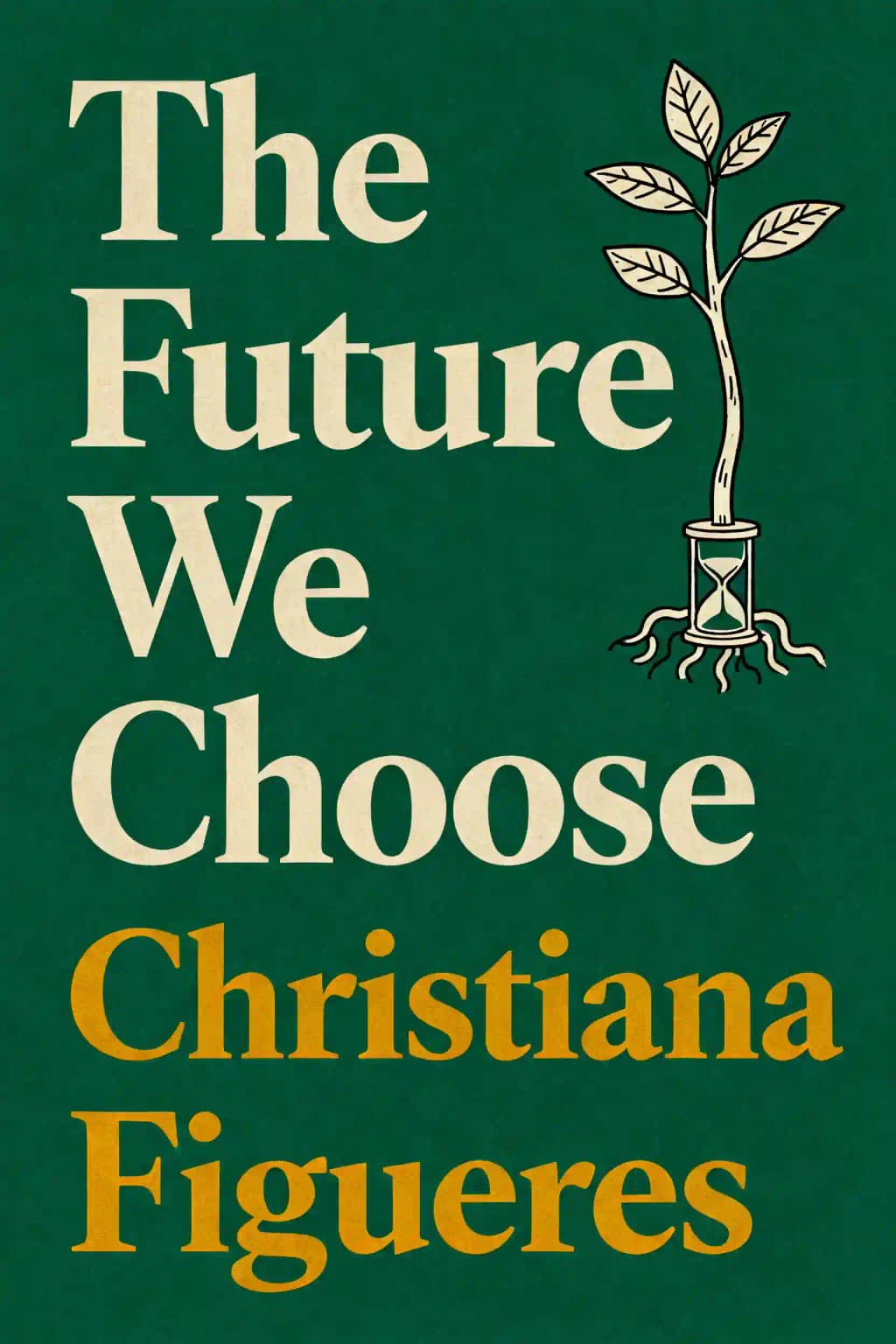
THE FUTURE WE CHOOSE
Resumen de THE FUTURE WE CHOOSE
Former UN climate chief Christiana Figueres offers two futures: climate collapse or carbon-neutral prosperity. This urgent manifesto, praised by Kirkus Reviews, became a discussion cornerstone for communities worldwide. What mindset shifts - Stubborn Optimism, Endless Abundance - could transform our planet's destiny?
Temas clave en THE FUTURE WE CHOOSE
- climate crisis mitigation
- stubborn optimism
- regenerative future
- global climate policy
- sustainable mindset shift
Citas de THE FUTURE WE CHOOSE
We aren't passive recipients of attitudes but active creators of them.
Radical change begins with unwavering belief in possibility.
The evolution of humanity is a story of adaptive ingenuity.
What if the real challenge isn't managing scarcity but creating abundance?
Personajes en THE FUTURE WE CHOOSE
- Christiana FigueresFormer UN climate chief and author
- Tom Rivett-CarnacStrategic advisor and co-author
- Malala YousafzaiHistorical figure cited for transformative belief
Sobre el Autor
Sobre el autor de THE FUTURE WE CHOOSE
Christiana Figueres, co-author of The Future We Choose: The Stubborn Optimist’s Guide to the Climate Crisis, is a renowned Costa Rican diplomat and architect of the landmark 2015 Paris Climate Agreement. As Executive Secretary of the UN Framework Convention on Climate Change (2010–2016), she catalyzed unprecedented global collaboration, securing commitments from 195 nations to limit warming to 1.5°C.
Born in San José to a political legacy—her father served three terms as Costa Rica’s president—Figueres blends her background in international cooperation and renewable energy advocacy to outline actionable climate solutions in this prescriptive nonfiction work.
A founding partner of Global Optimism and convener of Mission2020, Figueres sits on boards including ClimateWorks and the World Resources Institute. Her TED Talks and keynote addresses at Davos and COP summits have shaped mainstream climate discourse. The Future We Choose distills her 25-year career in climate diplomacy into a blueprint for collective action, emphasizing renewable energy transitions and climate justice. The Paris Agreement, negotiated under her leadership, became international law in just 11 months—the fastest UN treaty ratification in history.
Descargar resumen de THE FUTURE WE CHOOSE
Obtén el resumen de THE FUTURE WE CHOOSE como PDF o EPUB gratis. Imprímelo o léelo sin conexión en cualquier momento.
Preguntas Frecuentes Sobre Este Libro
The Future We Choose outlines two potential scenarios for 2050: a climate-devastated world if emissions remain unchecked, and a thriving, regenerated planet if humanity rapidly transitions to renewable energy and sustainable systems. The book emphasizes three key mindsets (stubborn optimism, endless abundance, and radical regeneration) and ten actionable steps to achieve net-zero emissions by 2050.
This book is essential for climate activists, policymakers, and anyone seeking actionable strategies to combat the climate crisis. It’s particularly relevant for readers interested in systemic change, renewable energy transitions, and fostering resilience in the face of ecological challenges.
Yes—it balances stark climate warnings with pragmatic solutions, offering a roadmap for personal and collective action. The authors’ firsthand experience negotiating the Paris Agreement adds credibility, while the ten actionable steps provide clarity for readers overwhelmed by climate anxiety.
The authors advocate adopting:
- Stubborn optimism: Relentless focus on achievable solutions despite setbacks.
- Endless abundance: Shifting from scarcity to leveraging renewable resources like solar/wind energy.
- Radical regeneration: Restoring ecosystems and reimagining economic systems to prioritize sustainability.
Key actions include retiring fossil fuels, defending scientific truth, reforesting degraded land, and redesigning cities for walkability. A central theme is rejecting nostalgia for fossil-fuel-driven systems and embracing equitable, democratic transitions to clean energy.
The book validates climate-related grief while urging readers to channel it into purposeful action. It emphasizes “holding a vision of the future” through community engagement and political advocacy, framing emotional resilience as critical to sustaining long-term efforts.
Some critics argue the book underplays systemic barriers like corporate lobbying and political short-termism. While it acknowledges the need for economic fairness, it offers limited concrete strategies to dismantle existing power structures tied to fossil fuels.
Co-author Christiana Figueres spearheaded the 2015 Paris Agreement, and the book expands on its goals. It reframes the accord as a starting point, detailing how individuals and governments can exceed its targets through accelerated decarbonization.
Notable lines include:
- “Let go of the old world—it’s time to challenge our assumptions.”
- “Vanquishing [climate doomism] was our true legacy.”
These emphasize rejecting incrementalism and embracing systemic reinvention.
Unlike technical guides like The Uninhabitable Earth, this book focuses on psychological resilience and collective agency. It aligns with Drawdown’s solutions-based approach but adds urgency through its dual 2050 scenarios.
With global emissions still rising, the book’s 2030 decarbonization deadline remains critical. Its emphasis on democratic action (vs. authoritarian climate policies) addresses contemporary debates about balancing speed and equity in transitions.
It directly challenges fossil fuel companies and industries reliant on extraction, urging rapid phaseouts. It also critiques urban planners and governments prioritizing short-term economic growth over sustainable infrastructure.