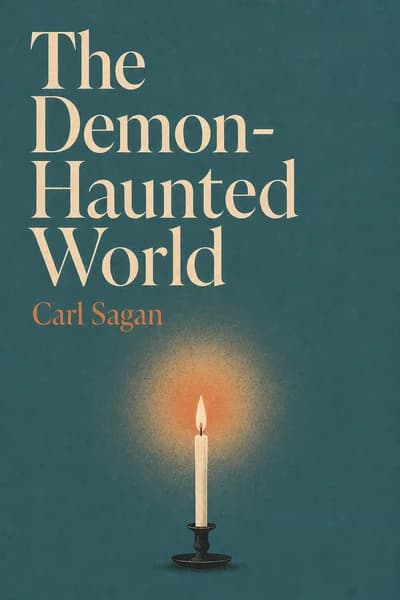
The Demon-Haunted World
Science as a Candle in the Dark
Resumen de The Demon-Haunted World
In "The Demon-Haunted World," Carl Sagan illuminates science as humanity's defense against superstition. This NYT bestseller, praised as "one of the most important books ever written," offers a toolkit for critical thinking that's more urgent today than when first published in 1995.

Temas clave en The Demon-Haunted World
- scientific skepticism
- critical thinking skills
- pseudoscience debunking
- error correction process
- rational inquiry
Citas de The Demon-Haunted World
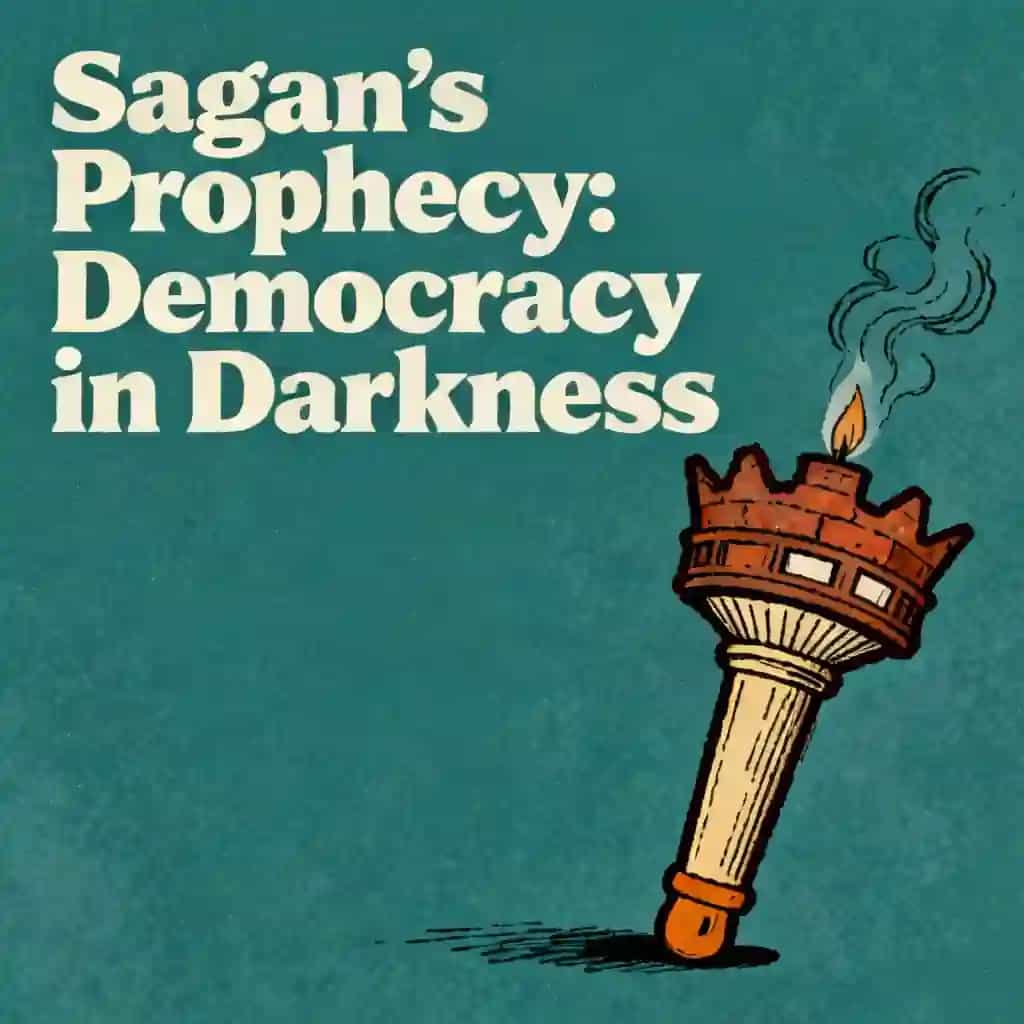
I have a foreboding of an America in my children's or grandchildren's time -- when the United States is a service and information economy; when nearly all the manufacturing industries have slipped away to other countries; when awesome technological powers are in the hands of a very few, and no one representing the public interest can even grasp the issues; when the people have lost the ability to set their own agendas or knowledgeably question those in authority; when, clutching our crystals and nervously consulting our horoscopes, our critical faculties in decline, unable to distinguish between what feels good and what's true, we slide, almost without noticing, back into superstition and darkness...
It seems to me what is called for is an exquisite balance between two conflicting needs: the most skeptical scrutiny of all hypotheses that are served up to us and at the same time a great openness to new ideas.
Science is far from a perfect instrument of knowledge. It's just the best we have.
If we teach only the findings and products of science—no matter how useful and even inspiring they may be—without communicating its critical method, how can the average person possibly distinguish science from pseudoscience?
Personajes en The Demon-Haunted World
- Carl SaganAuthor, scientist, and advocate for skepticism
- Edmund Way TealeWriter quoted on the morality of seeking truth
Sobre el Autor
Sobre el autor de The Demon-Haunted World
Carl Edward Sagan (1934–1996) was a renowned astronomer, astrophysicist, and science communicator who authored The Demon-Haunted World: Science as a Candle in the Dark, a seminal work in popular science that champions scientific skepticism and critical thinking. A professor at Cornell University and director of its Laboratory for Planetary Studies, Sagan’s career combined rigorous academic research—including NASA collaborations on the Mariner and Voyager missions—with a gift for making complex concepts accessible. His expertise in planetary science and extraterrestrial life studies underpins the book’s exploration of combating pseudoscience through rational inquiry.
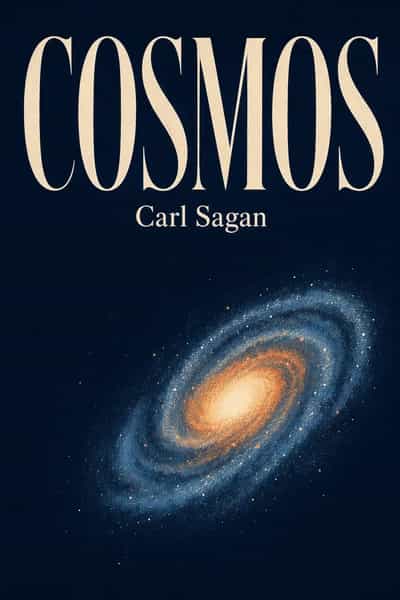
Sagan’s legacy includes bestselling titles like Cosmos (adapted into the iconic PBS series), Contact (a science fiction novel later filmed), and Pale Blue Dot, all celebrated for bridging science and public understanding.
A vocal advocate for space exploration and nuclear disarmament, he co-developed the "nuclear winter" hypothesis and designed interstellar messages like the Voyager Golden Record. The Demon-Haunted World remains a foundational text, translated into over 20 languages and continuously praised for its urgent defense of evidence-based reasoning in an era of misinformation.
Descargar resumen de The Demon-Haunted World
Obtén el resumen de The Demon-Haunted World como PDF o EPUB gratis. Imprímelo o léelo sin conexión en cualquier momento.
Preguntas Frecuentes Sobre Este Libro
The Demon-Haunted World advocates for scientific skepticism and critical thinking as tools to combat pseudoscience, superstition, and societal ignorance. Carl Sagan explains the scientific method, debunks myths like UFO sightings and faith healing, and argues that a scientifically literate populace is essential for democracy and progress. The book emphasizes rational inquiry over unquestioned beliefs.
This book is ideal for readers interested in science communication, skeptical inquiry, or combating misinformation. It’s valuable for educators, students, and anyone concerned about the rise of pseudoscience in modern society. Sagan’s accessible writing style makes complex ideas approachable for non-experts.
Yes—it remains a cornerstone of scientific literature, praised for its urgency in addressing misinformation. Readers appreciate its timeless relevance, particularly in an era of "fake news" and anti-intellectualism. Critics note its occasional focus on 1990s-era UFO claims, but its core message transcends specific examples.
Key themes include:
- The danger of substituting superstition for scientific literacy.
- The importance of skepticism in evaluating claims.
- The role of education in preserving democracy.
- The ethical responsibility of scientists to communicate clearly.
The metaphor symbolizes science as a light dispelling ignorance and irrational fear. Sagan argues that scientific thinking—rooted in evidence, testing, and humility—protects society from regressing into myth-driven "demons" like mass hysteria or authoritarianism.
Some critics argue Sagan overemphasizes UFOlogy and 1990s cultural trends, making portions feel dated. Others suggest his optimism about scientific progress overlooks systemic barriers to education. However, most agree the book’s advocacy for critical thinking remains vital.
Unlike Cosmos’s focus on astronomy, this book tackles societal issues, aligning closer to Pale Blue Dot’s humanistic themes. It’s more polemical than his earlier works, directly challenging pseudoscience and advocating for education reform.
The book’s warnings about misinformation, distrust in institutions, and anti-science movements resonate in today’s climate of AI deepfakes and conspiracy theories. Sagan’s call for critical thinking offers a framework to navigate modern challenges.
- “Science is more than a body of knowledge; it’s a way of thinking.”
- “Extraordinary claims require extraordinary evidence.”
- “We can judge our progress by the courage of our questions.”
These lines underscore Sagan’s emphasis on curiosity and empirical rigor.
He dissects UFO claims as modern myths, highlighting flawed evidence and psychological factors driving belief. Sagan stresses that uncritical acceptance of such stories reflects broader societal resistance to scientific scrutiny.
Sagan advocates for:
- Revamping science education to prioritize critical thinking.
- Encouraging public engagement with scientific debates.
- Promoting media literacy to combat misinformation.
Sagan’s warnings about unchecked technological power and gullibility apply to AI ethics, social media algorithms, and bioengineering. The book urges balancing innovation with ethical skepticism—a caution still relevant today.