Capítulo 1
A Chilling Inheritance of Secrets and Lies
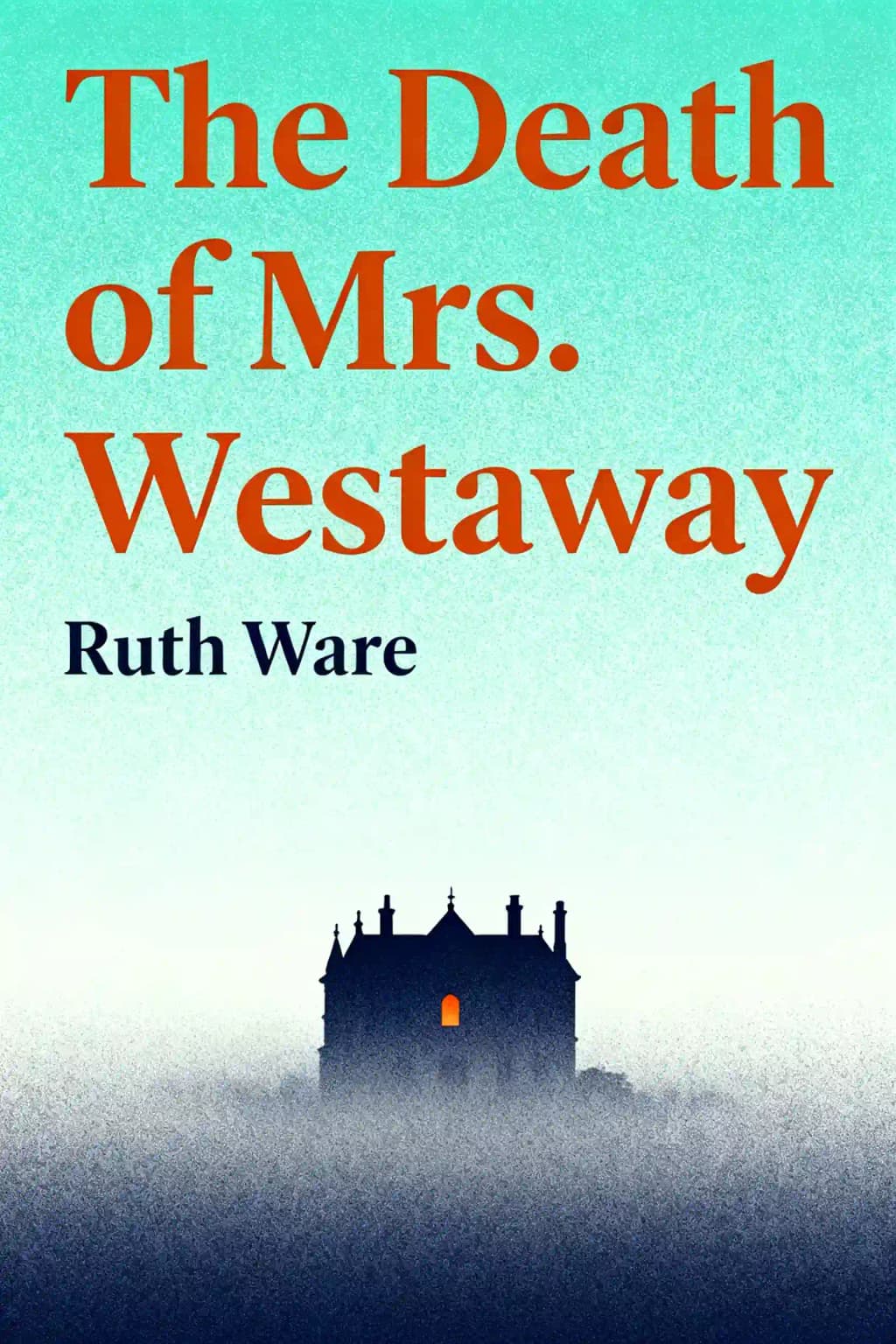
When Ruth Ware's psychological thriller "The Death of Mrs. Westaway" hit shelves in 2018, it quickly captivated readers with its atmospheric tension and intricate web of family secrets. The novel, which Stephen King praised as "a dark and dramatic thriller that will have you sleeping with the lights on," became an instant New York Times bestseller. Ware's masterful blend of Gothic elements with modern suspense has earned her comparisons to Agatha Christie and Daphne du Maurier, with this particular work drawing inspiration from du Maurier's classic "Rebecca." The book's exploration of identity, deception, and the lengths people will go to protect their secrets resonated deeply with readers, making it a favorite book club selection and cementing Ware's reputation as one of the most compelling voices in contemporary thriller fiction.
Capítulo 2
The Tarot Reader's Desperate Gamble
Harriet "Hal" Westaway lives a precarious existence. Three years after her mother's death in a hit-and-run accident, the twenty-one-year-old scrapes by reading tarot cards on Brighton Pier. Though she doesn't believe in the mystical aspects of tarot, Hal possesses an uncanny ability to read people-noticing subtle details in their appearance and behavior that allow her to craft compelling narratives from the cards. This skill, learned from watching her mother perform readings for years, helps her survive but barely covers her expenses.
When we meet Hal, her situation has become desperate. She owes money to a loan shark, and his enforcers have begun leaving threatening notes. The unspoken message is clear-they know where she lives, where she works, and they will return. With winter approaching and her finances in shambles, Hal feels trapped and increasingly fearful.
Then a letter arrives from a solicitor in Penzance, informing her that her grandmother, Hester Mary Westaway of Trepassen House, has died and named Hal as a beneficiary in her will. There's just one problem: Hal's grandparents died over twenty years ago. This must be a case of mistaken identity.
Yet as Hal researches Trepassen House online and discovers it's an impressive country estate, a spark of hope ignites. The possibility of inheriting even a small share could solve her financial problems and provide security she hasn't known since her mother died. Despite knowing there must be a mistake, Hal can't help but wonder if she could pull off claiming the inheritance. After all, with her skills as a cold reader-her ability to observe details and craft convincing narratives-isn't she uniquely qualified to play this role? When one of the loan shark's enforcers breaks into her flat and destroys her belongings, including the only photo of her and her mother, something breaks inside Hal. She books a train ticket to Penzance, deciding to take her chances with the mysterious inheritance.
Capítulo 3
Journey to Trepassen House
The train journey to Penzance marks Hal's first step into deception. She researches the Westaway family online, discovering that Hester Mary Westaway was survived by three sons-Harding, Abel, and Ezra-and their children, but notably, no daughter is mentioned among the survivors. Using social media, she learns that Harding has a wife named Mitzi and three teenage children, while Abel appears to be in a relationship with a man named Edward. Both brothers' profiles suggest comfortable wealth that makes Hal ache with envy.
Upon arriving in Penzance, Hal attends Hester Westaway's funeral, where she meets Mr. Treswick, the solicitor who wrote to her. Inside the nearly empty church, she observes the pallbearers: Harding (balding and jowly), Abel (bearded with graying blond hair), and Ezra (younger, dark-haired, and inappropriately flirtatious). Throughout the service, Hal struggles with her deception, feeling a profound wrongness in participating in this ritual for a woman she has no connection to.
After the service, Mr. Treswick drives Hal to Trepassen House, which appears neglected with overgrown ivy and cracked paint. Her hopes for a substantial inheritance begin to fade. As they approach, Mr. Treswick explains the house's name likely comes from the Cornish for "Magpie Farm," appropriate given the numerous magpies that plague the property. He shares the old rhyme about magpies with Hal-"One for sorrow, two for joy"-explaining it continues through "five for silver, six for gold." When Hal asks about seven magpies, Mr. Treswick replies ominously: "Seven magpies are for a secret never to be told."
At Trepassen, Hal meets Mrs. Warren, the elderly housekeeper who regards her with cold speculation rather than warmth. Mrs. Warren's manner is brusque, implying Hal is just another family member "picking like magpies over the spoils" despite not caring for Mrs. Westaway during her life. The housekeeper assigns Hal to a painfully bare attic room with only a metal bedstead, washstand, and a barred nursery window-bars that seem designed to keep someone in rather than out.
Capítulo 4
Family Revelations and Mounting Tensions
When Hal introduces herself to the family as Harriet Westaway, Mr. Treswick explains she's "Maud's daughter." The revelation stuns the three brothers. Harding can't understand why they never knew, Abel repeatedly expresses disbelief, while Ezra goes pale and silent. Despite her fear, Hal plays her part, shaking Harding's hand and accepting Abel's emotional hug as he welcomes her "home."
What follows is a chaotic half-hour of questions from her supposed relatives, with multiple voices talking over each other, asking about her upbringing and current situation. Harding's interrogation style is direct and demanding, while Abel deflects difficult questions with friendly anecdotes. Throughout it all, Ezra remains silent, simply watching her.
The tension escalates dramatically when Mr. Treswick gathers everyone to discuss Mrs. Westaway's will. He nervously explains that Mrs. Westaway left specific bequests: thirty thousand pounds to Mrs. Warren and ten thousand to each grandchild-except Harriet, who has been left "the entire residue of the estate." Harding explodes in anger, demanding to see the will's wording and threatening to challenge it. As the tension reaches its peak, Hal feels faint and collapses to the floor.
When she awakens, Hal learns more about the family dynamics. Abel explains he was cut off by his mother years ago and had resigned himself to receiving nothing in the will. The conversation turns to Maud, Abel's sister, who ran away twenty years ago. With painful emotion, Abel directly asks Hal what happened to her mother. Trapped and unable to evade the question, Hal tells them her mother died in a hit-and-run accident three years ago, just before her eighteenth birthday. Abel is devastated by the news, making Hal realize with guilt that these are real people with genuine grief, not the "imaginary rich yahoos" she had envisioned on the train.
Capítulo 5
Uncovering Hidden Truths
As Hal explores Trepassen House, she discovers increasingly troubling details that suggest a far darker history than she initially imagined. In her attic bedroom - a space that feels more like a prison cell than guest quarters - she finds "HELP ME" scratched into the window glass behind heavy iron bars. The desperate message had been deliberately hidden from casual view, visible only when the light catches it at certain angles. She also notices that her bedroom door has two heavy-duty brass bolts mounted on the outside, their worn surfaces suggesting years of use - as if the room had been designed to confine rather than shelter its occupants.
While methodically exploring the sprawling house, Hal discovers an abandoned study thick with dust and forgotten memories. Inside, she finds a yellow leather-bound photo album containing carefully preserved family photographs spanning decades. The images show holidays, celebrations, and mundane moments of family life at Trepassen House. Before she can examine it thoroughly, Harding appears suddenly in the doorway, his presence both protective and menacing as he whisks the album away. Later that evening, Abel shows Hal a photograph that stops her heart - it shows Abel, Ezra, a fair-haired girl she identifies as Maud, and unmistakably, Hal's own mother. The revelation comes when Abel explains that the dark-haired girl was "Maggie Westaway," supposedly a distant cousin who came to live with them after losing her parents in her teenage years.
Hal's world shifts on its axis as she realizes the devastating truth - her mother was not Maud Westaway's daughter but another Margarida Westaway entirely, explaining Mr. Treswick's earlier confusion about the inheritance. This revelation forces Hal to confront an uncomfortable moral dilemma: by concealing this knowledge, she has crossed the line from unwitting beneficiary to active participant in fraud.
The mystery deepens when Hal discovers a diary entry hidden between the pages of an old book, dated December 1994. The writer - young, frightened, and alone - describes being imprisoned in the very attic room where Hal now sleeps. The entry details how her aunt locked her away upon discovering her pregnancy, demanding she reveal the father's identity. In what must have been a moment of desperate defiance, she used her mother's precious diamond engagement ring to scratch that haunting plea for help into the window glass - a message that would wait decades to be discovered.
The web of secrets begins to unravel further when Mrs. Warren, the elderly housekeeper whose memory seems selective at best, makes a revealing slip. She makes a cryptic comment about "Maggie" being "into all that muck" - dismissively referring to tarot cards as "pagan stuff." The casual mention of her mother's nickname sends a jolt through Hal, who begins to suspect that Mrs. Warren knows far more about her true identity than she's letting on. The housekeeper's knowing looks and careful choice of words suggest she's been watching Hal with more than casual interest since her arrival.
Capítulo 6
Danger in the Shadows
After making her devastating confession to the family - revealing that she is not their niece and that Margarida Westaway was not her mother but rather Maggie Westaway - Hal retreats to her room, emotionally and physically drained by the day's revelations. The weight of her deception and the subsequent truth-telling leaves her feeling vulnerable in the sprawling old house. She drifts into an uneasy sleep, only to wake hours later in the pitch darkness with her throat parched and desperately needing water.
The house creaks with ancient settling sounds as she makes her way toward the stairs. The darkness is absolute - unusually so - and she realizes the corridor's light bulb is missing. As she takes her first tentative step down the staircase, her ankle catches sharply on something nearly invisible. Before she can react, she's falling, tumbling down the wooden stairs in a terrifying cascade that ends with her head striking hard against the bottom step.
Dazed but conscious, Hal forces herself to investigate. Using her phone's flashlight, she makes a chilling discovery: someone has meticulously driven rusty nails into the skirting board at precisely ankle height, with remnants of snapped string stretched between them - an elaborate trap designed to cause serious injury or worse. The calculated nature of the setup becomes clear: the missing light bulb, the positioning of the nails, the timing - all suggesting someone had prepared this trap long ago, perhaps even before her trip to Brighton, waiting for the perfect moment to strike.
Despite her throbbing head and bruised body, Hal's determination only grows stronger. Running away now would mean surrendering to the same fears that drove her mother away years ago. Too many questions remain unanswered: the true reason behind her mother's flight, the deliberate deception about Hal's father's identity, Maud's mysterious disappearance, and most pressingly, what dark secret could be worth killing to protect.
The following morning, nursing her injuries but driven by an urgent need for answers, Hal ventures onto the estate's grounds. Following the path described in her mother's diary, she discovers the lake - a dark mirror reflecting the overcast sky. Through a tangle of overgrown vegetation, she spots the boathouse, its weathered structure almost completely hidden by encroaching nature. The rotted door gives way with unsettling ease, and inside, Hal makes another disturbing discovery: a partially submerged boat, its hull bearing a jagged, purposefully made hole - clear evidence of sabotage. The boathouse's atmosphere is thick with decay and foreboding, bearing no resemblance to the idyllic spot her mother had lovingly described in her diary. Instead, it feels like a tomb - a place where dark secrets have festered for decades, waiting to be unearthed.
Capítulo 7
The Final Devastating Truth
Unable to sleep after her discoveries, Hal retrieves the yellow photo album she'd glimpsed in the study. Looking through the family photographs, she makes a shocking discovery-the girl labeled as "Margarida" (Maud) is unmistakably her mother. This revelation turns everything upside down: Hester Westaway was indeed her grandmother, the will was valid, and the woman who raised her wasn't her birth mother.
The truth emerges card by card, like a tarot reading. Maggie had escaped Trepassen with Maud's help, and given birth to Hal in Brighton. Then something drew Maggie back to Trepassen alone-perhaps financial desperation-leaving baby Hal with Maud. But Maggie never returned, and Maud stepped into her cousin's life, sacrificing her Oxford education and dreams of freedom to raise Hal as her own.
This explains why Maud had seemed so different from the girl in the diary-they were different people. And examining the photograph Abel had given her, Hal realizes another shocking truth: her father must be Ezra. The dark eyes she inherited didn't come from her mother Maggie, who had blue eyes, but from Ezra himself.
Unable to sleep with the weight of her discovery, Hal decides to confront Mrs. Warren for answers. She finds the housekeeper's rooms empty but disturbingly shrine-like, filled with photographs of Ezra at various ages-a testament to her obsessive devotion to him.
As Hal explores further into Mrs. Warren's private quarters, Ezra appears behind her. Looking into his dark eyes-eyes so like her own-Hal experiences a moment of crystallizing realization. Everything suddenly makes sense: Mrs. Warren's odd expression when they first met, the strange wording of Mrs. Westaway's will, and Ezra's refusal to challenge the inheritance.
In the confrontation that follows, Ezra confesses to killing both Maud and Maggie. He explains that Maud was planning to tell Hal everything when she turned eighteen, and he couldn't let that happen. He describes taking Maggie to the lake years ago, and when she rejected his advances and slapped him, his rage took over. He strangled her and disposed of her body in the icy water.
Capítulo 8
A Legacy of Secrets Revealed
The final confrontation between Hal and Ezra unfolds in the oppressive darkness of Trepassen House, where shadows seem to hold decades of buried truths. After discovering damning evidence in the attic-old letters and a hidden diary-Hal finds herself cornered by an increasingly desperate Ezra. She manages to escape through the cellar's dank passages, emerging into the estate grounds where moonlight casts an ethereal glow across the frost-covered landscape. The bitter winter air bites at her skin as Ezra pursues her, his footsteps crunching in the frozen grass behind her.
When finally cornered near the lake's edge, Hal makes a calculated decision. Despite her fear of water-a phobia born from years of avoiding the truth about her past-she steps onto the lake's frozen surface. The ice groans beneath her feet, and despite Ezra's increasingly frantic warnings about the thin ice, she continues backing away. His desperation to stop her reveals more than just concern; it betrays his guilt over long-buried crimes. When Ezra follows her onto the ice, nature delivers its own justice. The ice splinters with a sound like breaking glass, and he plunges through, striking his head against the jagged edge before disappearing into the black water's embrace.
In the days that follow, Hal methodically pieces together the complex tapestry of deception that has defined her existence. Her mother's protective lies, though born of love, created a fortress of falsehoods around Hal's childhood. Her father's crushing guilt over his role in past events had slowly poisoned him, leading to his eventual departure. The weight of secrets had taken its toll on Mrs. Westaway and Mrs. Warren as well, who spent decades carrying the burden of Ezra's crimes and the dark truth concealed in the boathouse-where evidence of his first victim still remained.
With newfound clarity and strength, Hal makes a profound declaration: "No more. No more secrets." The truth, however painful, has become her anchor. She understands now that knowing who she really is matters more than any inheritance or social standing.
The novel concludes with Hal embracing her true identity as Mrs. Westaway's granddaughter and the legitimate heir to Trepassen House. Yet this legal claim pales in comparison to her deeper inheritance: the truth about her origins and the profound love of the woman who chose to raise her as her own daughter, protecting her at all costs. The magpies that have watched over Trepassen House for generations have witnessed the final secret being revealed, bringing closure to a legacy of lies and opening the door to a future built on truth.
Capítulo 9
The Inheritance of Identity
At its heart, "The Death of Mrs. Westaway" explores how our identities are shaped by both truth and deception - a complex interweaving of fact and fiction that forms the foundation of who we believe ourselves to be. Hal begins the story believing she knows who she is: the daughter of Margarida "Magpie" Westaway, a tarot reader who raised her alone after what she believed was a brief encounter with a Spanish student. Her entire sense of self is built around this carefully constructed narrative, from her inherited tarot cards to her adopted mannerisms at the seaside fortune-telling booth.
When financial desperation and mounting threats from a loan shark drive her to impersonate someone else, Hal believes she's embarking on a calculated deception - a temporary masquerade to secure an inheritance she doesn't deserve. The profound irony is that in pretending to be someone she's not, she accidentally stumbles upon her authentic identity. Through a series of increasingly unsettling revelations, she discovers that the woman who raised her was not her birth mother but her mother's devoted cousin, Maggie, who took her in after a devastating tragedy. Her father was not an anonymous Spanish student but Ezra Westaway - a man whose dark past and terrible acts spawned a web of secrets that would take decades to unravel.
Throughout the novel, Hal's remarkable skill at reading people - her keen ability to observe minute details others overlook and construct compelling narratives that explain them - serves as both her professional expertise and her pathway to truth. This talent, painstakingly honed under Maggie's guidance at the fortune-telling booth, becomes the very tool that enables her to piece together the fragments of her true history. She notices telling gestures, catalogs meaningful glances, and interprets the weighted silence between words - all skills that prove invaluable in uncovering her family's buried secrets.
The magpies that give Trepassen House its ominous name serve as a powerful recurring motif throughout the narrative. The old nursery rhyme that threads through the story takes on deeper significance: one magpie brings sorrow, two bring joy, three signal a girl, four a boy, five bring silver, six bring gold, and seven magpies guard a secret never to be told. These birds become harbingers of truth and deception, their presence marking pivotal moments of revelation. But as Hal ultimately discovers, even the most carefully guarded family secrets eventually surface - whether through deliberate investigation or tragic circumstance. With these revelations comes the possibility of understanding, not just of others but of oneself. The novel suggests that true inheritance isn't merely about wealth or property; it encompasses the stories we're told, the lies we're fed, the secrets kept from us, and most importantly, the truths we must uncover for ourselves to fully understand who we are.
Capítulo 10
The Gothic House of Secrets
Trepassen House stands as the embodiment of the novel's Gothic elements-a decaying mansion filled with locked rooms, hidden diaries, and dark family secrets. Like the classic Gothic estates of literature, from Thornfield Hall to Manderley, Trepassen represents both sanctuary and prison.
For Hal, the house initially appears as a potential salvation from her financial troubles. Yet as she explores its cold corridors and locked rooms, she discovers it has been a place of confinement and suffering for generations of women-from Maggie, trapped in the attic room while pregnant, to Maud, who sacrificed her dreams to raise Hal, to Mrs. Westaway herself, living with terrible knowledge she could neither share nor escape.
The house's physical features mirror its psychological landscape: barred windows that prevent escape, bolted doors that lock from the outside, hidden diaries that contain partial truths, and the sunken boat in the boathouse that conceals evidence of murder. Even the name "Trepassen" connects to magpies-birds associated with theft, deception, and ill fortune.
By the novel's end, Hal has inherited not just the physical structure of Trepassen House but its legacy of secrets and lies. Her decision to embrace truth-"No more secrets"-represents her determination to break this cycle, to transform the house from a repository of hidden horrors to a place where truth, however painful, can finally be acknowledged.
In this way, Ruth Ware crafts a modern Gothic tale that honors the traditions of the genre while exploring contemporary themes of identity, inheritance, and the power of truth to both destroy and heal. The Death of Mrs. Westaway reminds us that the past is never truly buried, that secrets have a way of surfacing, and that sometimes the most frightening journey is the one that leads us to ourselves.