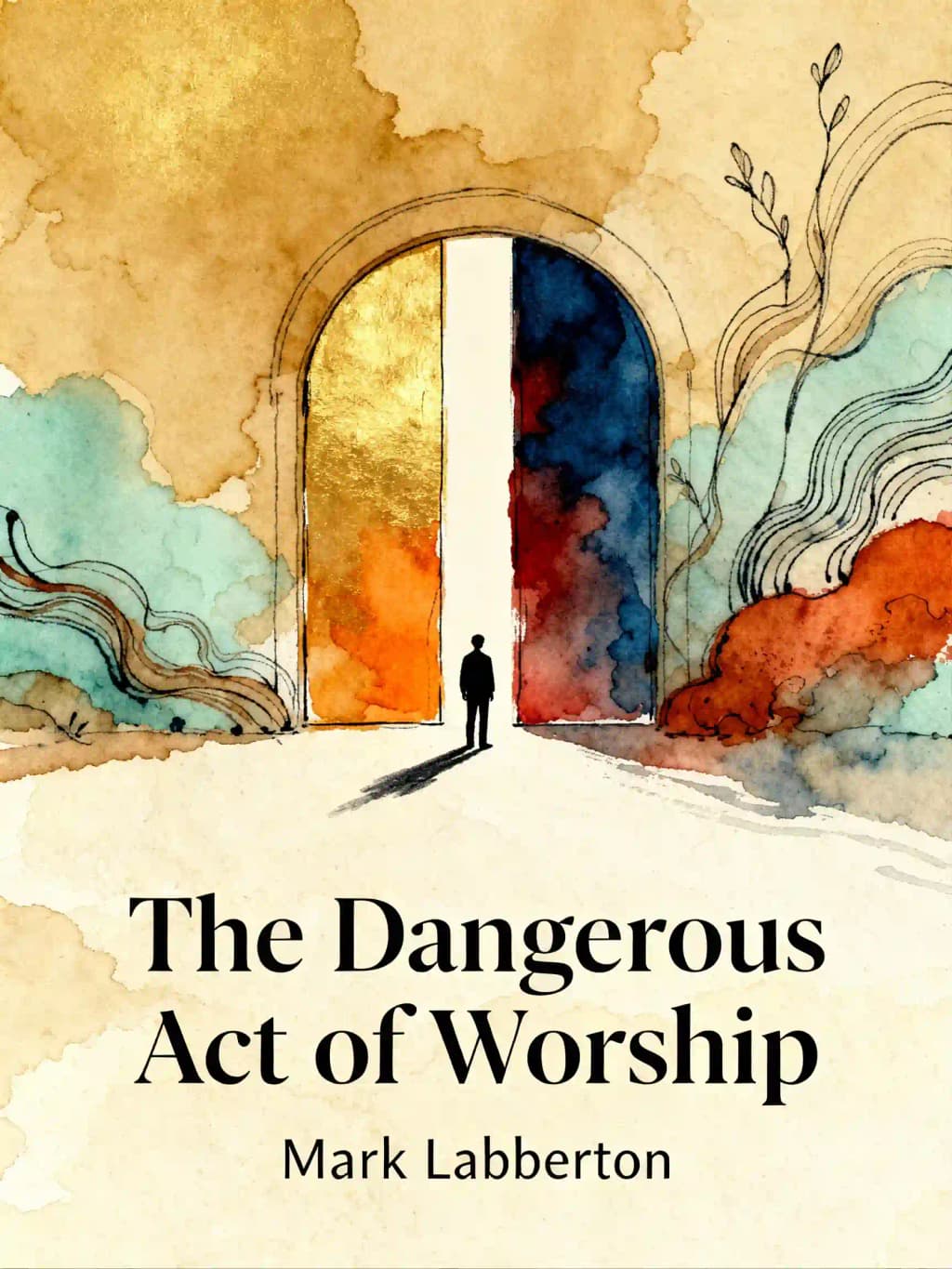
Is Sunday worship just a comfortable ritual? Mark Labberton's provocative challenge to Christians exposes how true worship demands justice beyond church walls. Fuller Seminary's president asks: What if your worship isn't dangerous enough to change the world?
Mark Labberton, author of The Dangerous Act of Worship: Living God’s Call to Justice, is a theologian, pastor, and advocate for integrating faith with social justice.
A former president of Fuller Theological Seminary (2013–2023) and senior pastor of First Presbyterian Church of Berkeley, Labberton blends decades of pastoral experience with global humanitarian work, including roles with International Justice Mission and Langham Partnership.
His writings in The Atlantic and Christianity Today, along with his podcast Conversing, explore themes of worship, justice, and neighborly love—central to his book’s challenge to confront systemic inequities through faith.
Labberton holds a PhD from Cambridge University and has authored other influential works like The Dangerous Act of Loving Your Neighbor and Called: The Crisis and Promise of Following Jesus Today. Under his leadership, Fuller Seminary expanded its focus on global theological education, reinforcing his vision of faith-driven justice.
The Dangerous Act of Worship argues that authentic Christian worship must lead to personal and societal transformation through justice and compassion. Labberton challenges readers to see worship not as a ritualistic comfort zone but as a radical call to align with God’s heart for the marginalized. The book emphasizes that true worship reshapes priorities, compelling believers to act against injustice.
This book is ideal for pastors, theologians, and lay Christians seeking to deepen their understanding of worship’s ethical implications. It resonates with readers interested in bridging faith and social justice, offering insights for those grappling with how to live out their beliefs in a broken world.
Yes—Labberton’s blend of theological depth and practical application makes it a compelling read. His experience as a pastor and seminary president lends credibility, while his focus on justice offers a timely critique of complacent faith practices. It’s particularly valuable for those reevaluating worship’s role in modern Christianity.
Labberton posits that worshiping a just God inherently demands action against inequality. He critiques “safe” worship that ignores systemic oppression, urging congregations to see liturgy as a rehearsal for justice-oriented living. The book highlights biblical examples where praise and prophetic justice are intertwined.
The term “dangerous” reflects worship’s power to disrupt apathy and confront oppressive systems. Labberton argues that encountering God’s holiness exposes societal brokenness, forcing believers to choose between comfort and costly discipleship. This tension makes worship a subversive act in a status-obsessed world.
The book critiques performance-driven services focused solely on emotional experiences. Labberton advocates for worship that “disturbs the comfortable,” using elements like corporate confession, participatory prayer, and testimonies from the margins. He warns against reducing worship to music or ritual divorced from ethical action.
While The Dangerous Act of Loving Your Neighbor focuses on interpersonal relationships, this title examines collective worship’s transformative potential. Both books share a justice emphasis, but Worship specifically critiques liturgical practices, offering a roadmap for churches to become agents of systemic change.
Some conservatives argue Labberton overemphasizes social action at the expense of doctrinal rigor. Others praise his vision but seek more concrete examples for rural or traditional congregations. Despite this, the book is widely respected for its prophetic challenge to shallow religiosity.
As global inequities and church scandals persist, Labberton’s call for integrity between belief and action remains urgent. The book equips churches to address contemporary issues like AI ethics, climate migration, and political polarization through worship that fosters courage and humility.
Siente el libro a través de la voz del autor
Convierte el conocimiento en ideas atractivas y llenas de ejemplos
Captura ideas clave en un instante para un aprendizaje rápido
Disfruta el libro de una manera divertida y atractiva
Everything that matters is at stake in how we worship.
We believe we can worship God while losing track of our neighbor.
Loving God and neighbor are inseparable.
Most churches fear losing control in worship.
The primary idol in our culture is self.
Desglosa las ideas clave de Dangerous Act of Worship en puntos fáciles de entender para comprender cómo los equipos innovadores crean, colaboran y crecen.
Destila Dangerous Act of Worship en pistas de memoria rápidas que resaltan los principios clave de franqueza, trabajo en equipo y resiliencia creativa.

Experimenta Dangerous Act of Worship a través de narraciones vívidas que convierten las lecciones de innovación en momentos que recordarás y aplicarás.
Pregunta lo que quieras, elige la voz y co-crea ideas que realmente resuenen contigo.

Creado por exalumnos de la Universidad de Columbia en San Francisco
"Instead of endless scrolling, I just hit play on BeFreed. It saves me so much time."
"I never knew where to start with nonfiction—BeFreed’s book lists turned into podcasts gave me a clear path."
"Perfect balance between learning and entertainment. Finished ‘Thinking, Fast and Slow’ on my commute this week."
"Crazy how much I learned while walking the dog. BeFreed = small habits → big gains."
"Reading used to feel like a chore. Now it’s just part of my lifestyle."
"Feels effortless compared to reading. I’ve finished 6 books this month already."
"BeFreed turned my guilty doomscrolling into something that feels productive and inspiring."
"BeFreed turned my commute into learning time. 20-min podcasts are perfect for finishing books I never had time for."
"BeFreed replaced my podcast queue. Imagine Spotify for books — that’s it. 🙌"
"It is great for me to learn something from the book without reading it."
"The themed book list podcasts help me connect ideas across authors—like a guided audio journey."
"Makes me feel smarter every time before going to work"
Creado por exalumnos de la Universidad de Columbia en San Francisco

Obtén el resumen de Dangerous Act of Worship como PDF o EPUB gratis. Imprímelo o léelo sin conexión en cualquier momento.
Picture a worship leader, eyes closed in ecstatic praise, hands lifted high toward heaven-completely oblivious to the fact that he's repeatedly stepping on the toes of people behind him. This isn't just an awkward moment; it's a perfect snapshot of modern Christianity's deepest problem. We've learned to worship God while losing track of our neighbor. We've mastered the art of appearing spiritual while remaining blind to suffering right in front of us. What if the most dangerous thing you could do this week isn't skydiving or confronting your boss-but genuinely worshiping God? Not the sanitized, comfortable version we've grown accustomed to, but the kind that wakes us up to a world we've been trained not to see. Nothing is as dangerous as encountering the true and living God. Not because God is capricious or cruel, but because meeting God means never being the same again. It's like grabbing a fifty-thousand-volt power line-you can't just casually touch divine reality and walk away unchanged. Consider Susan, who after earning her Ph.D., deliberately bought a home in a troubled neighborhood to love difficult children. She faced violence, moved to New York during 9/11, eventually adopted twin boys from Ecuador. For her, it's simply overflow: "We love because God first loved us." The real danger of worship is truth-worshiping God as he truly is and proving it by how we live.