Capítulo 1
When Self-Interest Threatens Our Society's Soul
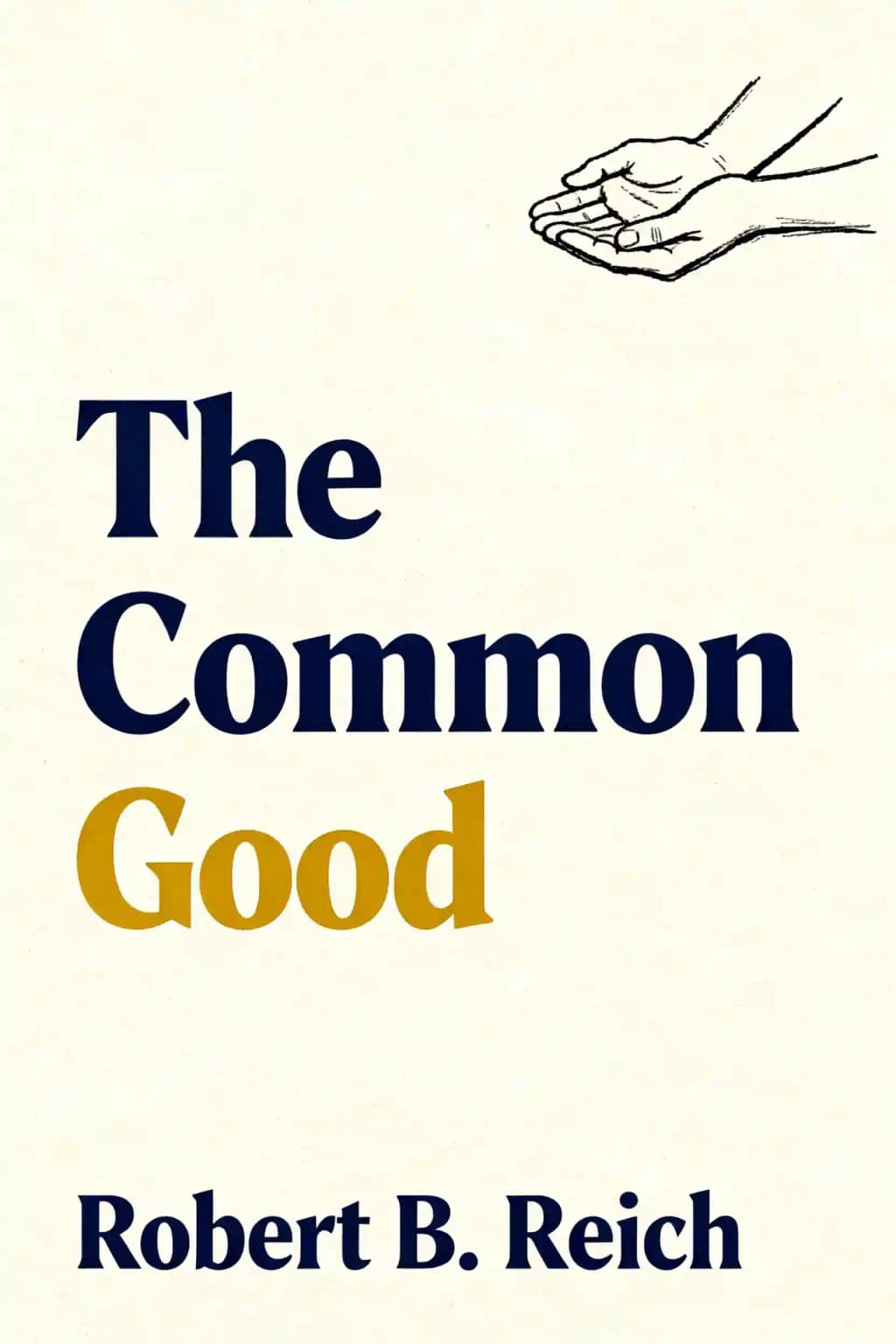
In the turbulent political landscape of 1968, a young Robert Reich found himself working as an intern for Robert F. Kennedy's Senate office. Though his tasks weren't glamorous, Reich felt he was contributing to something larger than himself-the common good of America. Fast forward five decades, and Reich's bestselling exploration of civic virtue has become required reading in political science departments nationwide. "The Common Good" arrived at a critical moment in American history, with Time magazine hailing it as "the moral compass America needs right now." Even celebrities like Leonardo DiCaprio and Emma Watson have praised Reich's accessible yet profound examination of what binds us together as a society. The book's cultural impact has been significant-inspiring community service initiatives on college campuses and prompting renewed interest in civic education. At its core, Reich's work poses a question that has become increasingly urgent in our polarized era: What connects us as Americans, and how can we restore what we've lost?
Capítulo 2
The Erosion of Social Trust Through Exploitation
The common good represents a pool of trust built up over generations-shared values about what we owe one another as citizens bound in the same society. These aren't just abstract principles but practical norms we voluntarily follow and ideals we collectively pursue. Without this foundation, there is no society.
Some philosophers, most notably Ayn Rand, have attacked this concept. Her influential novels like "The Fountainhead" and "Atlas Shrugged" advocated for the "virtue of selfishness," arguing that society should be based solely on autonomous, self-seeking individuals. This philosophy gained significant traction in American conservatism starting in the late 1970s, influencing figures in both business and politics, including members of the Trump administration.
But this view fundamentally misunderstands how societies function. Without voluntary adherence to common notions of right and wrong, we'd live in a jungle where only the strongest survive. Even the "free market" that Rand's followers glorify isn't separate from government-it's created through laws and rules that define ownership and trade.
The story of Martin Shkreli illustrates what happens when self-interest completely displaces concern for the common good. Born to Albanian immigrant janitors, Shkreli initially seemed to exemplify the American dream-intellectually gifted, college-educated, entrepreneurial. But his story darkened when he began manipulating financial markets and eventually purchased the rights to Daraprim-the only approved treatment for a rare parasitic disease-and raised its price by over 5,000 percent. When criticized, he was unapologetic: "This is a capitalist society, a capitalist system and capitalist rules. My investors expect me to maximize profits."
What makes exploitation like Shkreli's so dangerous is that it erodes the very trust that makes society function. In any social system, breaking widely accepted unwritten rules offers advantages to early exploiters. Like a thief in a town where people don't lock their doors, the first to violate social norms operates with tremendous advantage. After exploitation occurs, rules inevitably change, forcing everyone else to take inconvenient or costly preventive measures.
Around five decades ago, people with wealth and power began systematically exploiting social trust. The unwritten rules defining the common good eroded as America produced waves of individuals who prioritized wealth and power over decency and responsibility.
Capítulo 3
The Political Weaponization of "Whatever It Takes"
The Watergate scandal marked the beginning of "whatever-it-takes-to-win" politics. Senator Sam Ervin identified Nixon's "lust for political power" that blinded him to ethical considerations. Nixon authorized illegal break-ins against perceived enemies, ordered spying on Democrats, paid for sabotage of opponents, directed the IRS to investigate Democratic candidates, and approved hush money for burglars. His resignation and subsequent pardon by Ford deeply shook Americans' trust in politics.
The 1987 Senate hearings for Supreme Court nominee Robert Bork marked another escalation in partisan warfare. Liberal groups employed unprecedented tactics-mass mailings with disparaging claims, privacy violations, and apocalyptic warnings-creating the verb "to Bork." While they succeeded in defeating his nomination, they legitimized similar tactics in future confirmation battles.
Newt Gingrich's 1995 House takeover brought partisan warfare to new heights, transforming Washington from a place of compromise to a war zone with fishing expeditions against opponents, government shutdowns, and eventually Clinton's impeachment. The escalation continued through Obama's presidency, with both sides abandoning norms-Democrats passing the Affordable Care Act without Republican votes, Republicans obstructing Obama's agenda, and Obama circumventing Congress through executive orders.
This undermined the constitutional system of separation of powers, leading to wild policy swings with each change in administration. Trump escalated conflict further, using white resentment against minorities to solidify his base. These measures had nothing to do with the nation's central problems or his base's economic anxieties, serving only to advance a narrow political agenda.
What's most concerning is how this approach has normalized behavior that would have been unthinkable in previous generations. When winning at all costs becomes the only value, the institutions that protect our democracy become collateral damage.
Capítulo 4
Corporate America's Abandonment of Stakeholder Capitalism
A second chain reaction undermining the common good began in the 1980s with corporate raiders mounting hostile takeovers financed by risky bonds. Before this shift, large corporations balanced responsibilities to all "stakeholders"-shareholders, workers, communities, and the nation. As Standard Oil chairman Frank Abrams declared in 1951, management's job was "to maintain an equitable balance among the claims of various directly affected interest groups."
This stakeholder approach fueled rapid economic growth and middle-class expansion in the post-war era. CEOs were "corporate statesmen" responsible for the common good, with companies like General Electric serving the "balanced best interests" of all stakeholders.
The 1980s brought a radical transformation through raiders like Michael Milken, who pioneered using high-risk "junk" bonds for hostile takeovers targeting companies that could deliver higher shareholder returns by abandoning other stakeholders-fighting unions, cutting worker pay, automating jobs, and relocating factories.
Jack Welch exemplified this new ethos at GE, slashing 100,000 jobs between 1981-1985 (earning him the nickname "Neutron Jack") while encouraging managers to replace 10% of subordinates annually. GE halved its American workforce while nearly doubling its foreign workforce, abandoning communities like upstate New York. By 2017, CEO pay soared to almost 300 times that of typical workers.
The shift from stakeholder to shareholder capitalism hasn't improved the common good. Despite claims of greater "efficiency," most gains have gone to those at the top, leaving most Americans with flat wages, growing economic insecurity, and abandoned communities.
This profit-maximization mentality has infected sectors once based on the common good, like healthcare. Blue Cross and Blue Shield originally accepted everyone at the same rate regardless of health status, but by 1994 were forced to become for-profits after competitors like Aetna and Cigna skimmed off younger, healthier patients. Similarly, investment banks transformed from cautious partnerships to global megabanks where shareholders bore costs while bankers reaped bonuses from risky bets, leading to the 2008 crash.
Capítulo 5
Money, Politics, and the Rigged Economy
The third chain reaction eroding the common good emerged from the combination of whatever-it-takes politics and whatever-it-takes profit-making, unleashing corporate money into politics to rig economic rules favoring the wealthy.
By 2016, corporations and Wall Street contributed $34 for every $1 from labor unions and public interest organizations combined. The wealthiest 0.01% of Americans increased their share of federal election contributions from 10% in 1980 to 40% by 2012, worsened by Supreme Court decisions equating money with speech and corporations with people.
Both political parties transformed into fundraising machines. Democrats made a Faustian bargain under Tony Coelho, achieving rough parity with Republicans in corporate contributions but becoming dependent on this money, as evidenced when many Democrats voted against Clinton's healthcare plan because corporate sponsors opposed it.
The revolving door between government and industry accelerated, with half of retiring senators and 42% of retiring representatives becoming lobbyists by 2016. Wall Street's campaign contributions led to the repeal of Depression-era banking regulations, enabling the 2008 financial crisis that devastated millions while banks received bailouts.
Research by Princeton's Martin Gilens and Northwestern's Benjamin Page concluded that "the preferences of the average American appear to have only a minuscule, near-zero, statistically non-significant impact upon public policy." The rigged system has redistributed wealth upward through expanded intellectual property rights, relaxed antitrust enforcement, altered contract laws, insider trading allowances, corporate-friendly bankruptcy laws, and reduced taxes on corporations and the wealthy.
When the game appears rigged, cheating becomes normalized throughout society. Employees pilfer, managers skim profits, and professional ethics wither. The system shifts from mutual obligations to private deals, with relationships viewed as contracts rather than commitments to the common good.
Capítulo 6
The Human Cost of Abandoning the Common Good
The consequences of abandoning the common good have been catastrophic for most Americans. By 2016, the typical American household had 14% lower net worth than in 1984, while the richest 0.1% owned nearly as much wealth as the bottom 90%. Despite the economy nearly doubling in size between 1972 and 2016, typical workers' pay dropped 2% after inflation, with gains flowing to the top.
The middle class is shrinking dramatically. Only half of adults born in the mid-1980s earn more than their parents, compared to 90% of those born in the early 1940s. Most Americans work longer hours with fewer benefits, with two-thirds living paycheck to paycheck.
Life expectancy gaps between rich and poor are widening, with rising death rates among less-educated Americans due to suicides, liver disease, and drug overdoses. Economic stress has fueled bigotry, with America imprisoning a higher percentage of its population-disproportionately Black and Latino-than almost any other nation.
Economic winners increasingly secede from the common good, creating rigid class divisions as parents compete hyper-aggressively to secure advantages for their children. Rather than acknowledging systemic problems, some commentators blame the losers for lacking initiative, embracing a social Darwinism that views struggling communities as "deserving to die."
The anger over this rigged system fueled both left and right populism, with Bernie Sanders and Donald Trump both condemning elites who profited while ordinary Americans suffered. By 2014, the percentage of Americans believing hard work leads to advancement had dropped 14 points since 2000.
This widespread anger attaches to convenient scapegoats, inviting demagogues to sow division and threatening the social cohesion democracies require. The question remains: Can the common good be restored?
Capítulo 7
Leadership as Stewardship of Public Trust
Leadership must embody trusteeship-stewardship of the unwritten rules that constitute the common good. True leadership rejects "whatever-it-takes" politics that undermines trust. Political victories that erode trust in politics aren't victories but net losses for society. Record corporate profits achieved by eroding public trust aren't successes but derelictions of duty. This principle extends to all institutions, from government agencies to educational establishments, where leaders must prioritize long-term institutional integrity over short-term gains.
An American president isn't merely chief executive but a moral leader whose values reverberate through society. The peaceful transition of power exemplifies this commitment to the common good, as seen in Al Gore's gracious concession to George W. Bush in 2000 despite a contested election. Similar examples include George H.W. Bush's graceful handover to Bill Clinton in 1992 and the letter he left for his successor, continuing a tradition that reinforces democratic norms. These moments transcend partisan politics to uphold institutional stability.
CEOs and corporate directors are also entrusted with the common good. The notion that corporations must maximize shareholder value is relatively new, dating only to the 1980s, driven by Milton Friedman's influential but increasingly questioned doctrine. The Market Basket case demonstrates an alternative: when CEO Arthur T. Demoulas was fired for prioritizing employees and customers over shareholders, boycotts eventually forced the board to sell the company back to him. This showed how stakeholder-focused leadership can actually enhance business success while maintaining public trust.
Companies like Patagonia, Ben & Jerry's, and Warby Parker have organized as "benefit corporations" that legally consider workers, community and environment alongside shareholders. Their success challenges traditional corporate governance models. CEOs could use their outsized political influence to resurrect stakeholder capitalism through laws requiring consideration of all stakeholders, giving workers greater voice, and limiting executive compensation. Some companies are already implementing stakeholder advisory boards and profit-sharing programs.
In the 1940s-60s, business leaders viewed themselves as "corporate statesmen" advocating for jobs expansion, unions, and environmental protections. Companies like IBM under Thomas Watson Jr. and Kodak under Marion Folsom exemplified this approach. Today's executives could champion campaign finance reform, revolving door restrictions, and other measures to unrig the system they've helped create. This might include supporting transparency initiatives, backing anti-corruption measures, and advocating for stronger corporate governance standards.
Leadership as trusteeship extends beyond mere ethics to enhancing public trust in institutions. As Shimon Peres noted, leadership should be "defined not by personal ambition, but by morality and a call to service." Modern examples include Paul Polman's transformation of Unilever into a sustainability leader and Dan Price's decision to set a minimum salary of $70,000 at Gravity Payments. These leaders demonstrate how stewardship of public trust can align with organizational success while serving broader societal needs.
Capítulo 8
Reclaiming Honor and Confronting Shame
Societies traditionally enforce the common good through honor and shame-celebrating exemplary contributions while condemning exploitation. Modern America has misplaced these concepts, often honoring mere celebrity or wealth rather than contributions to the common good. This shift reflects a broader cultural transformation where monetary success has become the primary measure of social worth, overshadowing traditional virtues like integrity, service, and sacrifice.
The most honorable people often don't seek recognition, instead crediting others and respecting their calling too much to consider themselves extraordinary. Baseball Hall-of-Famer Ryne Sandberg exemplified this humility, emphasizing respect for teammates, opponents, and the game itself: "I didn't play the game right because I saw a reward...I played it right because that's what you're supposed to do." Similar examples can be found in countless teachers who spend their own money on classroom supplies, firefighters who rush into burning buildings, or community organizers who work tirelessly without recognition.
In contemporary America, honor has become commodified as nonprofits bestow honorary degrees, name buildings, and hold galas for wealthy donors regardless of how they acquired their wealth. Universities, museums, and other institutions etch donors' names in granite, making them synonymous with honorability while ignoring whether they violated laws, paid off politicians, or engaged in financial schemes. This practice has created a parallel system of honor where the size of the donation matters more than the donor's character or contribution to society. For instance, prestigious universities have faced criticism for accepting donations from individuals implicated in financial fraud or human rights violations, only to later struggle with the ethical implications of these associations.
True honor should recognize those who courageously stand up for the common good against forces of greed, corruption, and abuse of power-whistleblowers, principled public servants, and everyday heroes like teachers, social workers, nurses, and first responders. These individuals often face personal and professional risks, sacrificing their own security for the greater good. Consider whistleblowers who expose corporate fraud, losing their careers in the process, or public servants who resist political pressure to maintain their integrity.
Wielded appropriately, shame can motivate action for the common good by illuminating the gap between professed ideals and tolerated reality. For shame to be effective, we must hold individuals-not just corporations-accountable. Corporations cannot feel shame; only individuals can. Yet few executives face personal consequences, as prosecutors are outgunned by corporate lawyers and often reluctant to jeopardize their own career prospects. This accountability gap is evident in cases of environmental disasters, financial crises, and public health scandals where corporate leaders escape personal responsibility while their organizations pay fines that amount to merely the cost of doing business.
The restoration of genuine honor and appropriate shame requires rebuilding social mechanisms that recognize and reward true service to the common good while ensuring meaningful consequences for those who prioritize personal gain over public welfare. This might include strengthening whistleblower protections, reforming campaign finance laws, and creating new forms of public recognition for civic virtue that can't be bought with money alone.
Capítulo 9
Truth as the Foundation of Democracy
Reviving the common good depends on each of us taking responsibility for finding, sharing, and insisting upon public truth-facts that affect our collective well-being, along with clear logic about their significance. This responsibility extends beyond passive consumption of information to active verification and thoughtful analysis. We must not normalize public lying or allow deliberate misinformation to go unchallenged. The common good requires vigilance against deception and public shaming of liars, including holding public figures accountable through fact-checking and sustained scrutiny of their claims.
Without proper education to differentiate truth from falsehood, democratic deliberation becomes impossible-as evidenced by widespread scientific misconceptions among Americans. Studies show that significant percentages of Americans reject established scientific facts about climate change, evolution, and vaccine safety. When we accept lies as facts or illogic as logic, we lose our shared reality and become powerless to tackle common problems. This erosion of shared truth has concrete consequences, from delayed climate action to compromised public health responses.
A free and independent press is essential for truth as Jefferson recognized, yet public trust in media has collapsed from 72 percent in 1972 to just 18 percent before the 2016 election. This decline stems partly from profit-driven media corporations prioritizing ratings over civic responsibility, alongside the rise of partisan news outlets that blur the line between fact and opinion. The 24-hour news cycle has further degraded journalistic standards by emphasizing speed over accuracy.
Media must rebuild public trust through transparent ethics codes, fact-checking processes, and clear separation of news from opinion. They need ombudsmen to investigate complaints and public editors as in-house critics. News organizations should regularly publish corrections, explain their reporting methods, and disclose potential conflicts of interest. Investment in investigative journalism and local news coverage must be prioritized to counter the spread of misinformation.
Social media, rather than democratizing news as Reich once hoped, has instead isolated us in algorithmic bubbles that reinforce existing beliefs. These platforms' business models prioritize engagement over truth, leading to the amplification of sensational and divisive content. We no longer share a common reality but instead occupy separate information universes with those who already agree with us, creating echo chambers that resist contrary evidence and perpetuate polarization.
We must break out of these self-generated bubbles by actively seeking alternative information sources and testing our views through engagement with different perspectives. This requires deliberate effort to consume news from varied sources, fact-check claims before sharing, and engage in respectful dialogue with those holding different views. We each have a responsibility to educate ourselves about finding truth and critically assessing news, while demanding that media organizations and tech companies act as trustees of the common good. This includes supporting legislation for platform transparency, promoting digital literacy education, and developing new models for sustainable journalism that serves democracy rather than profit alone.
Capítulo 10
Civic Education: The Cornerstone of Democratic Renewal
Restoring the common good requires a new commitment to civic education-both formal education for young people and ongoing education for all citizens. Our children need to understand themselves not just as individuals seeking self-expression and lucrative careers, but as citizens responsible for upholding core common values.
Civic education has largely disappeared from standard high school curriculum, replaced by narrowed focus on English, math, and standardized tests. Higher education has become increasingly vocational as students pursue economic security in an age of widening inequality. Education is now viewed primarily as a private investment rather than a public good.
Yet America's founding fathers understood democracy depends on an educated public. As Benjamin Franklin noted after the Constitutional Convention, they had created "a republic, if you can keep it." Jefferson warned that "ignorance and despotism seem made for each other."
Restoring the common good requires reconnecting education to its public moral roots-not just as job preparation but as training for responsible citizenship. Every child should understand our political system, the Constitution, separation of powers, and the rule of law. They must grasp both how our system should work and how it actually works, and why bridging that gap matters.
Civic education requires learning by doing. Young people must develop what Tocqueville called "habits of the heart" through community service-working in homeless shelters, tutoring, mentoring, and helping the elderly. They need to move beyond their bubbles of class, race, religion, and ideology to engage with different people and perspectives.
Reich proposes two years of required public service as a duty of citizenship. This would spread responsibility across society, as the military draft once did before Nixon ended it in 1973. National service could include military service, an expanded Peace Corps, programs like Teach For America, or Social Work for America. This shared experience would help instill a sense of obligation to society regardless of wealth or status, while connecting Americans across social divides.
The core of America's national identity isn't about race or ethnicity-it's about the ideals we share and the good we hold in common. If we're losing our identity, it's because we're losing our sense of common good. This must be restored.
The common good consists of shared commitments to the rule of law, democratic institutions, truth, tolerance, equal rights and opportunity, civic participation, and necessary sacrifices for our ideals. Without these commitments, there is no "we."
Though our era shows many examples of greed, narcissism, and hate, Reich firmly believes restoration is possible. Daily, ordinary Americans demonstrate compassion and generosity that rarely make headlines. Our challenge is transforming this into a new public spiritedness that reaches the highest levels of society-a public morality that strengthens democracy, makes the economy work for everyone, and revives institutional trust.
America has never been perfect. Our finest moments have been when we sought to become more perfect than we had been. Resurrecting the common good may take another half century, but as theologian Reinhold Niebuhr said, "Nothing that is worth doing can be achieved in our lifetime; therefore we must be saved by hope."