Dr. Kendrick's medical detective story shatters cardiovascular dogma, arguing blood clotting - not cholesterol - causes heart disease. Named among experts' top 10 cardiology books, this witty, evidence-packed investigation has physicians rethinking decades of treatment. What if Big Pharma got it wrong?
Dr. Malcolm Kendrick is the bestselling author of The Clot Thickens: The Enduring Mystery of Heart Disease and a Scottish General Practitioner with over 25 years of clinical experience. A graduate of Aberdeen Medical School (1981), Kendrick is a member of the Centre for Evidence-Based Medicine and The International Network of Cholesterol Skeptics, bringing a contrarian, research-driven perspective to cardiovascular health.
In The Clot Thickens, Kendrick challenges mainstream cardiology by arguing that blood clotting and endothelial damage—not cholesterol or saturated fat—are the primary drivers of heart disease. His thrombogenic hypothesis draws on overlooked 19th-century research and modern clinical evidence, offering readers a science-backed alternative to conventional thinking. Kendrick has also authored The Great Cholesterol Con (2008), Doctoring Data (2015), and A Statin Nation (2018), all of which critically examine pharmaceutical influence and medical research integrity.
Known for his accessible yet provocative style, Kendrick has appeared on numerous podcasts and media platforms, making complex medical concepts understandable for general audiences. His work continues to spark debate within the medical community and empower readers to question established health narratives.
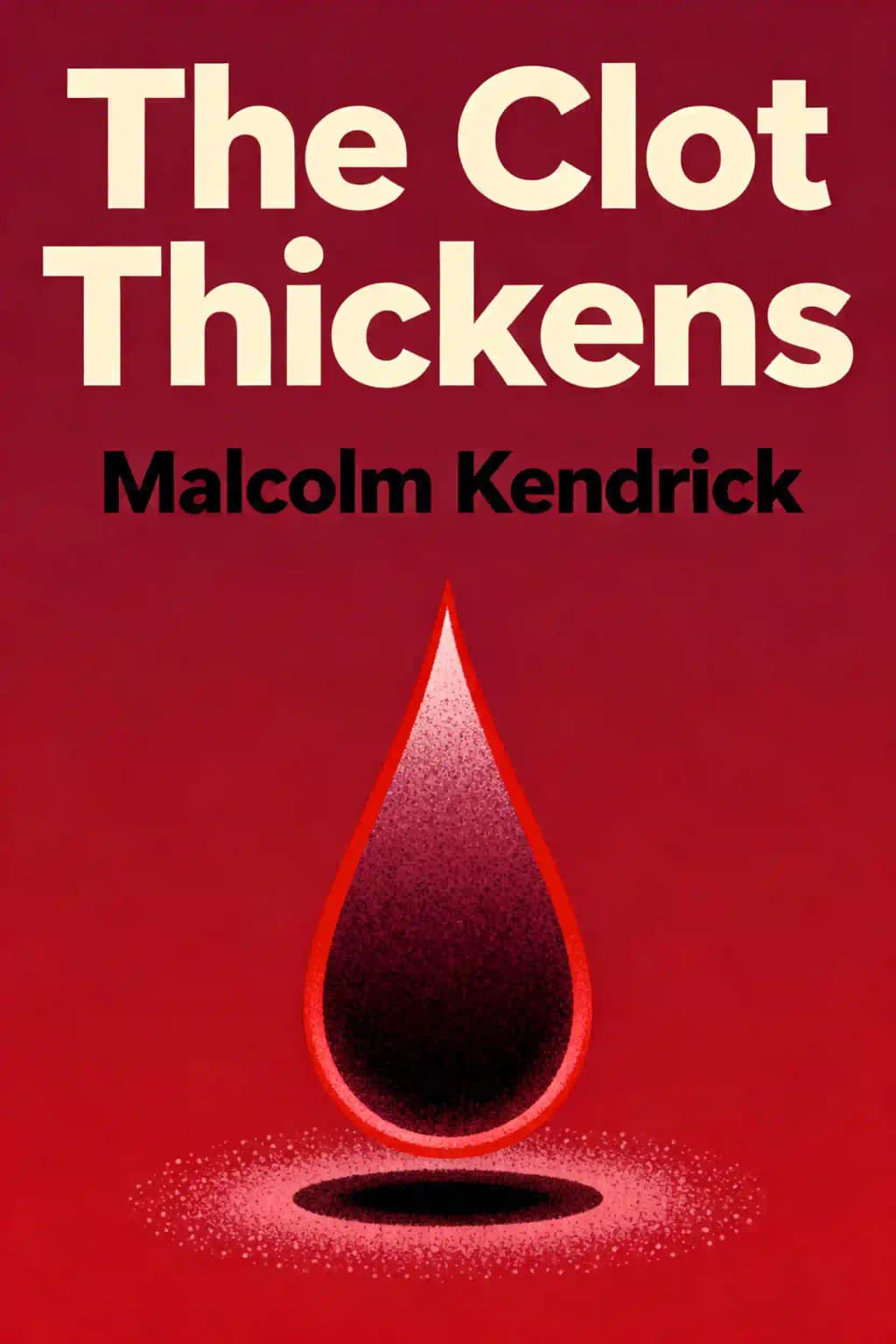
The Clot Thickens by Malcolm Kendrick challenges the conventional belief that high cholesterol causes heart disease. The book presents a thrombogenic hypothesis, arguing that blood clots and endothelial damage are the true culprits behind cardiovascular disease. Kendrick examines 150 years of scientific evidence, critiques pharmaceutical industry practices, and offers practical recommendations for preventing heart disease through lifestyle modifications focused on reducing blood clotting risk rather than lowering cholesterol.
The Clot Thickens is ideal for anyone diagnosed with cardiovascular disease, diabetes, or those who have experienced heart attacks or strokes. The book appeals to readers questioning conventional medical wisdom about cholesterol and statins, healthcare professionals seeking alternative perspectives on CVD prevention, and individuals interested in understanding the science behind heart disease beyond mainstream narratives. Those comfortable with detailed scientific discussions will find the most value.
The Clot Thickens is worth reading for its groundbreaking thesis and meticulous scientific citations, with reviewers calling it "the best title on heart attack and ischemic stroke prevention". However, the book's writing style divides readers—some praise Kendrick's wit and humor, while others find it overly verbose and sarcastic. At 330+ pages, critics note it could have been more concise, but the underlying science and unifying theory of heart disease make it valuable for dedicated readers.
Dr. Malcolm Kendrick is a Scottish physician, author, and member of the Centre for Evidence-Based Medicine and The International Network of Cholesterol Sceptics. He has written multiple books challenging conventional cardiovascular medicine, including "The Great Cholesterol Con" and "Doctoring Data". Kendrick is known for his controversial stance against the cholesterol hypothesis and his advocacy for evidence-based medicine that questions pharmaceutical industry influence on medical practice.
The thrombogenic hypothesis presented in The Clot Thickens proposes that blood clots, rather than cholesterol, are the primary cause of cardiovascular disease. Kendrick explains that endothelial damage triggers blood clot formation, which over time becomes incorporated into arterial walls, creating plaque buildup. This theory suggests that preventing heart disease requires addressing factors that damage the endothelium and promote clotting, rather than focusing solely on cholesterol levels.
The Clot Thickens systematically dismantles the diet-heart hypothesis by demonstrating that saturated fat and cholesterol consumption don't directly cause cardiovascular disease. Malcolm Kendrick argues that cholesterol has been wrongly convicted while the true culprits—blood clotting and endothelial damage—escaped scrutiny. He presents decades of scientific evidence showing inconsistencies in the cholesterol theory and exposes how pharmaceutical companies profited from statins despite knowing the cholesterol hypothesis was flawed.
According to The Clot Thickens, key cardiovascular disease risk factors include anything that damages the endothelium: type 2 diabetes, smoking, air pollution, high blood pressure, and periodontal disease. Kendrick emphasizes blood sugar dysregulation and insulin resistance as more critical than cholesterol levels. The book identifies stress, certain medications, and inflammatory conditions as factors that promote blood clotting and endothelial dysfunction, providing a comprehensive framework for understanding CVD risk beyond traditional markers.
Malcolm Kendrick's dietary recommendations in The Clot Thickens focus on improving endothelial function and reducing blood clot risk rather than lowering cholesterol. He emphasizes managing carbohydrates and insulin resistance, suggesting these have greater impact on heart health than saturated fat consumption. Kendrick advocates for whole foods and balanced nutrition that supports vascular health, challenging decades of low-fat dietary guidelines and offering practical steps for readers to take control of their cardiovascular wellness.
The Clot Thickens faces criticism primarily for its writing style rather than its scientific content. Reviewers note the book is unnecessarily long at 330+ pages, with one critic stating it should have been a "thin masterpiece" of 100 pages. Kendrick's tone is described as sarcastic, sophomoric, and self-aggrandizing, with excessive tangents that distract from his compelling thesis. Some readers found the conversational Scottish style charming, while others considered it unprofessional for recommending to healthcare professionals.
The Clot Thickens critiques the pharmaceutical industry's promotion of statins despite questionable evidence supporting the cholesterol hypothesis. Malcolm Kendrick argues that Big Pharma made trillions from cholesterol-lowering drugs while knowing the underlying theory was flawed. However, some readers wished for more detailed coverage of when statins might be appropriate, noting this topic wasn't explored in significant depth despite being central to the cholesterol controversy.
The Clot Thickens offers a unifying theory of heart disease that explains why diverse conditions—from sickle cell disease to diabetes to stress—all increase cardiovascular risk through a common mechanism: endothelial damage and blood clotting. Unlike books focused on cholesterol management, Kendrick traces 150 years of overlooked scientific evidence and introduces "unrecognized heroes" whose thrombogenic research was suppressed. This detective-story approach, combined with challenges to medical orthodoxy, distinguishes it from conventional cardiovascular literature.
The Clot Thickens is meticulously researched, with extensive footnotes citing relevant scientific papers that provide an excellent foundation for further study. Malcolm Kendrick draws from peer-reviewed journals, including publications in Atherosclerosis, to build his case for the thrombogenic hypothesis. Reviewers praise his evidence-based approach and persuasive presentation, though they note his controversial conclusions challenge decades of mainstream cardiovascular research. The book's scientific rigor makes it valuable despite debates about his interpretation of the data.
Siente el libro a través de la voz del autor
Convierte el conocimiento en ideas atractivas y llenas de ejemplos
Captura ideas clave en un instante para un aprendizaje rápido
Disfruta el libro de una manera divertida y atractiva
The diet-heart hypothesis has a fatal flaw - it's physiologically impossible.
Highest mortality occurred at the lowest cholesterol levels.
Plaques are actually remnants of blood clots.
Fatty streaks do NOT develop into atherosclerotic plaques.
Nitric oxide (NO) is arguably the single most important molecule for cardiovascular health.
Desglosa las ideas clave de The Clot Thickens en puntos fáciles de entender para comprender cómo los equipos innovadores crean, colaboran y crecen.
Experimenta The Clot Thickens a través de narraciones vívidas que convierten las lecciones de innovación en momentos que recordarás y aplicarás.
Pregunta cualquier cosa, elige tu estilo de aprendizaje y co-crea ideas que realmente resuenen contigo.

Creado por exalumnos de la Universidad de Columbia en San Francisco
"Instead of endless scrolling, I just hit play on BeFreed. It saves me so much time."
"I never knew where to start with nonfiction—BeFreed’s book lists turned into podcasts gave me a clear path."
"Perfect balance between learning and entertainment. Finished ‘Thinking, Fast and Slow’ on my commute this week."
"Crazy how much I learned while walking the dog. BeFreed = small habits → big gains."
"Reading used to feel like a chore. Now it’s just part of my lifestyle."
"Feels effortless compared to reading. I’ve finished 6 books this month already."
"BeFreed turned my guilty doomscrolling into something that feels productive and inspiring."
"BeFreed turned my commute into learning time. 20-min podcasts are perfect for finishing books I never had time for."
"BeFreed replaced my podcast queue. Imagine Spotify for books — that’s it. 🙌"
"It is great for me to learn something from the book without reading it."
"The themed book list podcasts help me connect ideas across authors—like a guided audio journey."
"Makes me feel smarter every time before going to work"
Creado por exalumnos de la Universidad de Columbia en San Francisco

Obtén el resumen de The Clot Thickens como PDF o EPUB gratis. Imprímelo o léelo sin conexión en cualquier momento.
What if the leading killer worldwide has been fundamentally misunderstood for decades? Heart disease claims millions of lives annually, yet the conventional wisdom about its causes-primarily blaming cholesterol and saturated fat-fails to explain phenomena like the "French Paradox." How can the French, with their butter-rich diet, have just one-fifth the cardiovascular disease rate of countries following "heart-healthy" guidelines? This contradiction launched a three-decade investigation that challenges everything we thought we knew about heart health. The answer isn't floating in your bloodstream as cholesterol-it's in the complex dance between your blood vessels, clotting mechanisms, and repair systems that determines whether you'll face a heart attack at 45 or die peacefully in your sleep at 95.
The diet-heart hypothesis claims eating saturated fat raises cholesterol, causing arterial blockages and heart attacks. However, this theory is physiologically impossible. Nobody actually has "cholesterol levels" since cholesterol isn't water-soluble and can't travel freely in blood. Instead, it moves in lipoproteins - tiny virus-sized spheres. When we eat saturated fat, it binds with bile salts, gets absorbed into the gut wall, and packs into chylomicrons that bypass the liver and go directly to fat cells for storage. LDL particles form when liver-produced VLDLs shrink while delivering fatty acids throughout the body. For LDL to increase, VLDL must rise first - and carbohydrates, not saturated fat, raise VLDL. When we consume excess carbs, the liver converts them to fat and packages this new fat into VLDLs. Evidence against the cholesterol hypothesis is overwhelming. Large studies show higher cholesterol levels correlate with longer lifespans and reduced mortality risk, especially in women. The Nord-Trndelag Health Study found "moderately elevated cholesterol" may be "not only harmless but even beneficial."
For over 150 years, two competing hypotheses have explained cardiovascular disease. While the cholesterol hypothesis dominated public discourse, the thrombogenic hypothesis-that blood clots are the key players-better aligns with evidence. This alternative theory suggests atherosclerotic plaques are remnants of blood clots that formed after damage to the arterial lining. These clots get covered by new endothelial cells, incorporating them into the artery wall. Frequent damage, larger clots, or faltering repair systems lead to growing plaques at the same location. Actual plaques aren't simply cholesterol deposits but complex structures containing red blood cells, fibrin, platelets, white blood cells, smooth muscle cells, calcium, and collagen. End-stage plaques typically consist of 87% fibrous tissue, 7% calcific deposits, 5% pultaceous debris, and only 1% foam cells. Research by Velican and Velican, studying arteries from hundreds of accident victims, showed that fatty streaks do NOT develop into atherosclerotic plaques. Instead, clinically significant plaques contain layers of small blood clots, termed "incorporated microthrombi."
Understanding cardiovascular disease requires knowing several key components that maintain arterial health. The endothelium - a single-cell layer lining all blood vessels - functions as a separate organ with a surface area the size of a football field. In healthy arteries, it forms a barrier preventing substances from entering artery walls. Covering the endothelium is the glycocalyx - nature's super-Teflon - a slippery coating containing powerful anti-coagulants. This fragile layer can repair itself in less than a second, serving as our first line of defense against arterial damage. Blood clotting is among the body's most sophisticated self-regulating systems. Platelets act as initial plugs and conductors, while fibrin forms sticky strands binding clots together. Red blood cells attach to fibrin, tightening the structure. When damage occurs, endothelial progenitor cells from bone marrow migrate to injured areas and develop into new endothelial layers - the only source of new endothelial cells. Nitric oxide dilates blood vessels, lowers blood pressure, stimulates progenitor cell production, and prevents substances from sticking to the endothelium, making it crucial for cardiovascular health.
Smoking devastates the cardiovascular system rapidly. Toxic nanoparticles breach lung barriers and enter the bloodstream, destroying endothelial cells. Environmental pollutants-vehicle exhaust, industrial emissions, wood smoke-cause similar damage through reducing nitric oxide, triggering inflammation, and promoting blood clotting. Lead exposure acts as a silent killer, accumulating in bone tissue over decades and gradually leaching into the bloodstream. About 400,000 deaths annually in the US link to lead exposure, with 250,000 being cardiovascular. Lead inhibits nitric oxide production and increases blood clotting risk. Diabetes damages arteries through multiple pathways. High blood sugar strips away the protective glycocalyx while reducing circulation of repair cells. The combination of increased coagulation, chronic inflammation, and compromised repair mechanisms makes diabetic patients particularly vulnerable to heart problems. Chronic psychological stress causes similar damage through persistent cortisol elevation, which antagonizes insulin, suppresses nitric oxide, damages the glycocalyx, impairs endothelial function, and increases blood-clotting factors-creating ideal conditions for heart disease.
Social factors profoundly influence cardiovascular health, often outweighing traditional risk factors. After the Soviet collapse, Lithuanian men's heart disease rates quadrupled compared to UK counterparts within just three years-despite no significant changes in diet or smoking habits. Indigenous populations bear catastrophic rates of cardiovascular disease following colonization. Australian Aboriginal women have thirty times the predicted heart disease death rate-a 2,900% increase over risk calculations. This reflects historical trauma, disruption of traditional lifestyles, discrimination, and destroyed cultural support systems. Yet some communities defy these patterns. Pennsylvania's Rosetans maintained remarkably low heart attack rates despite smoking unfiltered cigars, drinking abundantly, working dangerous jobs, and eating diets rich in lard. Their protection came from being "nourished by people" through strong family ties and cohesive community relationships. Their social structure featured multigenerational households, regular community gatherings, and collective celebration of success. This social cohesion created a protective buffer against the physiological effects of stress-demonstrating that community connection can be as important for heart health as diet or exercise.
Focus on protecting your endothelium and enhancing nitric oxide production rather than obsessing over cholesterol. For type 2 diabetes, empty glucose/glycogen stores through high-intensity exercise and limit carbohydrates-low-carb approaches achieve 46% drug-free diabetes remission and 93% prediabetes reversal. Stress management offers significant benefits: biofeedback and relaxation decrease blood glucose levels, while yoga can lower systolic blood pressure by up to 21 mmHg after heart attacks-exceeding most medications' effectiveness. For high blood pressure, ACE-inhibitors (especially perindopril) stimulate nitric oxide synthesis, while exercise increases it through multiple pathways. Rather than restricting sodium, focus on increasing potassium intake. Our ancestors consumed about 16 times more potassium than sodium, unlike modern diets. Sun exposure produces both vitamin D and nitric oxide, which lowers blood pressure, prevents blood clots, improves insulin sensitivity, and can reverse type 2 diabetes. Beneficial foods include beets, garlic, leafy greens, dark chocolate, red wine, and L-arginine-rich proteins. The thrombogenic model explains all cardiovascular risk factors more coherently than the cholesterol hypothesis. By protecting your endothelium, enhancing nitric oxide production, and maintaining strong social connections, you can significantly reduce heart disease risk-regardless of cholesterol numbers.