Capítulo 1
A Chilling Transformation: Innocence Lost on Hitler's Mountain
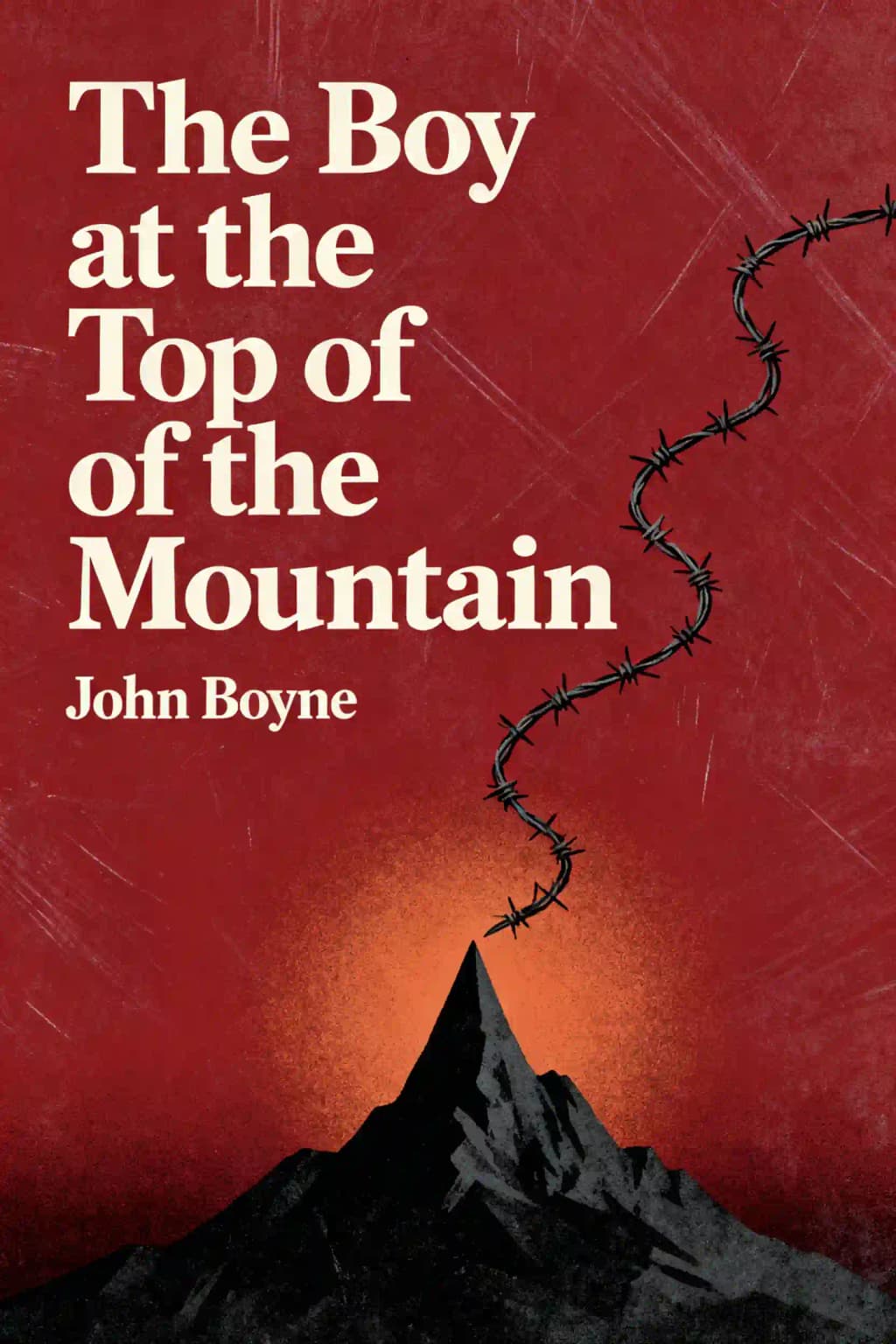
Imagine a young orphan boy, half-French and half-German, who loses everything he loves-his parents, his best friend, his beloved dog-only to be taken under the wing of the most notorious figure of the 20th century. John Boyne's "The Boy at the Top of the Mountain" has been praised by critics as a masterful psychological study of corruption and moral decay, with The Guardian calling it "a powerful, unflinching tale of innocence corrupted." The novel serves as a companion piece to Boyne's international bestseller "The Boy in the Striped Pajamas," which sold over six million copies worldwide and was adapted into a major motion picture. Where his previous work examined the Holocaust through the eyes of an innocent bystander, this novel dares to explore how easily a child can be molded into a perpetrator. Michelle Obama reportedly included it on a reading list for young adults interested in understanding the psychological foundations of authoritarianism and the seductive nature of power.
Capítulo 2
The Orphan's Journey: From Paris to the Berghof
Pierrot Fischer's childhood in Paris was marked by tragedy. His German father Wilhelm, haunted by his experiences in the Great War, descended into alcoholism and violent outbursts. One night, after a particularly brutal attack on Pierrot's French mother Emilie, Wilhelm disappeared, later found dead beneath a train near his hometown. Though devastated, Emilie created a new life for herself and seven-year-old Pierrot, working as a waitress at the Abrahams' restaurant.
This fragile stability shattered when Emilie began coughing blood on her birthday. Her condition deteriorated rapidly, and within a week, young Pierrot sat at her bedside as she died, leaving him utterly alone in the world. His only comfort was his friendship with Anshel Bronstein, a Jewish boy who shared his love of stories and signs, and his dog D'Artagnan, whom Anshel promised to care for.
Though the Bronsteins temporarily took Pierrot in, financial constraints and societal pressures-"a Jewish family might not be appropriate for a Gentile boy"-led to his placement in an orphanage run by the Durand sisters. Simone, tall and reserved, and Adele, short and chatty, managed the establishment with contrasting styles. At the orphanage, Pierrot encountered bullying from Hugo, ironically the sisters' nephew, whose father had also been damaged by war.
Just as Pierrot was settling into this new reality, a letter arrived from his Aunt Beatrix in Austria, offering him a home. This mysterious aunt, whom he'd never met, worked as a housekeeper at a grand house in the mountains. With a mixture of trepidation and hope, Pierrot embarked on a journey that would transform him forever, facing discrimination and cruelty along the way-from an elderly Jewish man being forced from his train compartment to Hitler Youth boys stealing his sandwiches.
When he finally arrived in Berchtesgaden, Aunt Beatrix insisted on changing his name to the more German-sounding "Pieter" and replacing his French clothes with traditional German attire-white shirts, lederhosen, and knee socks-making him "a little less French and a little more German." This seemingly innocent transformation foreshadowed the more profound changes to come at the house atop the mountain-Adolf Hitler's Berghof.
Capítulo 3
The Seduction of Power: Hitler's Special Boy
The Berghof, Hitler's mountain retreat, initially overwhelmed Pierrot with its grandeur and strict hierarchies. As a newcomer, he occupied the lowest rung in the household's social ladder, beneath the master and mistress, his aunt Beatrix the housekeeper, Ernst the chauffeur, Emma the cook, and the various maids. The silent, armed soldiers guarding the doors underscored the unusual nature of his new home.
Pierrot's first encounter with Hitler came after nearly a year at the Berghof. The Fuhrer took an immediate interest in the blue-eyed, blond-haired boy who reminded him of Aryan ideals. Their relationship deepened when Hitler discovered Pierrot could play piano, a shared passion that created a bond between them. Hitler began inviting the boy for walks with his German Shepherd, Blondi, sharing stories of his WWI service and his vision for Germany's future.
The turning point in Pierrot's transformation came when Hitler presented him with a Deutsches Jungvolk uniform-black shorts, brown shirt with lightning bolt patch, blue tunic, and cap. Initially conflicted, remembering how Hitler Youth had bullied him on the train journey to Austria, Pierrot's hesitation vanished when he saw himself in the mirror. Pride swelled in his chest, and a desire for authority took root in his heart. Standing before a Nazi banner, Hitler made him recite an oath pledging to "devote all my energies and strength to the saviour of our country" and to give his life for Hitler. Though his hands trembled, Pierrot thought, "Papa would be so proud of me."
Hitler cultivated Pierrot's mind as well as his loyalty, recommending books like Thomas Carlyle's biography of Frederick the Great, Mein Kampf, and Henry Ford's antisemitic tract The International Jew. He dismissed Pierrot's father as weak, insisting everyone should be "proud to die for the greater glory of the Fatherland." The boy stopped thinking of himself as French, now identifying as German and embracing Hitler's vision that "one day all Europe would belong to Germany."
This special attention elevated Pierrot's status within the household and beyond. At school, he boasted of his connection to the Fuhrer, though his childhood friend Katarina remained unimpressed. At the Berghof, he began mimicking Eva Braun's imperious manner, clicking his fingers and ordering servants about. When Beatrix suggested he spend less time with Hitler, Pierrot defended their relationship, parroting Hitler's sexist views that women are "necessary to the Reich" but politics should be "left to men." The innocent orphan was becoming unrecognizable, his transformation from Pierrot to Pieter-from victim to perpetrator-well underway.
Capítulo 4
Betrayal and Blind Loyalty: The Price of Belonging
As Pierrot's indoctrination deepened, his moral compass deteriorated. The pivotal moment came during a Christmas celebration at the Berghof when he discovered what appeared to be a plot against Hitler. Overhearing conversations between his aunt Beatrix and Ernst the chauffeur, Pierrot learned they were concerned about his transformation and Hitler's destructive influence. Later, he witnessed Ernst receiving what seemed to be poison and a syringe from a stranger.
At the Christmas feast, when Ernst insisted Hitler eat the first slice of stollen cake, Pierrot intervened, demanding Ernst eat it instead. The chauffeur fled, confirming his guilt in Pierrot's mind. After interrogating the boy, Hitler had Ernst executed by firing squad. To Pierrot's horror, Beatrix was also executed for her complicity. As his aunt's body was dragged away, Pierrot met Hitler's gaze through the window and offered the Nazi salute. "It was Pierrot who had climbed out of bed that morning, but it was Pieter who returned to it now before falling soundly asleep."
This act of betrayal marked Pierrot's complete transformation. He had sacrificed his own family for Hitler's approval, crossing a moral threshold from which there seemed no return. The orphan boy who once craved love and belonging had found it in the most destructive ideology of the century, and the price was his humanity.
In the years that followed, now thirteen and proudly serving as Scharfuhrer Fischer in the Hitler Youth, Pieter wielded his authority with cruel efficiency. He bullied the household staff, particularly Emma the cook who remembered his earlier kindness. When she delivered a letter from his Jewish childhood friend Anshel and reminded him of their friendship, Pieter violently rejected this connection to his past, throwing Emma to the floor and demanding she destroy any future letters.
His loyalty was rewarded when Hitler included him in meetings with high-ranking Nazi officials. During one such meeting with Himmler, Pieter took notes as they planned a massive concentration camp expansion-40 square kilometers of land, 300 buildings, capacity for 200,000 prisoners, electrified fences, guard towers, and "shower rooms" that wouldn't actually dispense water. Despite momentarily questioning this detail, Pieter felt proud to participate in planning what would become one of the Reich's largest death camps.
The boy who had once suffered at the hands of bullies had become the ultimate bully, wielding power without compassion, loyalty without morality. His transformation was complete, his betrayal absolute.
Capítulo 5
The Hollow Victory: Pieter's Rise and Isolation
By 1944, fifteen-year-old Pieter had achieved a position of considerable influence at the Berghof. His proximity to Hitler granted him privileges beyond his years, yet beneath his arrogant exterior lurked a profound emptiness. His attempts to reconnect with Katarina, visiting her father's stationery shop in Berchtesgaden without his Hitlerjugend uniform, revealed his desperate need for genuine human connection.
Despite his awkward attempts at conversation and boasting about his relationship with Hitler, Katarina remained cold and dismissive. When Pieter invited her to Eva Braun's birthday party at the Berghof, she refused until her father, sensing a political opportunity, enthusiastically accepted for both of them. Pieter's hollow victory in securing her attendance highlighted his inability to form authentic relationships.
The birthday celebration itself exposed the fracturing Nazi hierarchy. High-ranking officials including Himmler, Goebbels, and Speer appeared tense as the war turned against Germany. Their forced joviality couldn't mask the growing sense of doom permeating the gathering. When Katarina arrived, she remained unimpressed by Hitler and his entourage, even criticizing his paintings without realizing he was the artist.
Pieter's attempt to force himself on Katarina in his bedroom revealed the depths of his moral corruption. When Emma intervened with a knife, threatening him and lamenting how he had changed, Pieter's response sealed his fate. Rather than recognizing his wrongdoing, he reported Emma to Hitler, resulting in her being taken away-likely to a concentration camp. This act of cruelty demonstrated how completely he had internalized the Nazi ethos of power without responsibility, authority without compassion.
As the Reich began to crumble around him, Pieter's isolation intensified. The Holzmanns' stationery shop closed, and when he inquired about them, a shopkeeper bluntly told him, "You're what happened to them." His final encounter with Hitler revealed a broken, paranoid man who left in rage without saying goodbye. The Fuhrer who had once seemed godlike to the impressionable boy now appeared all too human-frightened, unstable, and doomed.
Left alone at the Berghof as staff fled the approaching Allied forces, Pieter confronted the consequences of his choices. Herta, before leaving for Vienna, delivered a devastating truth: "Don't ever pretend that you didn't know what was going on here... You knew it all." This accusation stripped away his last defense-the pretense of ignorance-forcing him to acknowledge his complicity in the Reich's atrocities.
When American soldiers arrived on May 4th, Pieter hid in a closet but was quickly discovered. Curling into a ball and begging, "Don't hurt me," as hands pulled him back into the light, he faced the reckoning that comes to all who choose power over principle, ideology over humanity.
Capítulo 6
The Aftermath: Confronting Complicity
At the Golden Mile Camp, where former Nazi officials and collaborators were held under Allied supervision, Pieter encountered the brutal reality of his former allegiance. Through debriefings and newspaper accounts, he learned the horrifying details of Hitler's final days in the Berlin bunker, the suicides of Goebbels and his family, and the capture of other Nazi leaders. The systematic documentation of concentration camp liberations - Auschwitz, Bergen-Belsen, Dachau - revealed the full scope of Nazi atrocities. The magnitude of the Holocaust - six million Jews systematically murdered, along with millions of others - confronted him with the horrific consequences of the ideology he had embraced. His complicity haunted him as he realized how thoroughly he had been manipulated through propaganda, youth programs, and the intoxicating promise of belonging to something greater than himself.
Upon release, Pieter wandered through war-torn Europe, a displaced youth stripped of both home and identity. In Cologne, he witnessed entire neighborhoods reduced to rubble, with children playing among bombed-out buildings and families living in basement shelters. In Antwerp, he formed a brief but profound friendship with Daniel, a Holocaust survivor whose numbered tattoo - A-7713 - served as an indelible reminder of Nazi atrocities. During their conversations in a makeshift displaced persons camp, Daniel's matter-of-fact descriptions of life in Auschwitz - the selections, the crematoriums, the desperate fight for survival - proved unbearable. Unable to face this physical evidence of his complicity, Pieter fled to Amsterdam, where he eventually secured false papers and became a teacher, building a life on carefully hidden foundations.
Years later, a chance encounter at an Amsterdam bookshop with Jakob Stern, a childhood friend of Anshel, forced Pieter to confront his shame. Stern recognized him from pre-war photographs Anshel had shared and knew intimate details of his transformation at the Berghof - the letters Anshel had written describing his friend's descent into fanaticism. This unexpected connection to his past shattered Pieter's carefully constructed anonymity, compelling him to acknowledge the truth he had been avoiding for decades.
Finally returning to France in 1962, Pieter sought closure by visiting the orphanage where his journey began. He found the building partially destroyed by wartime bombing, learned of Hugo's heroic death protecting Jewish children in the resistance, and discovered no trace of Josette, who had disappeared during the occupation. After much internal struggle, he wrote an unflinching letter to Ernst's sister in Munich, confessing his role in her brother's execution and the circumstances that led to his betrayal. Through this correspondence, Pieter made a startling discovery - Anshel had survived the war and become a celebrated author writing under a pseudonym.
This revelation led to the novel's powerful conclusion. Pieter tracked down his childhood friend in Paris, where Anshel had established himself as a chronicler of Holocaust experiences. In their final meeting, Pieter prepared to tell the full story of his corruption by power and the crimes he committed, hoping not for absolution but for the chance to bear honest witness to his choices and their consequences. This final act of confrontation represented his first step toward genuine redemption - not through forgiveness, which he knew he didn't deserve, but through the painful acknowledgment of his moral failure and its devastating impact on countless lives.
Capítulo 7
The Corruption of Innocence: How Good Children Become Monsters
The central question of "The Boy at the Top of the Mountain" is not whether evil exists, but how it reproduces itself-how innocent children become willing participants in atrocity. Pierrot's transformation from a sweet, compassionate boy to a cruel Nazi youth officer provides a chilling case study in the psychology of indoctrination.
Several factors facilitated this transformation. First, Pierrot's vulnerability as an orphan created a desperate need for belonging and approval. Having lost his parents, his dog, his best friend, and his home, he was emotionally susceptible to Hitler's paternal attention. The Fuhrer's special interest in the boy-inviting him for walks, teaching him about German history, praising his musical abilities-filled the void left by his father's absence.
Second, the gradual nature of the corruption made each step seem small and reasonable. The changes began innocuously: a new name, new clothes, new manners. By the time Pierrot was participating in meetings about concentration camps, the moral distance traveled was vast, but no single step had seemed impossible to take. This "boiling frog" approach to radicalization mirrors how real-world extremist groups recruit and indoctrinate vulnerable individuals.
Third, the isolation of the Berghof removed Pierrot from competing moral influences. Cut off from his Jewish friend Anshel, from the diverse perspectives of Paris, and later even from his aunt Beatrix, Pierrot existed in an echo chamber where Nazi ideology went unchallenged. When Emma or Katarina offered alternative viewpoints, he had already been so thoroughly indoctrinated that he rejected them outright.
Finally, the intoxication of power played a crucial role. The uniform, the special status, the authority over adults-all gave Pierrot a sense of importance he had never experienced. Having been bullied at the orphanage, he found that becoming a bully himself offered a perverse form of protection and validation.
This psychological journey illustrates how totalitarian regimes exploit human vulnerabilities to create willing executioners. By targeting children-whose moral frameworks are still developing-these systems can produce true believers who carry out atrocities without questioning their righteousness. The transformation of Pierrot into Pieter serves as a warning about the fragility of human goodness and the ease with which it can be corrupted under the right conditions.
Capítulo 8
The Weight of Witness: Responsibility and Redemption
As the war collapsed around him, Pieter faced a reckoning not just with his actions but with his knowledge. Herta's parting accusation - "Don't ever pretend that you didn't know what was going on here" - stripped away his last defense. He had witnessed the planning of concentration camps, seen people disappear after expressing dissent, heard the antisemitic rhetoric that dehumanized millions. His presence at the table made him complicit, regardless of his youth. The gradual accumulation of evidence - from whispered conversations in his father's study to the systematic removal of Jewish professors from universities - had created an undeniable pattern that even a teenager could recognize.
This question of knowing versus claiming ignorance resonates throughout Holocaust literature and historical accounts. After the war, many Germans insisted they "didn't know" about the death camps, despite living near railway lines that transported prisoners, working in factories that used slave labor, and witnessing the sudden disappearance of their Jewish neighbors. Some claimed they were "just following orders" while others maintained complete ignorance. Boyne's novel challenges this convenient amnesia by showing how a child - supposedly the most innocent member of society - could become aware of atrocities through mere proximity to power. The author demonstrates how willful blindness requires active participation: choosing not to see, not to question, not to speak.
Pieter's post-war journey through Europe represents his attempt to escape this knowledge, moving from city to city like a man pursued by invisible demons. In Amsterdam, becoming a teacher offered a way to reshape his identity, to present himself as someone who guides rather than corrupts the young. He immersed himself in literature, art, and philosophy - perhaps seeking answers to moral questions that haunted him. Yet the chance encounter that exposed his past demonstrated the impossibility of truly escaping what he had witnessed and done. His carefully constructed new life shattered with a single recognition.
His decision to seek out Anshel at the novel's conclusion suggests the beginning of a redemptive arc - not redemption through forgiveness, which may be impossible, but through honest acknowledgment. By facing the friend whose Jewish identity he had once denied and betrayed, Pieter takes responsibility for his choices in a way many real-life collaborators never did. The meeting forces him to confront not just his actions but the person he had become in that environment of normalized evil.
This final scene raises profound questions about forgiveness, accountability, and the possibility of moral rehabilitation. Can someone who participated in such evil ever truly make amends? Is acknowledgment enough, or does justice demand more tangible consequences? The weight of witness carries responsibilities that extend beyond the immediate moment - obligations to remember, to speak truth, to prevent future atrocities. By leaving these questions unanswered, Boyne invites readers to consider their own beliefs about redemption and responsibility, while suggesting that true redemption begins with the courage to face one's own complicity without excuses or evasion.
Capítulo 9
The Echoes of History: Why This Story Matters Today
"The Boy at the Top of the Mountain" may be set in the 1930s and 40s, but its exploration of how ordinary people become complicit in extraordinary evil remains urgently relevant. In an era of rising authoritarianism, polarization, and extremism, Boyne's novel offers crucial insights into the psychological mechanisms that enable atrocity. The story's resonance has only grown stronger as similar patterns of radicalization emerge in modern contexts, from online extremist movements to political polarization.
The gradual normalization of extreme ideologies that Pierrot experiences - from changing his name to reporting dissenters - mirrors contemporary radicalization processes. Online extremist groups use similar techniques to draw vulnerable individuals into increasingly radical positions, making each step seem reasonable until the convert finds themselves defending the indefensible. Social media algorithms, echo chambers, and targeted content create digital pathways to extremism that parallel Pierrot's physical journey. Modern extremist groups often begin with seemingly innocent entry points: shared grievances, promises of community, or appeals to tradition and identity.
The novel also illuminates how power structures exploit children's malleability. Modern terrorist organizations and authoritarian regimes continue to target youth for indoctrination, recognizing that shaping young minds creates lifelong adherents. From child soldiers in conflict zones to youth wings of extremist political movements, the targeting of young people remains a crucial tool for radical groups. By showing Pierrot's transformation through his own perspective, Boyne forces readers to consider how they might have responded in similar circumstances - a question that remains relevant as extremist ideologies continue to recruit worldwide through sophisticated propaganda and peer pressure.
Perhaps most importantly, the book challenges the comforting myth that evil is perpetrated only by monsters. Pierrot is not inherently cruel or hateful; he is a normal boy shaped by extraordinary circumstances and systematic manipulation. This recognition that ordinary people can commit extraordinary evil under the right conditions serves as a warning about our collective vulnerability to manipulation and corruption. Historical examples like the Stanford Prison Experiment and Milgram's obedience studies reinforce this uncomfortable truth about human nature.
As we witness the resurgence of antisemitism, xenophobia, and political extremism across the globe, "The Boy at the Top of the Mountain" reminds us that the conditions that enabled the Holocaust - fear, uncertainty, economic instability, and charismatic leadership - can recur. Recent events, from the rise of nationalist movements to the spread of conspiracy theories, demonstrate how quickly society can embrace extreme ideologies. The transformation of an innocent French-German boy into a Nazi youth officer is not merely historical fiction but a cautionary tale about the fragility of moral boundaries and the seductive power of belonging.
The novel's warning extends beyond political extremism to encompass broader questions about moral courage and resistance. In an age of "alternative facts" and information warfare, the ability to maintain independent thought and ethical principles despite social pressure becomes increasingly crucial. Pierrot's story serves as both a warning about our susceptibility to manipulation and a call to vigilance in protecting democratic values and human rights.