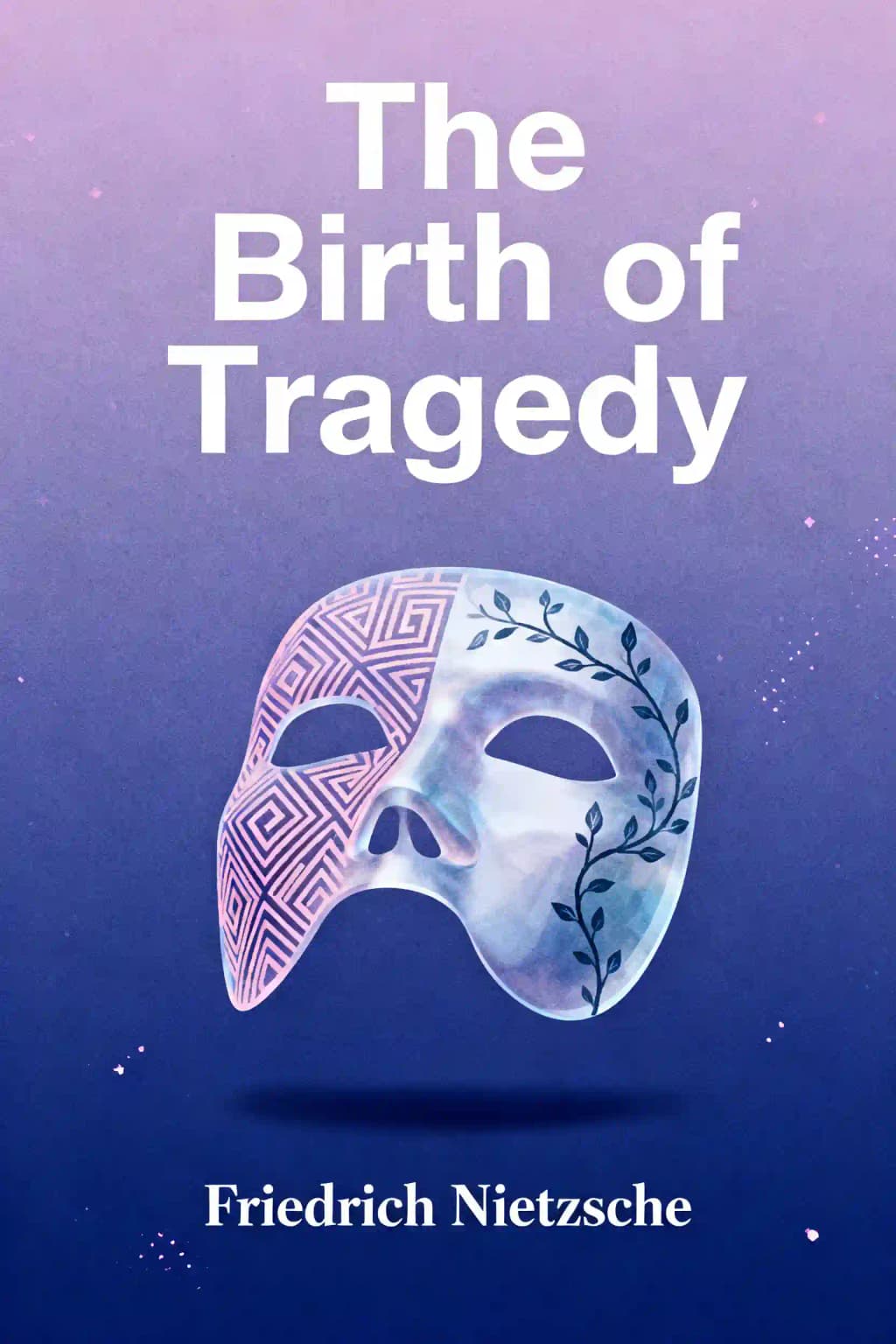
Nietzsche's explosive debut explores how Apollo's reason and Dionysus's passion birthed Greek tragedy. Initially controversial, its Apollonian-Dionysian dichotomy revolutionized aesthetics and influenced Thomas Mann's writing. What cultural tensions did Nietzsche predict that we're still wrestling with today?
Siente el libro a través de la voz del autor
Convierte el conocimiento en ideas atractivas y llenas de ejemplos
Captura ideas clave en un instante para un aprendizaje rápido
Disfruta el libro de una manera divertida y atractiva
Why does a mother weep at her daughter's wedding? Why do we queue for hours to see a painting, stand motionless before a sunset, or feel our chest tighten at a song we've heard a thousand times? Beauty moves us in ways that logic cannot explain - and according to Friedrich Nietzsche's radical first work, it might be the only thing standing between humanity and despair. Written at just 27, "The Birth of Tragedy" dared to suggest something scandalous: that life's meaning isn't found in morality, reason, or divine purpose, but in art itself. The ancient Greeks knew this secret. They stared unflinchingly at existence's horror and responded not with philosophy or prayer, but with theater. They understood something we've forgotten - that sometimes the truest response to suffering isn't an argument but a song. Here's Nietzsche's most radical claim, stated almost casually: "existence and the world seem justified only as an aesthetic phenomenon." Not as a moral system. Not as a rational order. Only as art. Look honestly at existence. It contains immense, apparently meaningless suffering. Children die of disease. Earthquakes destroy cities indiscriminately. Species go extinct. Civilizations collapse. From a moral perspective, this seems unjust. From a rational perspective, it seems purposeless. Neither religion's promise of divine justice nor science's mechanical explanations can fully justify this reality.
Desglosa las ideas clave de The Birth of Tragedy en puntos fáciles de entender para comprender cómo los equipos innovadores crean, colaboran y crecen.
Destila The Birth of Tragedy en pistas de memoria rápidas que resaltan los principios clave de franqueza, trabajo en equipo y resiliencia creativa.

Experimenta The Birth of Tragedy a través de narraciones vívidas que convierten las lecciones de innovación en momentos que recordarás y aplicarás.
Pregunta lo que quieras, elige la voz y co-crea ideas que realmente resuenen contigo.

Creado por exalumnos de la Universidad de Columbia en San Francisco
"Instead of endless scrolling, I just hit play on BeFreed. It saves me so much time."
"I never knew where to start with nonfiction—BeFreed’s book lists turned into podcasts gave me a clear path."
"Perfect balance between learning and entertainment. Finished ‘Thinking, Fast and Slow’ on my commute this week."
"Crazy how much I learned while walking the dog. BeFreed = small habits → big gains."
"Reading used to feel like a chore. Now it’s just part of my lifestyle."
"Feels effortless compared to reading. I’ve finished 6 books this month already."
"BeFreed turned my guilty doomscrolling into something that feels productive and inspiring."
"BeFreed turned my commute into learning time. 20-min podcasts are perfect for finishing books I never had time for."
"BeFreed replaced my podcast queue. Imagine Spotify for books — that’s it. 🙌"
"It is great for me to learn something from the book without reading it."
"The themed book list podcasts help me connect ideas across authors—like a guided audio journey."
"Makes me feel smarter every time before going to work"
Creado por exalumnos de la Universidad de Columbia en San Francisco

Obtén el resumen de The Birth of Tragedy como PDF o EPUB gratis. Imprímelo o léelo sin conexión en cualquier momento.